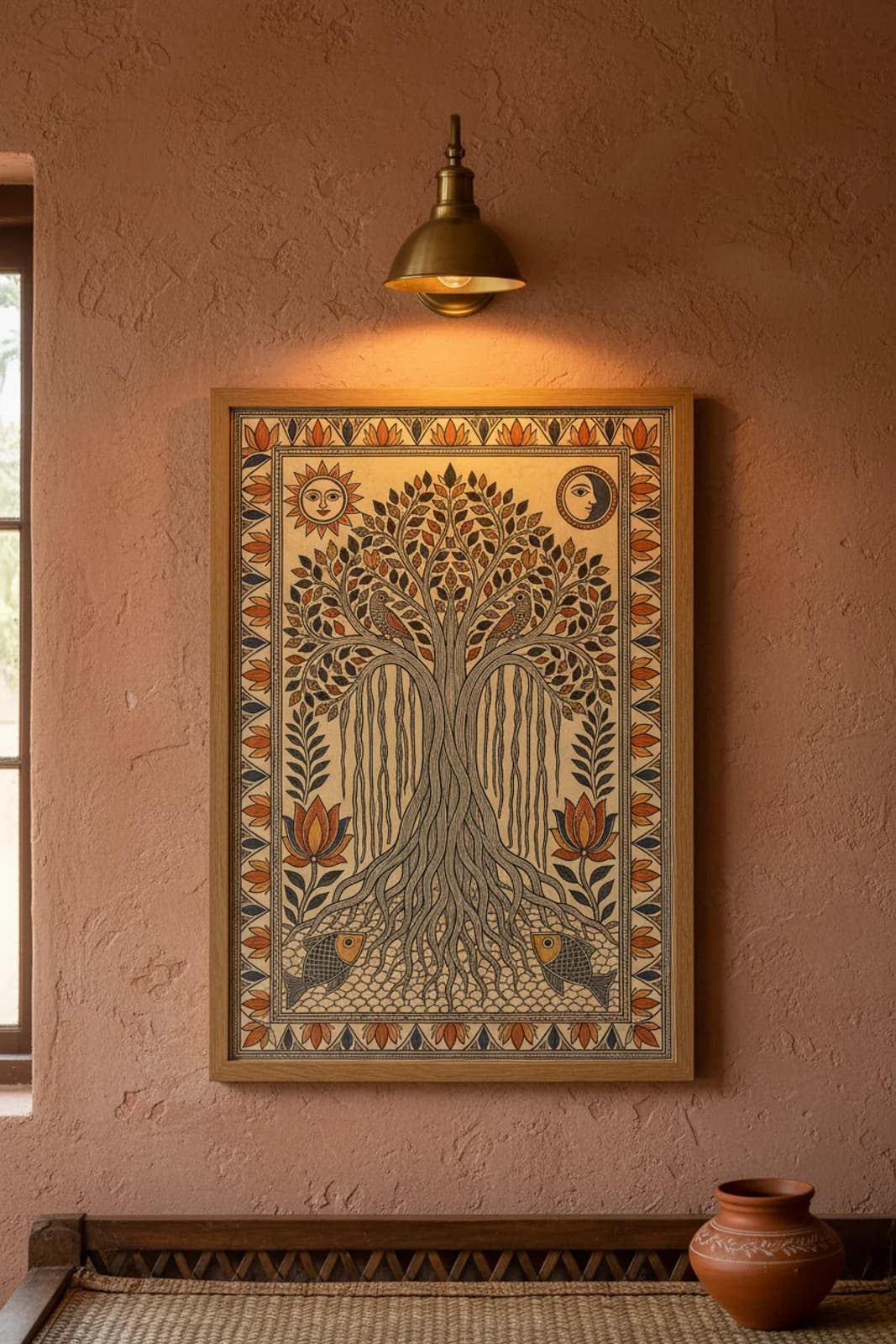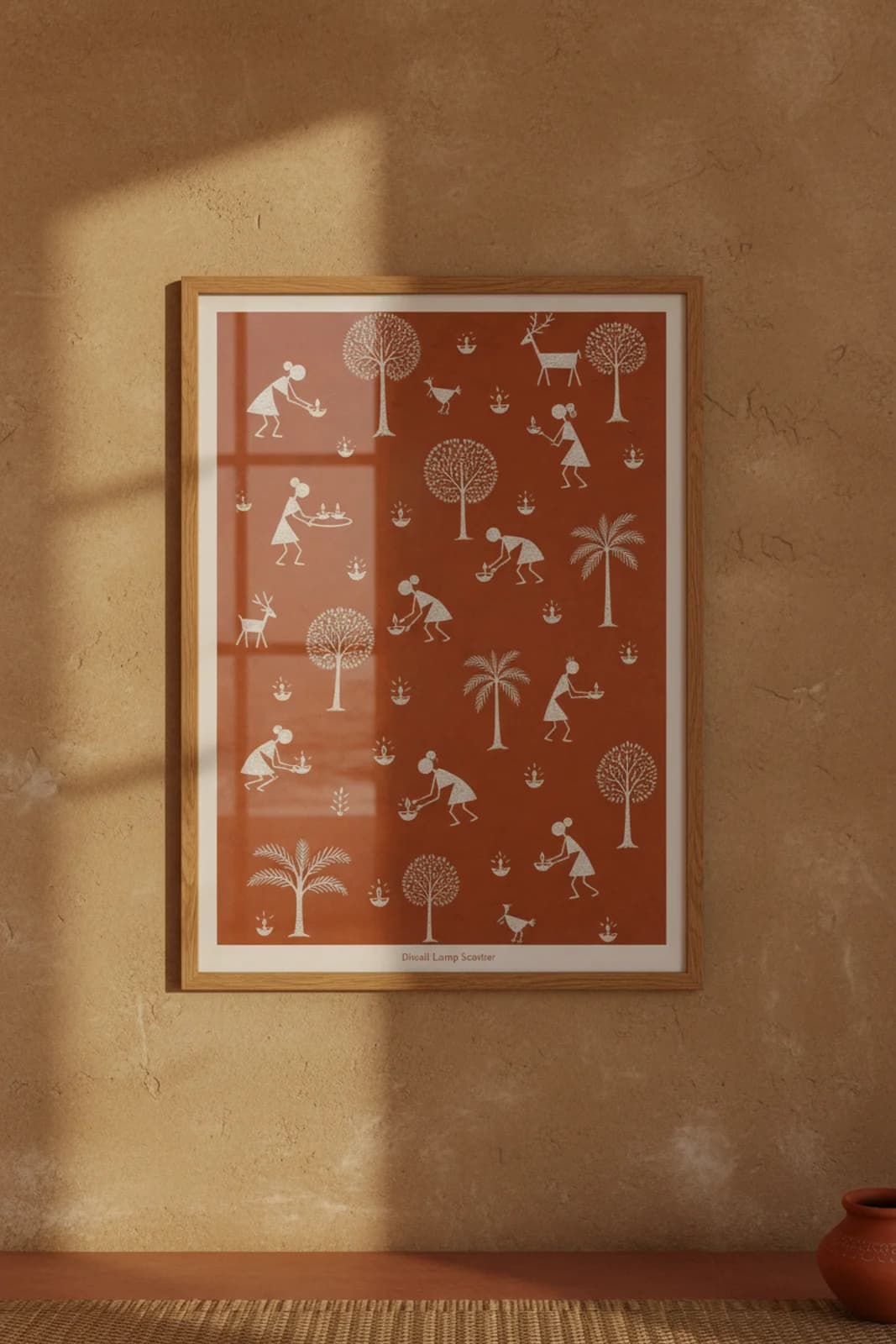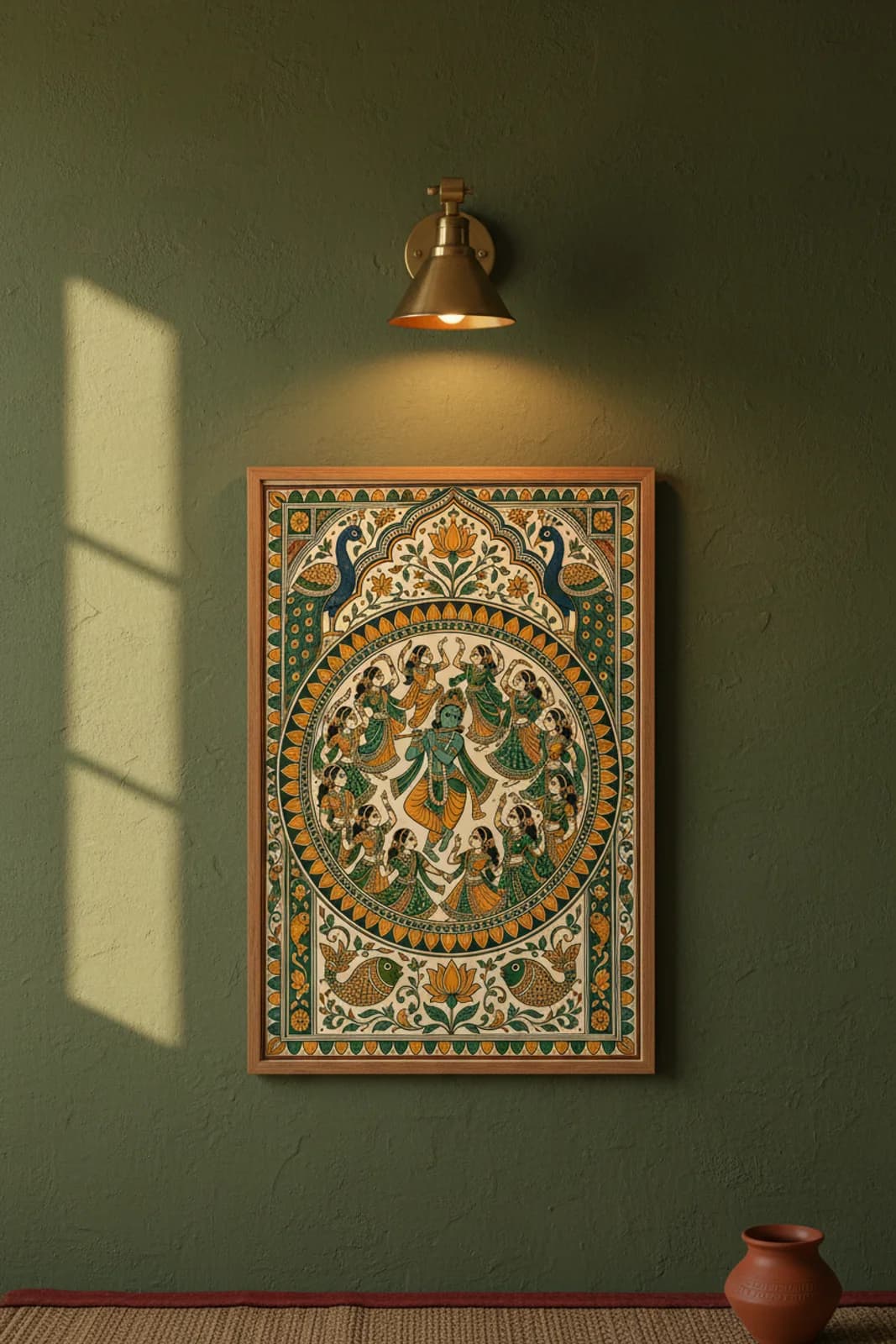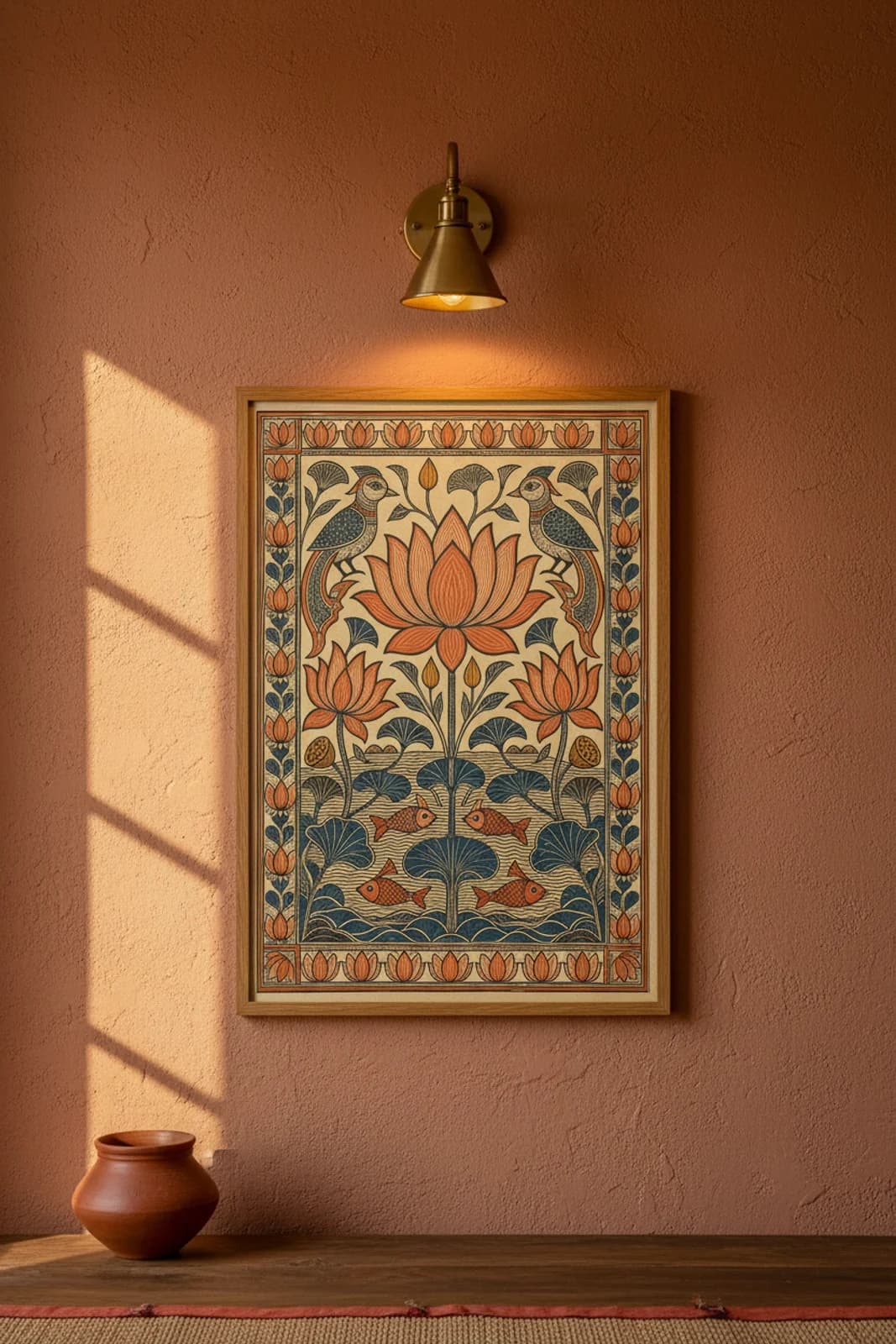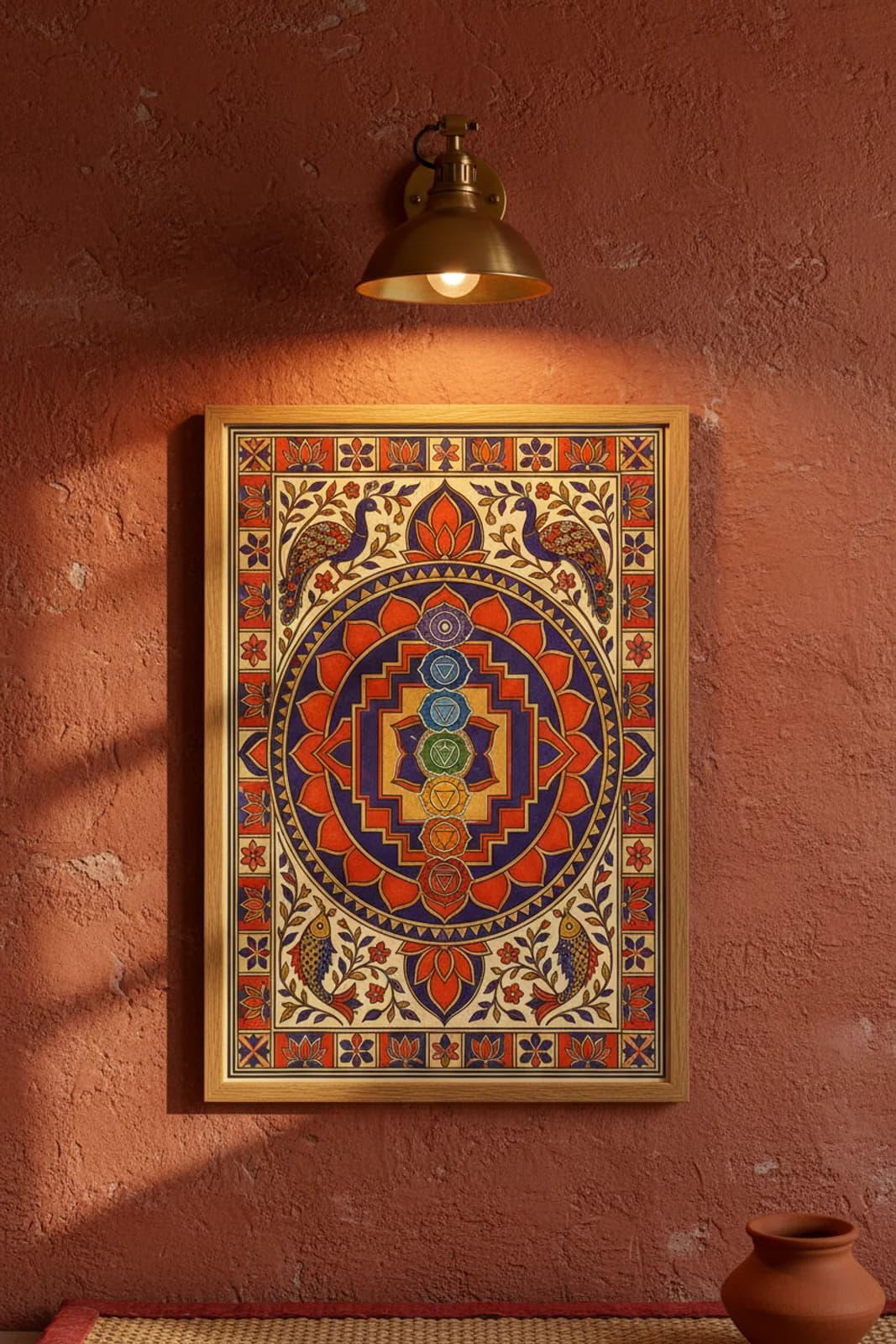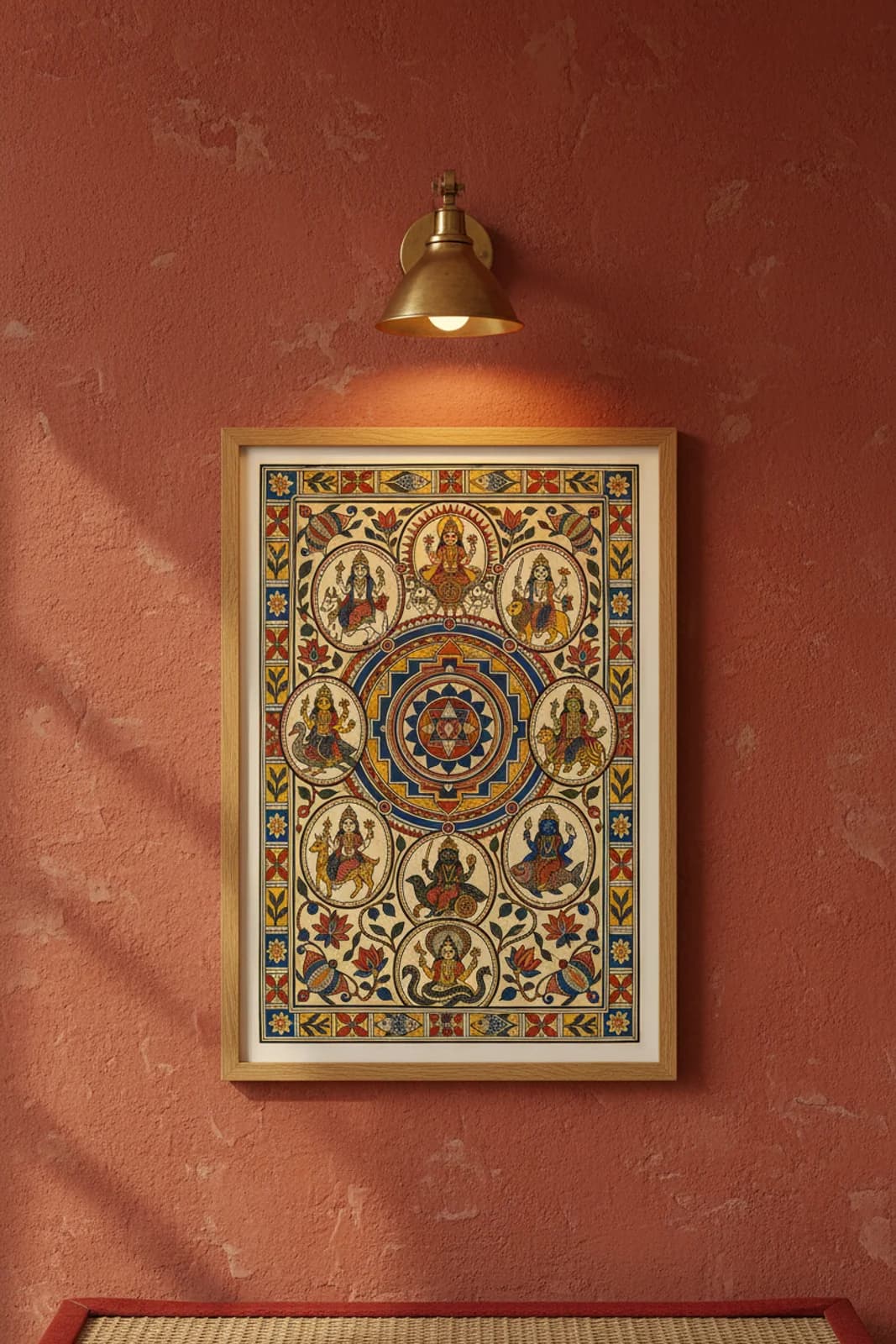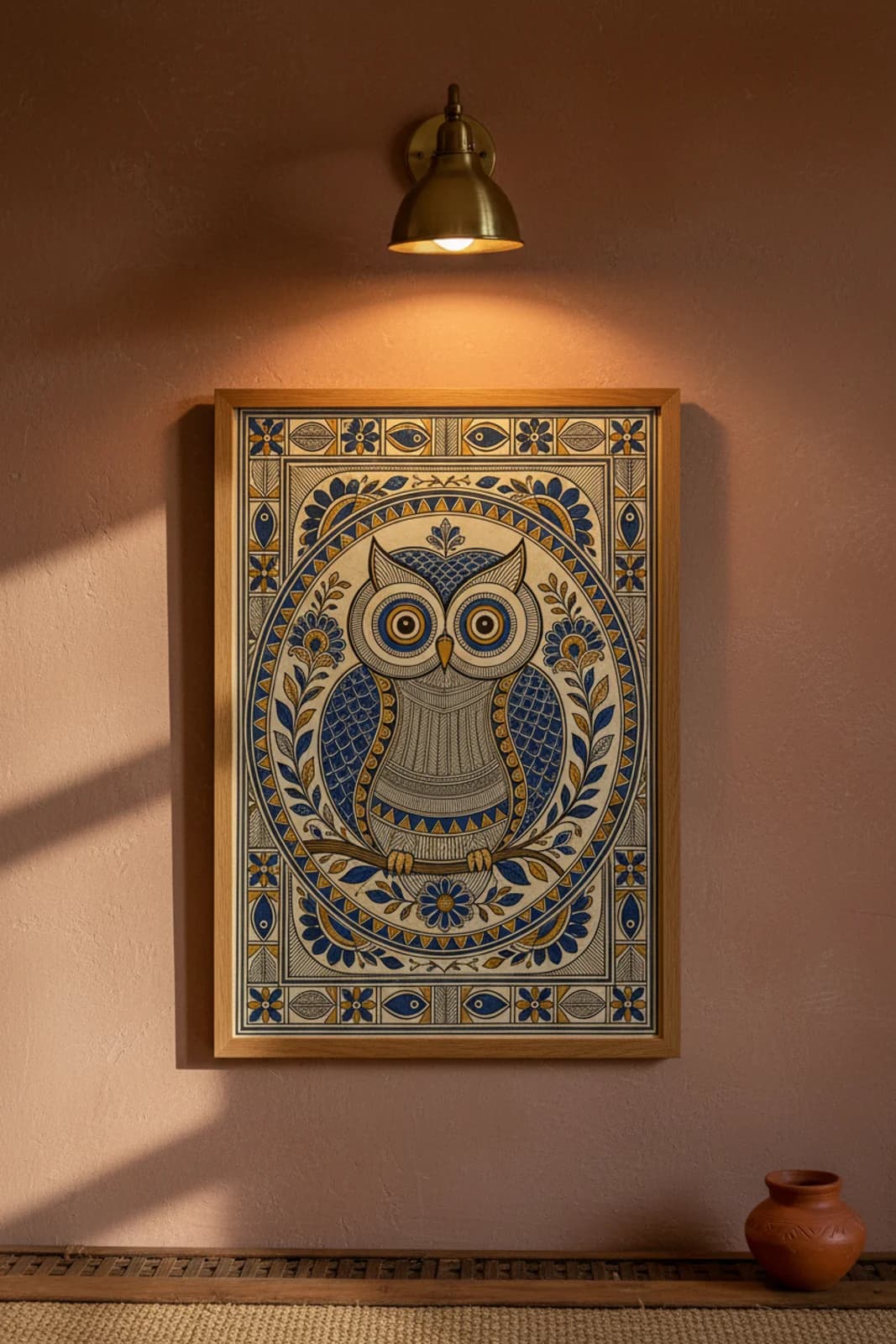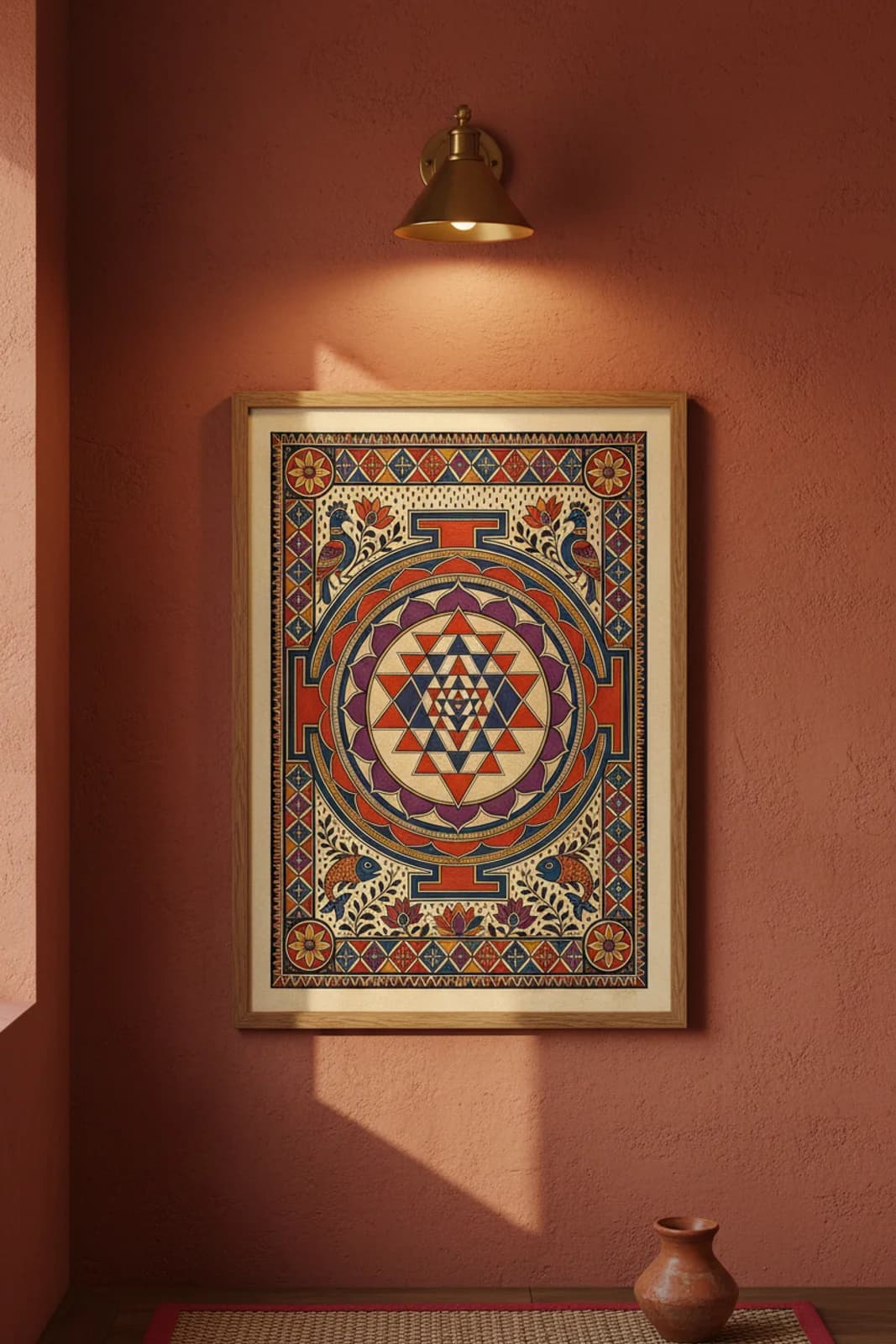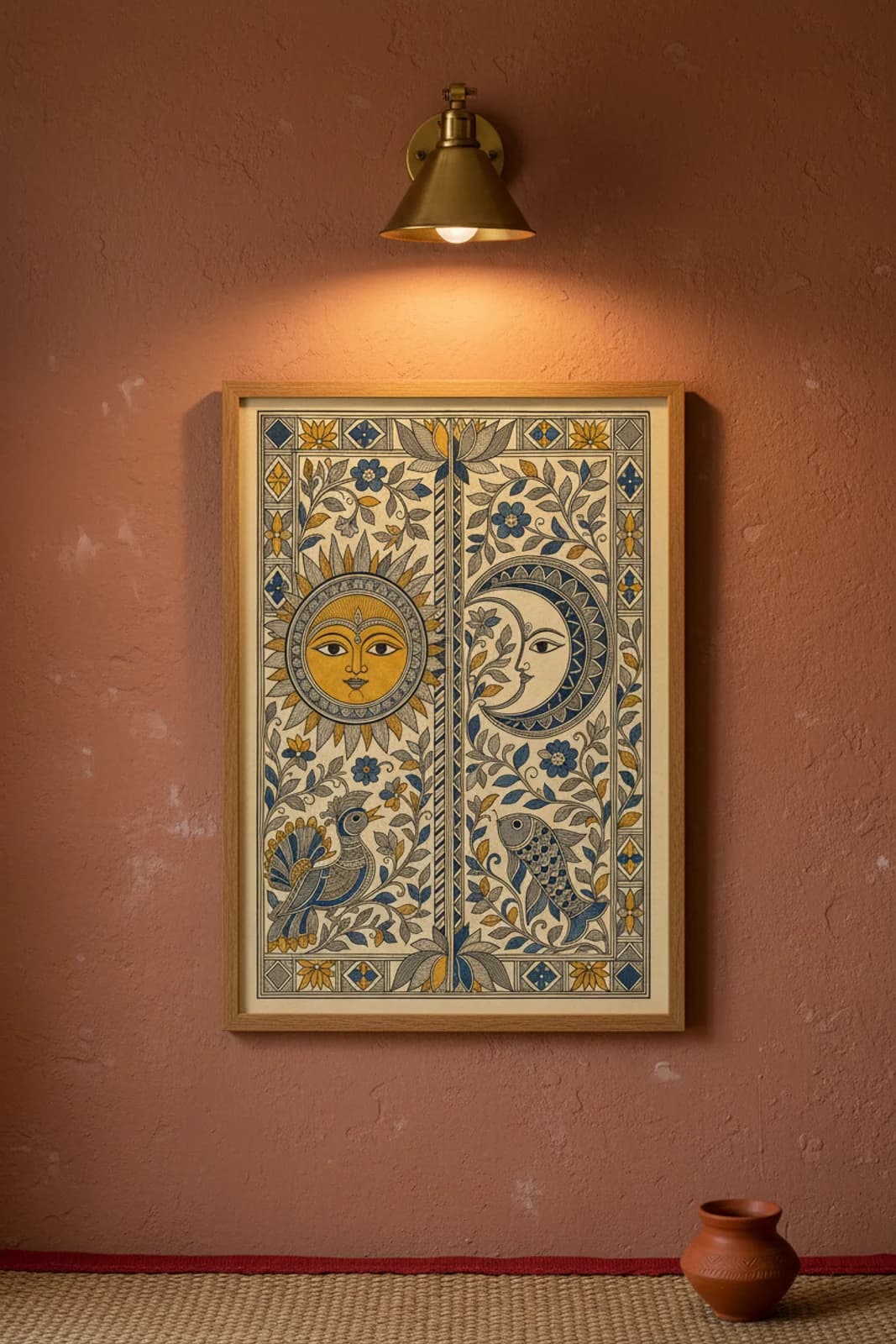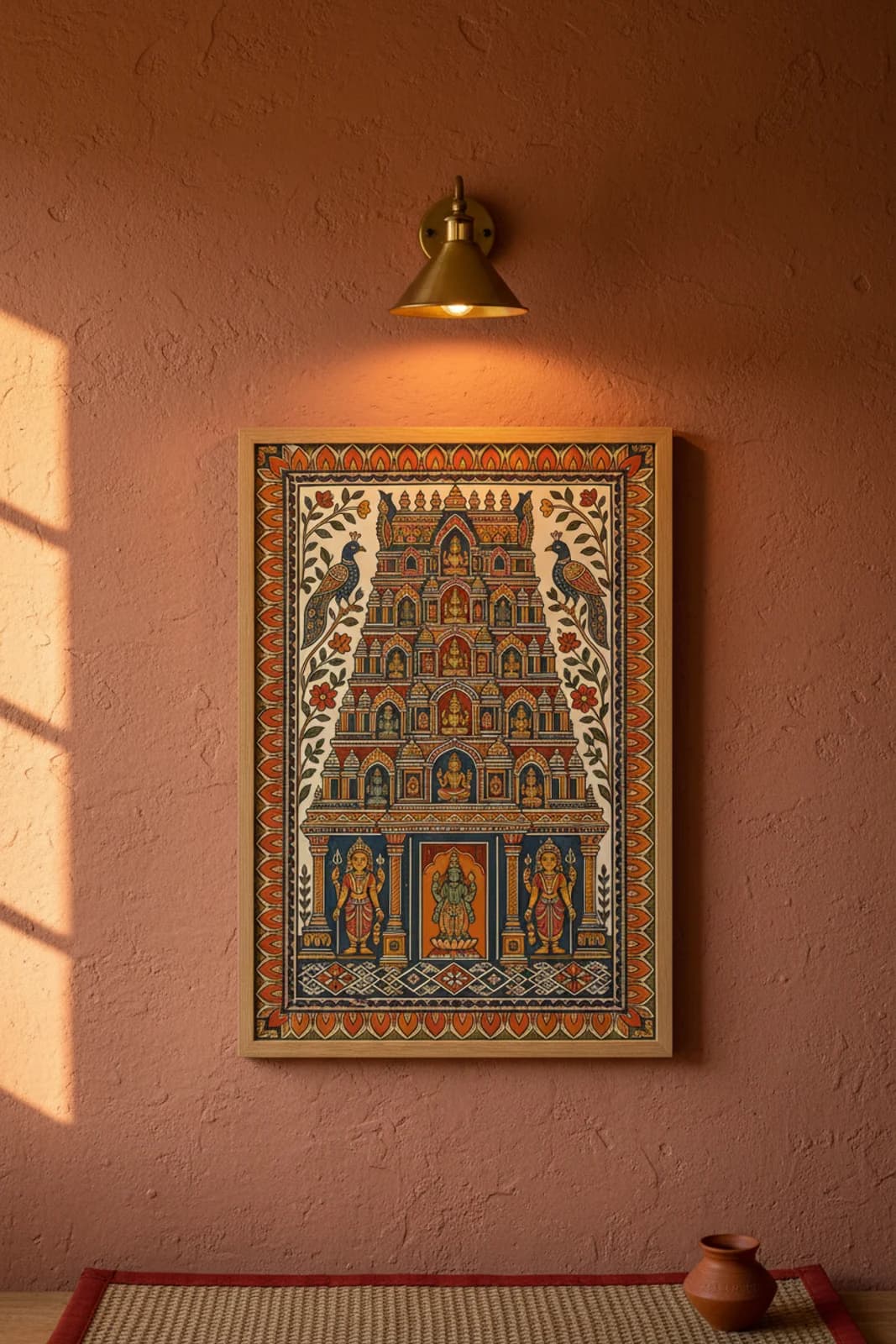
Puja Room — 49 museum-grade prints sized and toned for the room. Bharni — from the Hindi word for filling — is the Madhubani style associated with Brahmin women's ritual wall painting in the Mithila region, distinct from Kayastha Kachni line hatching and Dusadh Godna tattoo dot work. Bharni artists in villages like Jitwarpur and Ranti applied bold flat vermillion, turmeric, indigo, and lampblack within double outlines to depict festival deities, garden birds, and auspicious symbols on cow-dung-washed walls during Saraswati Puja, Durga Puja, and wedding seasons. The gopuram — from Sanskrit gopura, gateway tower — is the monumental pyramidal entrance of Dravidian Hindu temple architecture across Tamil Nadu, Karnataka, Andhra Pradesh, and Kerala, famously exemplified by the polychrome tiers of Madurai Meenakshi Amman Temple and Chennai Kapaleeshwarar Temple. Unlike Nagara shikhara spires of North India, gopurams widen visually through stacked horizontal tiers crowded with stucco deities, mythological figures, and ornamental yali balustrades. Ardhanareeswara — the half-Shiva, half-Parvati form — embodies the inseparability of the masculine and feminine principles, and it is a natural subject for bhitti chitra, Kerala's temple-mural tradition that flourished roughly from the 16th to 19th century and is still painted today. These murals use the panchavarna five-colour system — red, yellow, green, black and white over an ochre ground — in flat opaque fields bounded by a bold lamp-black outline, with the school's elongated lotus-shaped eyes.

$49

$49

$49


$49


$49

$49


$49