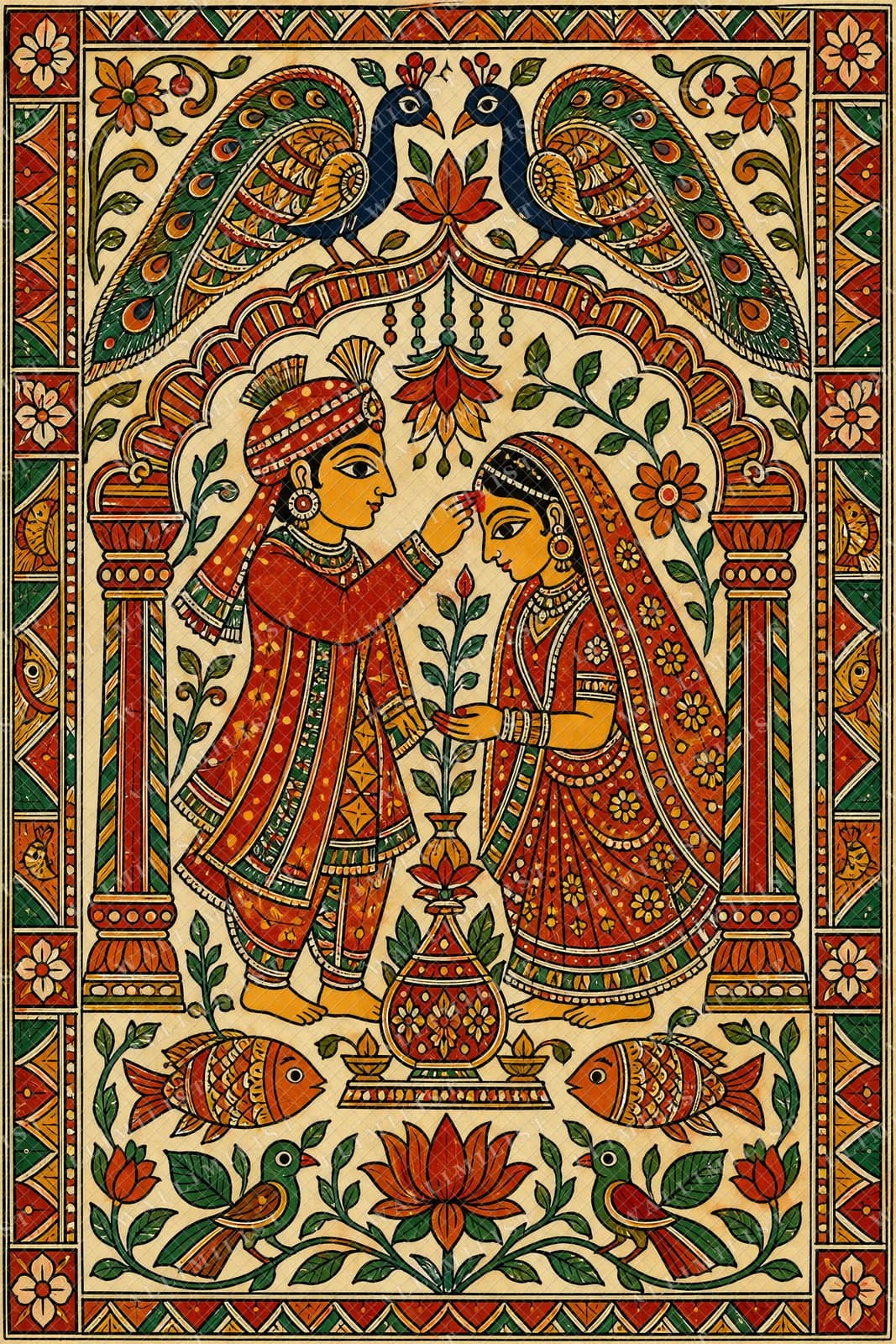
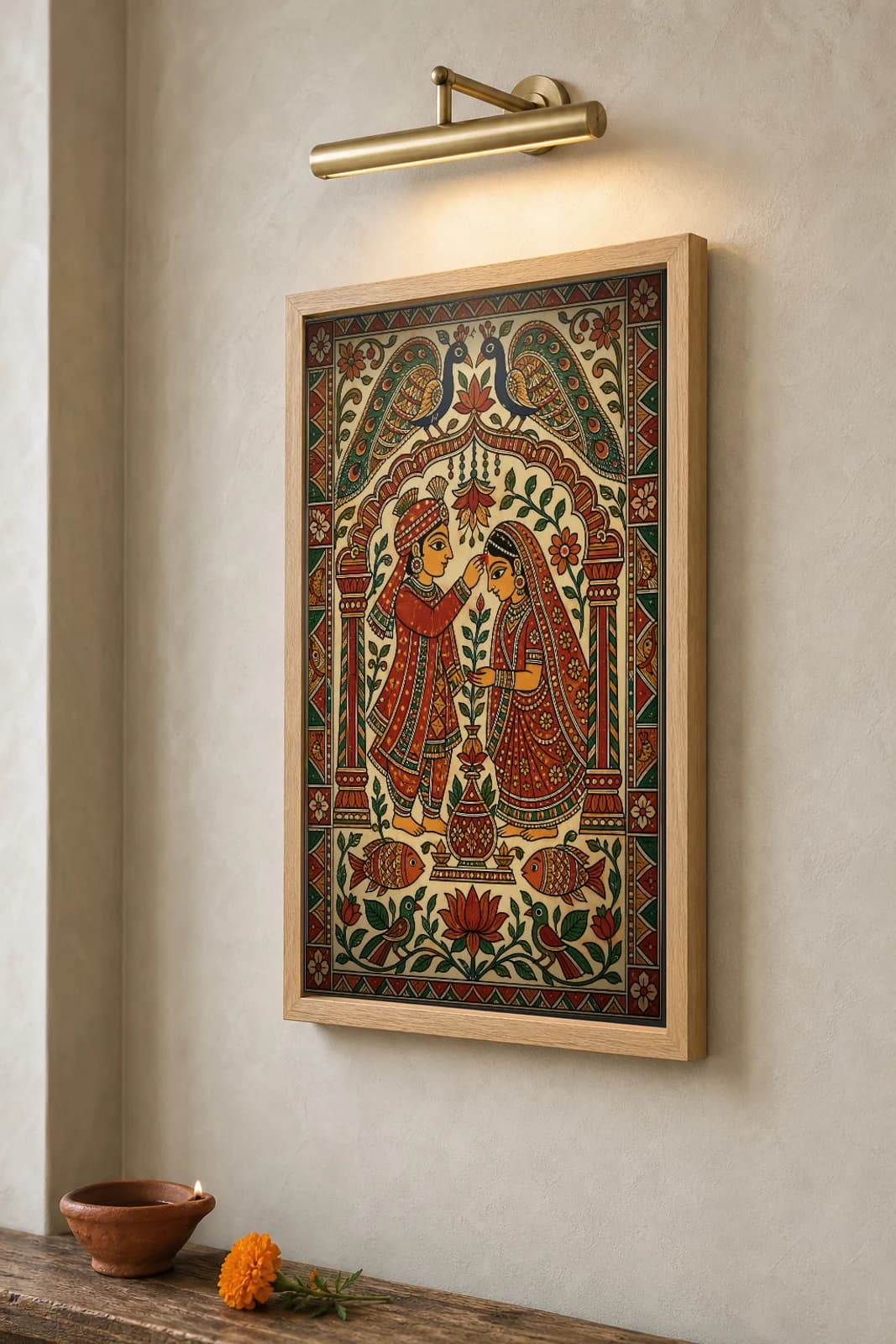
DESIGN BRIEF: Kohbar wedding walls usually begin with a sindoor bindu at the centre — tip lagavaichi, placed by an ahibati married woman before any lotus or naga is drawn. This panel inverts the hierarchy for print legibility: the human sindoor-daan moment becomes the narrative spine, and the bindu grammar lives in the groom's fingertip instead of an abstract wall dot. Vertical-bilateral symmetry solves the layout problem asymmetric procession scenes dodge — groom left, bride right, shared torana arch above, so the eye reads ritual action first and symbolic fauna second, the way a kohbar ghar visitor would scan the chamber wall top to bottom. I kept fill density brutal — Bharni flat colour with Kachni hatch in every interstitial — because authentic wedding-wall Kohbar leaves no cream breathing room; empty ground would read like an unfinished chamber, not a blessing. Peacocks crown the arch as romance guardians; fish and parrots anchor the base the way Pushpavatika panels place pond-life witnesses to union; the kalash between the couple holds abundance without needing a full deity tableau. The triangle outer border echoes aripana threshold geometry without importing floor-art white paste — red and green teeth pointing inward so the panel feels like a doorway you step through.
 WALLIMILIST