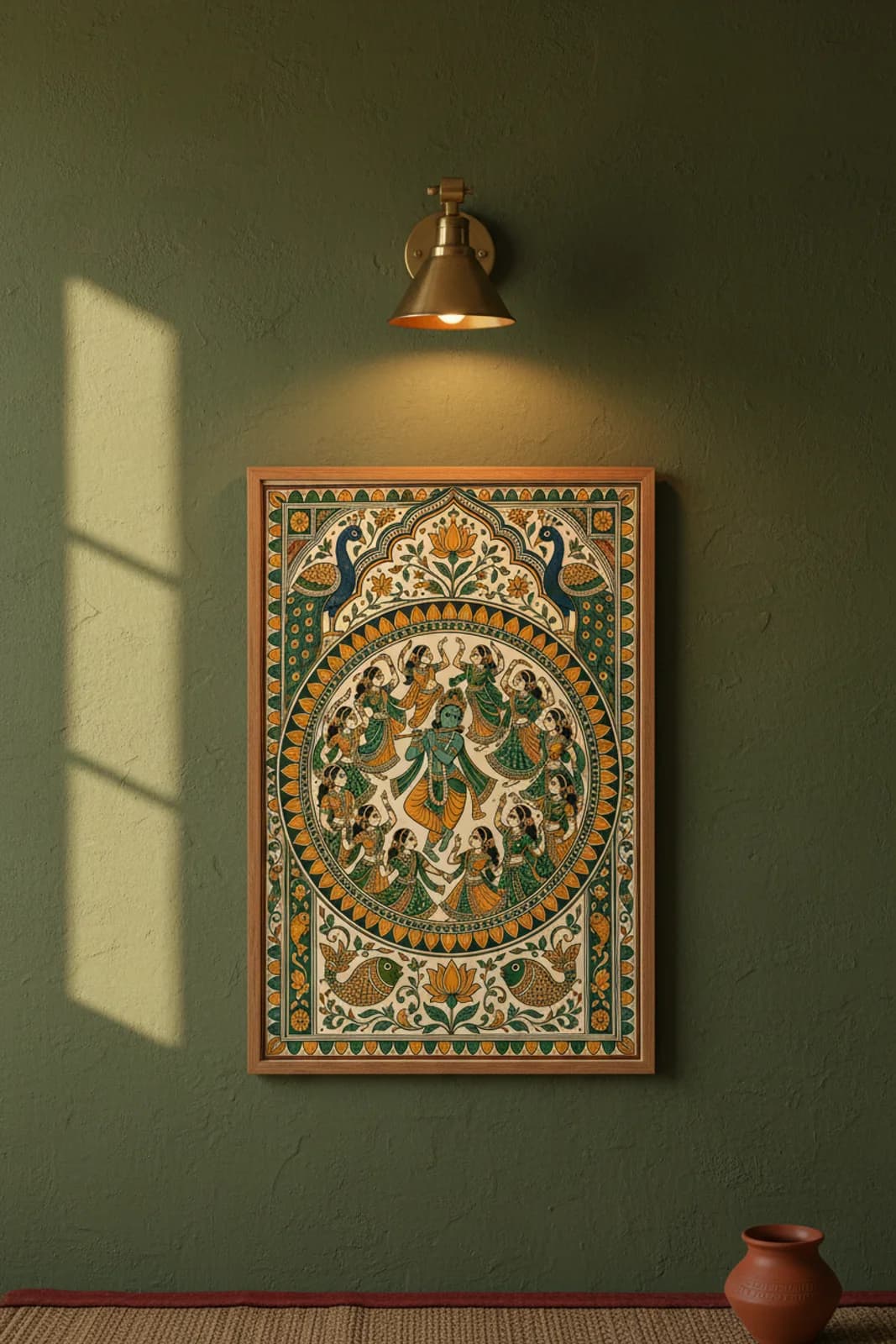
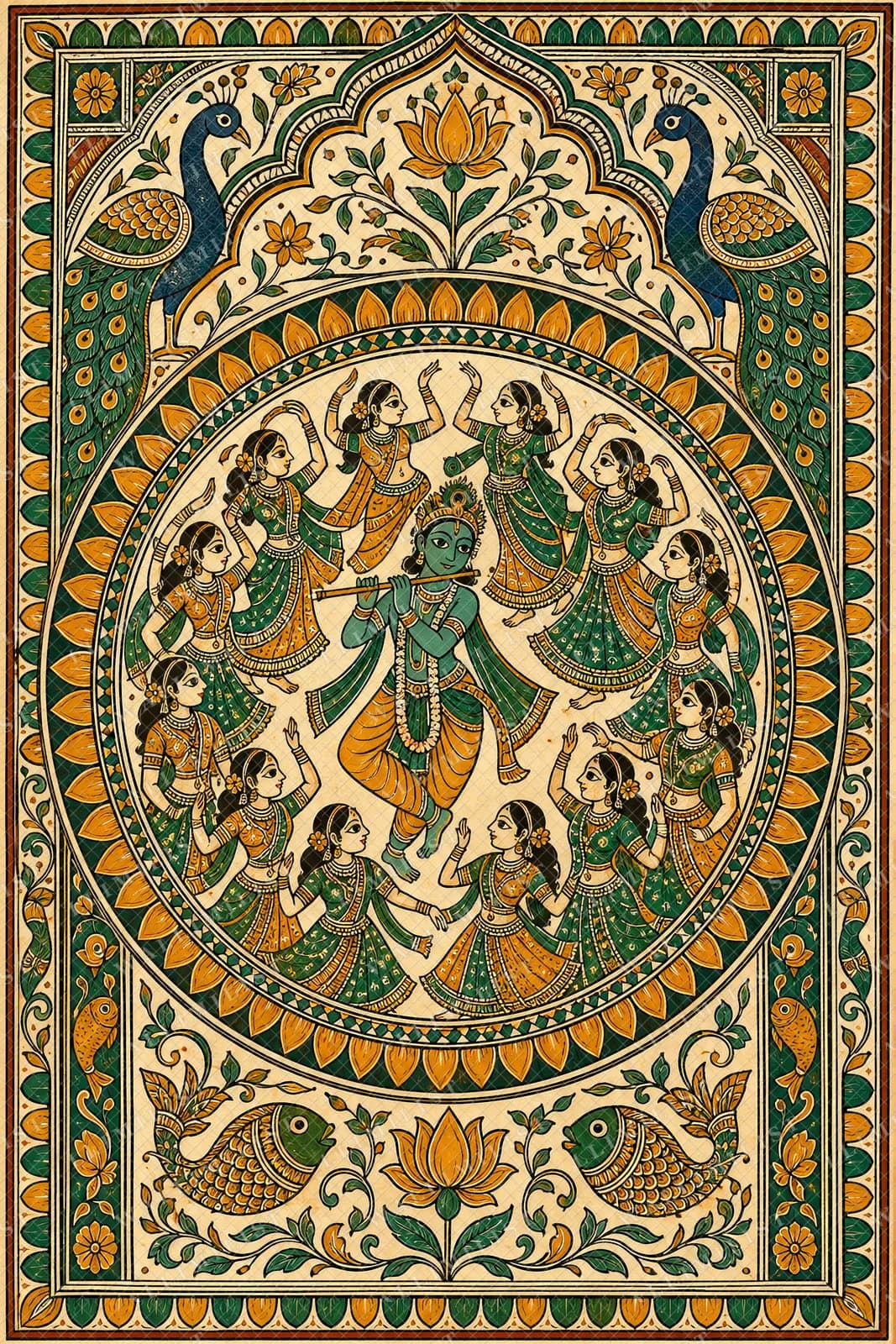
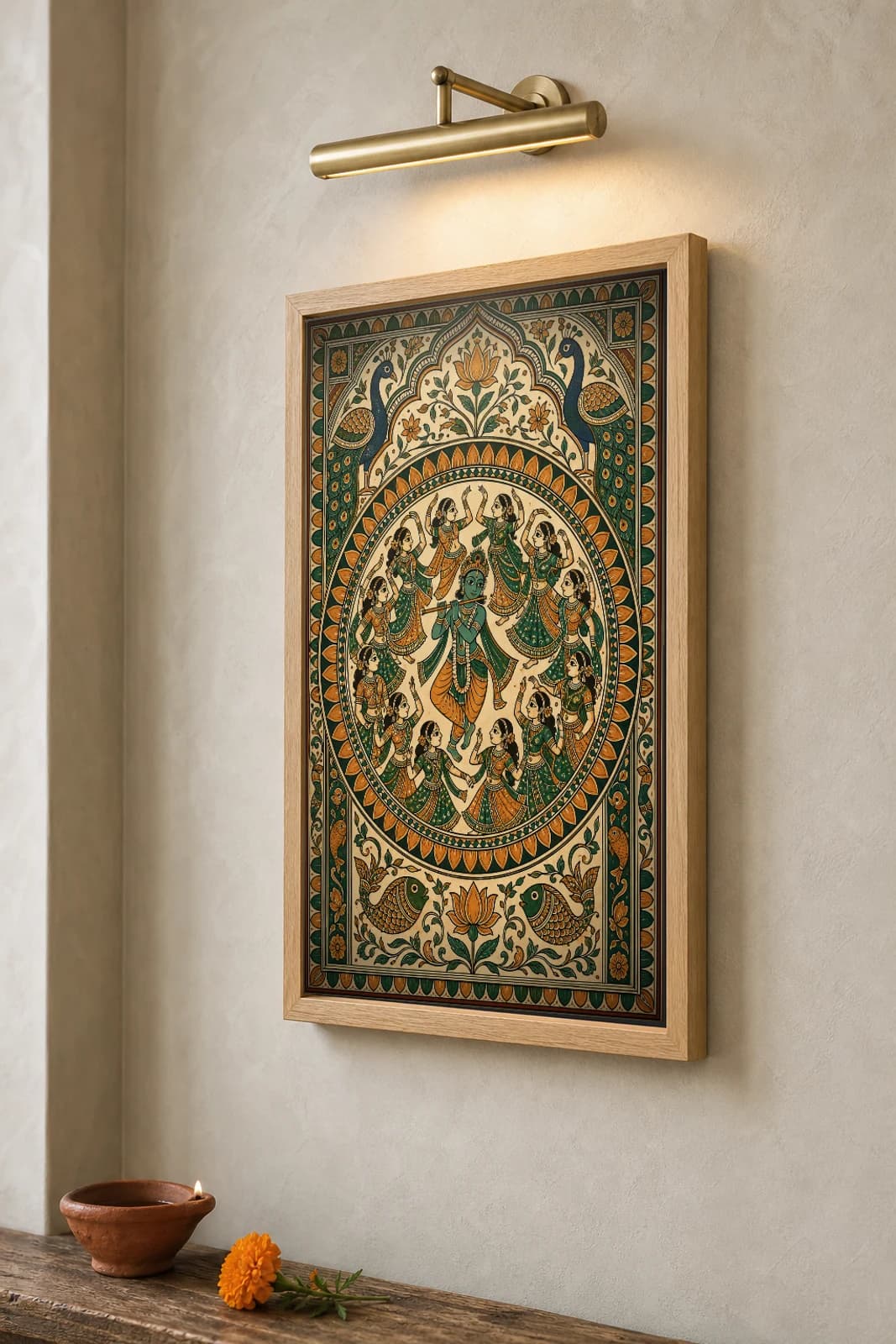
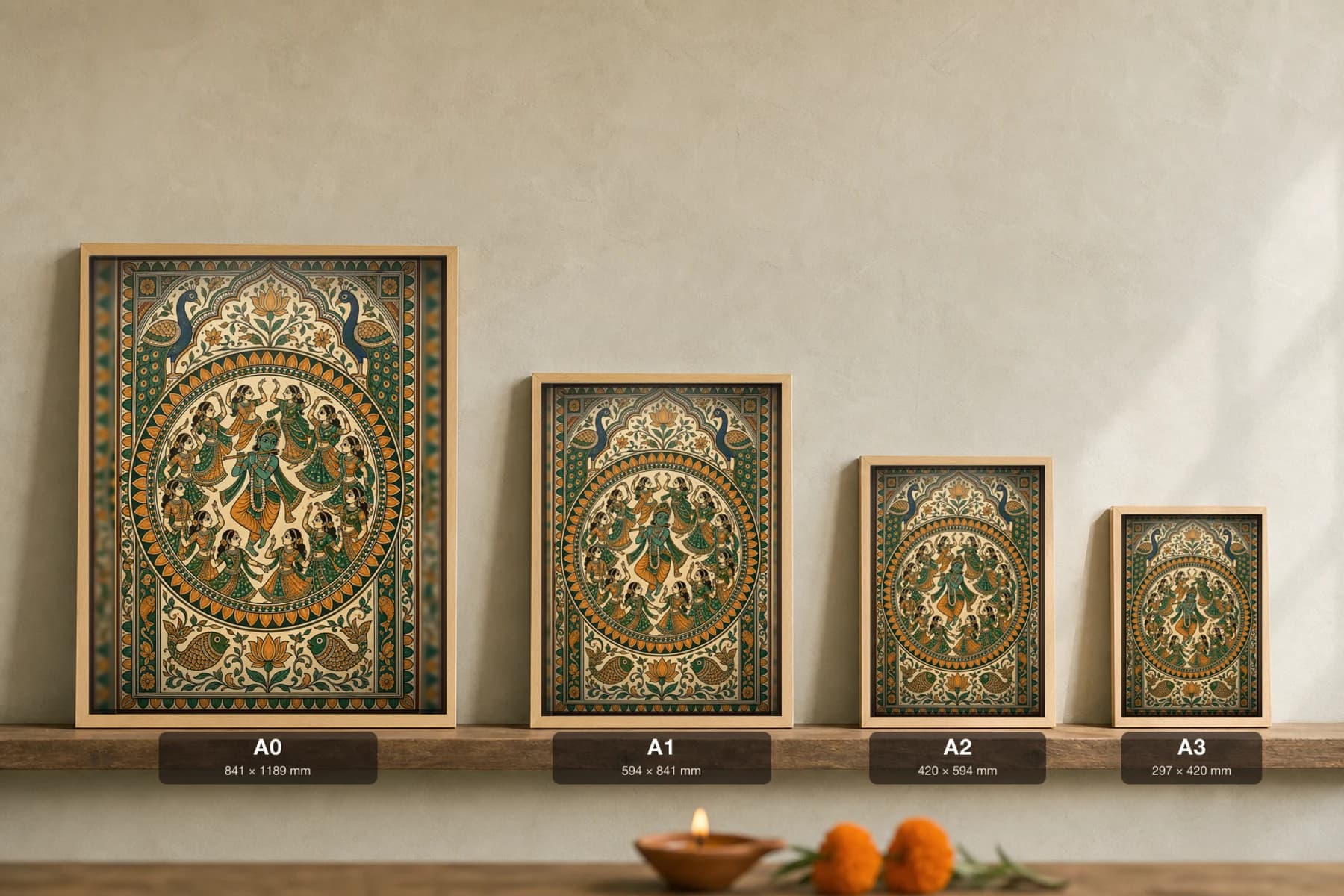
DESIGN BRIEF: Rasa Lila on a wall has to read as orbit, not crowd — if the gopis stack like a catalogue page, the dance loses its Braj mandala logic. Radial-mandala symmetry solves that: Krishna stays at the bindu, bansuri horizontal, legs crossed in the folk dance stance Darbhanga Bharni panels use on ritual walls, and twelve gopis divide the ring evenly so each silhouette mirrors its opposite without breaking the circle. I chose dense Bharni fill rather than Kachni line because Rasa scenes on wedding and festival walls were always colour-mass compositions — green and mustard lehenga alternation gives rhythm around the ring the way alternating petal colours give rhythm on a Kohbar lotus band. The peacock arch above borrows standard Mithila threshold grammar — indigo birds facing inward toward a shared lotus apex — without importing a separate narrative panel; it simply crowns the dance the way temple arches crown deity fields. Matsya fish and lotus at the base anchor fertility symbolism common to Mithila floor and wall borders, balancing the peacock crown. Side-panel fish repeats keep the vertical axis from floating empty between medallion and outer marigold border. Horror vacui packing on cream ground is deliberate — classical Darbhanga Bharni treats unfilled parchment as unfinished work.
 WALLIMILIST