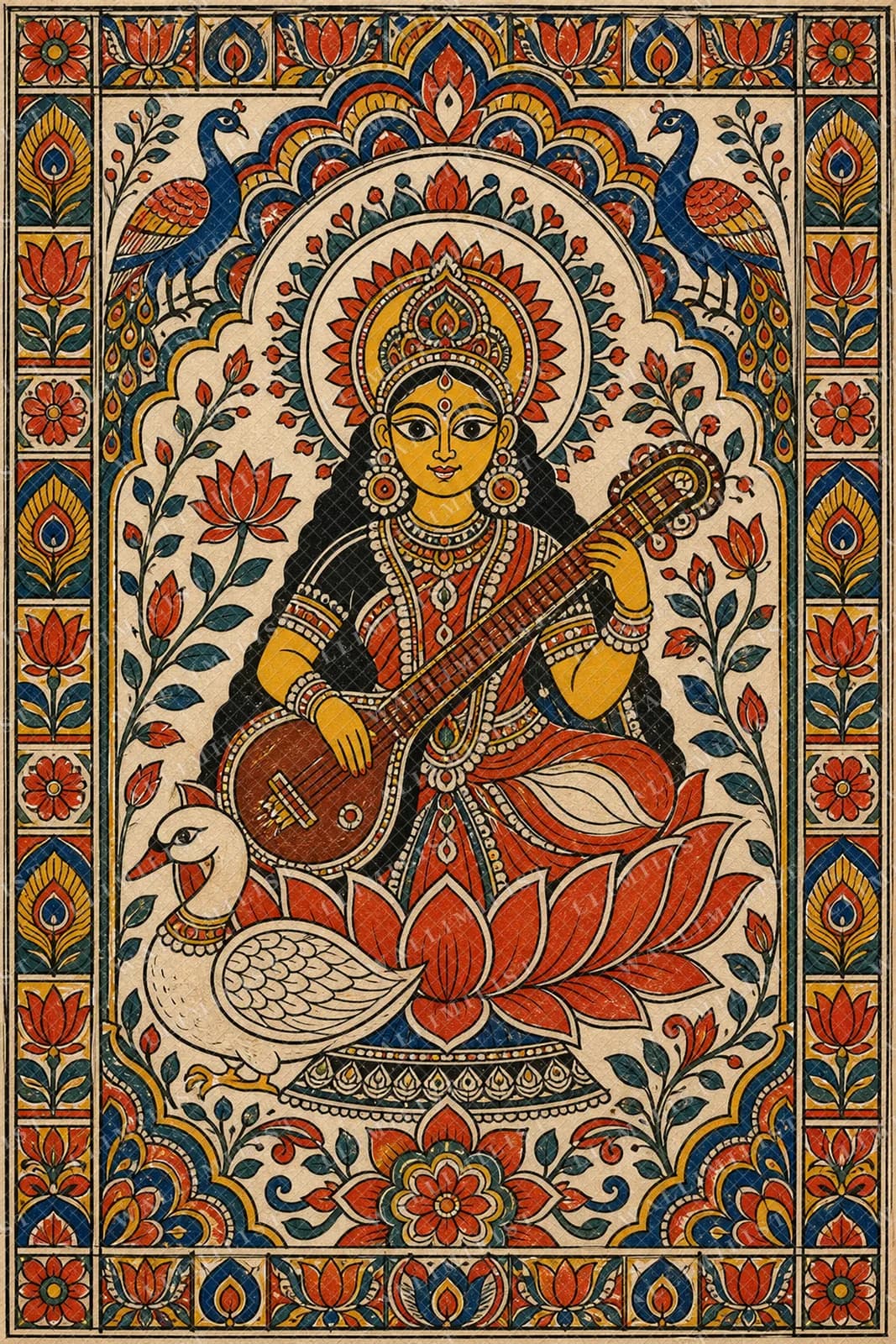
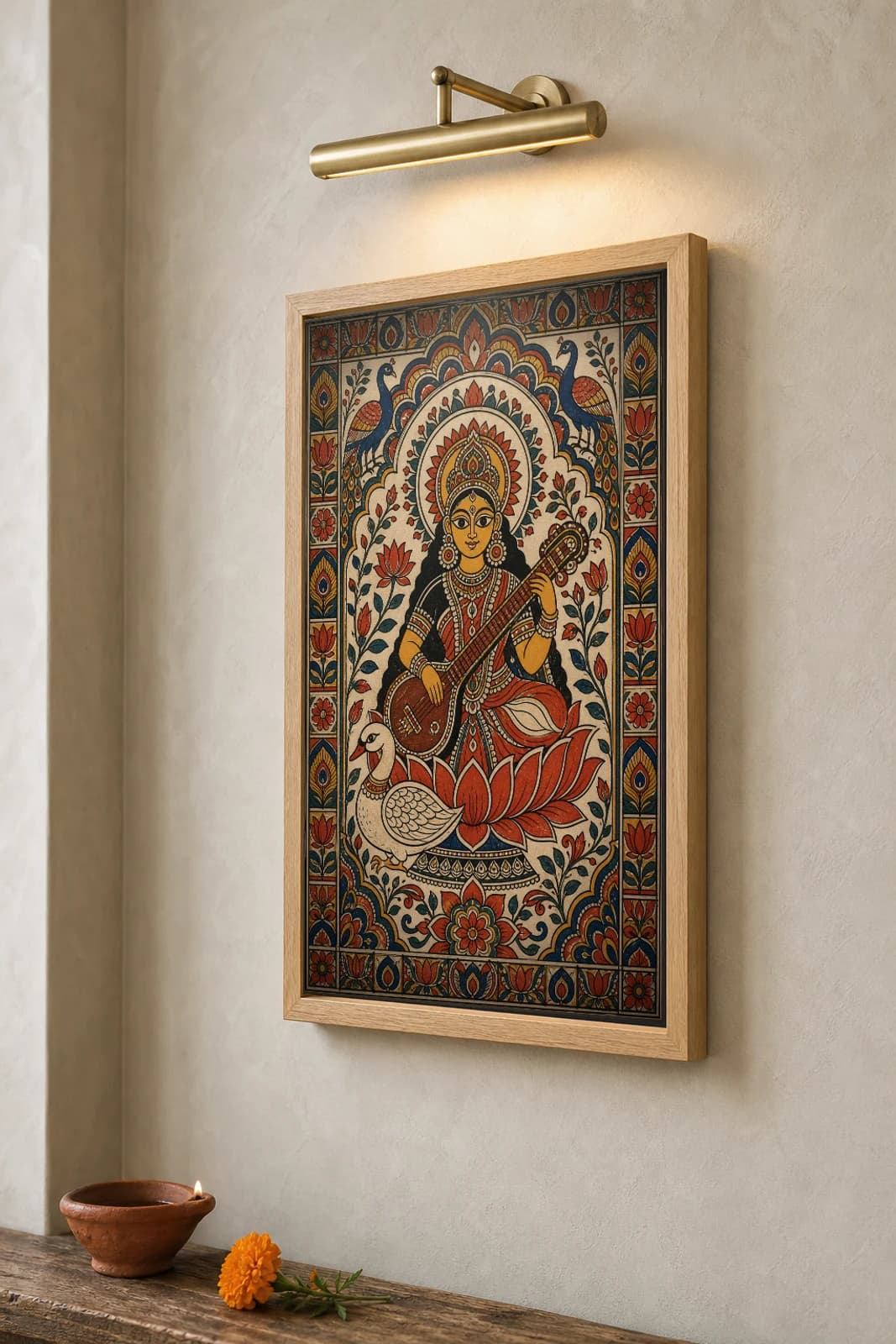
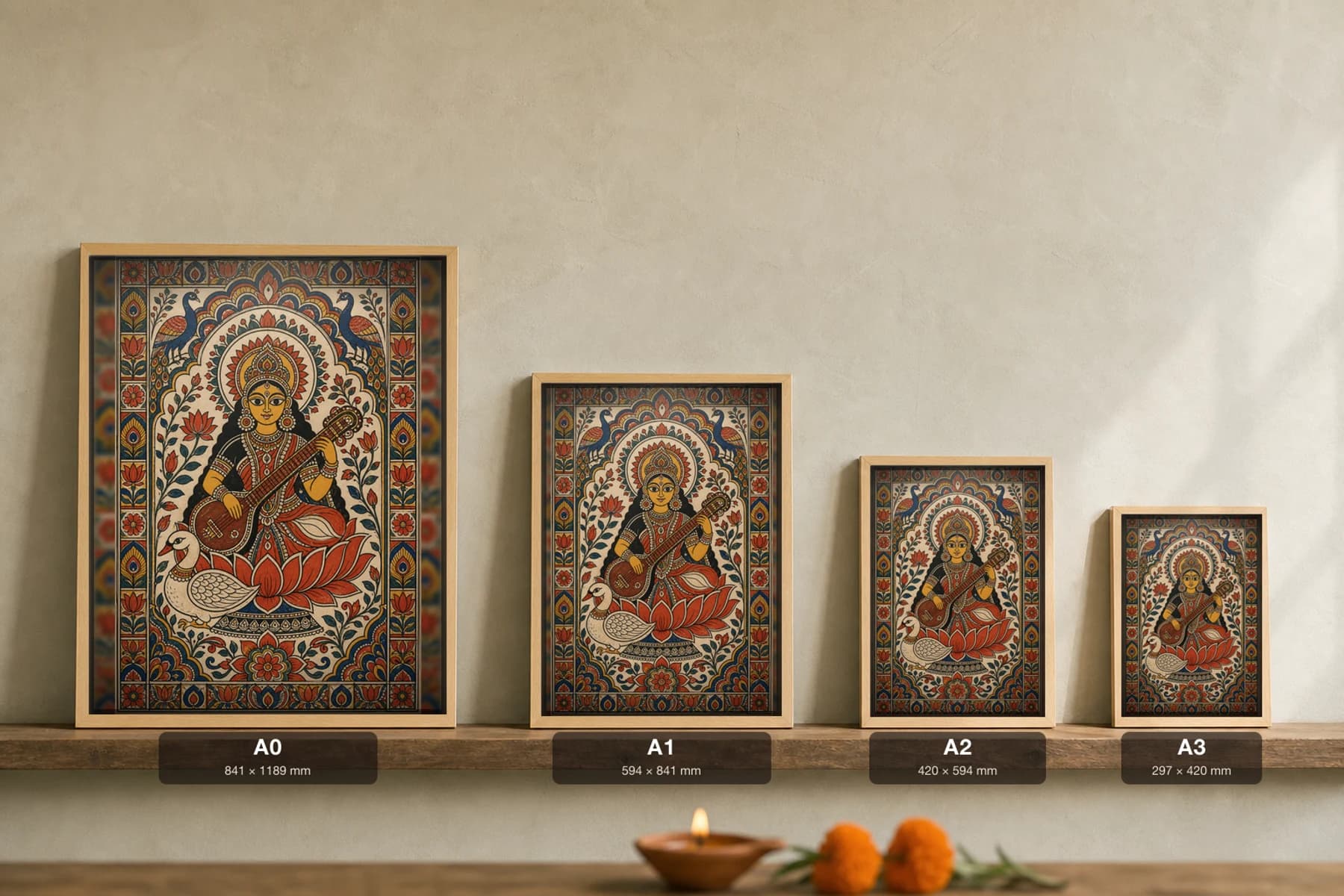
DESIGN BRIEF: Bharni deity panels fail when the figure floats in empty cream — Saraswati needs saturated flat fill so the veena, halo, and crown read as one devotional stack, not a line drawing waiting for colour. Vertical-bilateral symmetry solves the layout problem: the goddess sits dead-centre on her lotus throne while peacocks mirror in the upper corners and twin lotus blooms flank her waist, so the eye travels up through instrument to halo without drifting sideways. I placed the hamsa swan at bottom-left rather than centred beneath her feet because Ranti Bharni panels often tuck the vahana to one side when the lotus seat already anchors the base — the swan still reads as her vehicle without competing with the bilateral lotus pair. The pointed arch with scalloped scale infill borrows wedding-chamber torana grammar without importing full Kohbar narrative; it simply frames the deity the way a puja alcove frames a murti. Peacock corner guardians echo Mithila garden panels — rain-birds facing inward toward the knowledge goddess — while the outer square-panel border alternates lotus flowers and peacock-eye cells so the frame carries the same vermillion-cobalt-turmeric palette as the figure field.
 WALLIMILIST