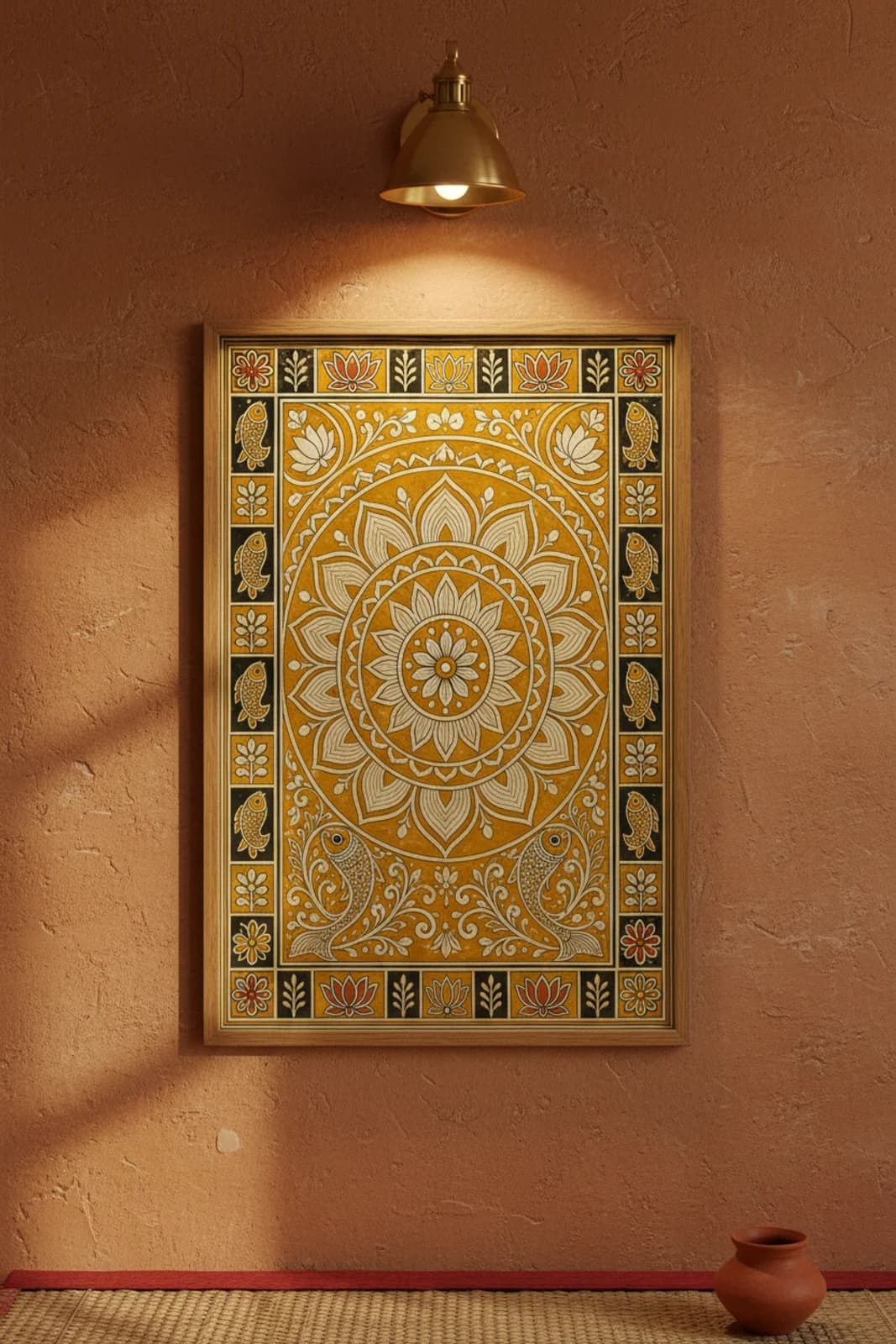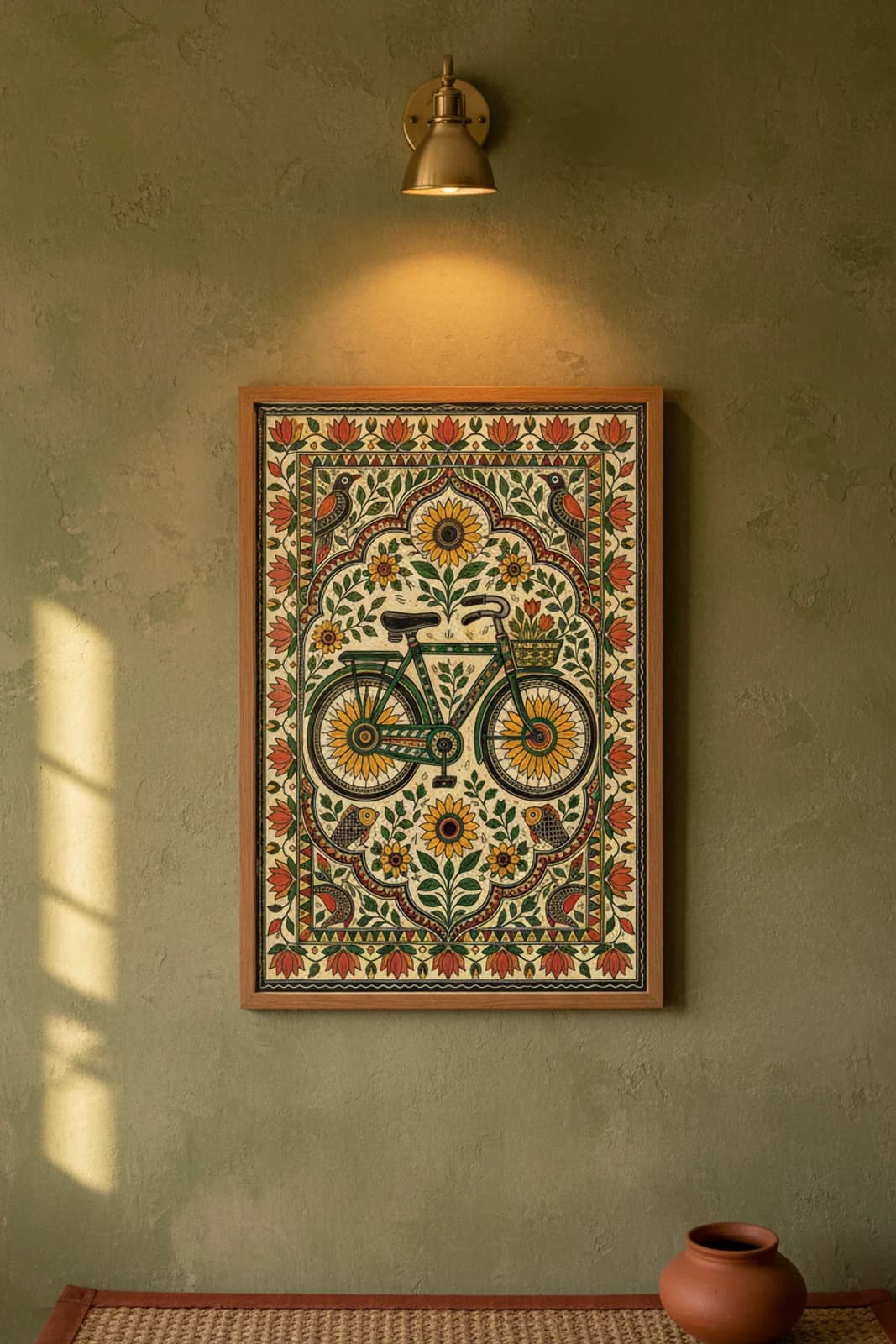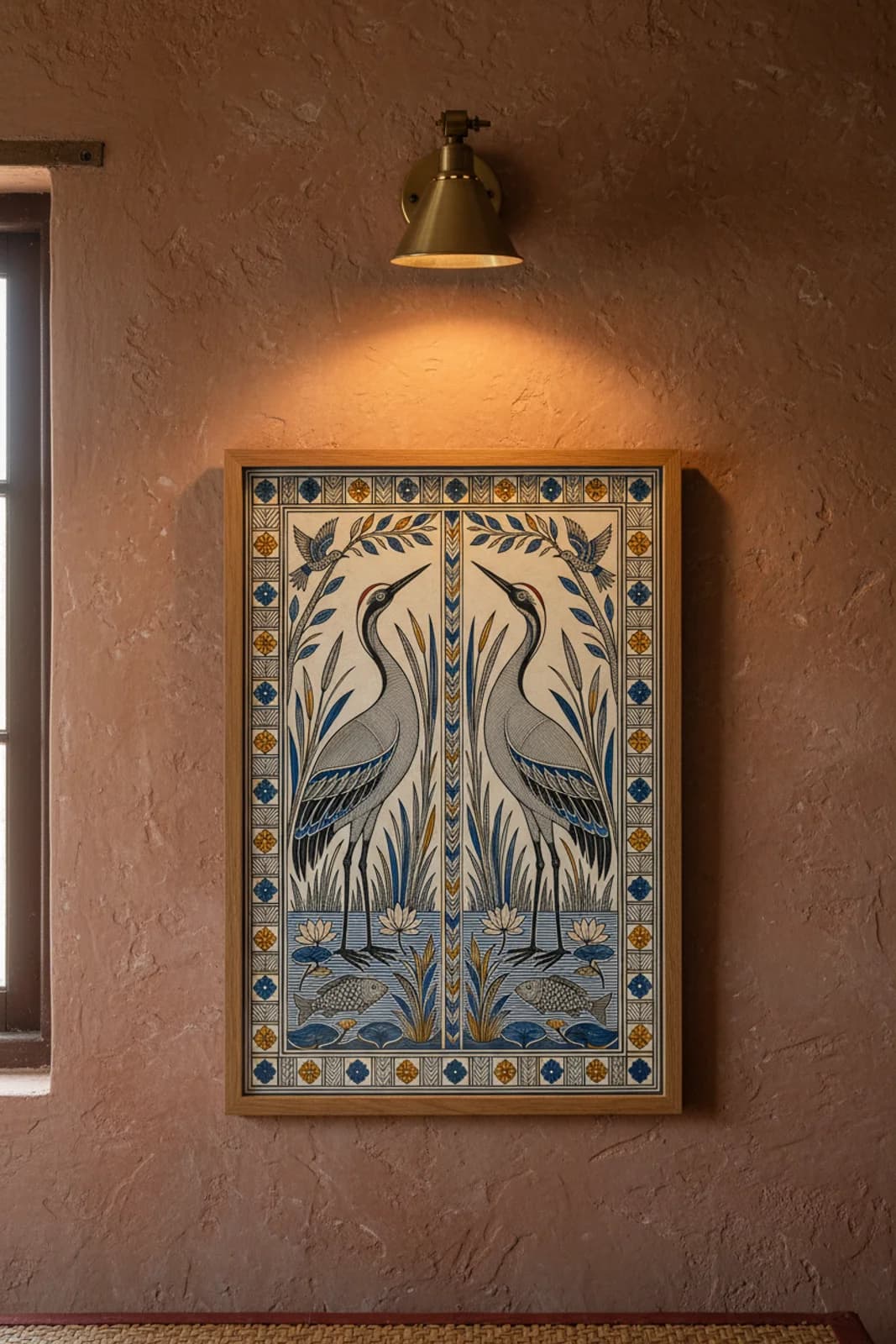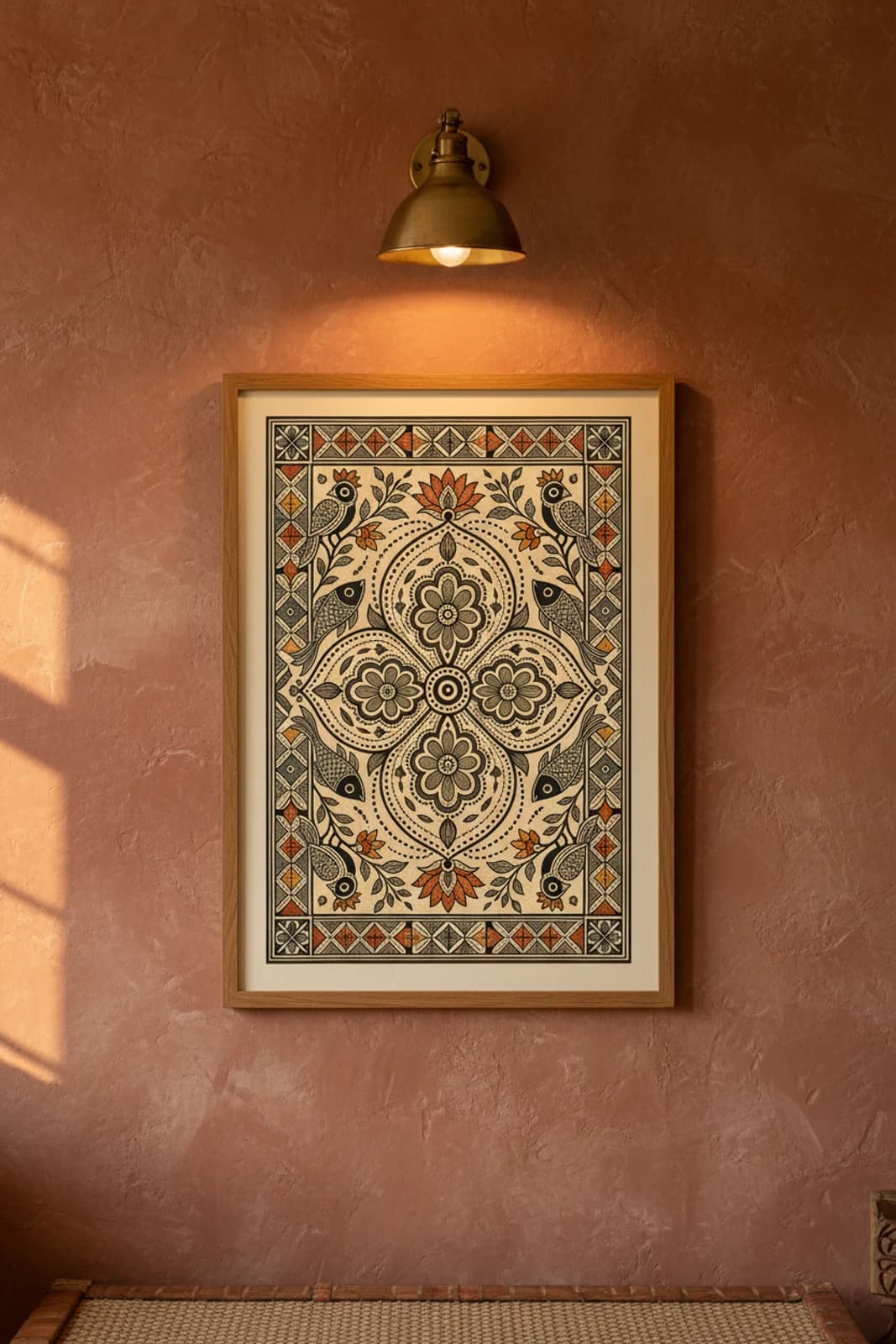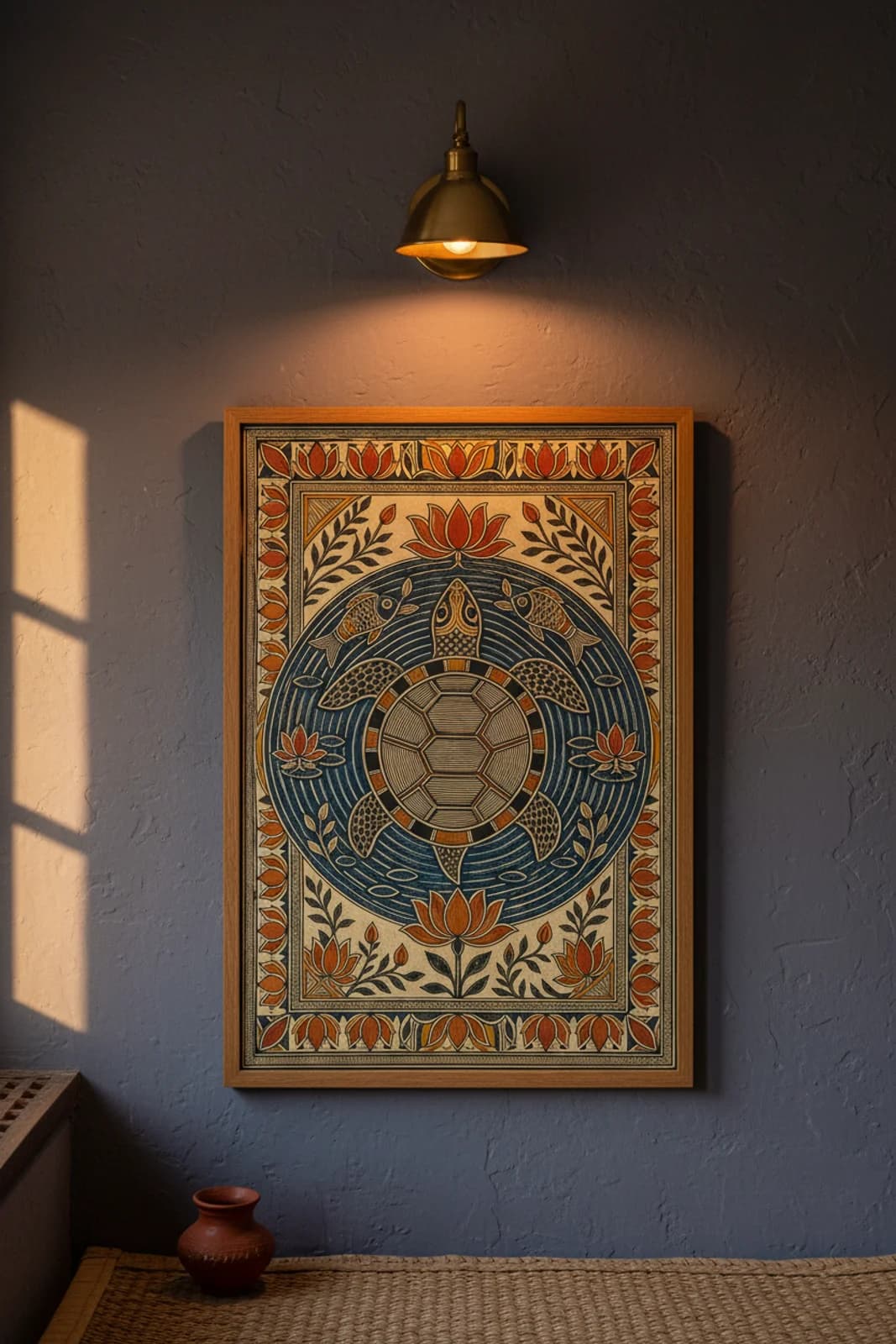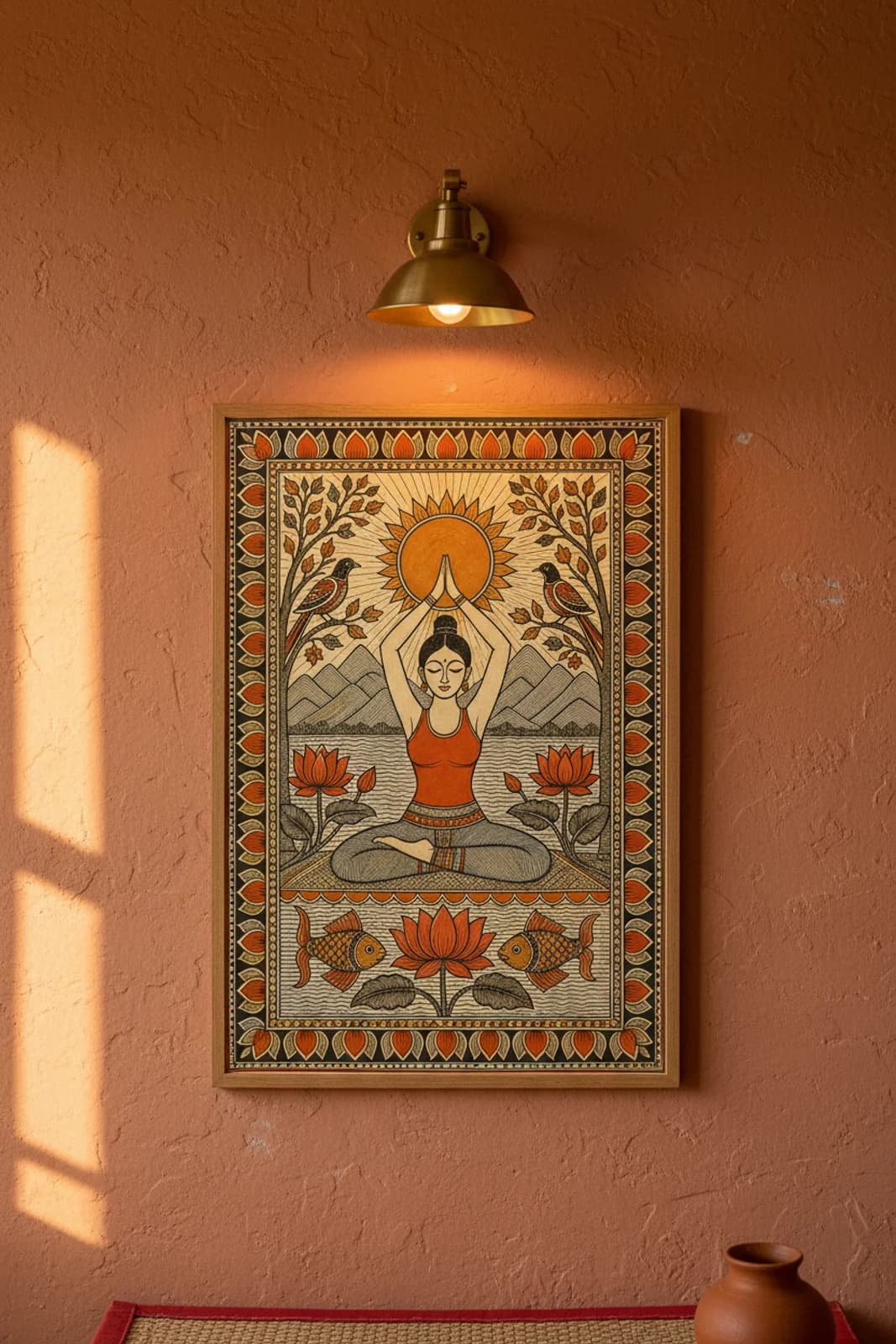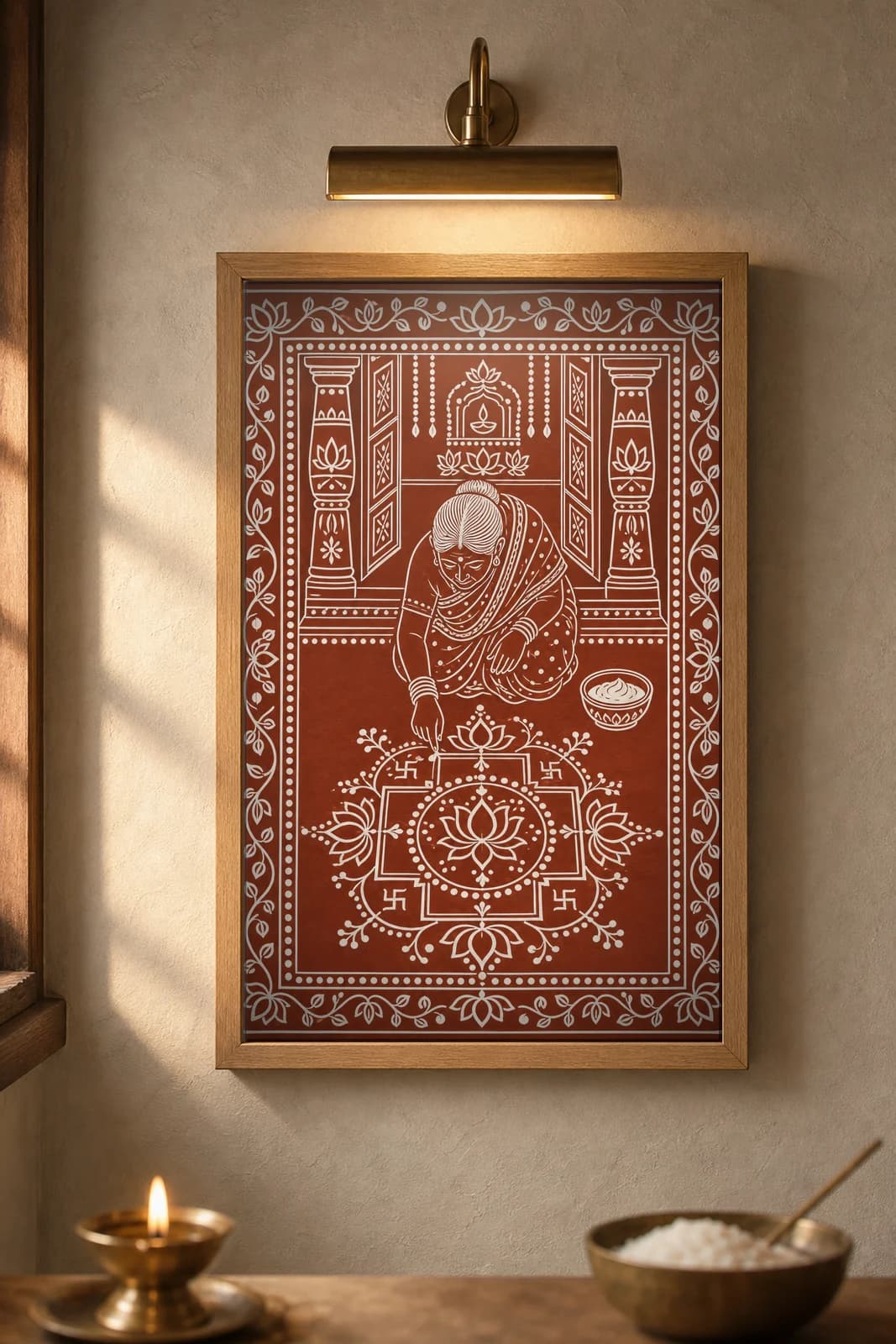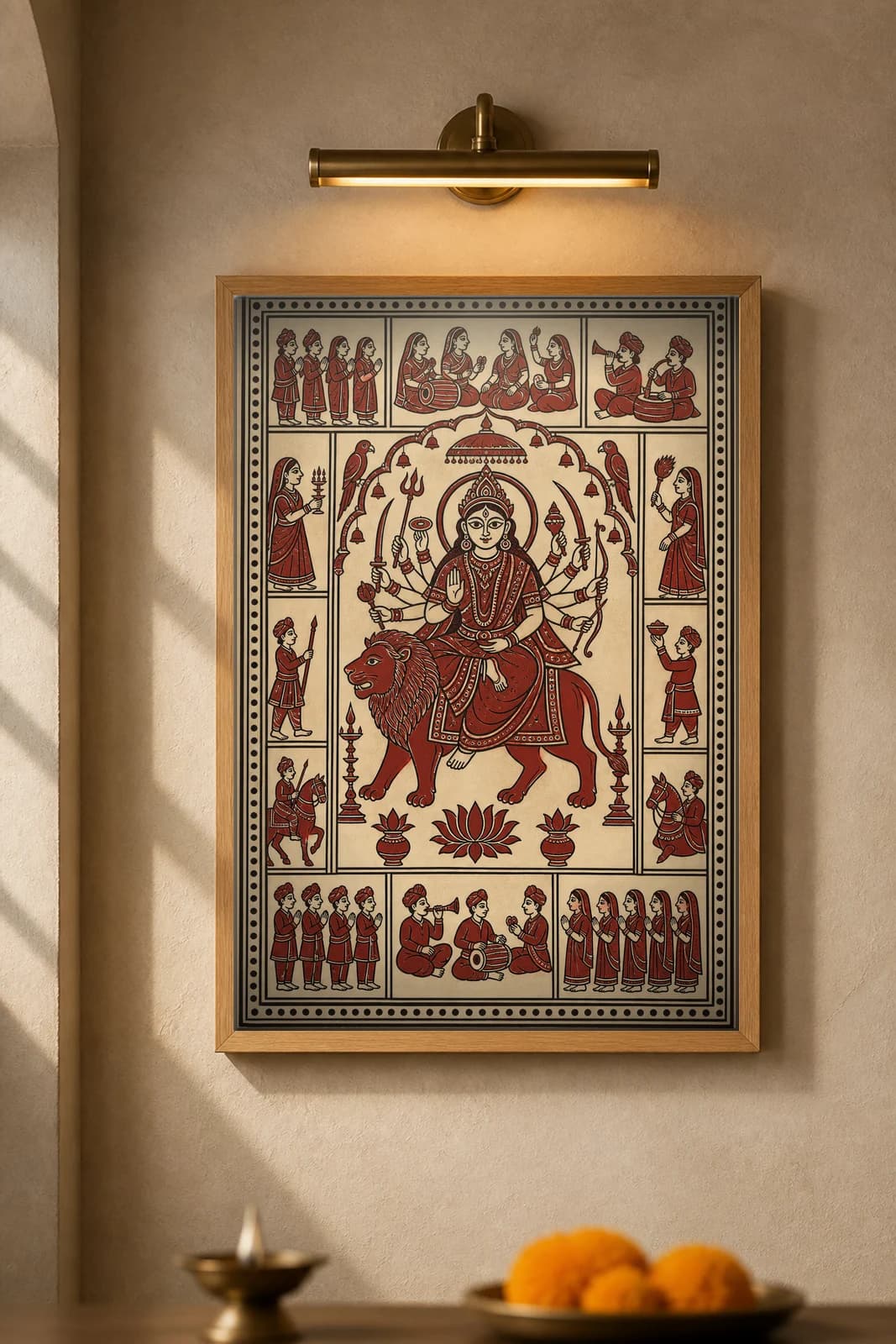
Puja Nook — 239 museum-grade prints sized and toned for the room. Aipan is the ritual floor- and wall-art of the Kumaon region of Uttarakhand, made traditionally by Kumaoni women with white rice-paste (biswar) drawn by fingertip onto a geru — red-ochre earth — ground, most often at thresholds, courtyards and household shrines before festivals and life-rites. The strictly two-tone white-on-geru discipline is the heart of the form and distinguishes it from multicolour Mithila/Madhubani work. Kalighat Pat grew up in 19th-century Kolkata, painted by migrant patua (chitrakar) scroll-painters who settled near the Kalighat Kali temple and sold quick watercolour souvenirs to pilgrims. Working on mill-made paper with a bold single black brush outline and soft 'boneless' shaded strokes on a plain ground, they painted gods and goddesses alongside what is often called India's first modern social satire — sharp, affectionate caricatures of the colonial 'babu' and the hypocrisies of Calcutta life. Aripana — also spelled Aripan — is ritual floor painting from the Mithila region of Bihar and adjoining Nepal, traditionally executed by women known as aripana deniharis before puja, weddings, thread ceremonies, and seasonal vratas. The surface is prepared with cow-dung wash; designs are drawn freehand with fingers dipped in pithar, a wet paste of soaked and ground rice, often finished with dots of sindur vermillion.

$49


$49


$49

$49


$49

$49


$49