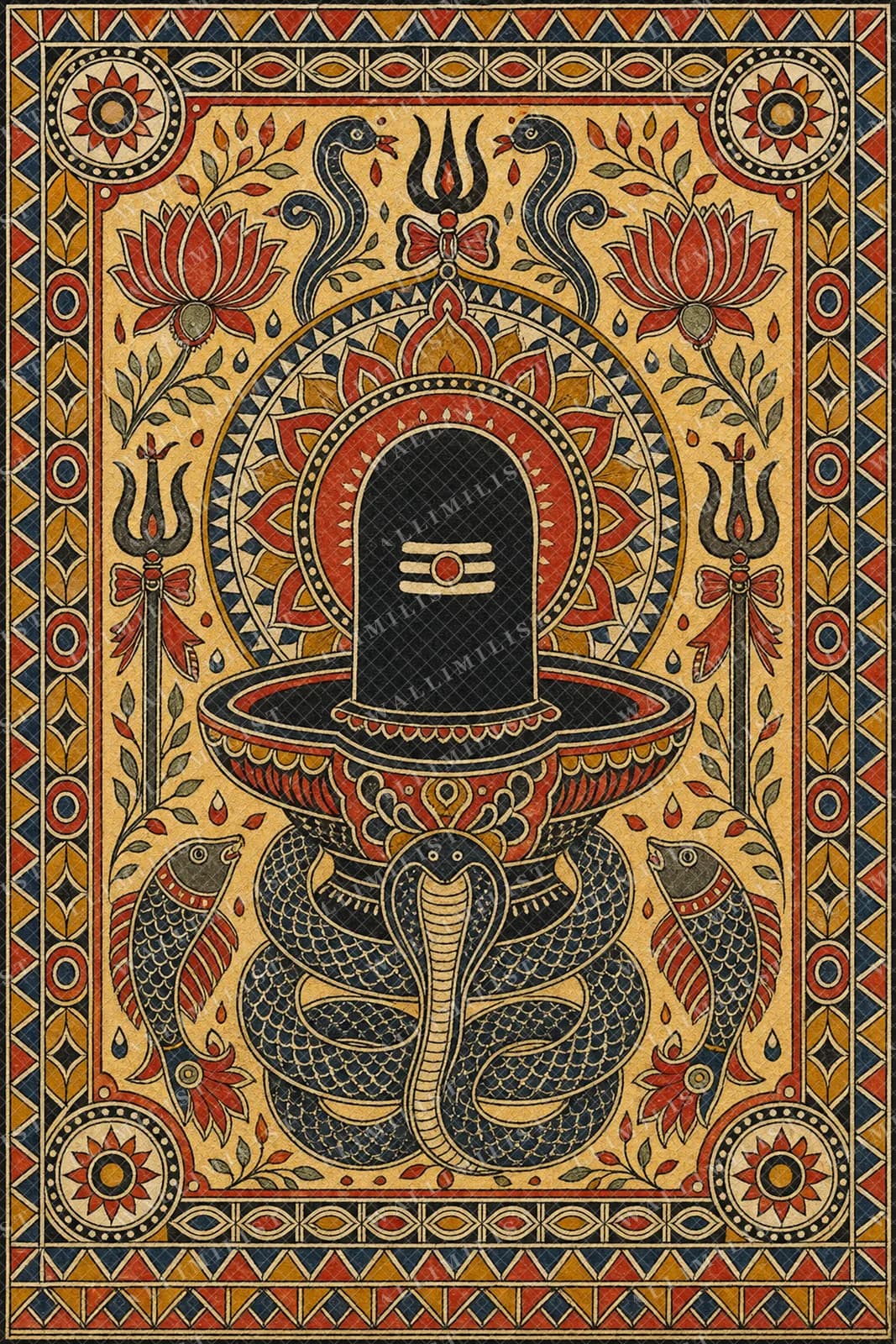
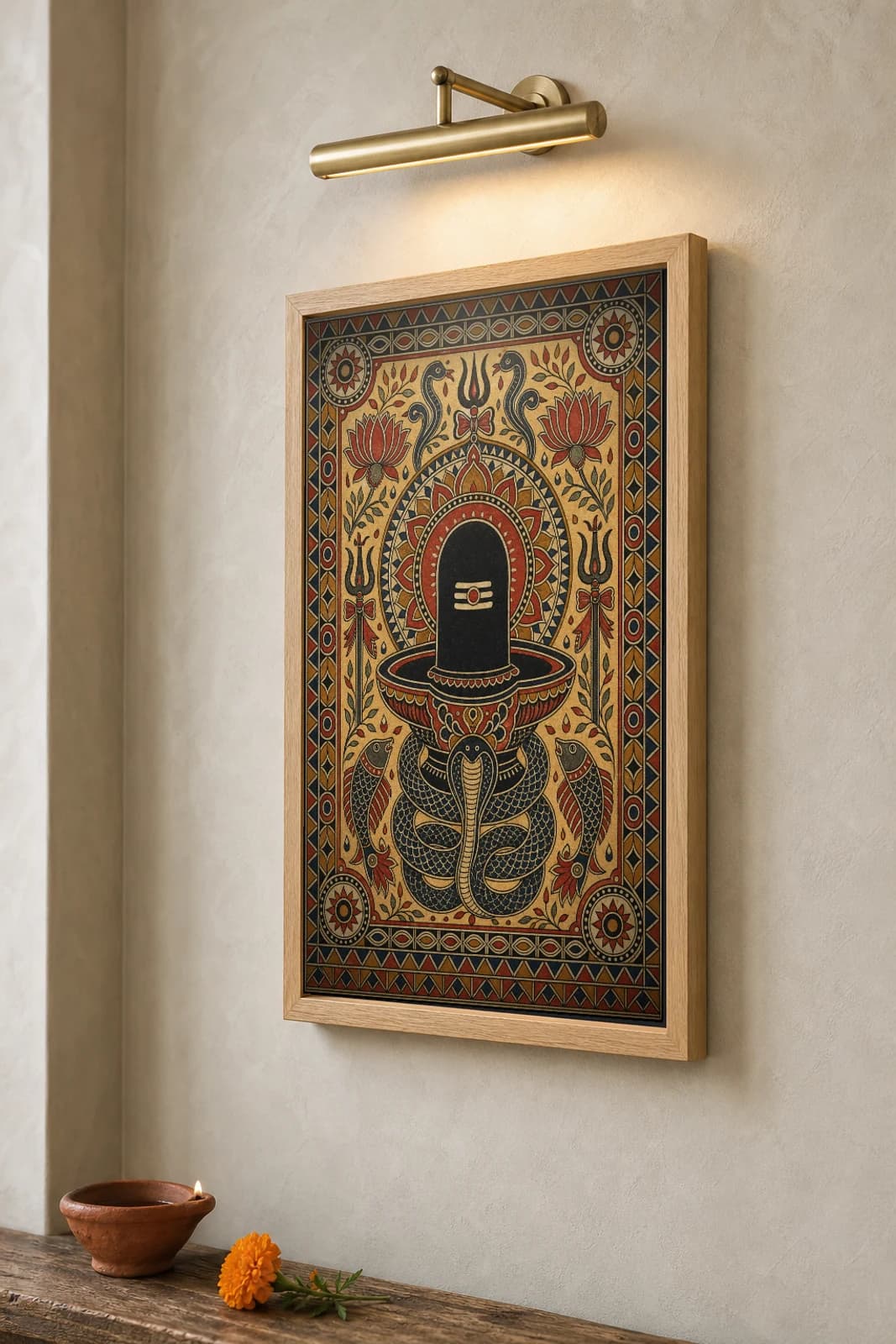
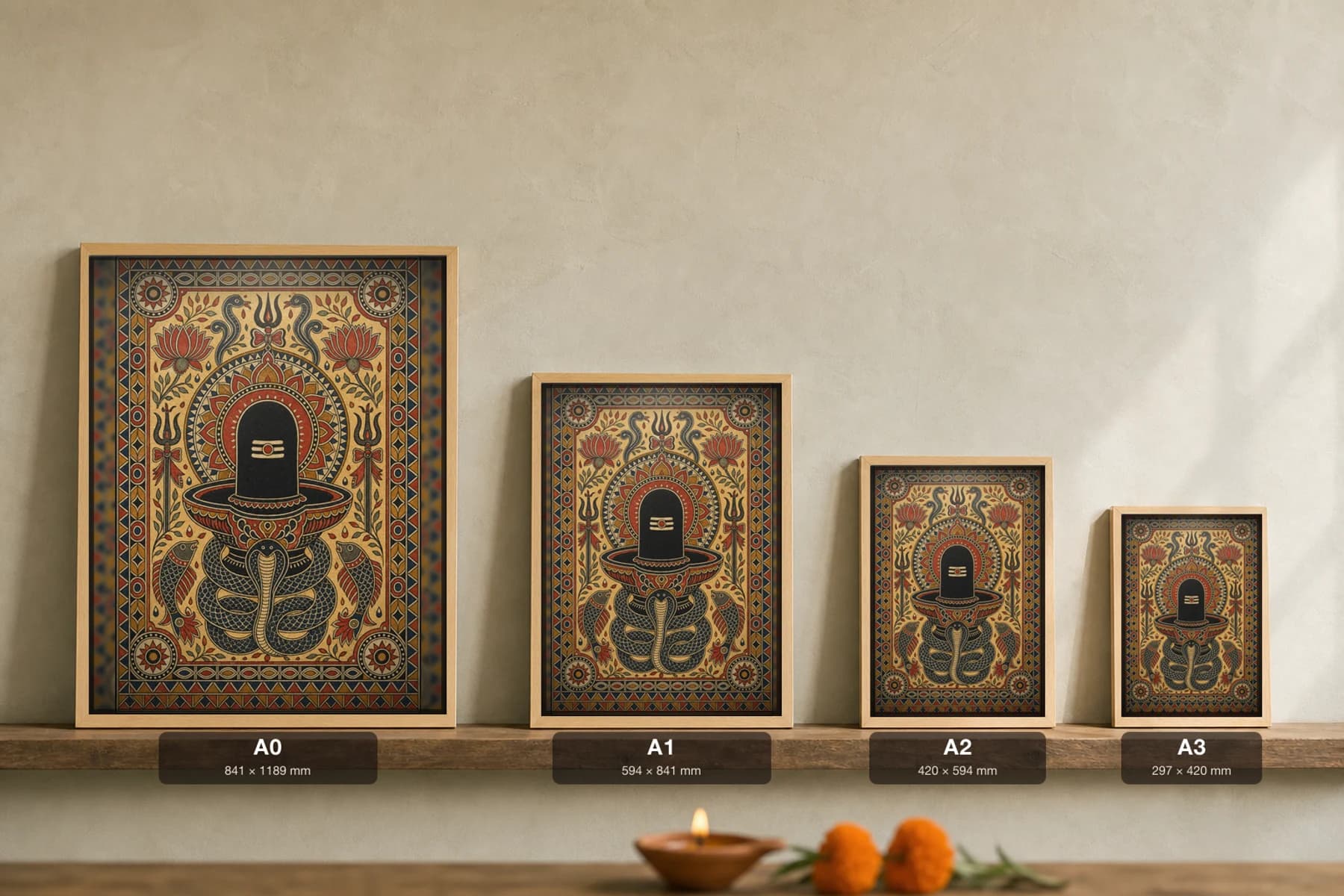
DESIGN BRIEF: Tantrik Madhubani treats the Shiva lingam as shrine diagram first and museum object second — if the yoni base and coiled naga float without a bilateral trishul frame, the panel reads like generic devotional clip art rather than Darbhanga tantric folk geometry. Vertical-bilateral symmetry solves that: lingam and yoni share one upright axis while the flanking trishuls, petal mandala halo, and corner lotus stems all mirror left-to-right, so the cosmic-union motif reads as one sacred enclosure rather than symbols pasted around a black oval. I kept the lingam abstract — tripundra bands and bindu only, no anthropomorphic Shiva face — because Tantrik Mithila panels often compress Mahadeva to his most legible ritual markers the way a lingam-yoni yantra compresses Shakti and Shiva to interlocking fields. The Shesha naga gets three coils with hood forward at the base because folk panels count the serpent as threshold guardian, not ornament: each coil segment mirrors the geometric cells in the side border bands. Corner fish curve upward toward the shrine the way Mithila abundance symbols attend a puja alcove — fertility grammar without importing a full Kohbar wedding narrative. The petal mandala halo behind the lingam borrows bindu-centred yantra logic so the vermillion-ochre sun disc extends the same tantric grammar as the outer triangle frieze rather than switching to generic rangoli filler.
 WALLIMILIST