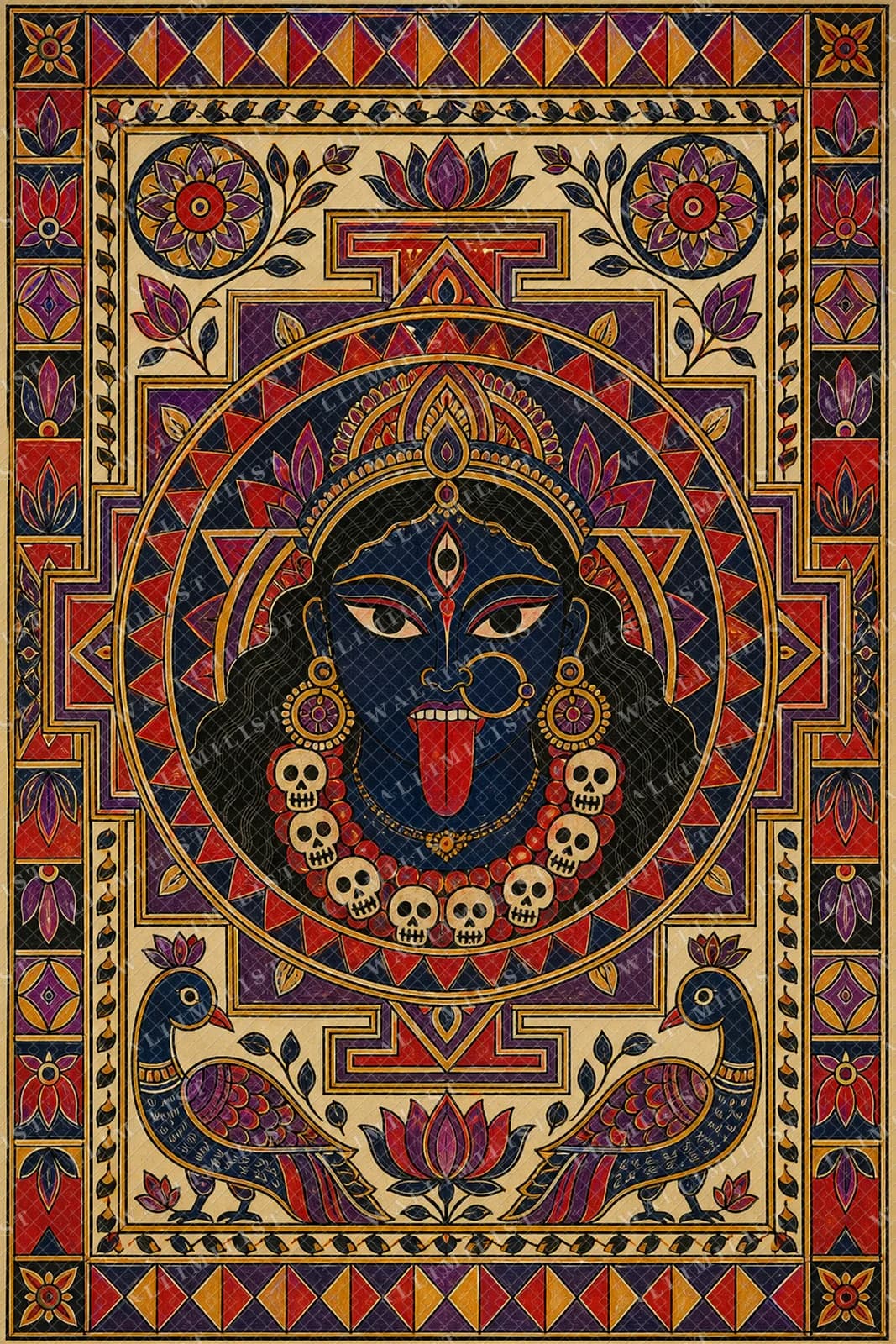
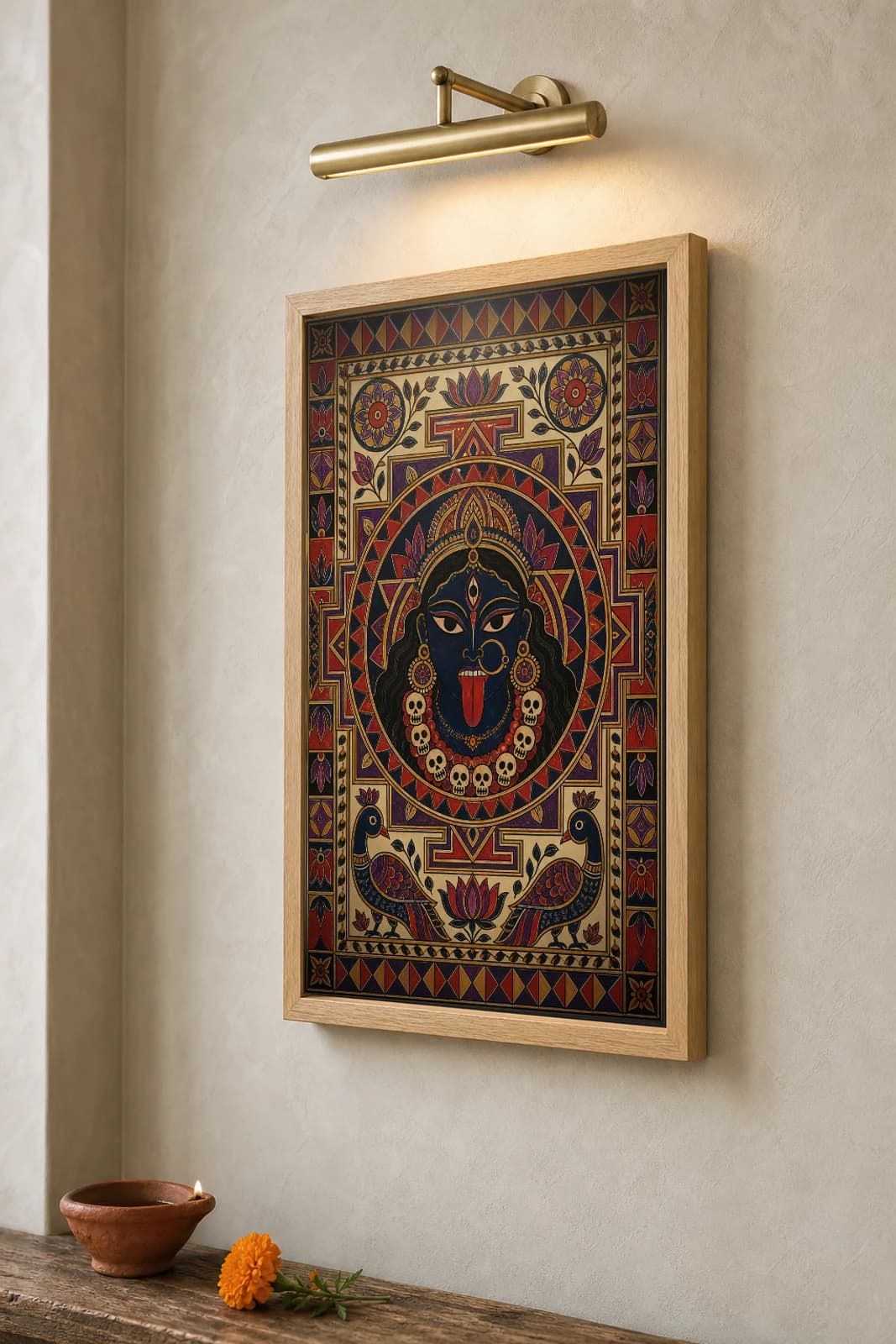
DESIGN BRIEF: Tantrik Madhubani treats Kali as diagram first and portrait second — if the mundamala and extended tongue float without a yantra frame, the panel reads like festival poster art rather than Shakti geometry. Central-medallion symmetry solves that: the face occupies the bindu centre while the stepped temple-frame enclosure shares the same vertical spine, so the serrated chakra ring, purple-vermillion shrine bands, and corner lotus anchors all read as one sacred enclosure rather than decoration pasted around a head. I kept the symbolic face rather than a full standing Mahakali form because Tantrik Mithila panels often compress the goddess to her most legible attributes — indigo skin, protruding tongue, skull garland, third eye — the way a Kali yantra compresses cosmic force to interlocking triangles. The mundamala gets seven skulls with red bead spacers because folk panels count the garland as rhythm, not horror: each skull cell mirrors the lotus squares in the side panels. Corner peacocks face inward toward the base lotus the way threshold guardians attend a shrine doorway — rain-bird symbolism without importing a full Bharni garden narrative. Border triangle frieze repeats the serrated chakra vocabulary at the outer edge so the frame extends the same tantric grammar rather than switching to generic rangoli filler.
 WALLIMILIST