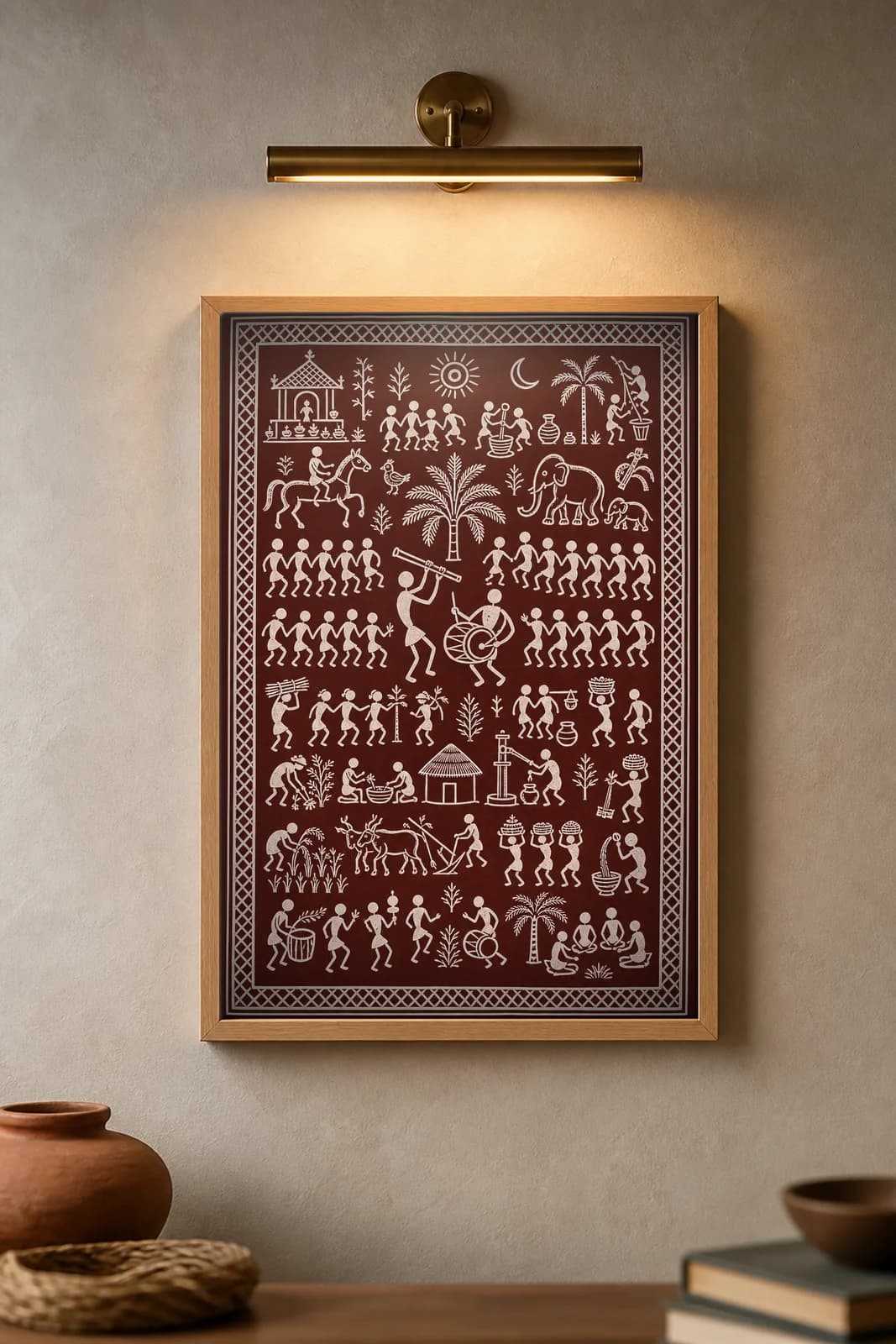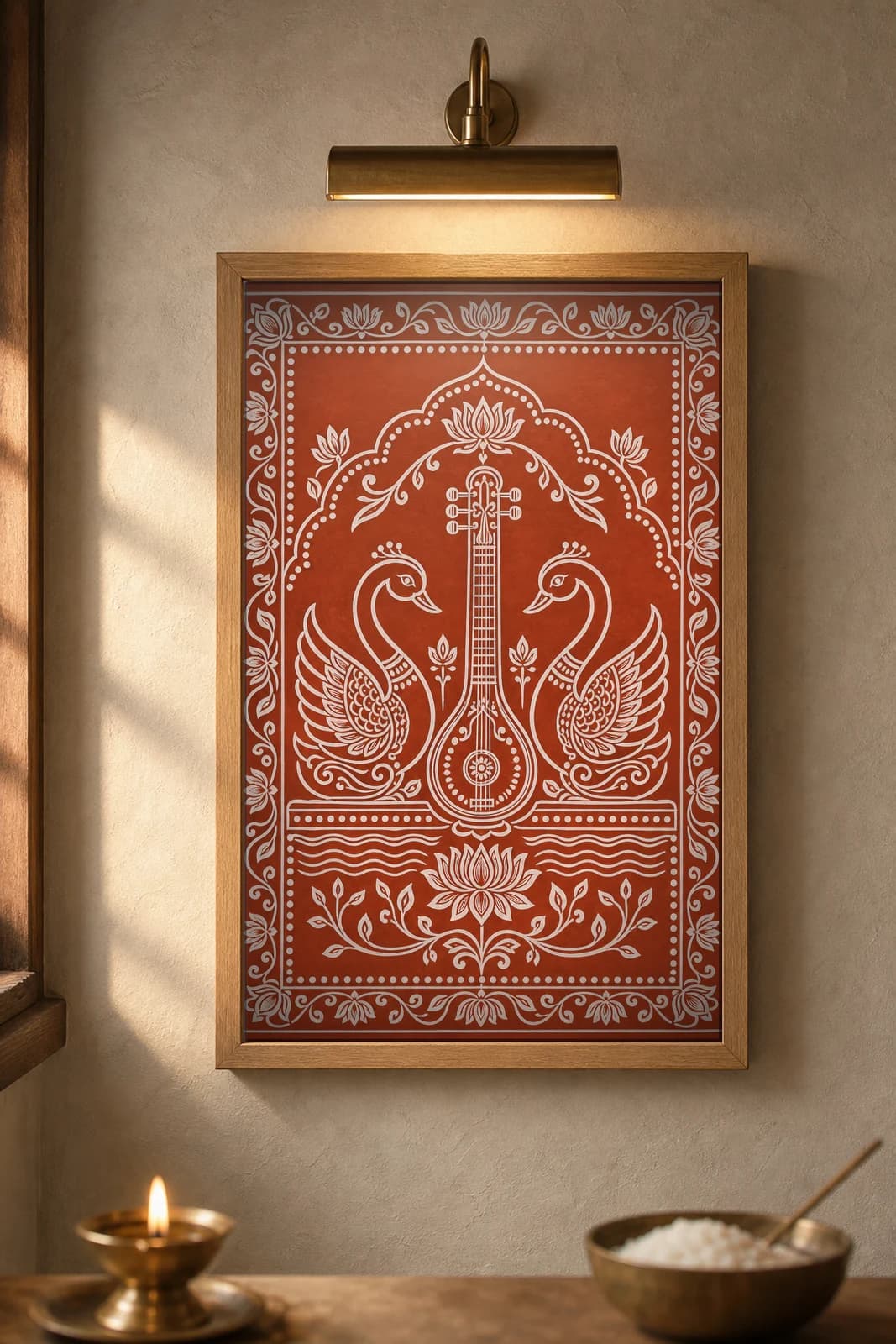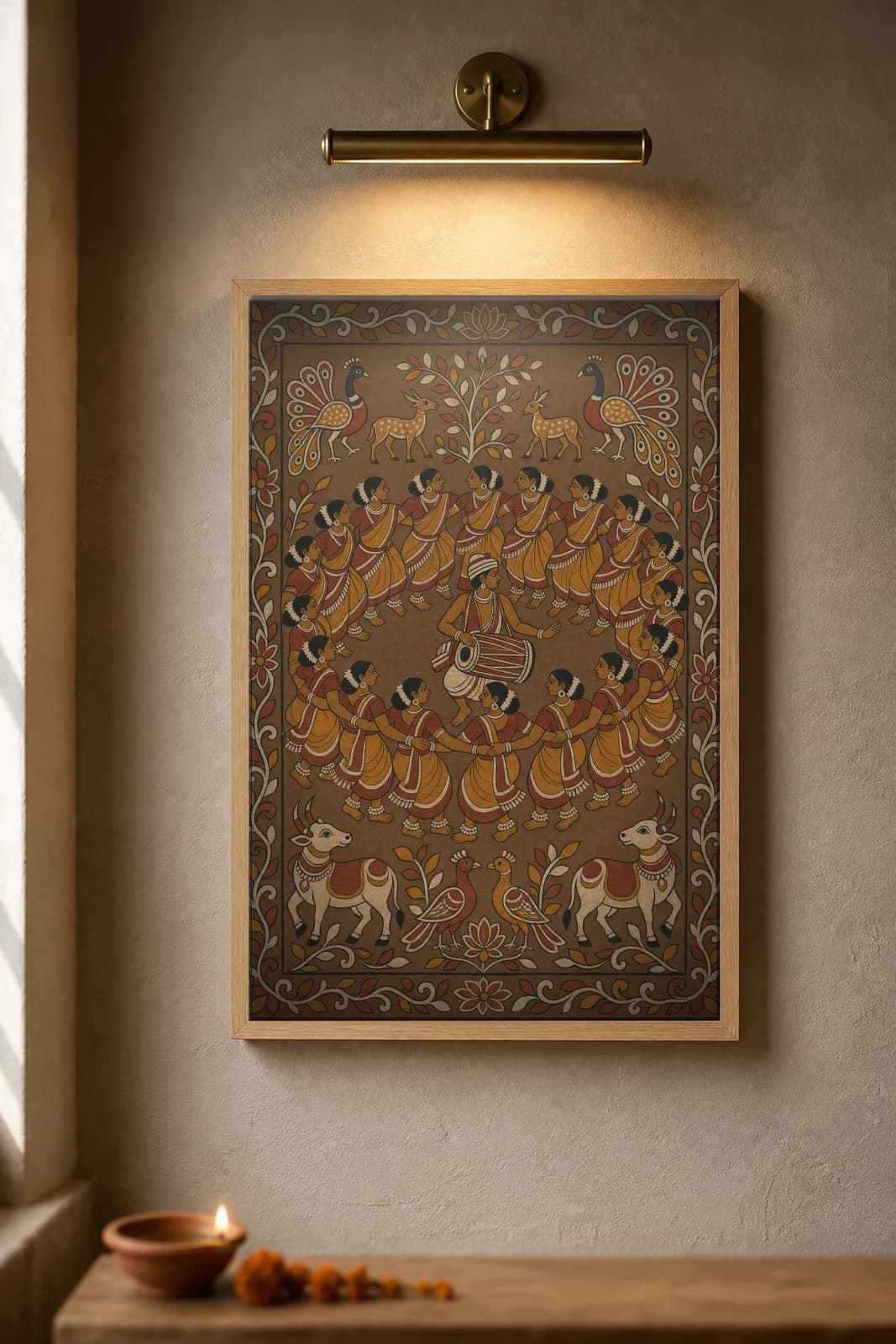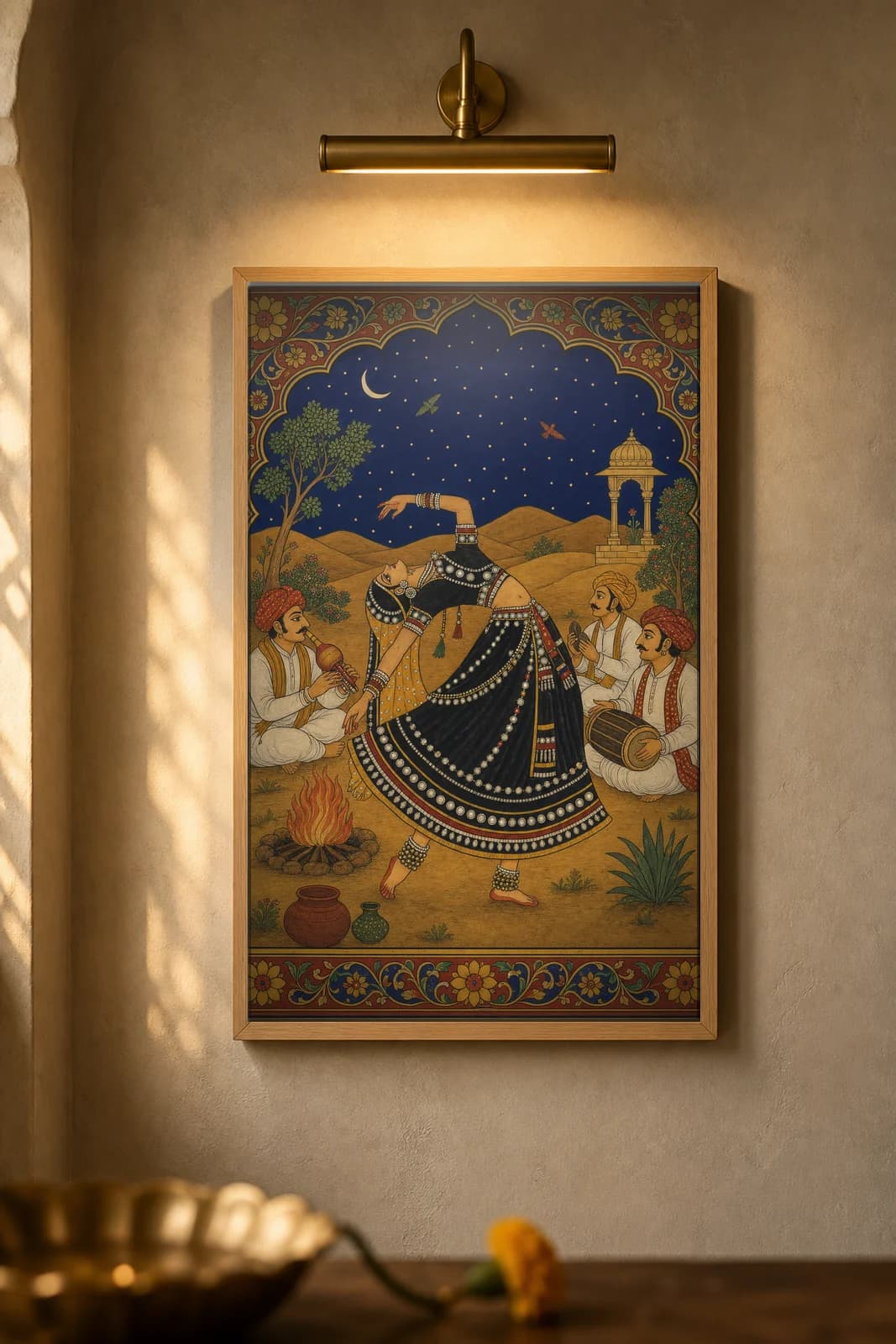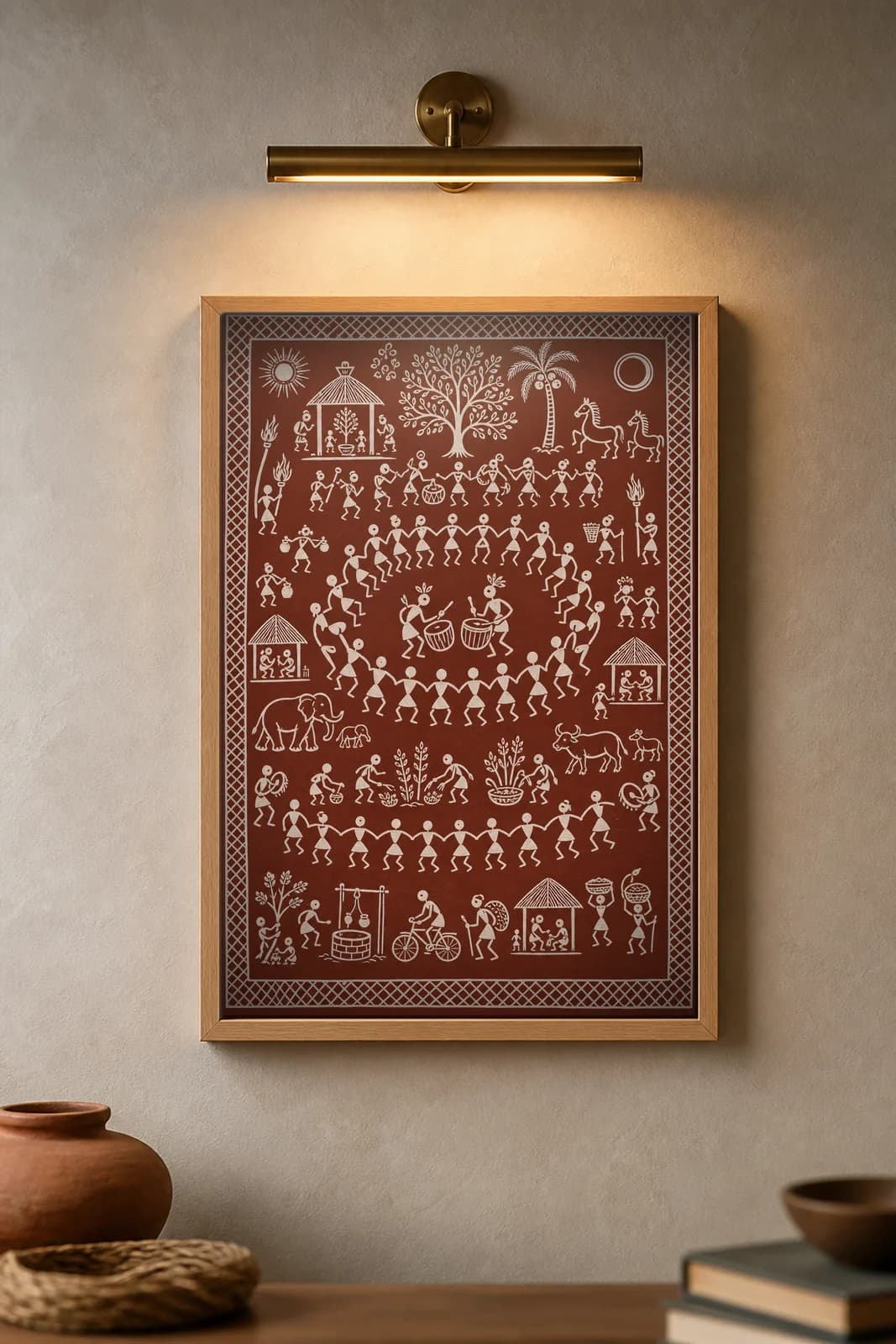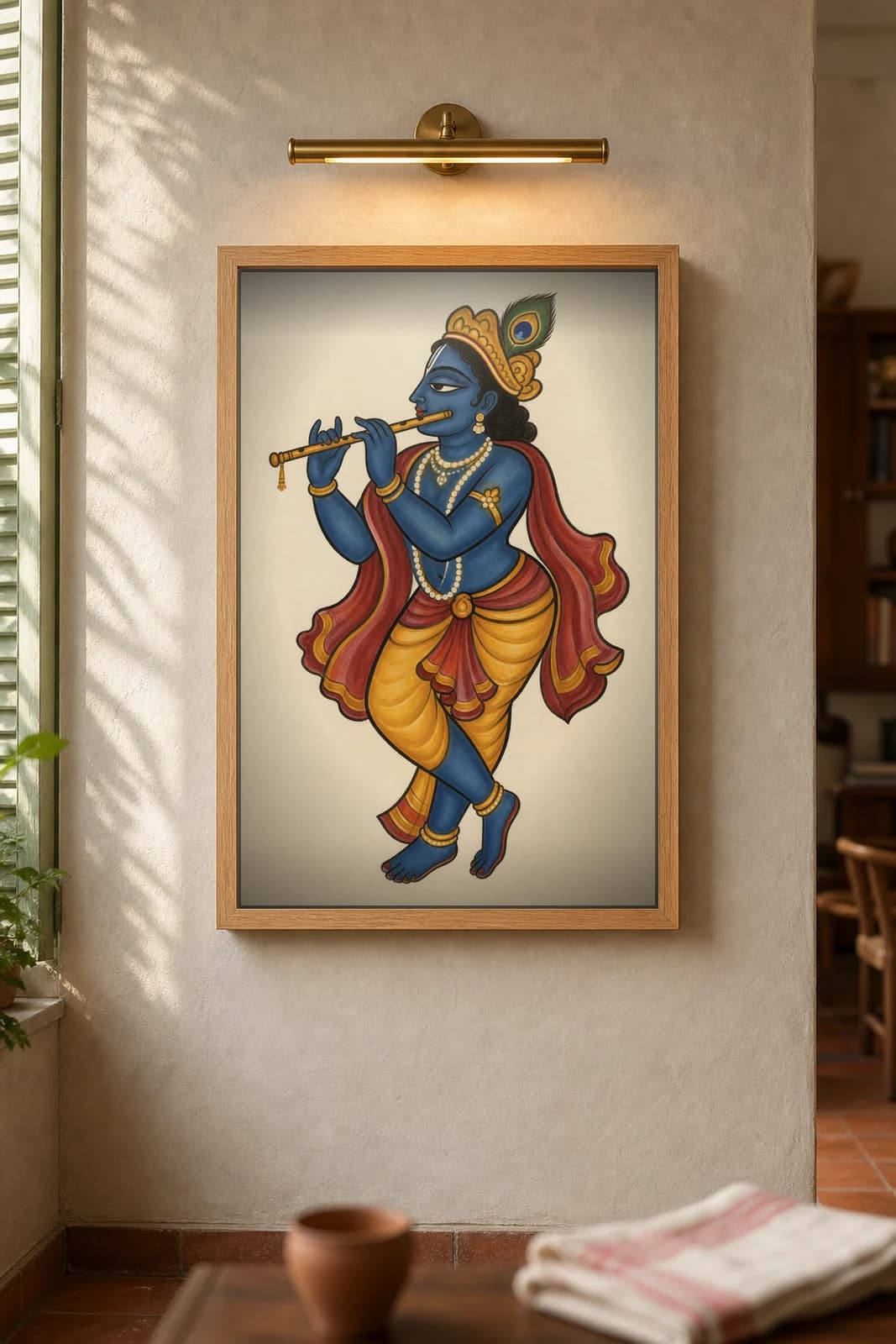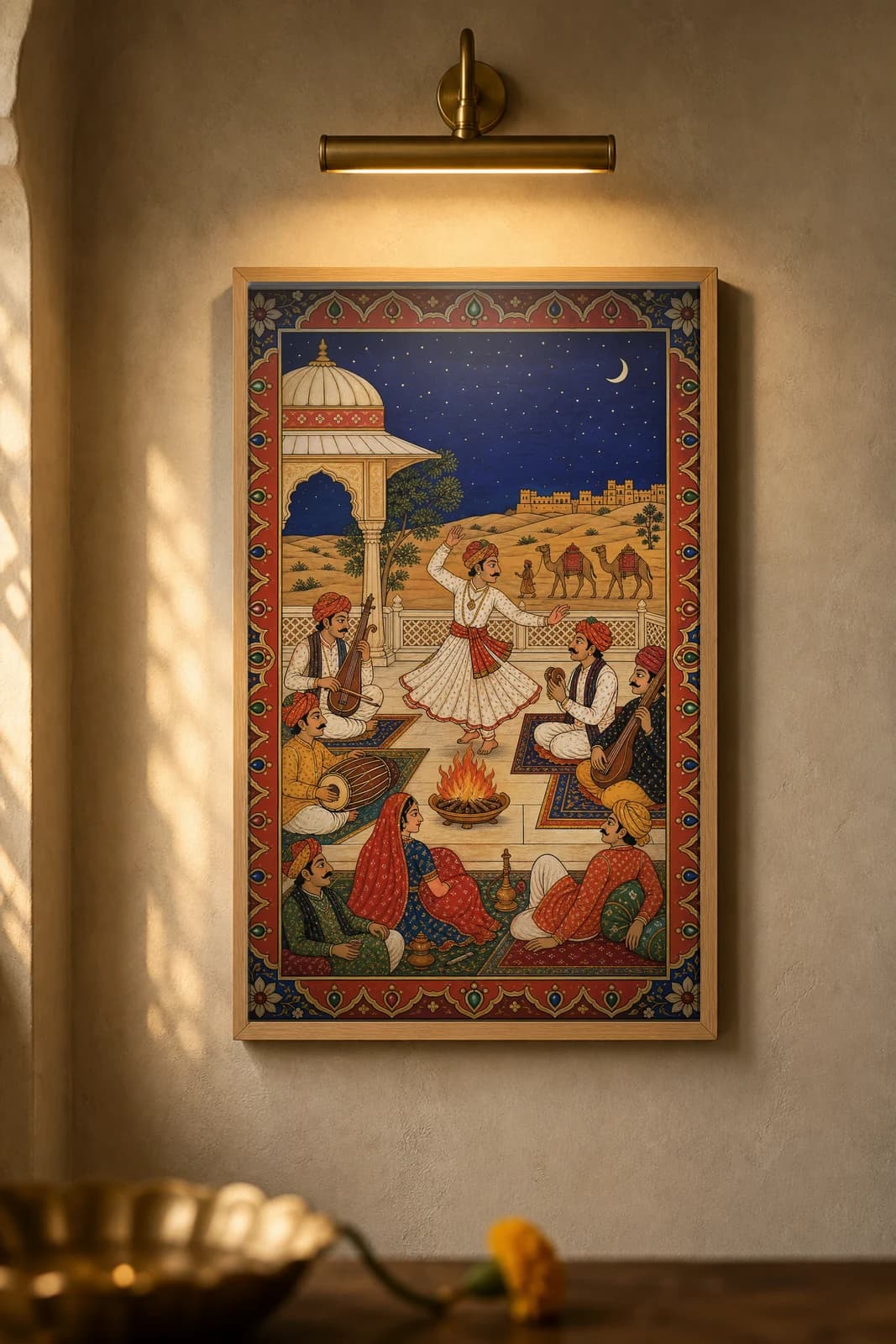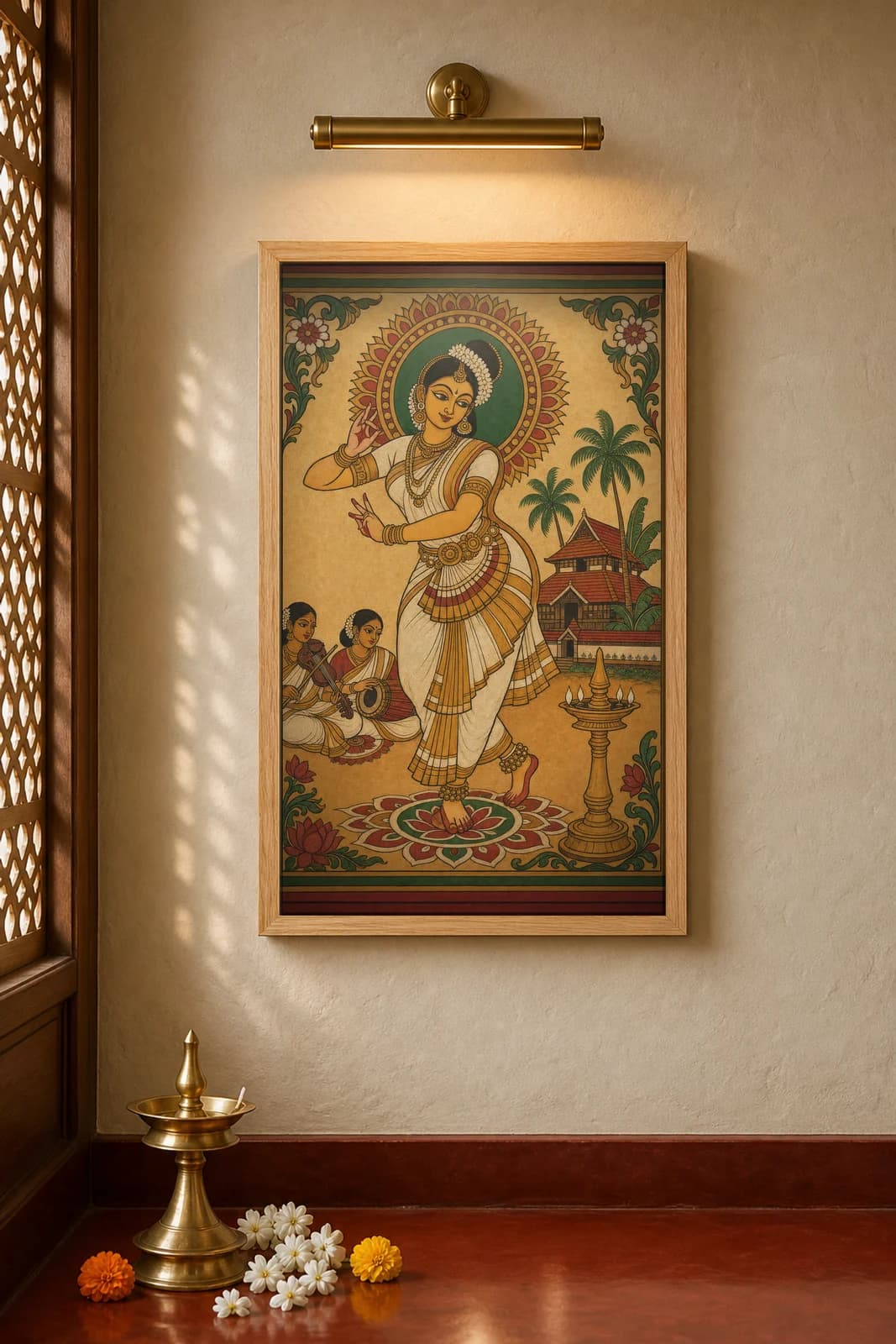
Music Room — 48 museum-grade prints sized and toned for the room. DESIGN BRIEF: the brief was the women's pot dance, so the hero is full-width rows of dancers each balancing a stack of pots on her head, knees bent into the step, with barrel-drummers anchoring the ends of the rows. We held the fill to medium and kept the fish-net frame open rather than a packed mesh, leaving clear deep-maroon ground between the rows so the balanced pots and the bent-knee bodies read at a glance and never blur into one mass. Bharni — from the Hindi word for filling — is the Madhubani style associated with Brahmin women's ritual wall painting in the Mithila region, distinct from Kayastha Kachni line hatching and Dusadh Godna tattoo dot work. Bharni artists in villages like Jitwarpur and Ranti applied bold flat vermillion, turmeric, indigo, and lampblack within double outlines to depict festival deities, garden birds, and auspicious symbols on cow-dung-washed walls during Saraswati Puja, Durga Puja, and wedding seasons. Kalighat Pat grew up in 19th-century Kolkata, painted by migrant patua (chitrakar) scroll-painters who settled near the Kalighat Kali temple and sold quick watercolour souvenirs to pilgrims. Working on mill-made paper with a bold single black brush outline and soft 'boneless' shaded strokes on a plain ground, they painted gods and goddesses alongside what is often called India's first modern social satire — sharp, affectionate caricatures of the colonial 'babu' and the hypocrisies of Calcutta life.


$49


$49

$49


$49


$49


$49


$49

$49


$49


$49

$49