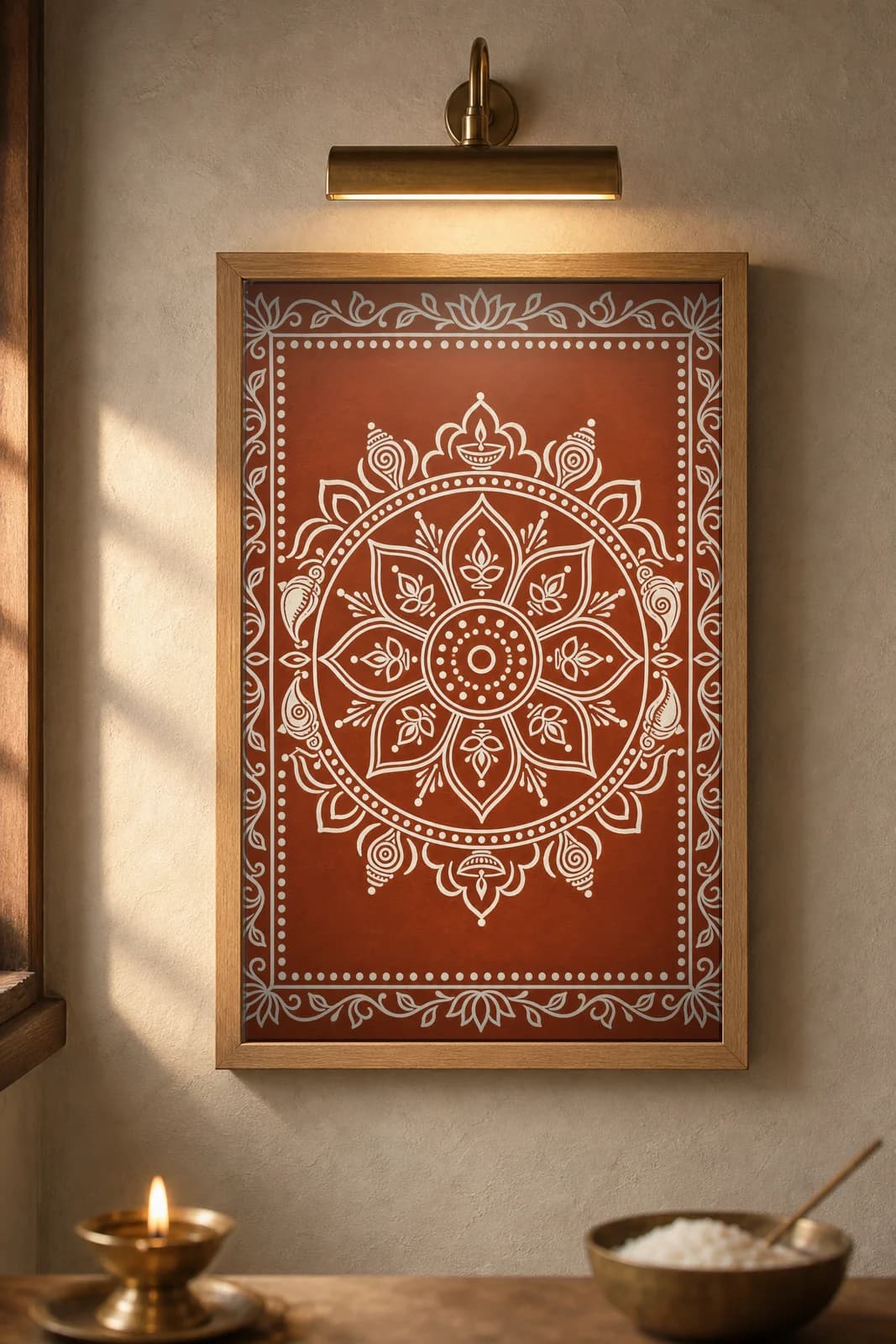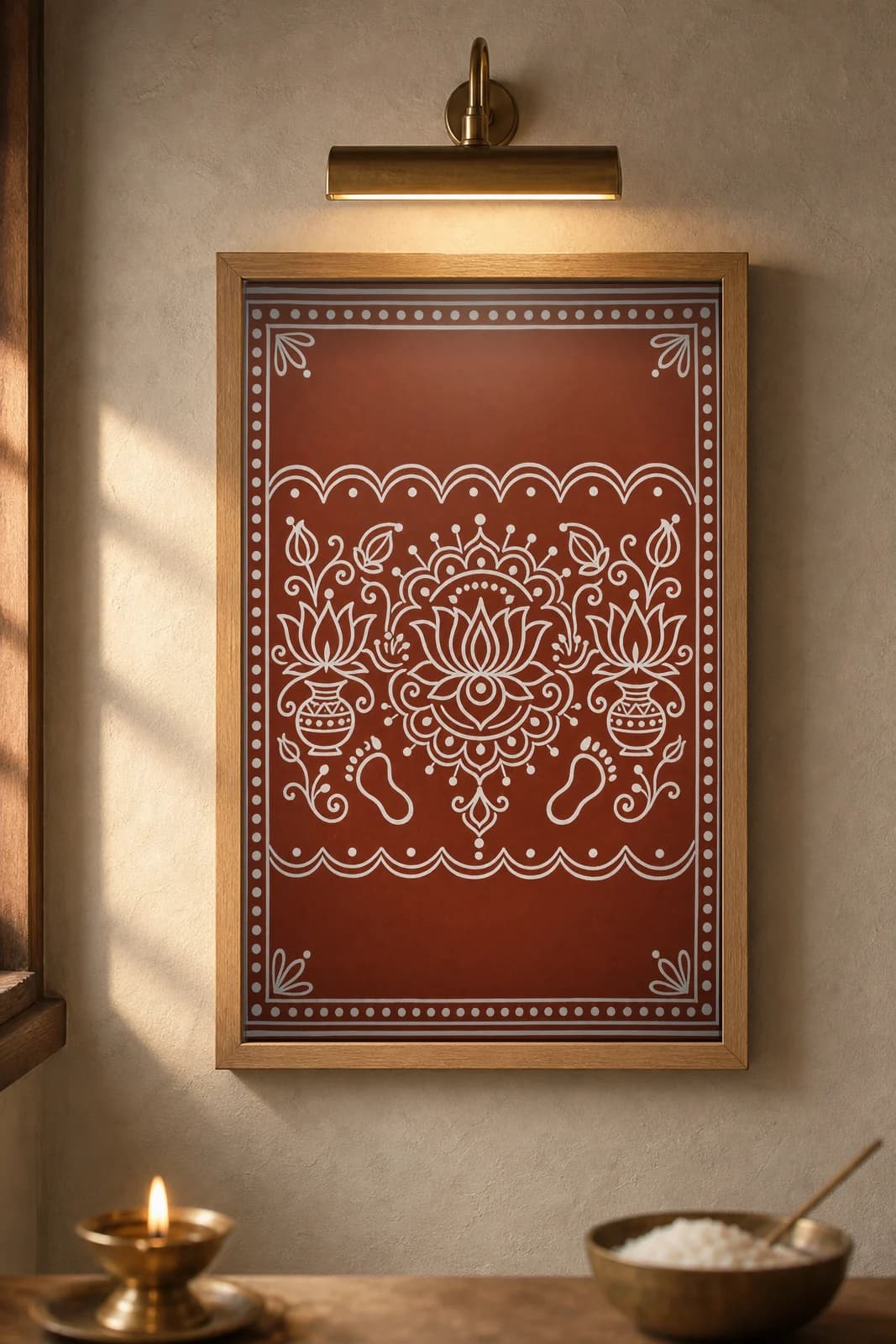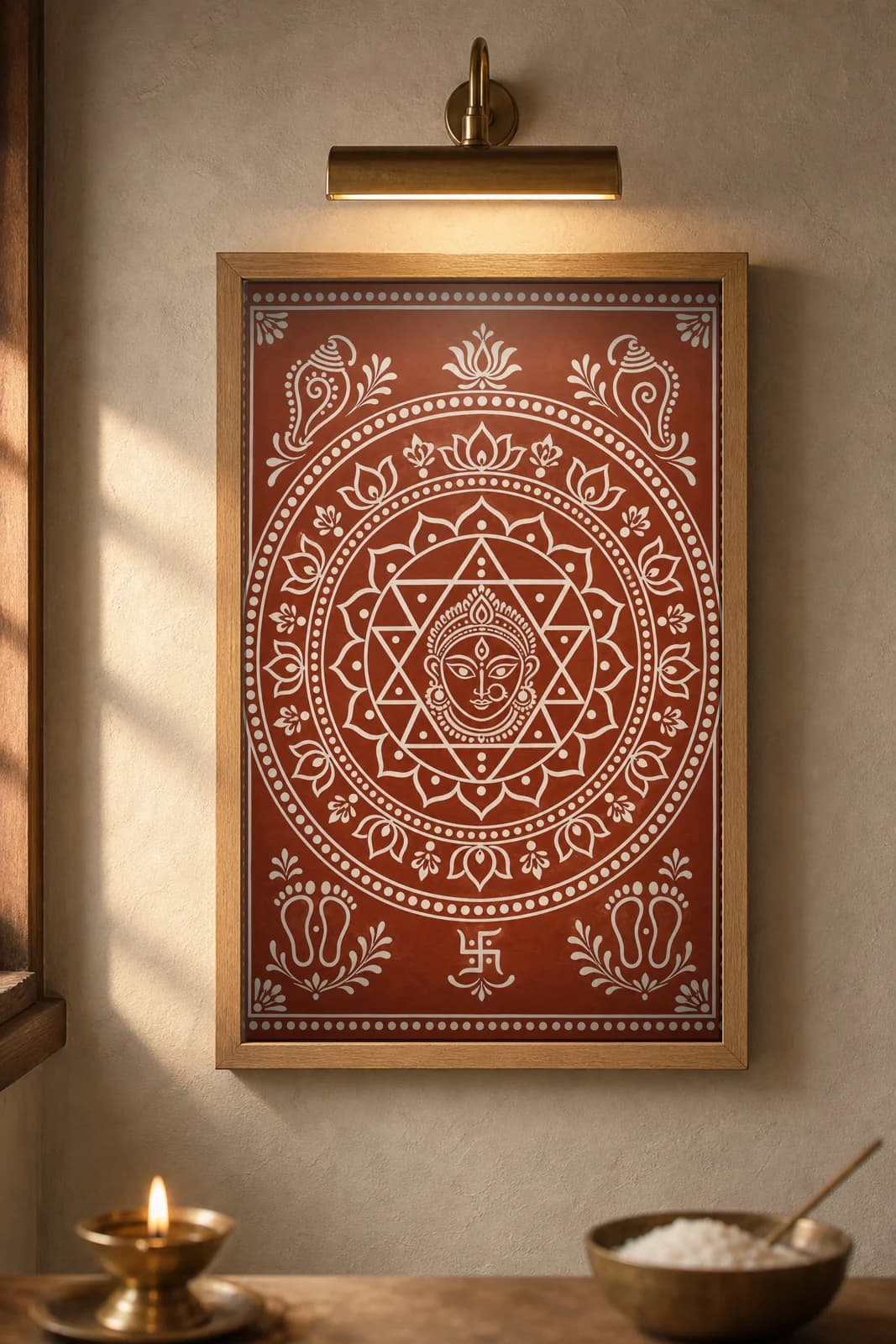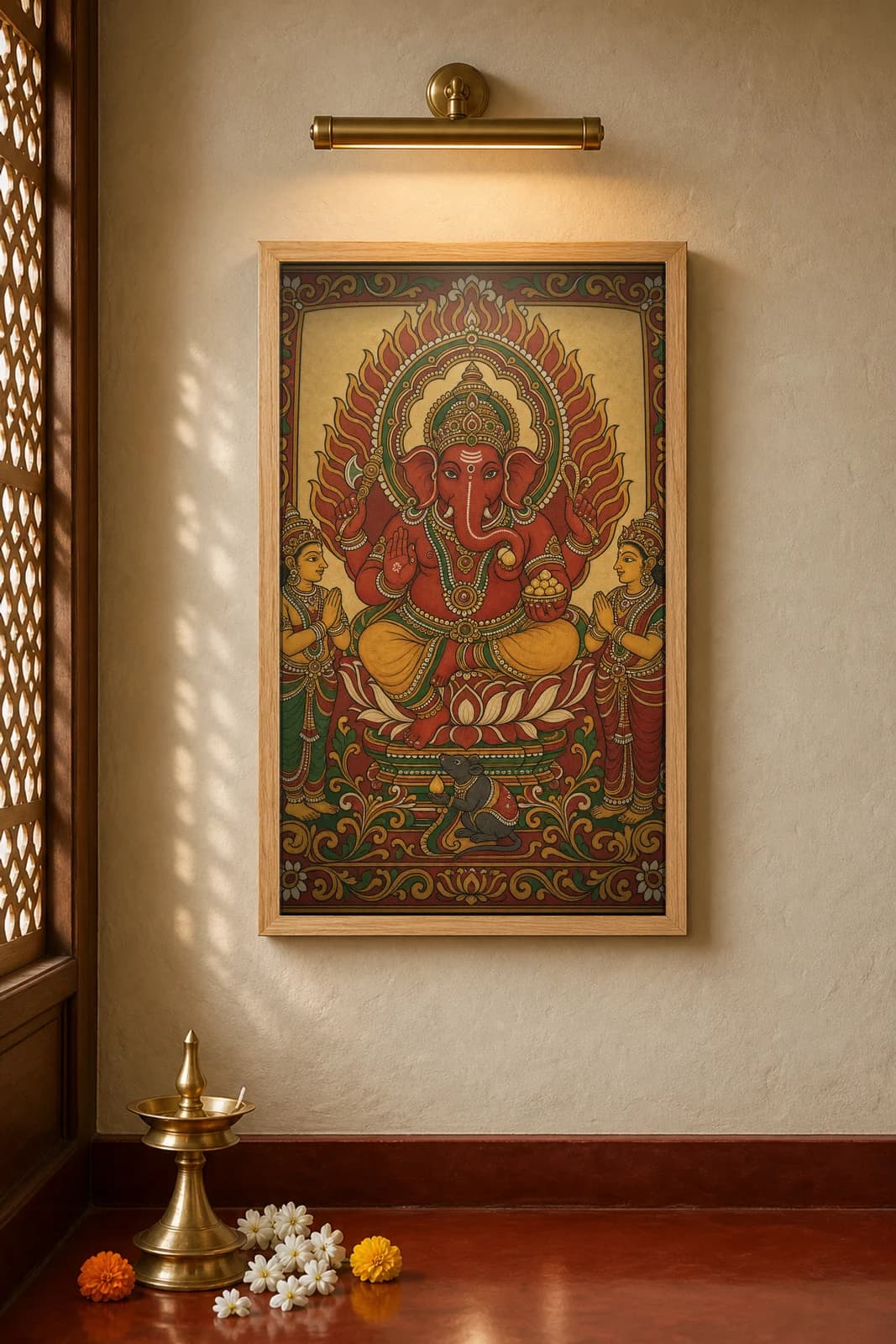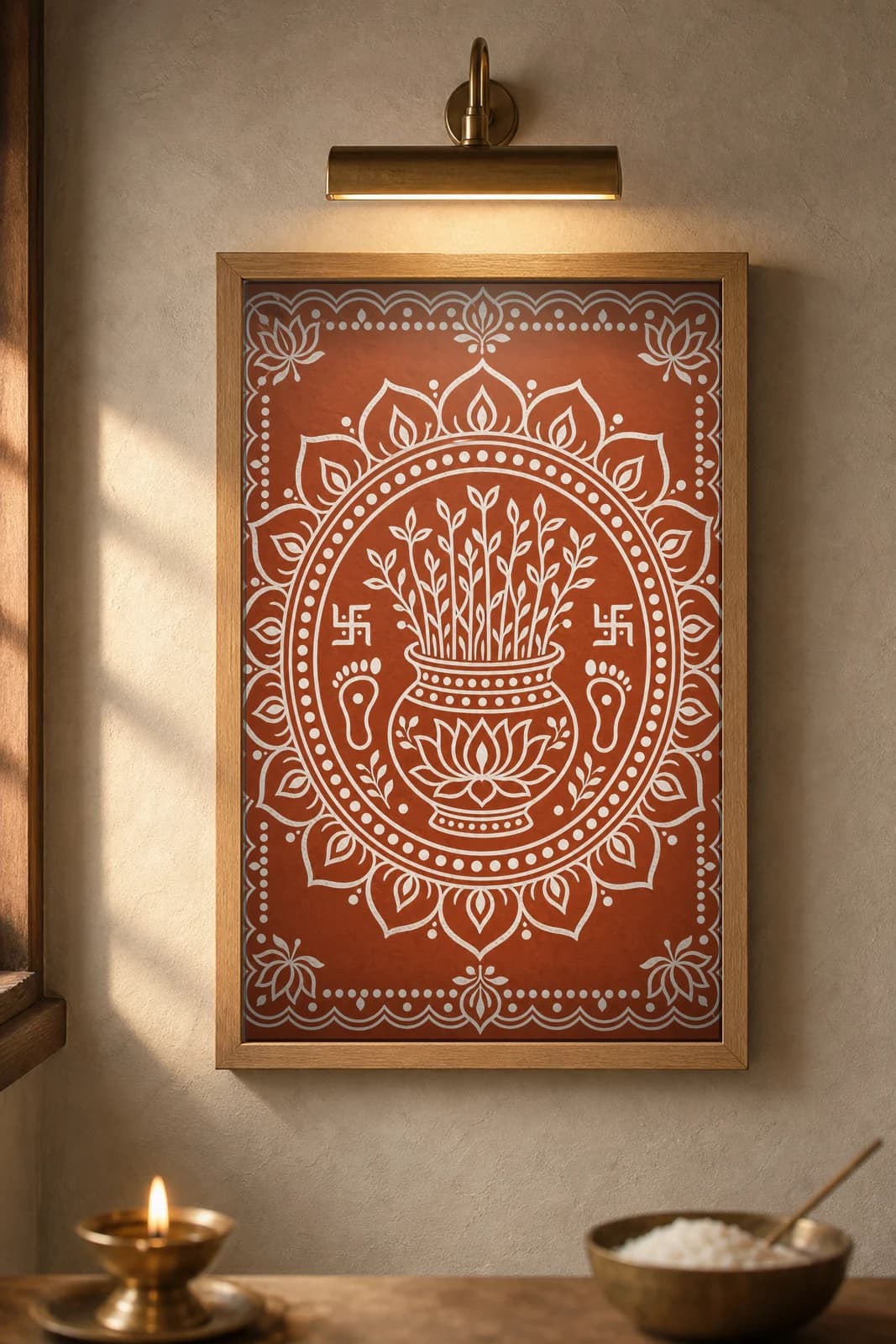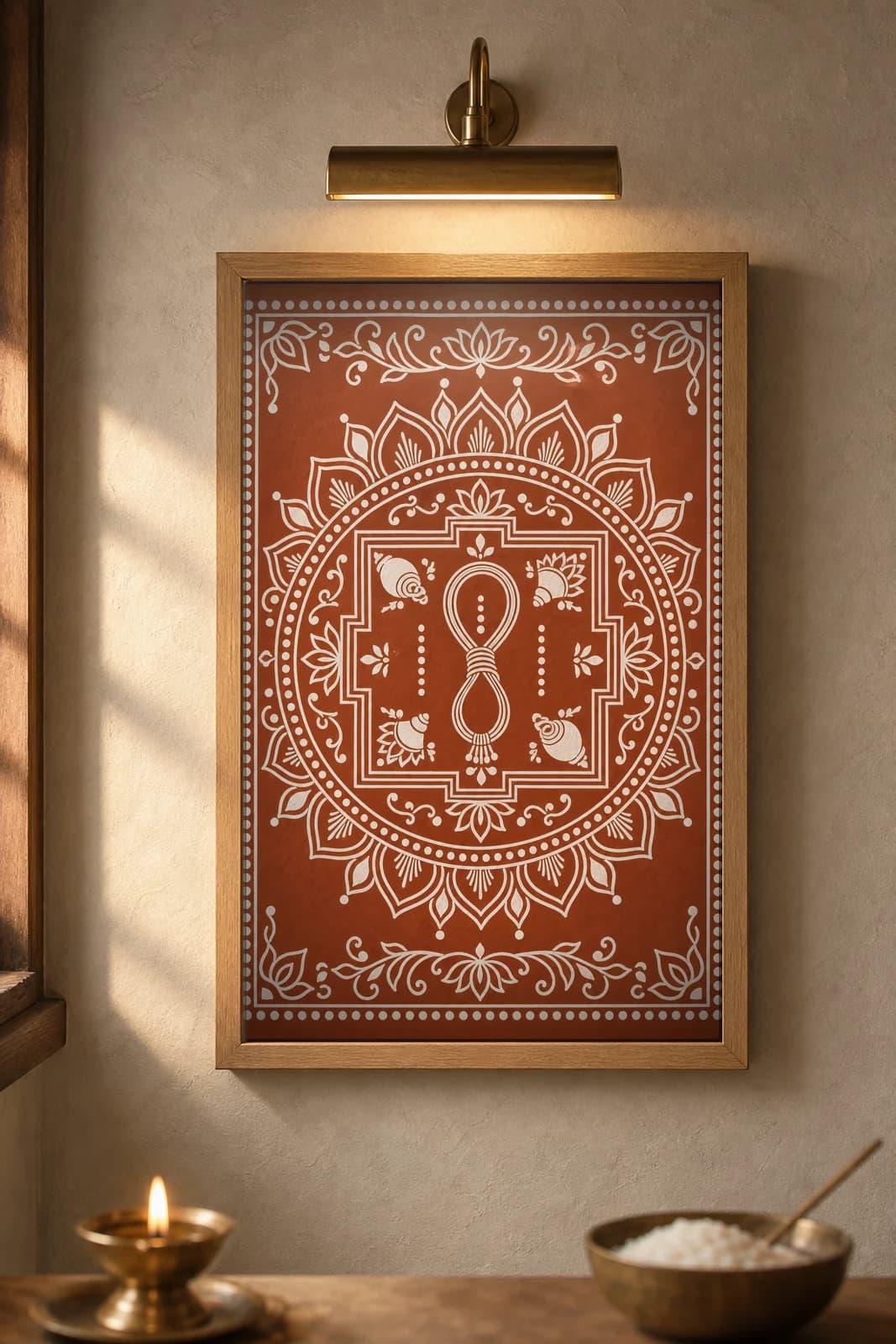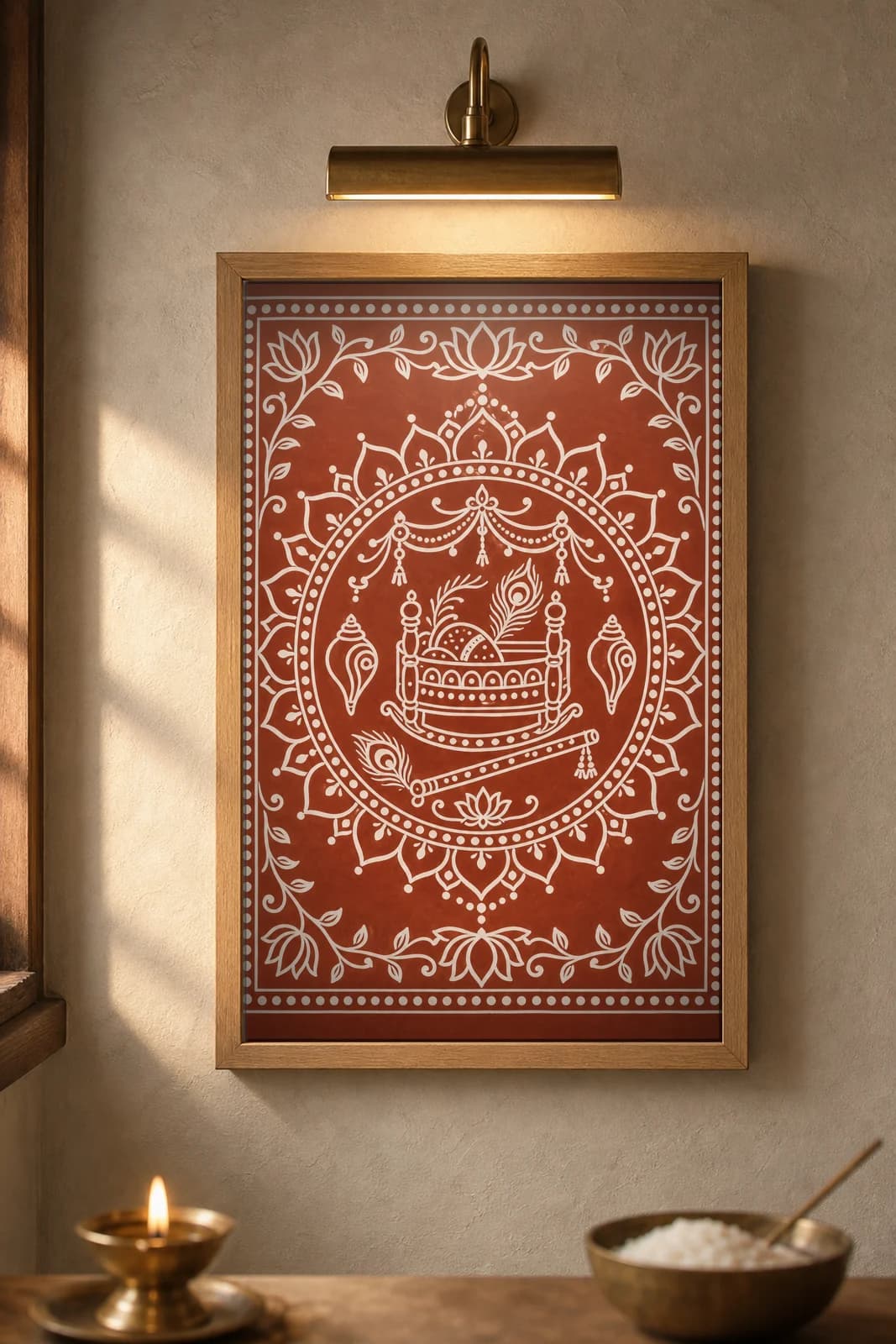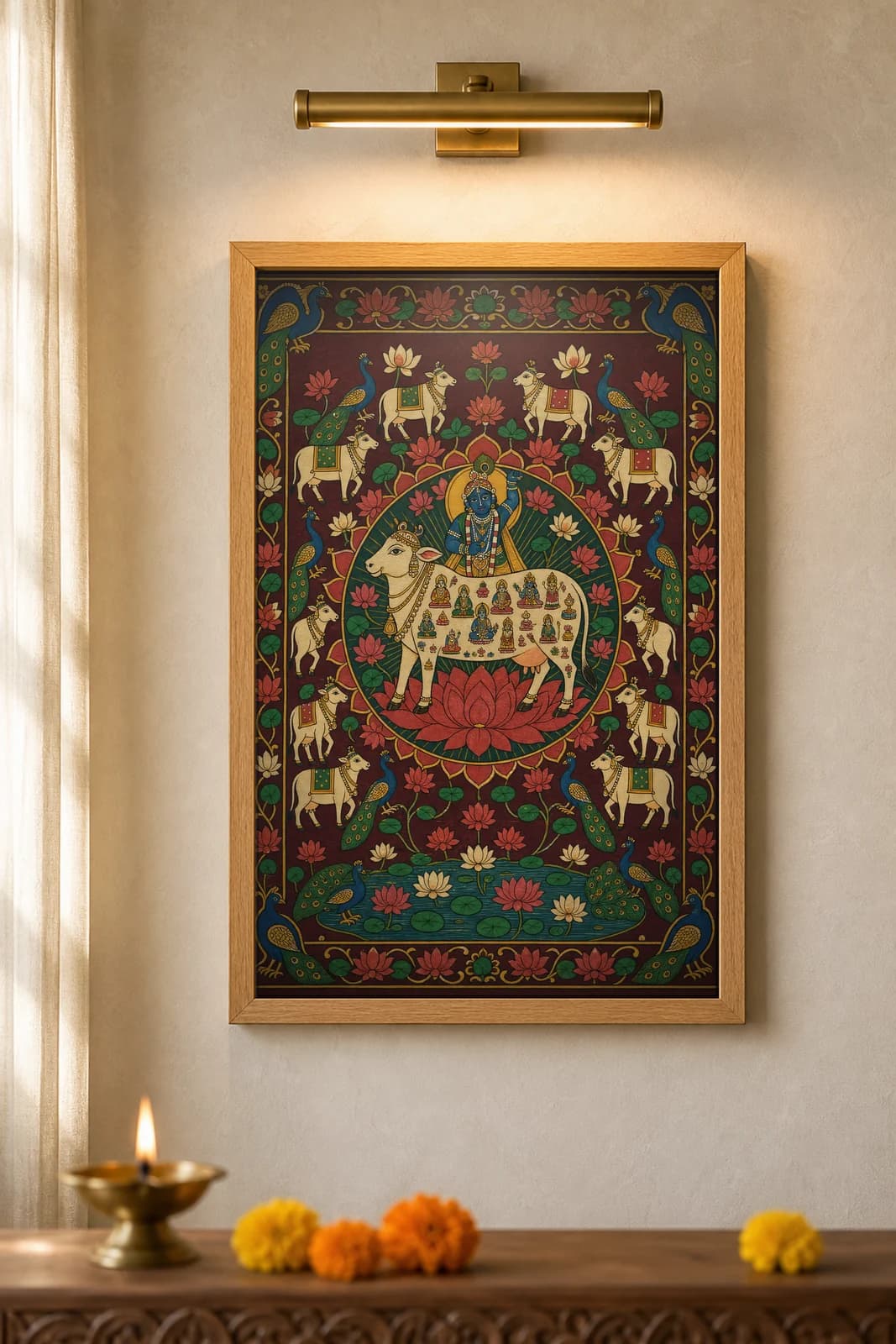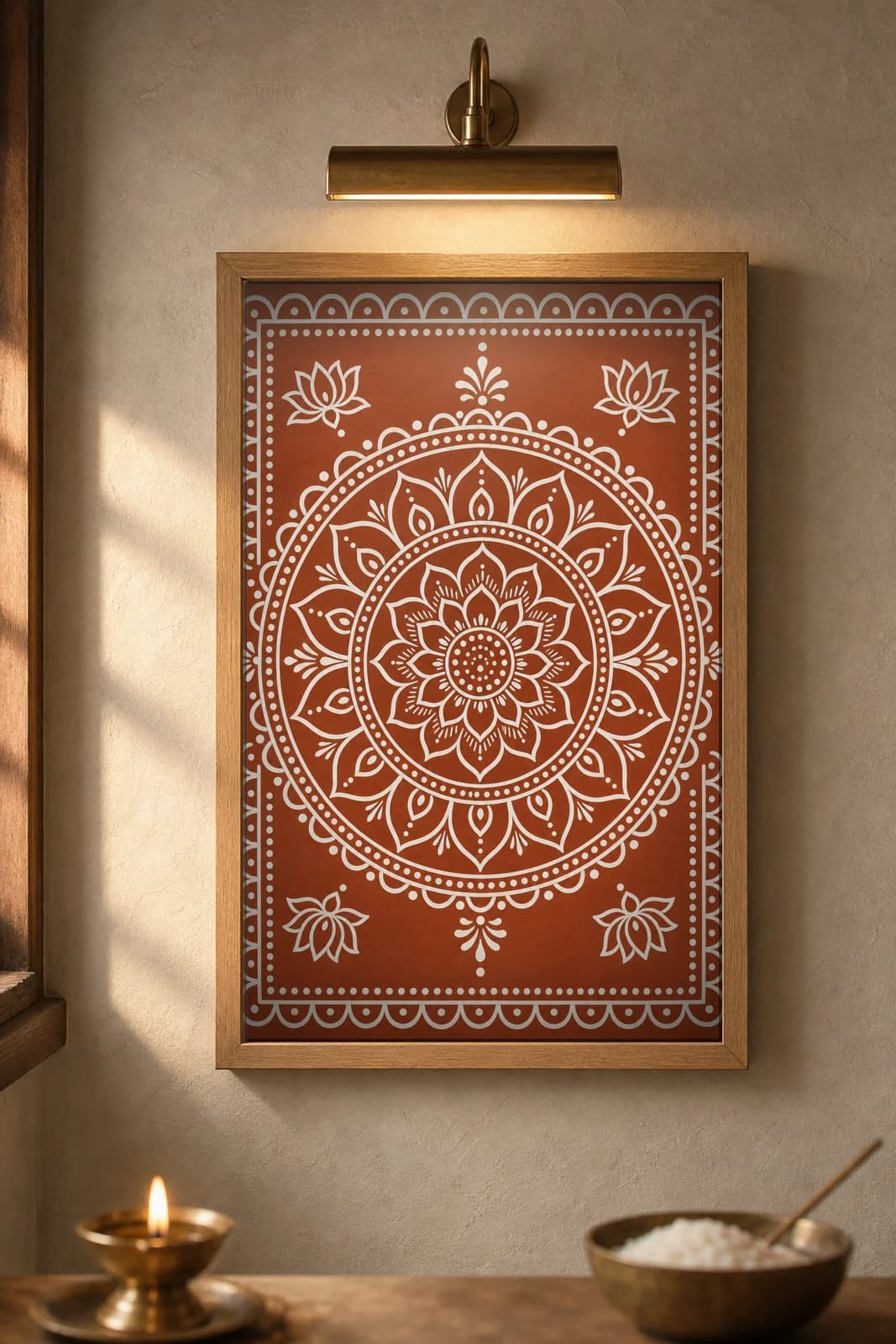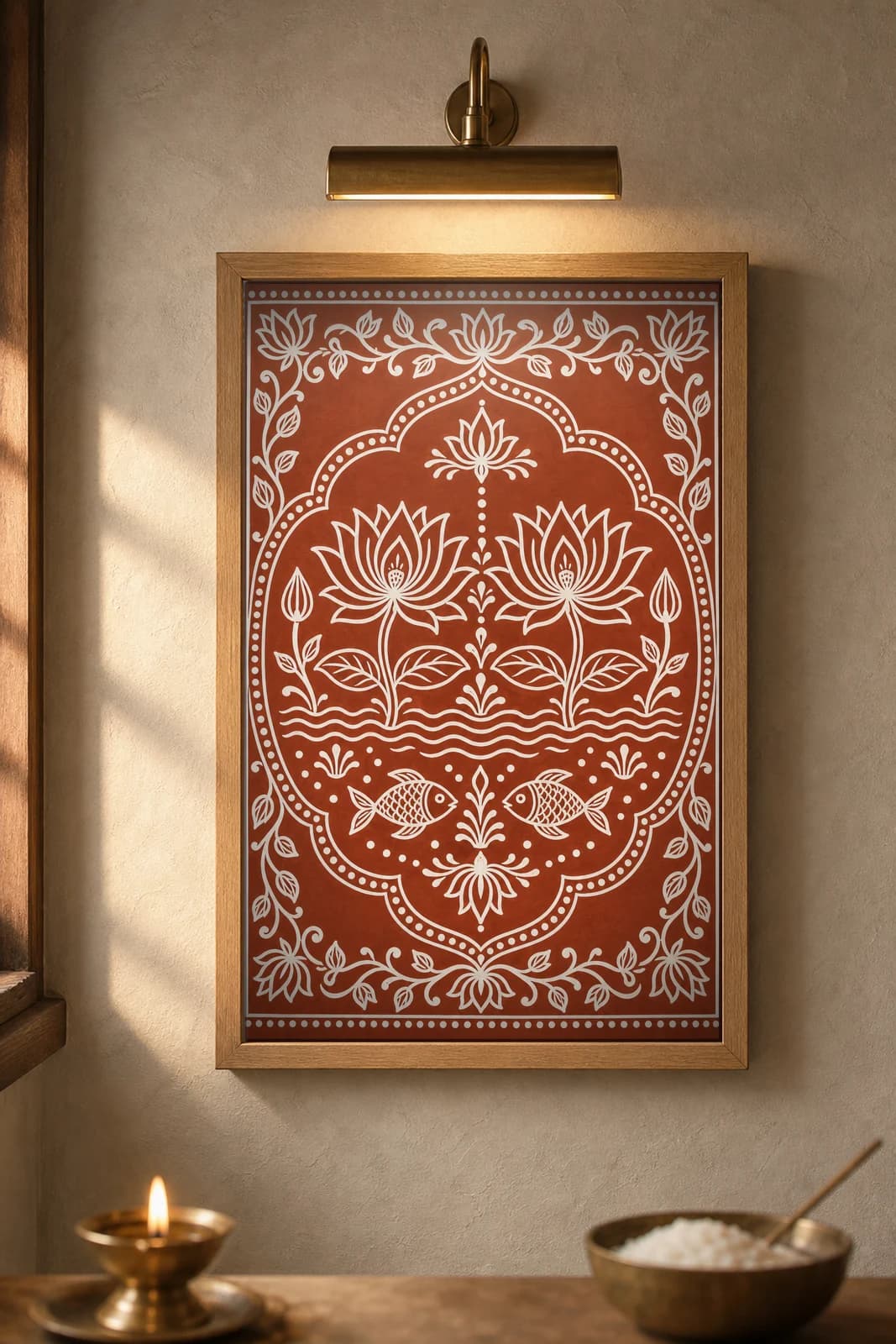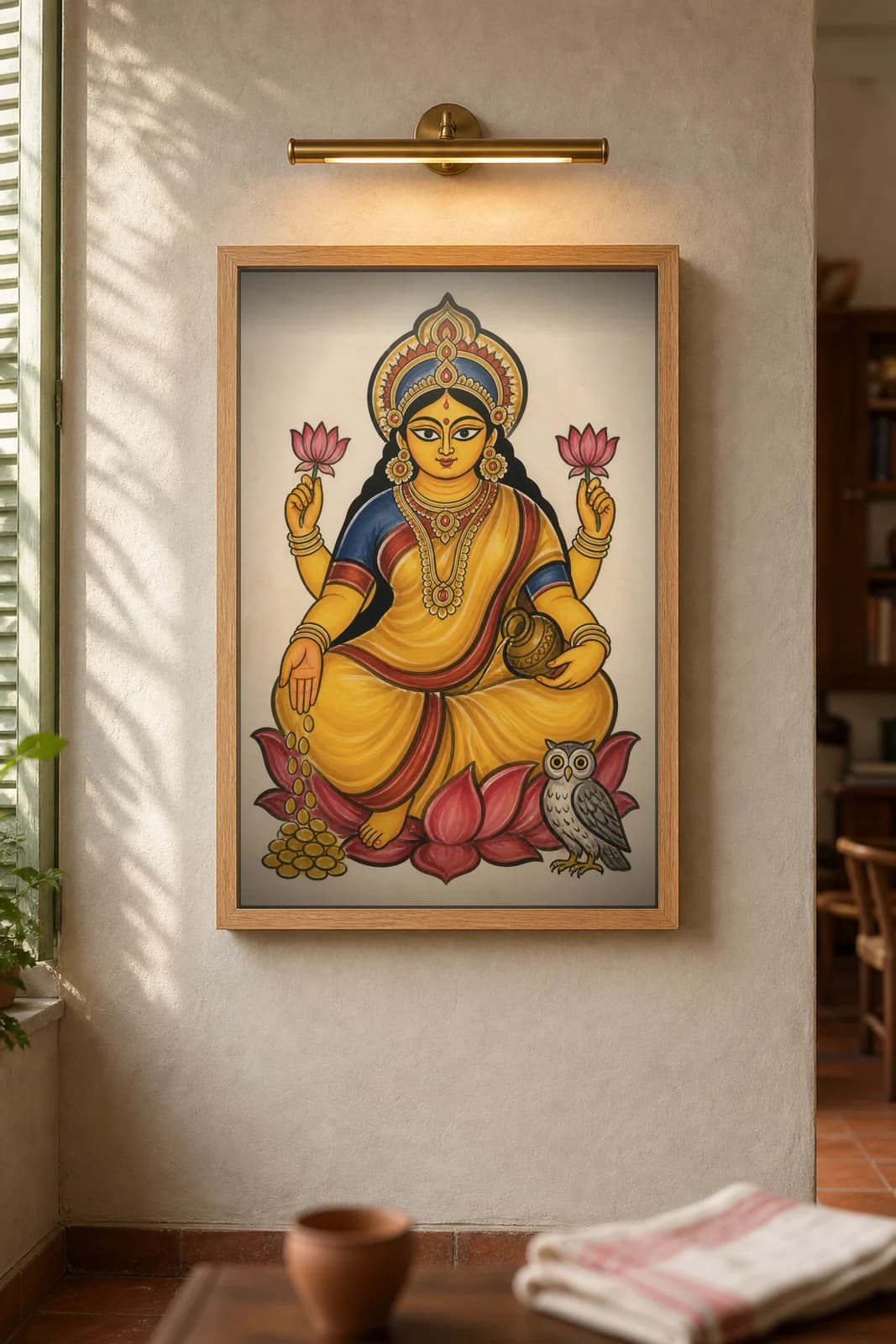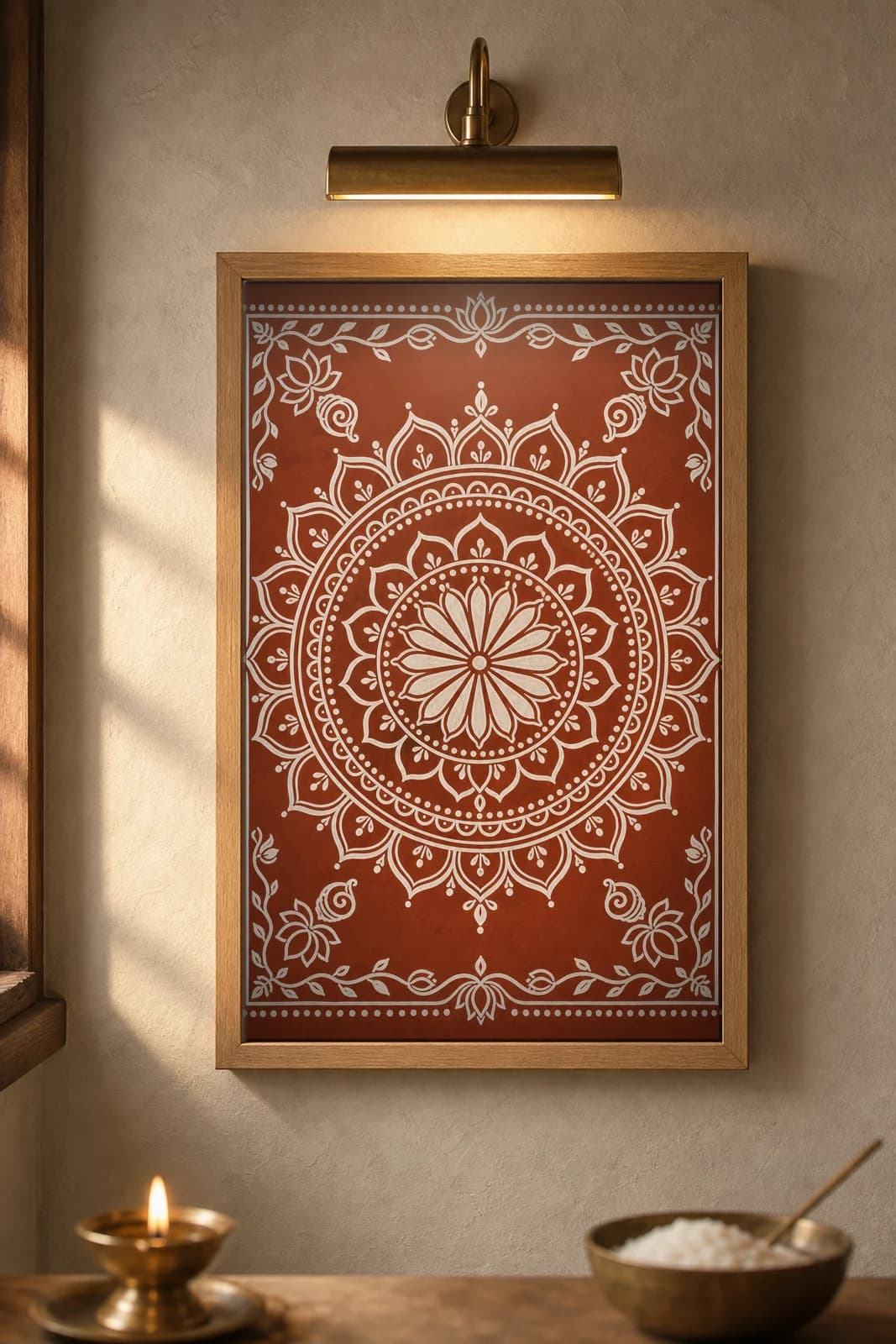
Auspicious — 53 museum-grade prints that set the mood. Aipan is the ritual floor- and wall-art of the Kumaon region of Uttarakhand, made traditionally by Kumaoni women with white rice-paste (biswar) drawn by fingertip onto a geru — red-ochre earth — ground. The ashtadal kamal, the eight-petal lotus, is a classic Lakshmi-yantra form drawn at Diwali: the lotus is the seat of the goddess of fortune, and the lamps and conches set between its petals are the offerings of the rite. Khovar is the marriage wall art of Hazaribagh district, Jharkhand, combed by women of tribal and Kurmi communities onto the bridal chamber before a wedding, using a sgraffito technique — wet white kaolin slip over a dark base coat, combed and scratched away with a broken comb so the dark ground reads as line. Paired fish are a classic Khovar fertility motif, promising plenty and increase to the new household, alongside lotus and peacocks. Kalighat Pat grew up in 19th-century Kolkata, painted by migrant patua (chitrakar) scroll-painters who settled near the Kalighat Kali temple and sold quick watercolour souvenirs to pilgrims. Working on mill-made paper with a bold single black brush outline and soft 'boneless' shaded strokes on a plain ground, they painted gods and goddesses alongside what is often called India's first modern social satire — sharp, affectionate caricatures of the colonial 'babu' and the hypocrisies of Calcutta life.

$49


$49


$49

$49


$49

$49


$49


$49


$49


$49