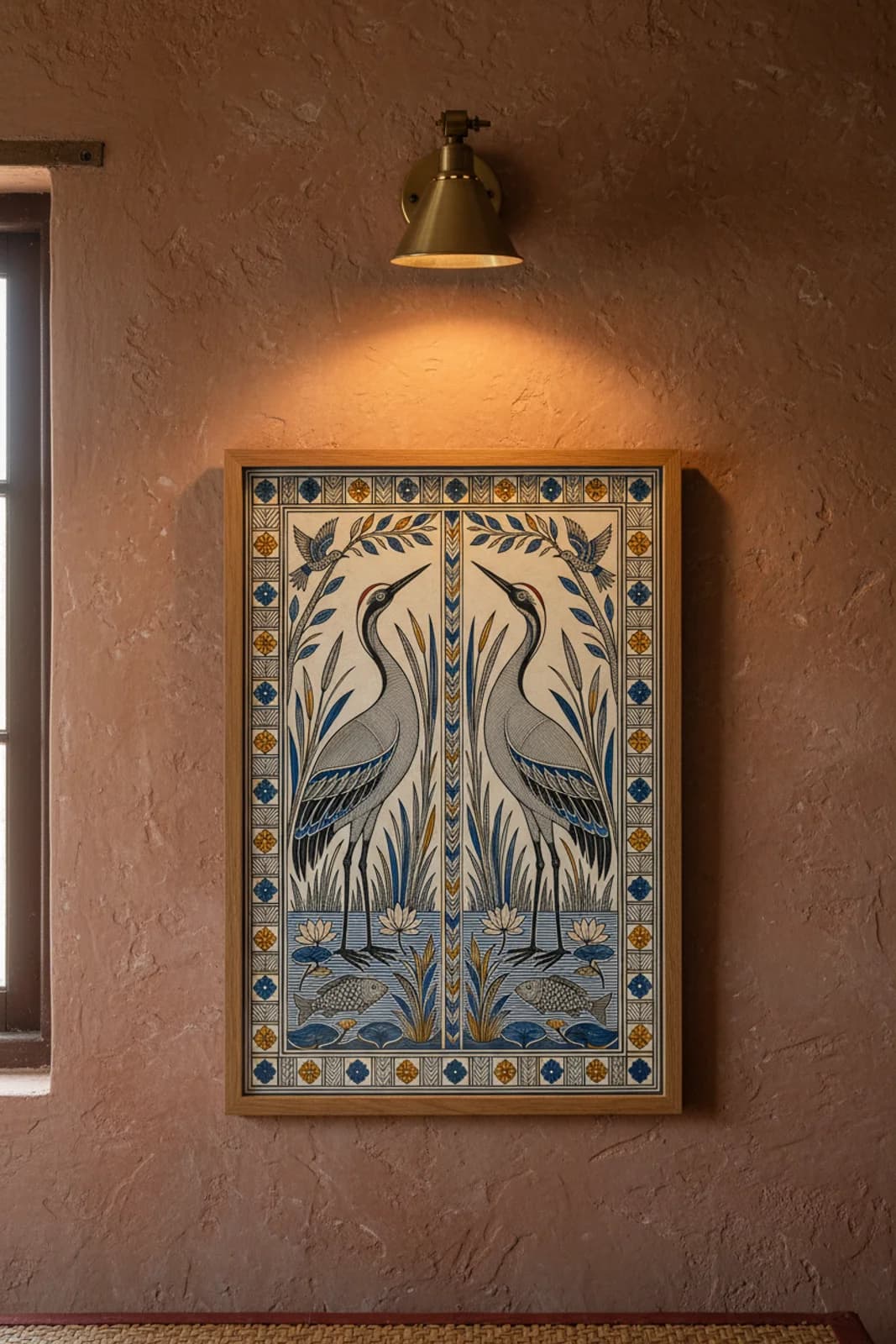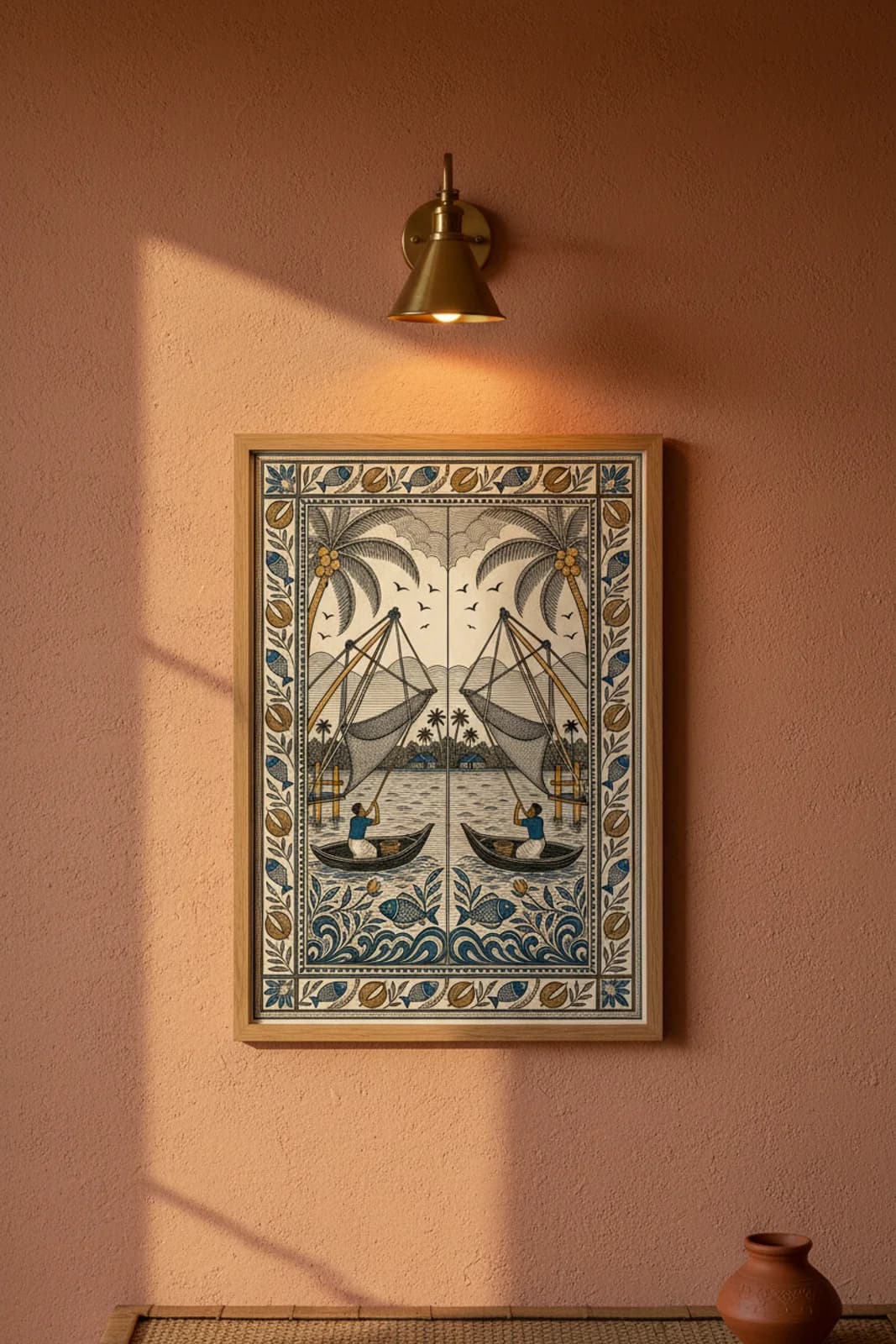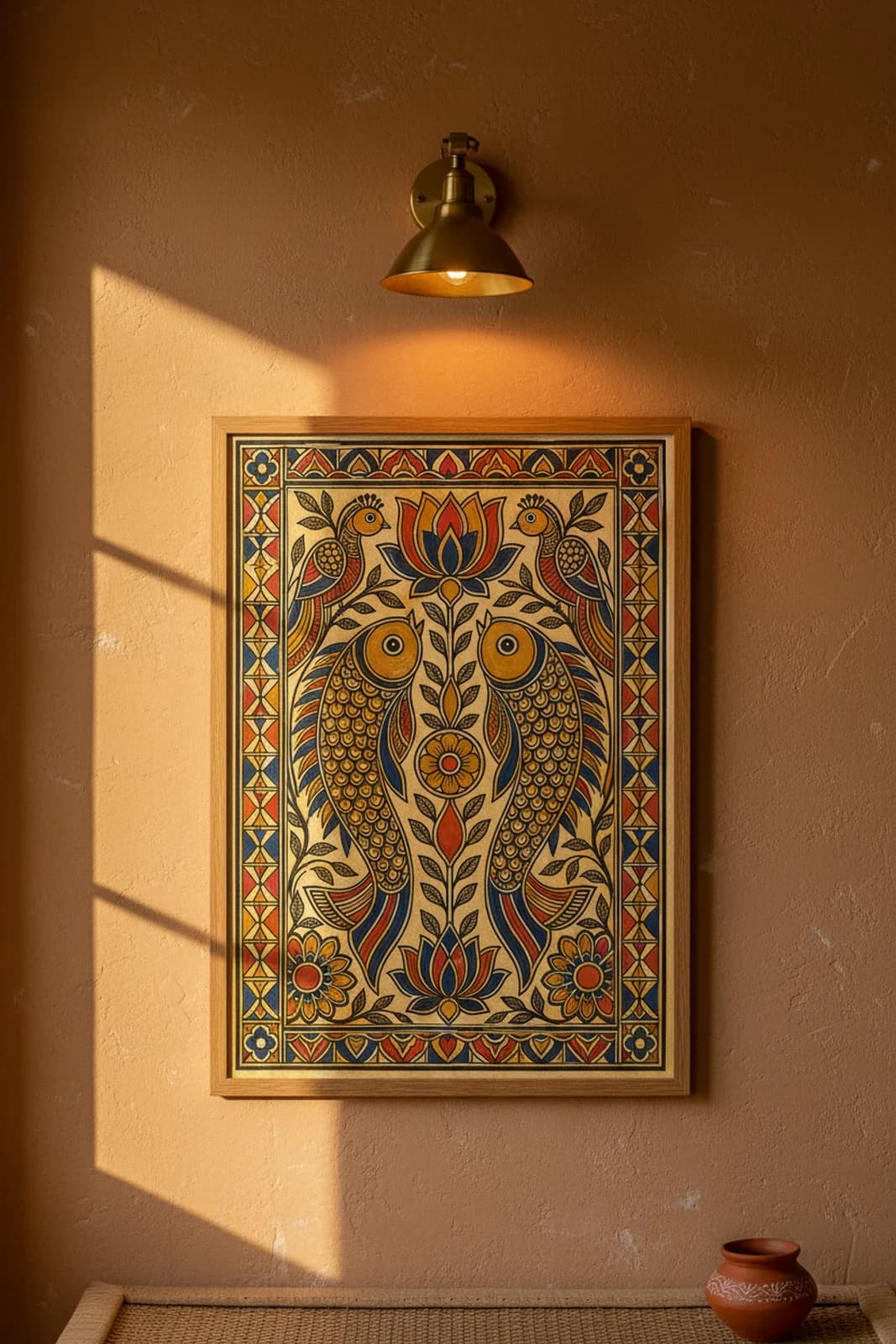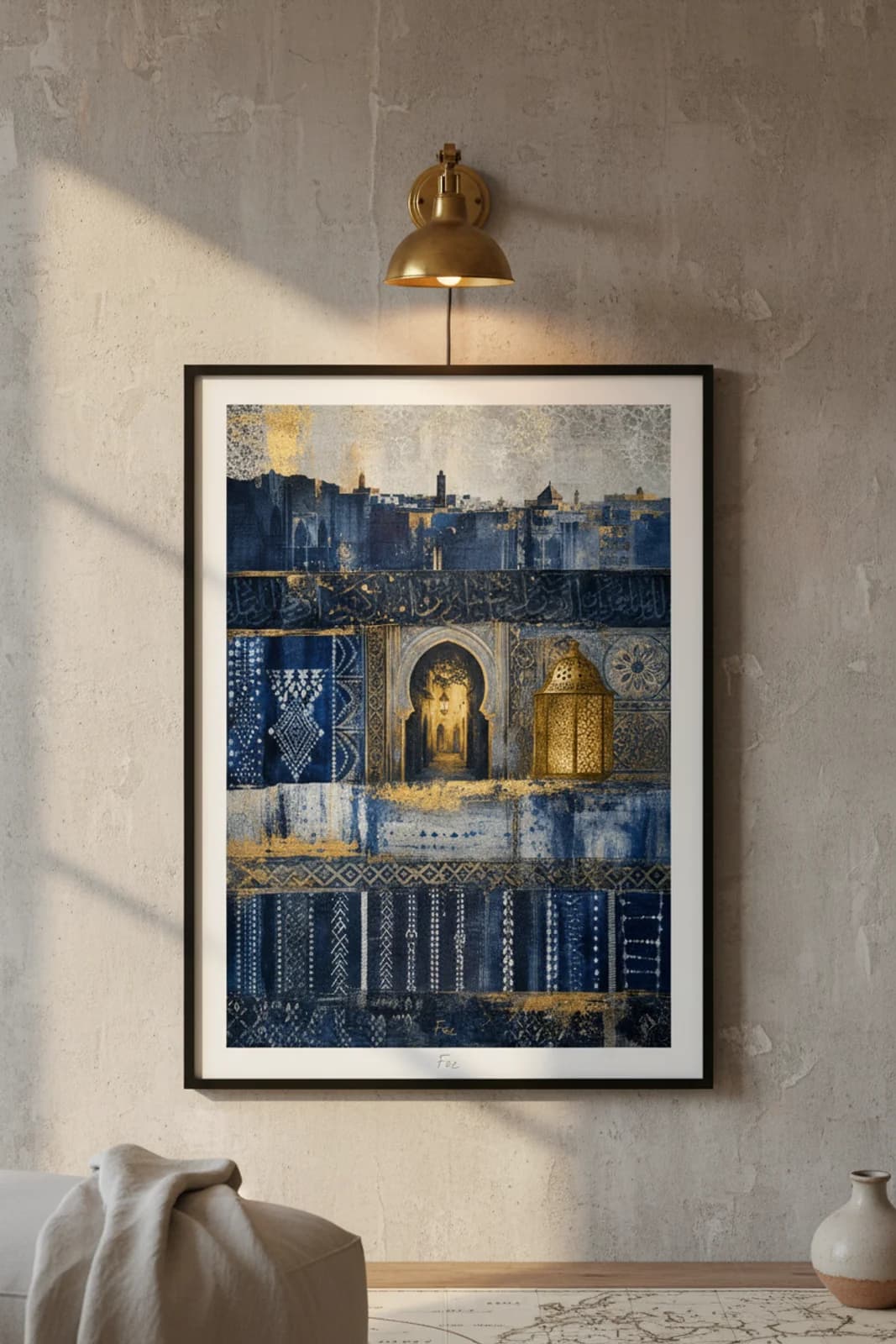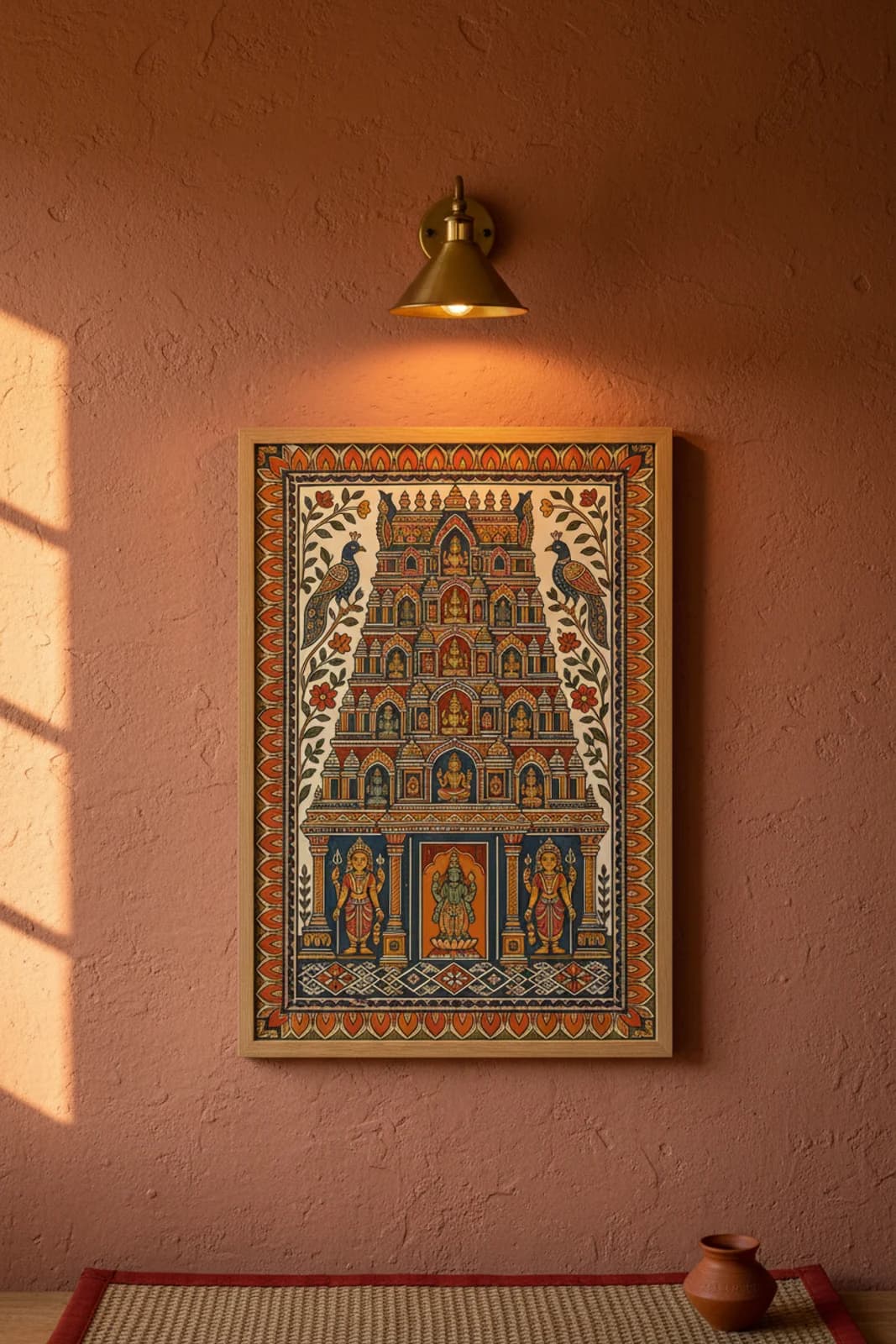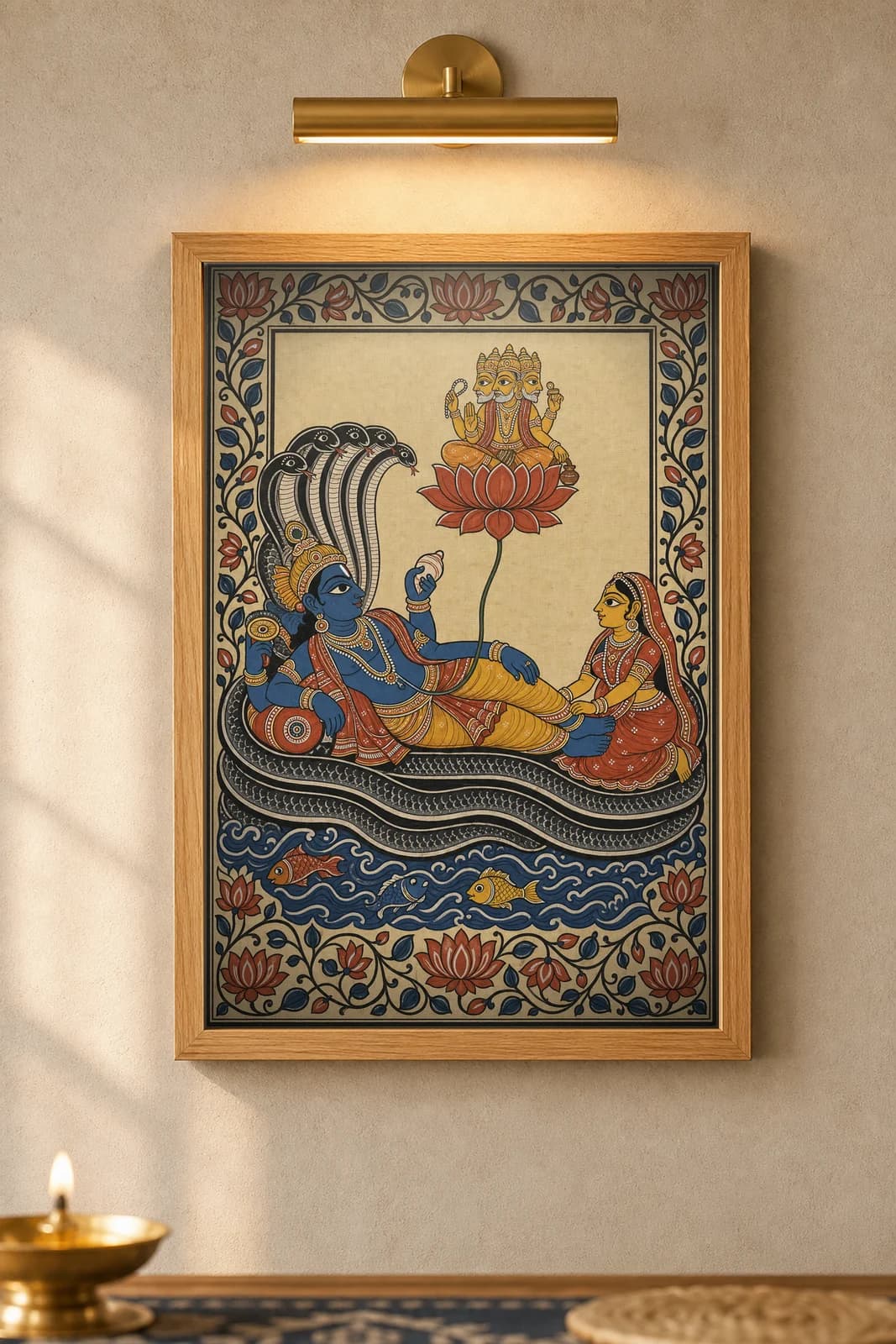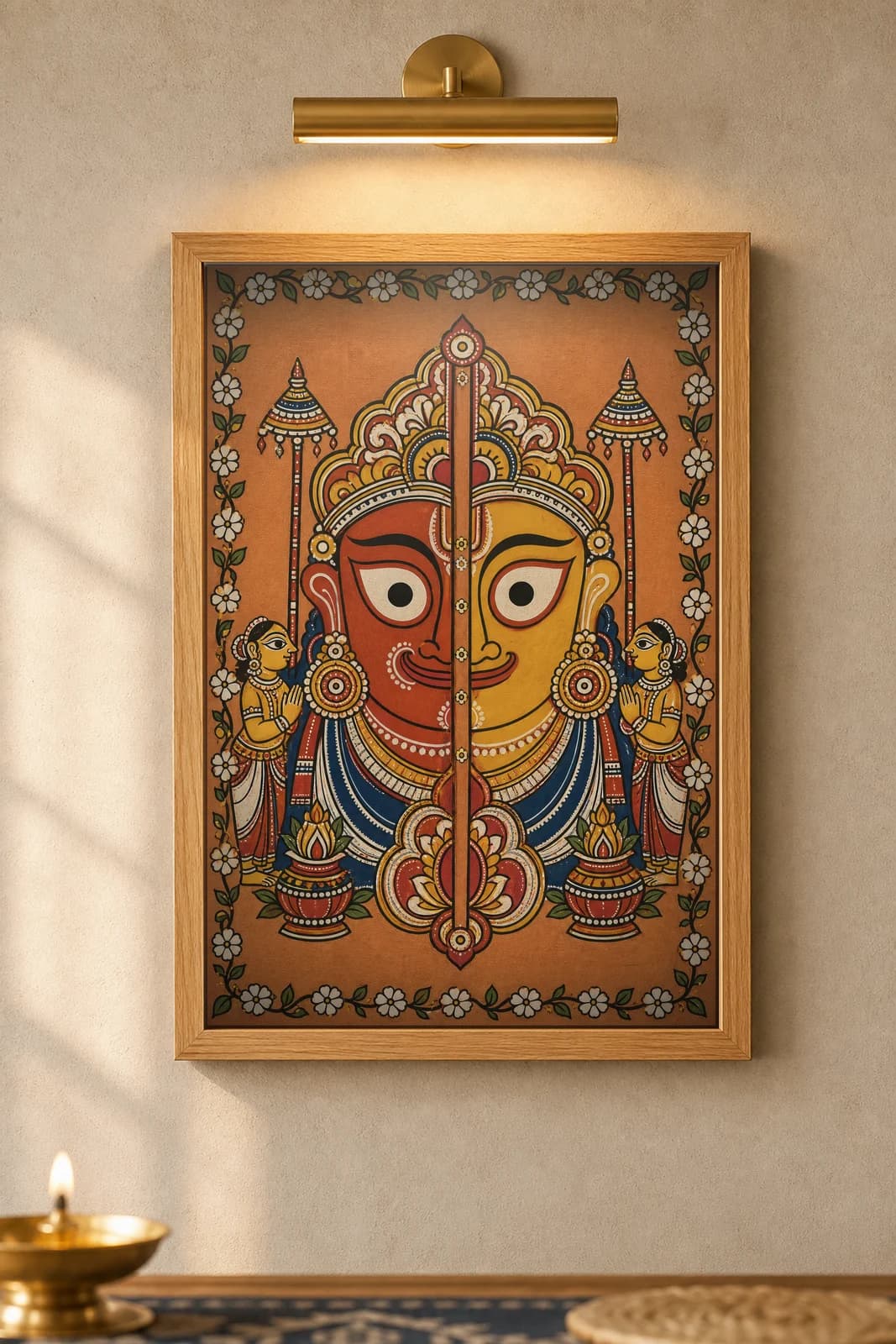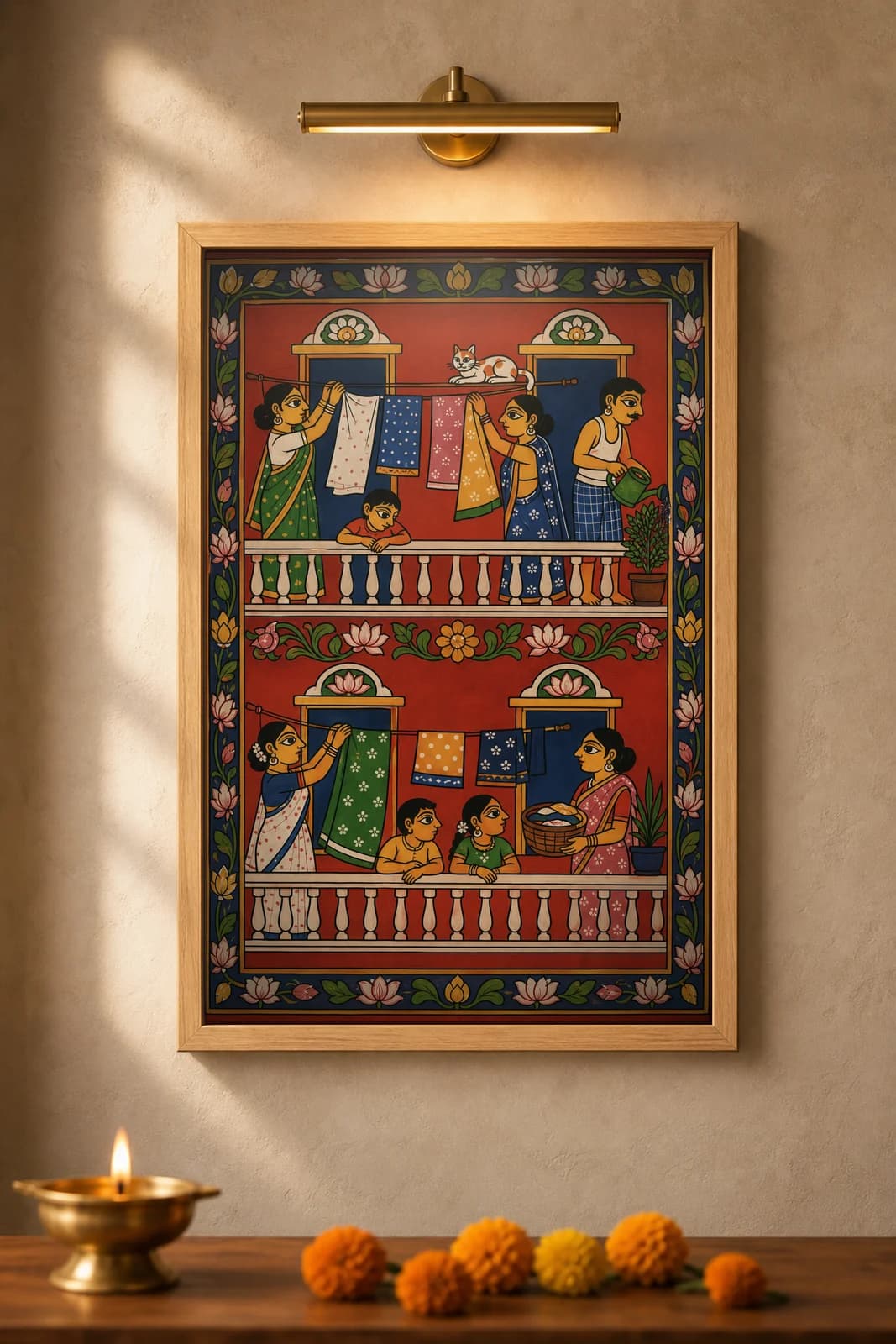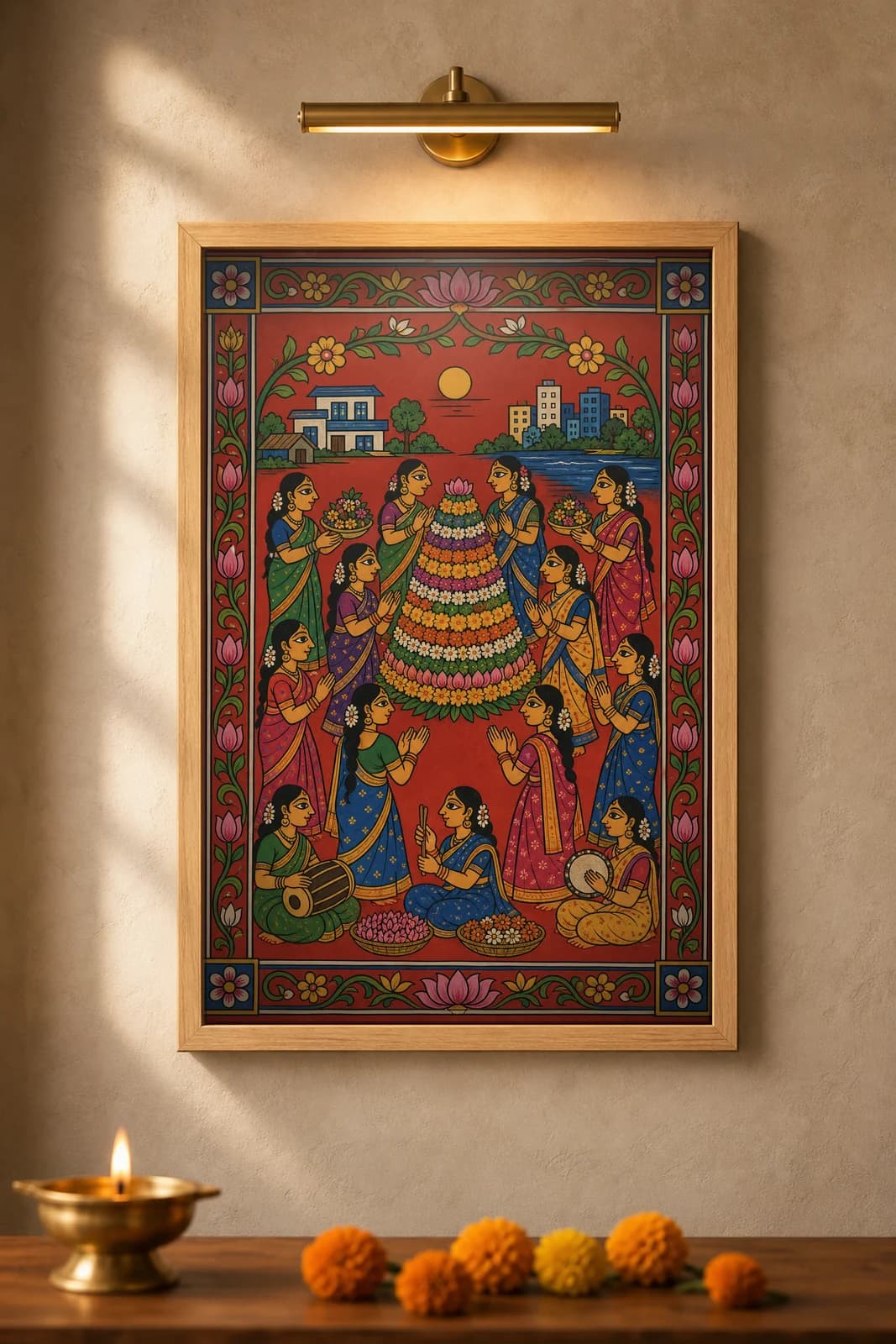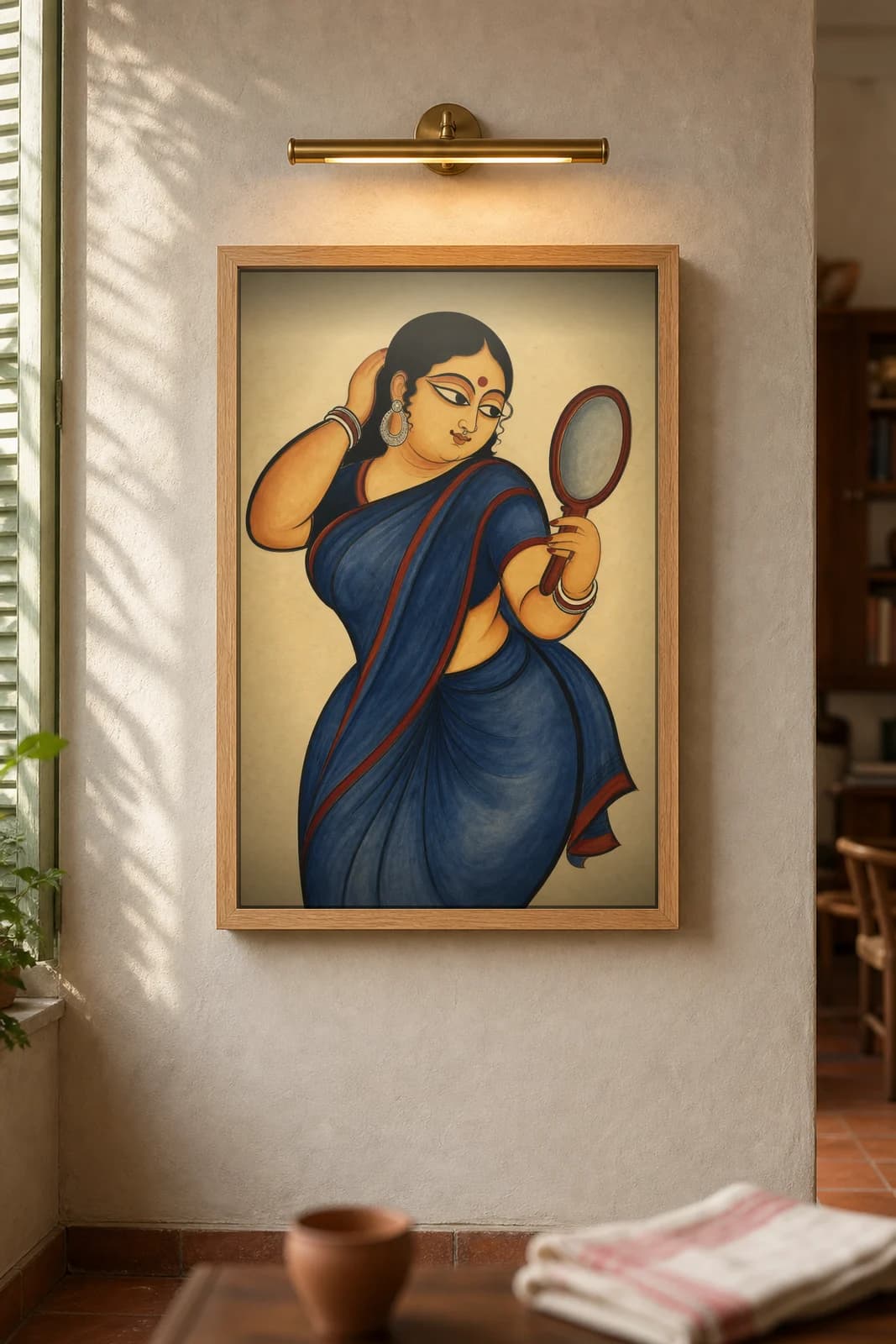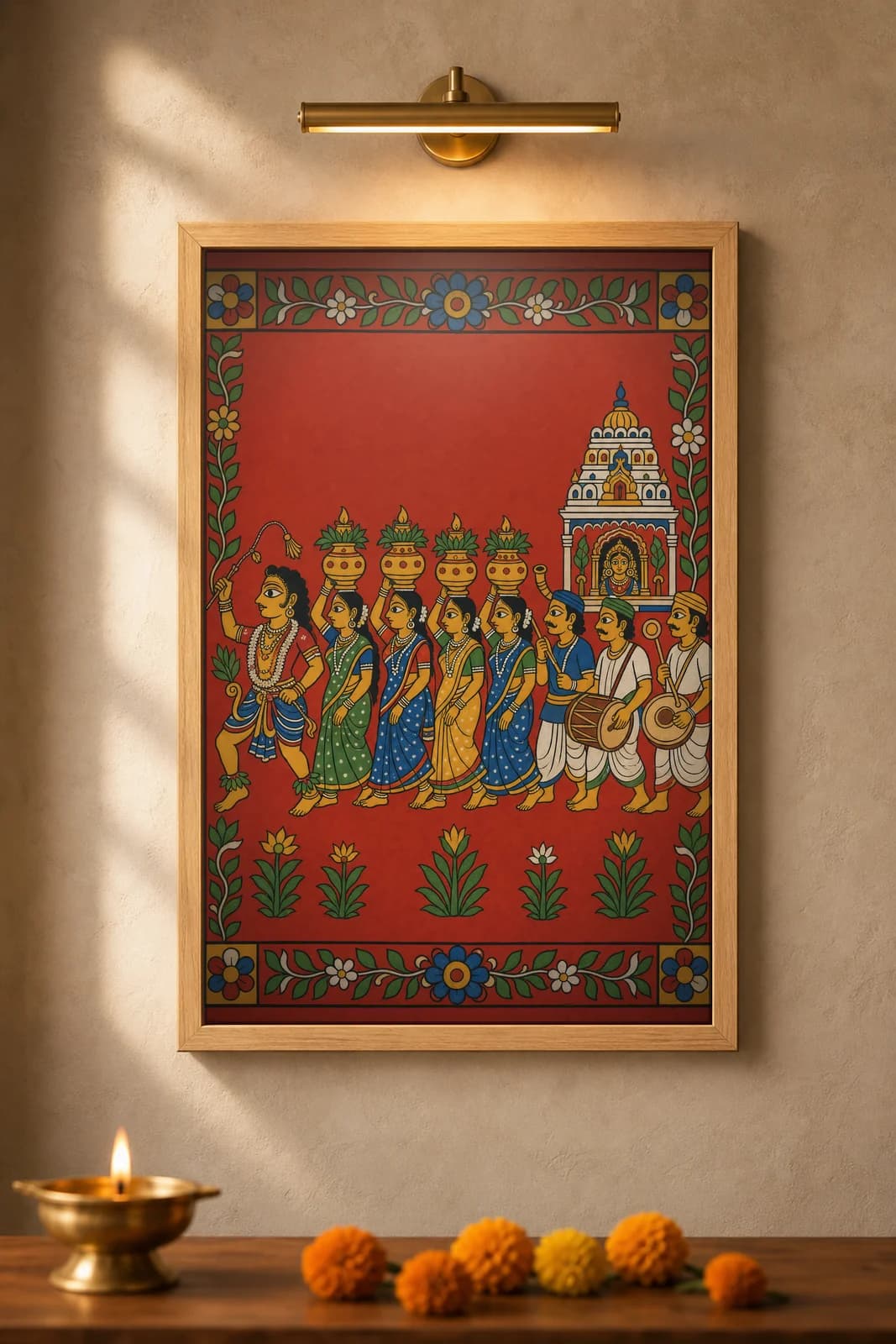
Indigo Blue — 166 museum-grade prints in this palette. Kalighat Pat grew up in 19th-century Kolkata, painted by migrant patua (chitrakar) scroll-painters who settled near the Kalighat Kali temple and sold quick watercolour souvenirs to pilgrims. Working on mill-made paper with a bold single black brush outline and soft 'boneless' shaded strokes on a plain ground, they painted gods and goddesses alongside what is often called India's first modern social satire — sharp, affectionate caricatures of the colonial 'babu' and the hypocrisies of Calcutta life. The gopuram — from Sanskrit gopura, gateway tower — is the monumental pyramidal entrance of Dravidian Hindu temple architecture across Tamil Nadu, Karnataka, Andhra Pradesh, and Kerala, famously exemplified by the polychrome tiers of Madurai Meenakshi Amman Temple and Chennai Kapaleeshwarar Temple. Unlike Nagara shikhara spires of North India, gopurams widen visually through stacked horizontal tiers crowded with stucco deities, mythological figures, and ornamental yali balustrades. Kachni — from the Hindi word for line art — is the Madhubani style associated with Kayastha community artists in Darbhanga and Rajnagar, built from fine parallel hatching, stipple dots, and minimal colour accent rather than the saturated flat fills of Brahmin Bharni panels. The sitar itself carries deep North Indian classical association: long-necked lute family instrument central to Hindustani raga performance, with gourd resonators, movable frets, and sympathetic strings — Varanasi remains among India's most storied gharana cities for sitar and tabla pedagogy along the Ganges ghats.


$49


$49


$49


$49


$49


$49


$49


$49