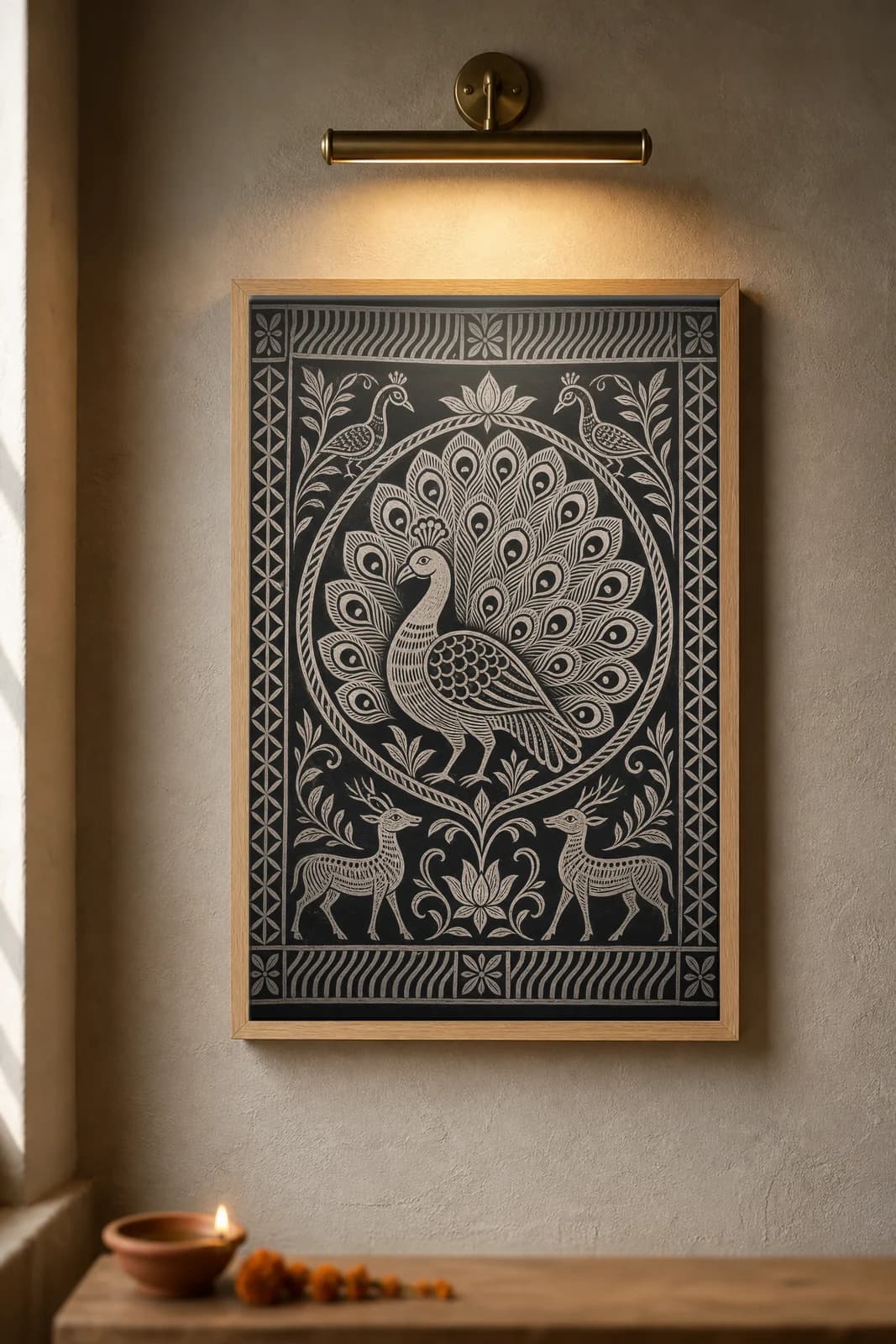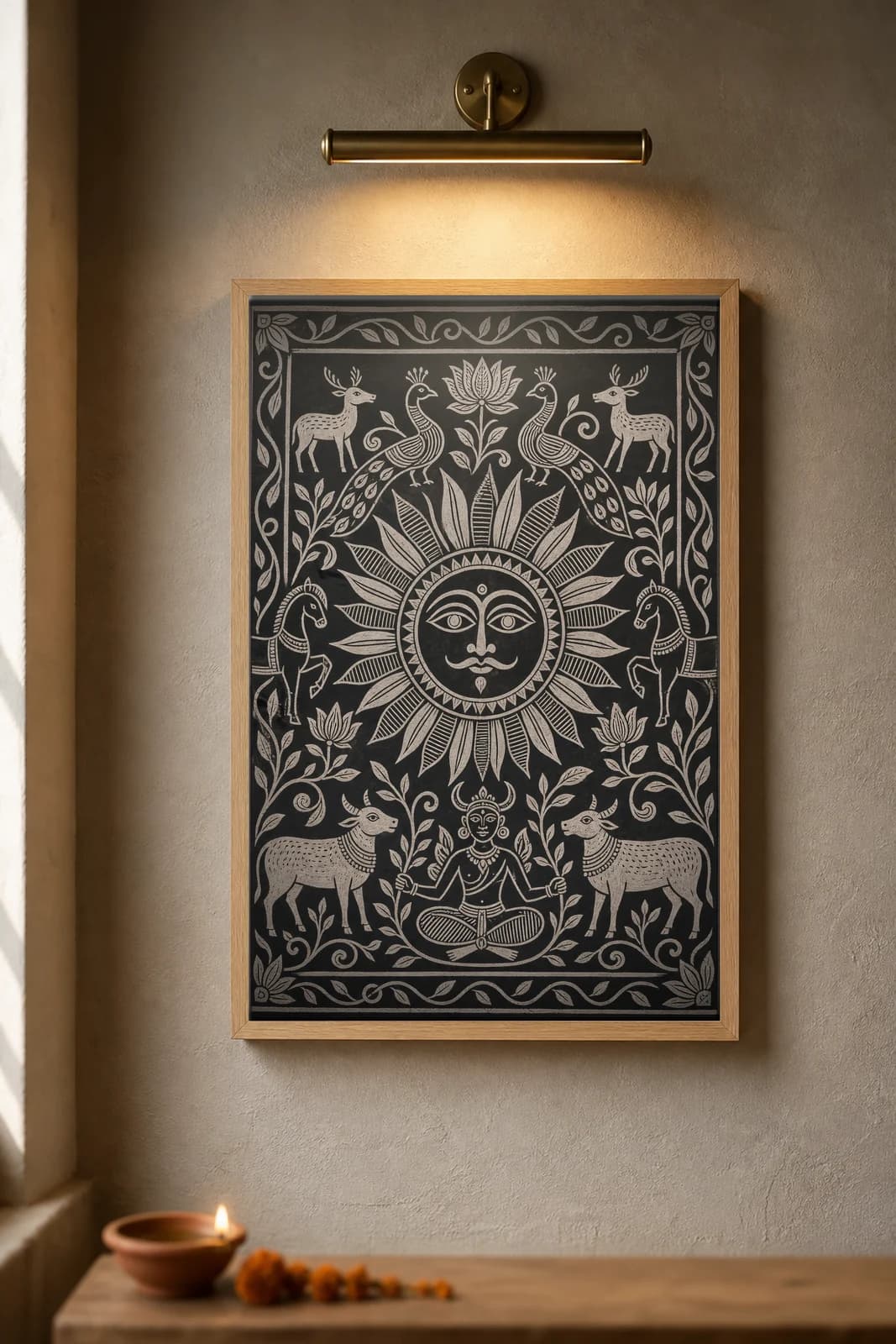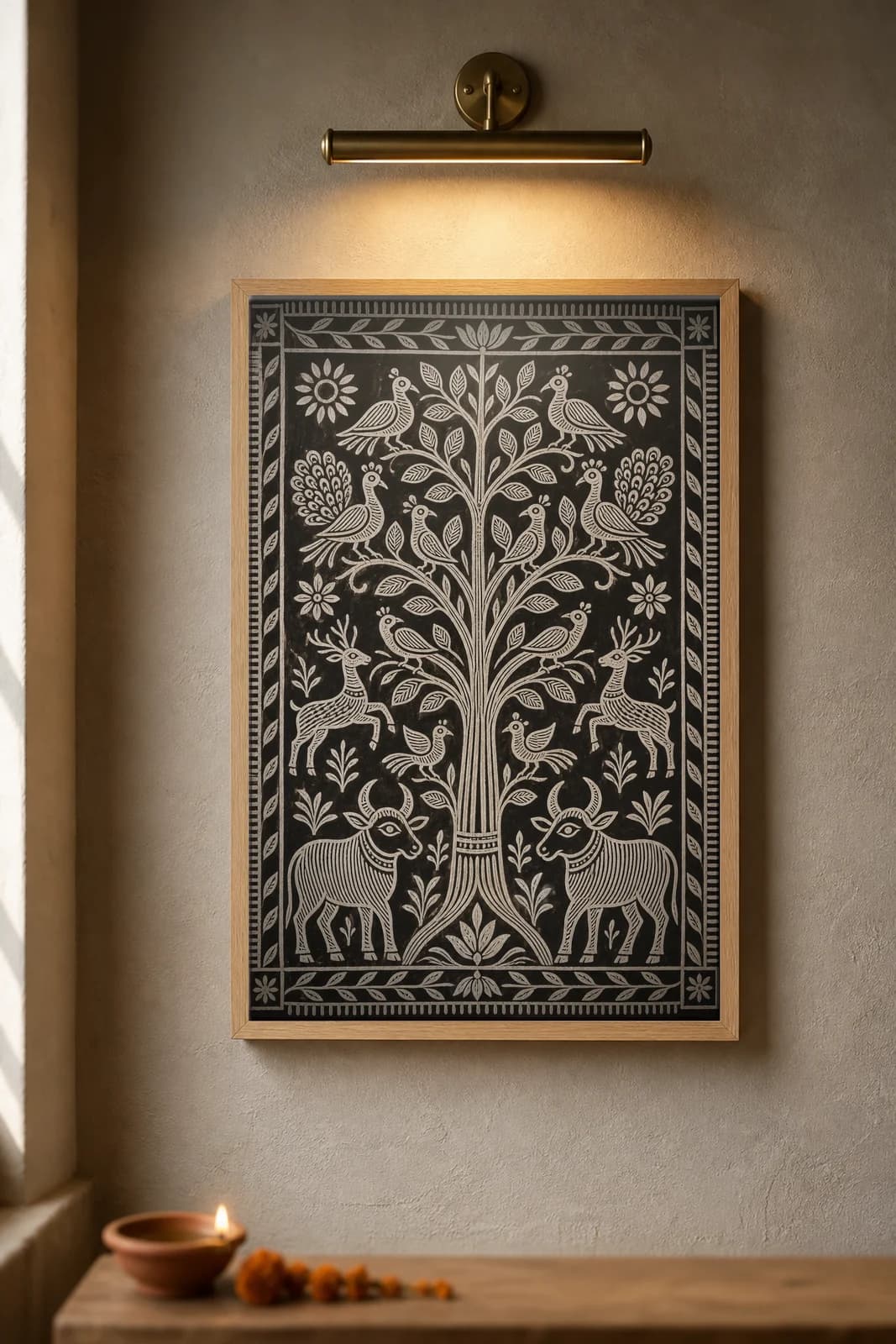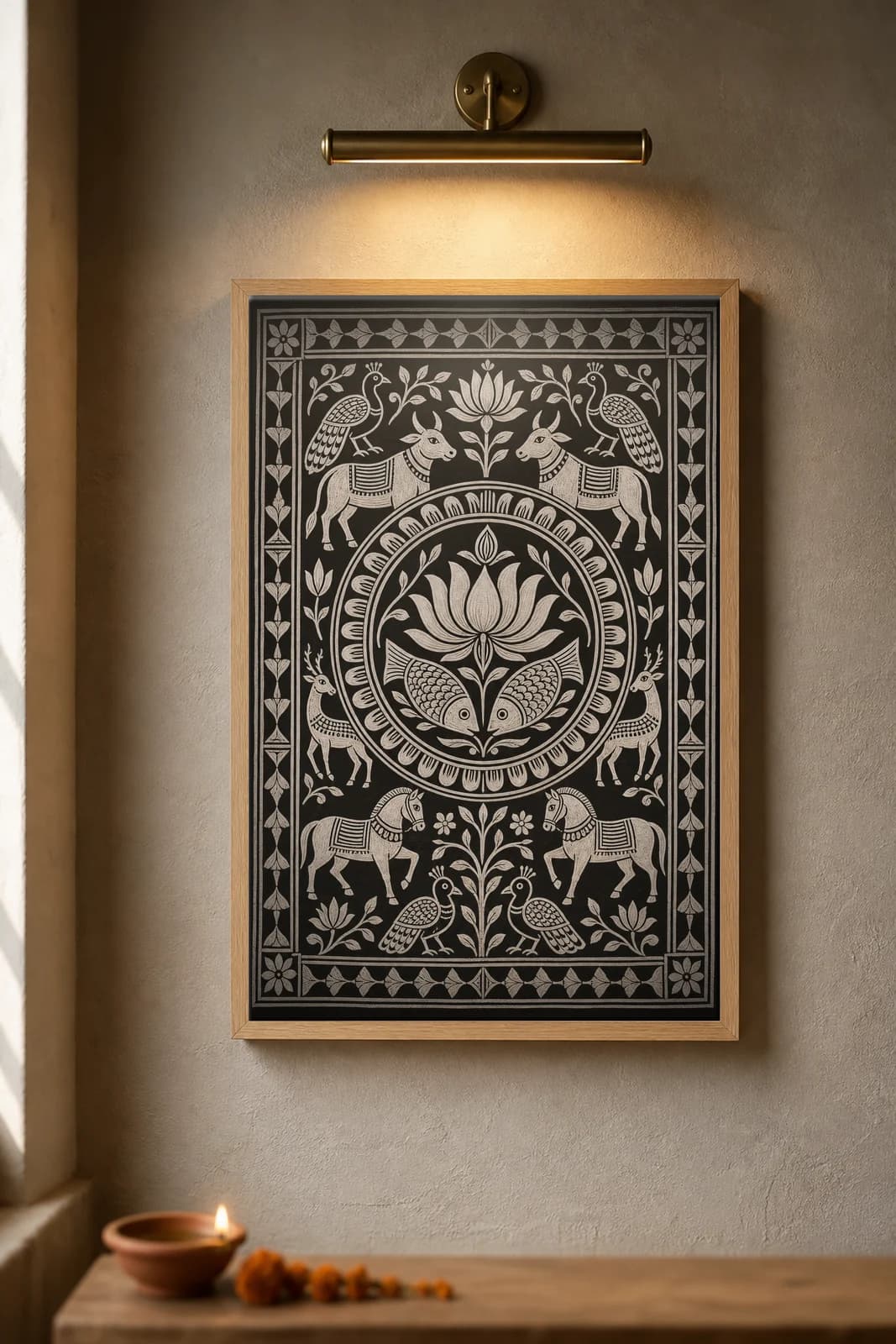
Hospitality Lobby — 287 museum-grade prints sized and toned for the room. Aipan is the ritual floor- and wall-art of the Kumaon region of Uttarakhand, made traditionally by Kumaoni women with white rice-paste (biswar) drawn by fingertip onto a geru — red-ochre earth — ground. The Bagwal is an old stone-throwing fair held at the Varahi (Maa Barahi) temple at Devidhura in Champawat district, in which two groups pelt each other — now largely with flowers and fruit — until the priest calls a halt; it is one of Kumaon's best-known living fairs. Kalighat Pat grew up in 19th-century Kolkata, painted by migrant patua (chitrakar) scroll-painters who settled near the Kalighat Kali temple and sold quick watercolour souvenirs to pilgrims. Working on mill-made paper with a bold single black brush outline and soft 'boneless' shaded strokes on a plain ground, they painted gods and goddesses alongside what is often called India's first modern social satire — sharp, affectionate caricatures of the colonial 'babu' and the hypocrisies of Calcutta life. The gopuram — from Sanskrit gopura, gateway tower — is the monumental pyramidal entrance of Dravidian Hindu temple architecture across Tamil Nadu, Karnataka, Andhra Pradesh, and Kerala, famously exemplified by the polychrome tiers of Madurai Meenakshi Amman Temple and Chennai Kapaleeshwarar Temple. Unlike Nagara shikhara spires of North India, gopurams widen visually through stacked horizontal tiers crowded with stucco deities, mythological figures, and ornamental yali balustrades.

$49


$49