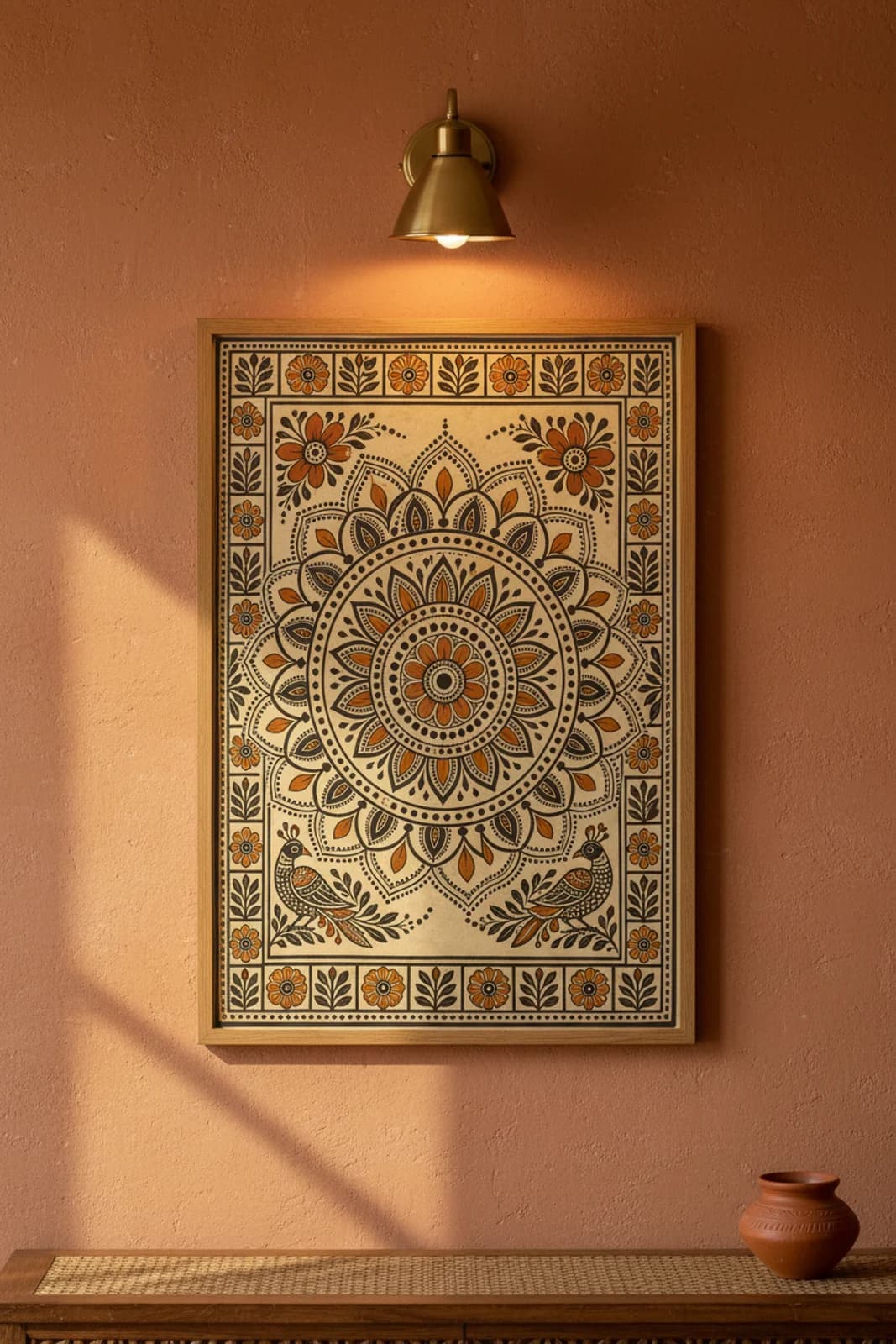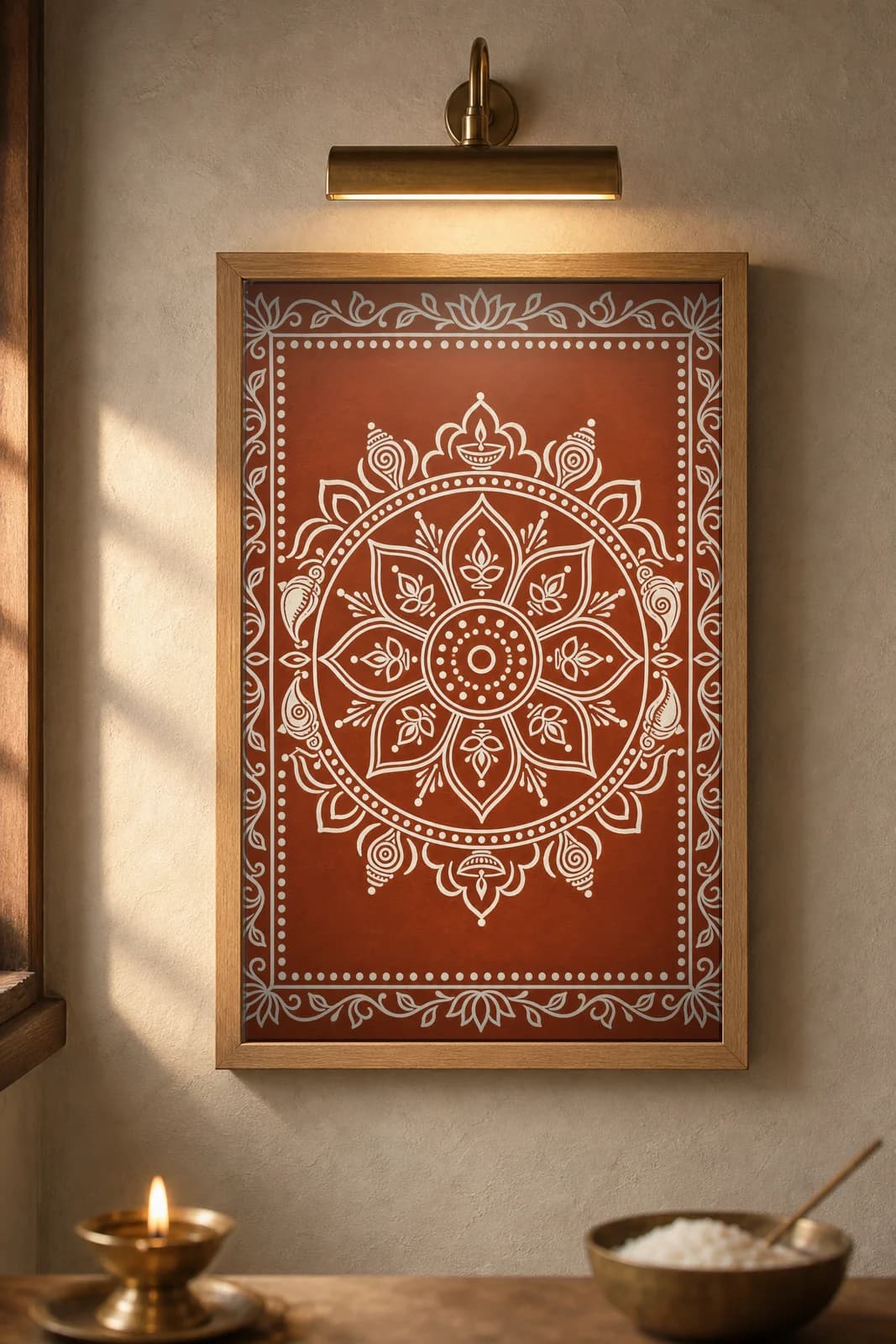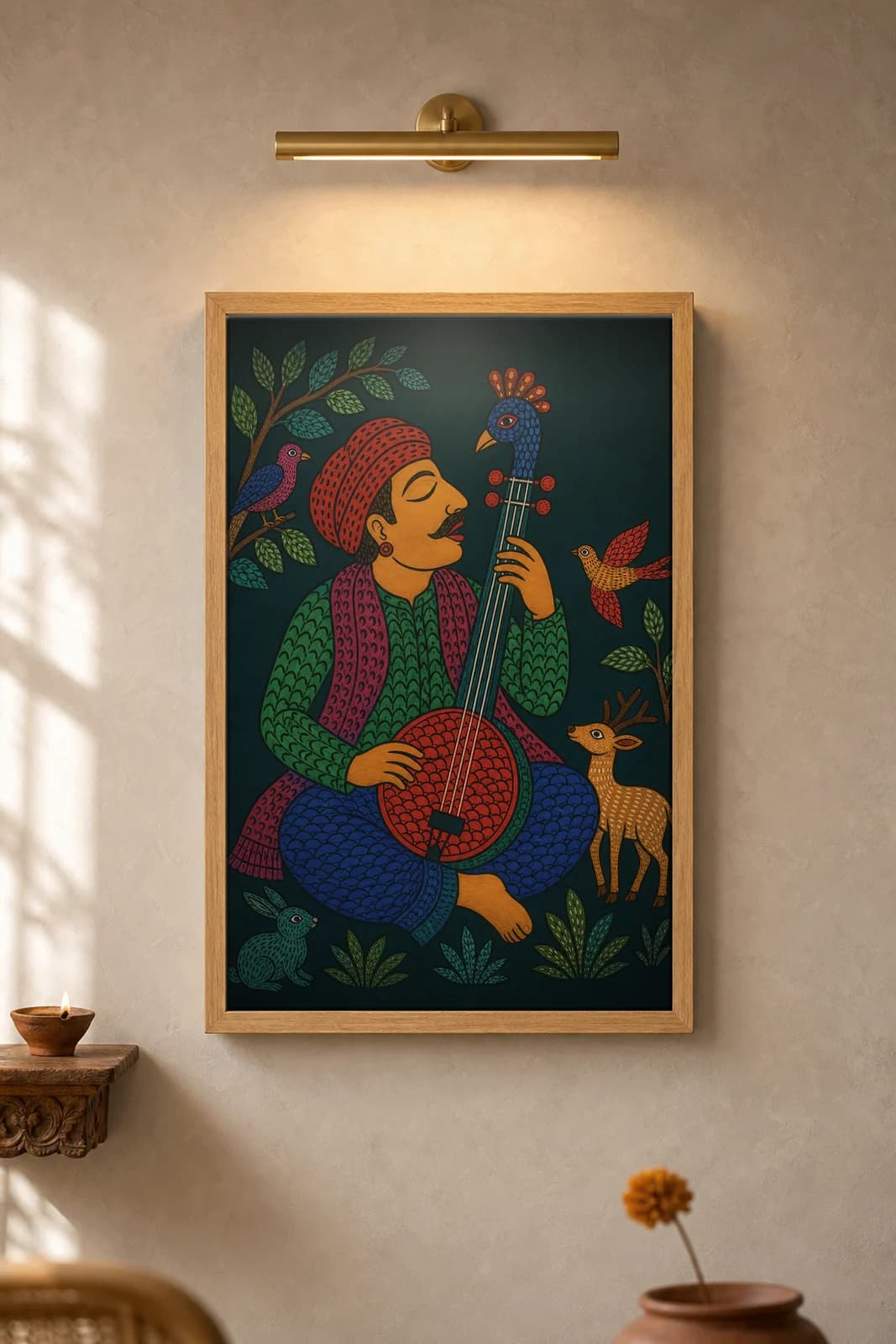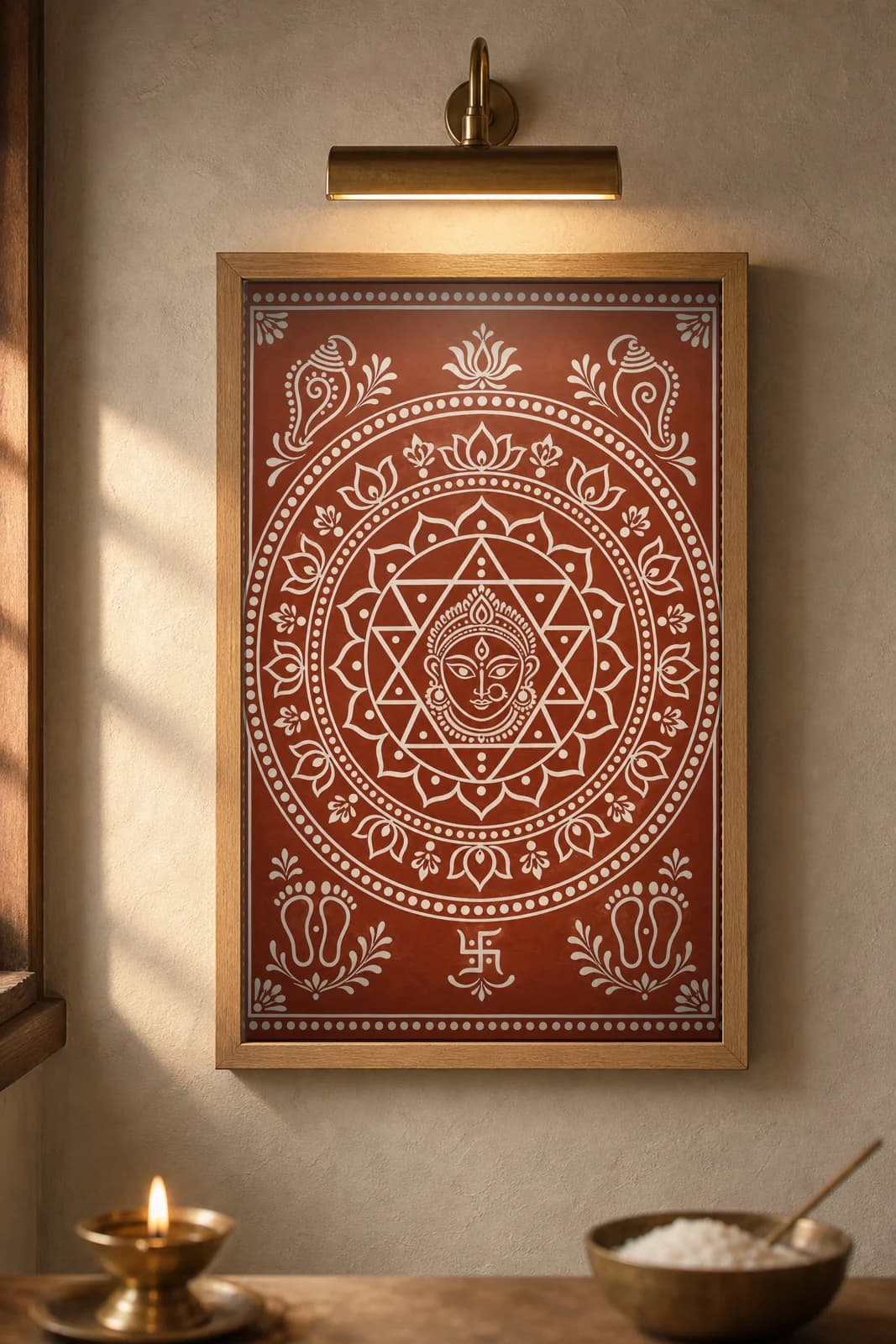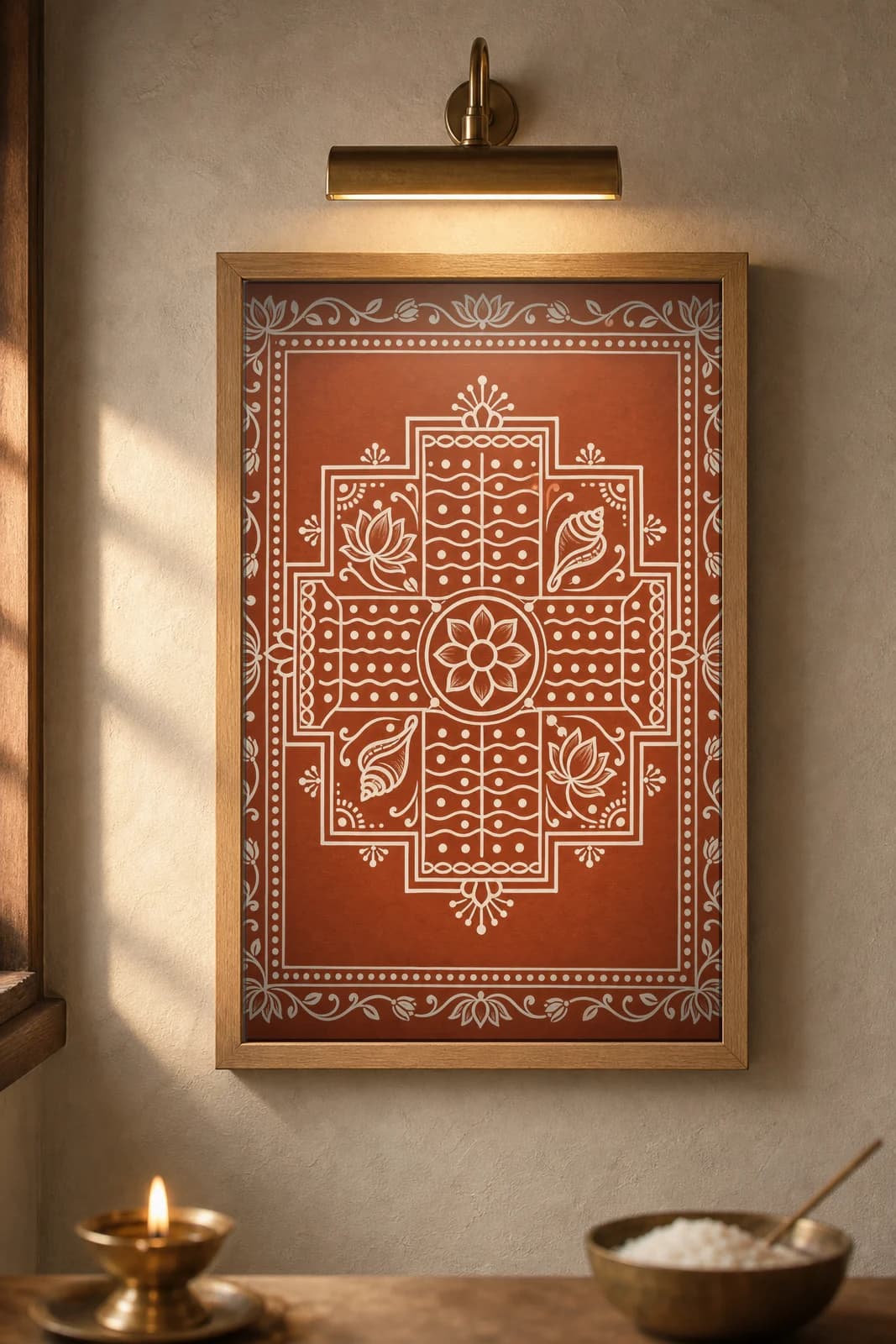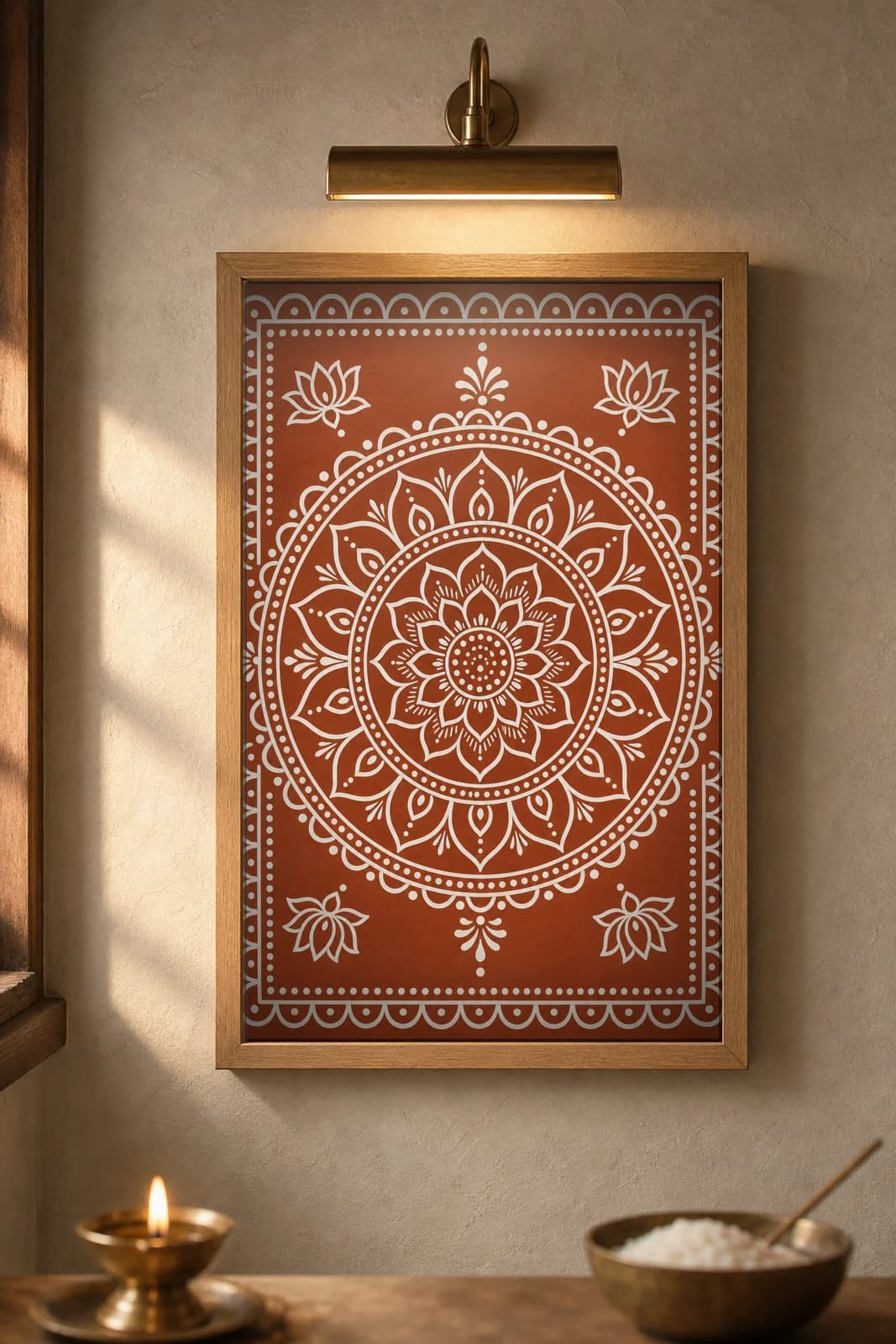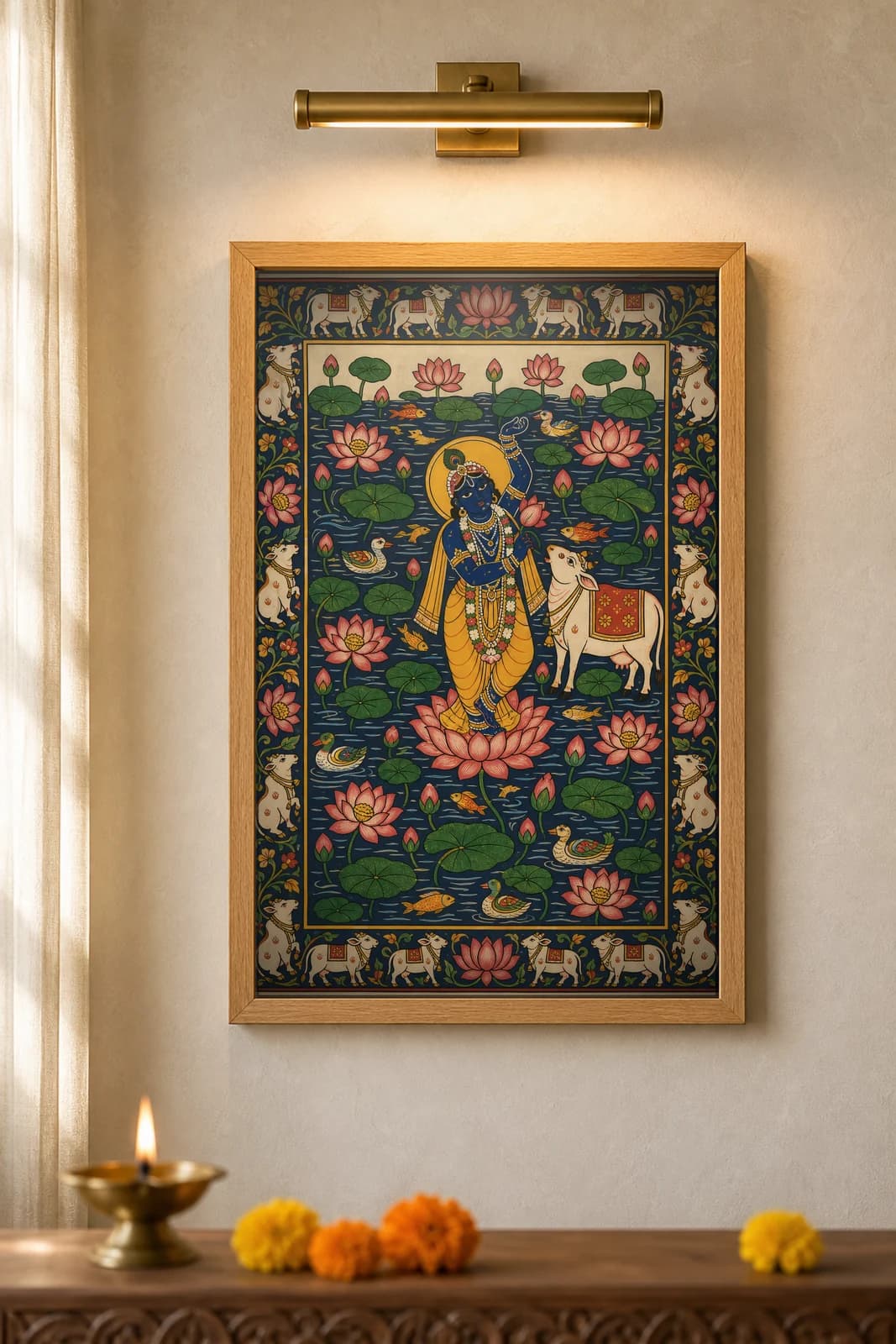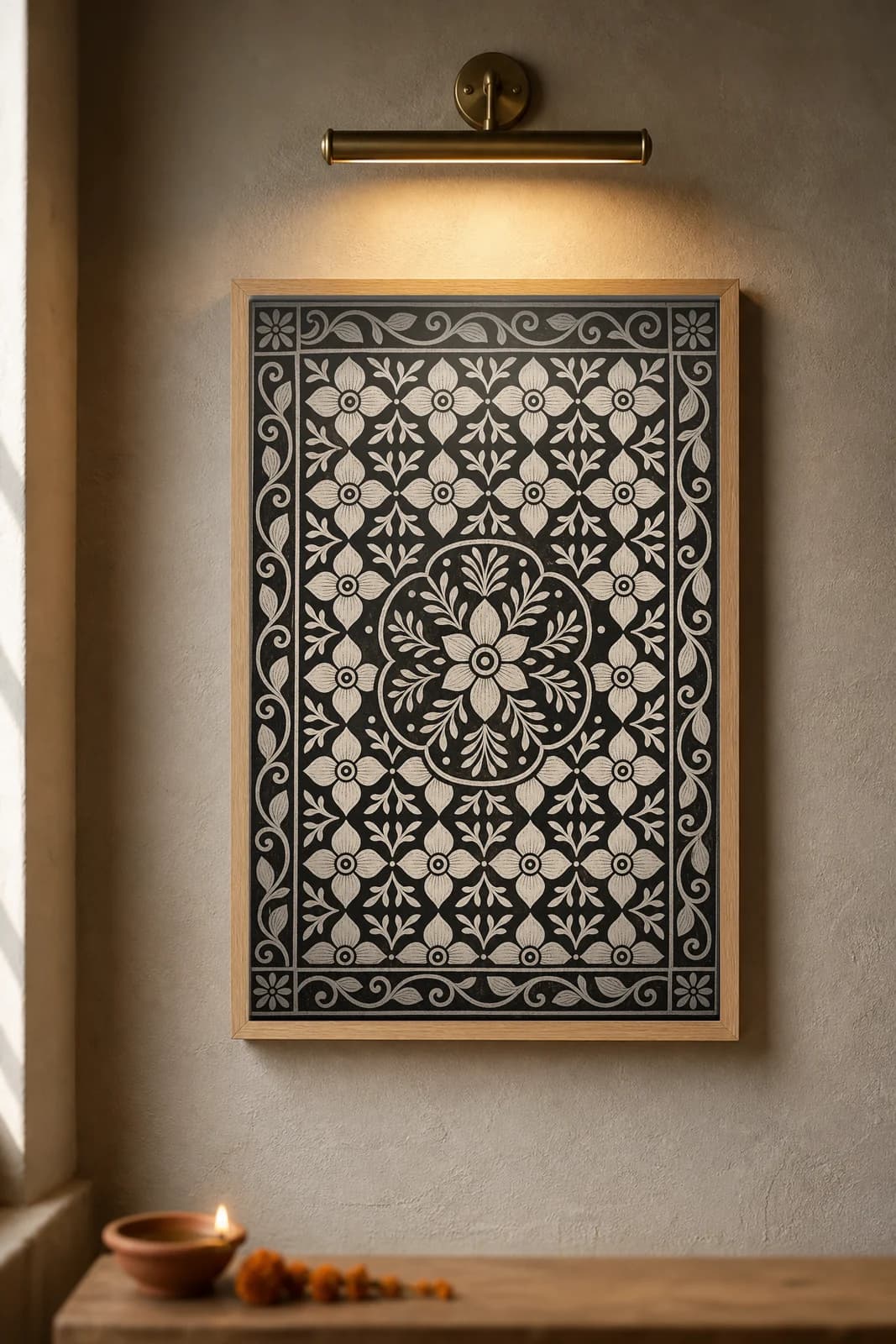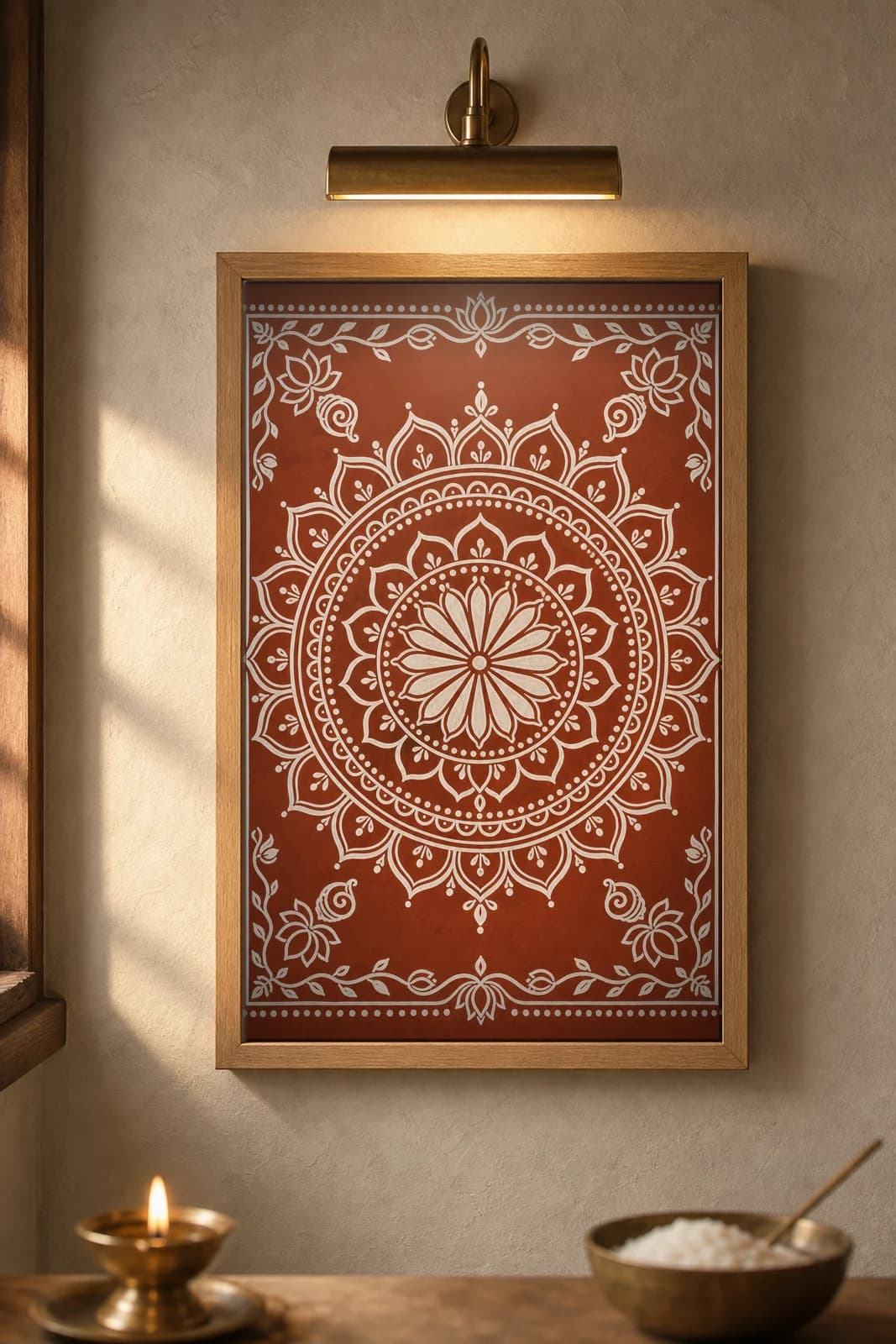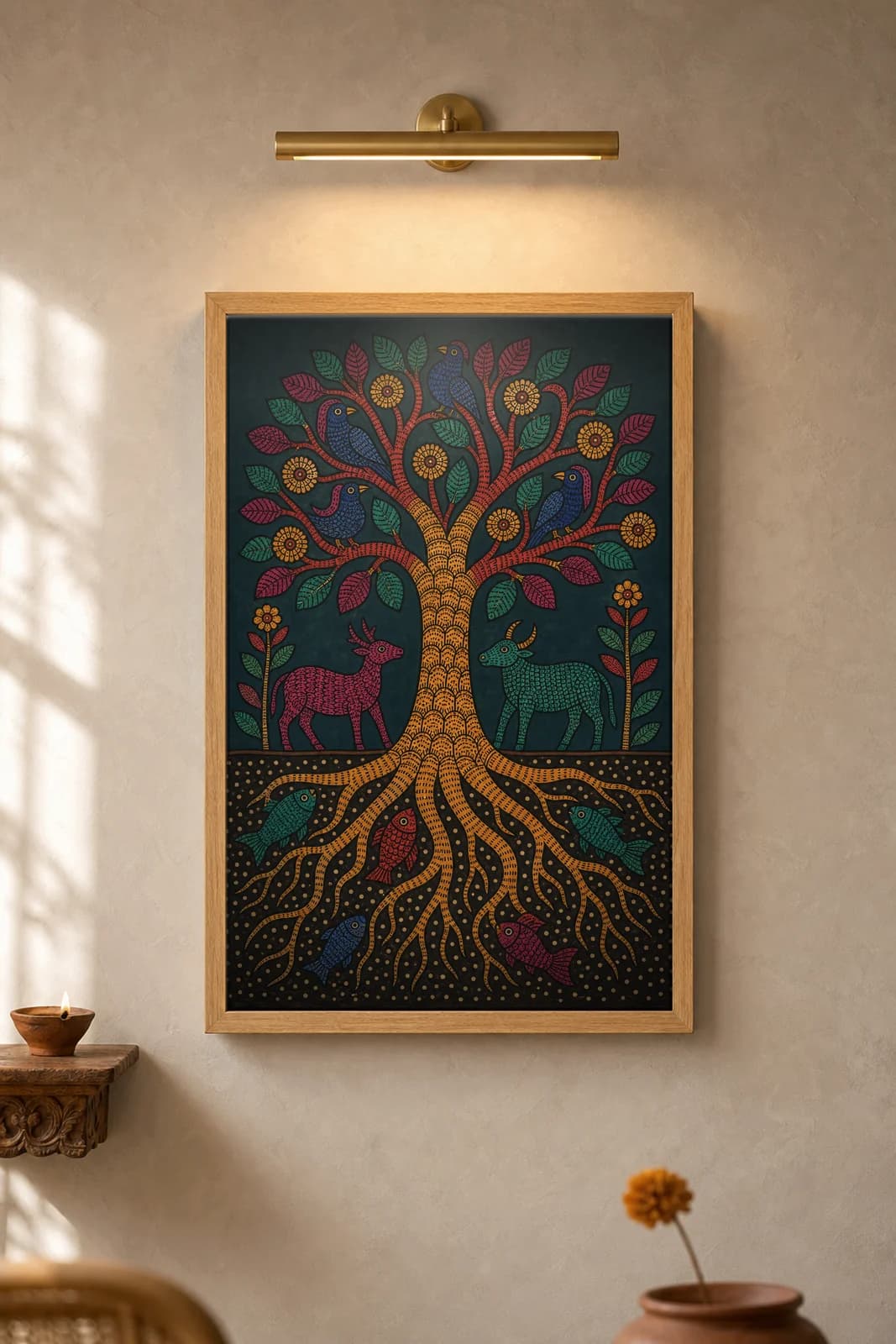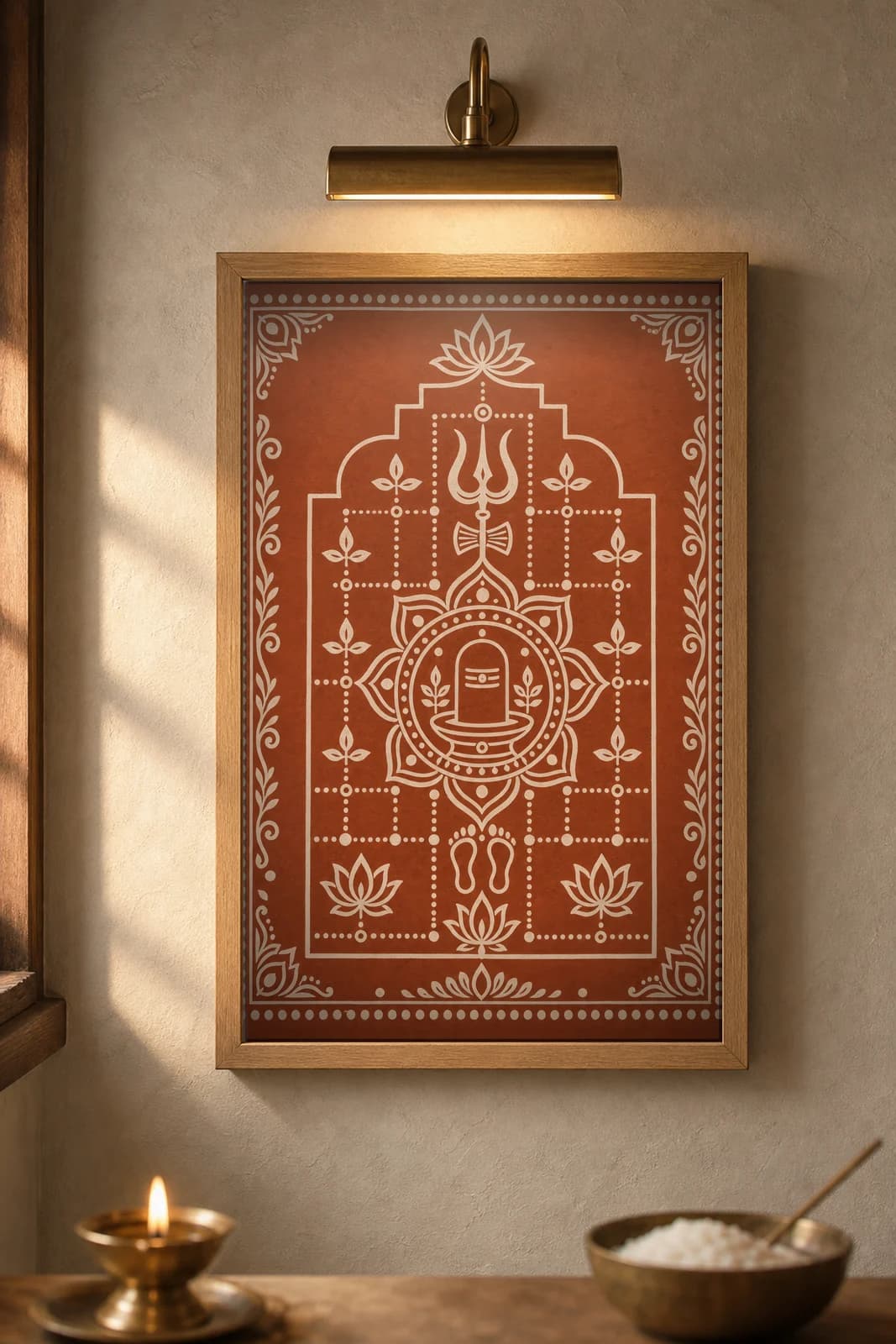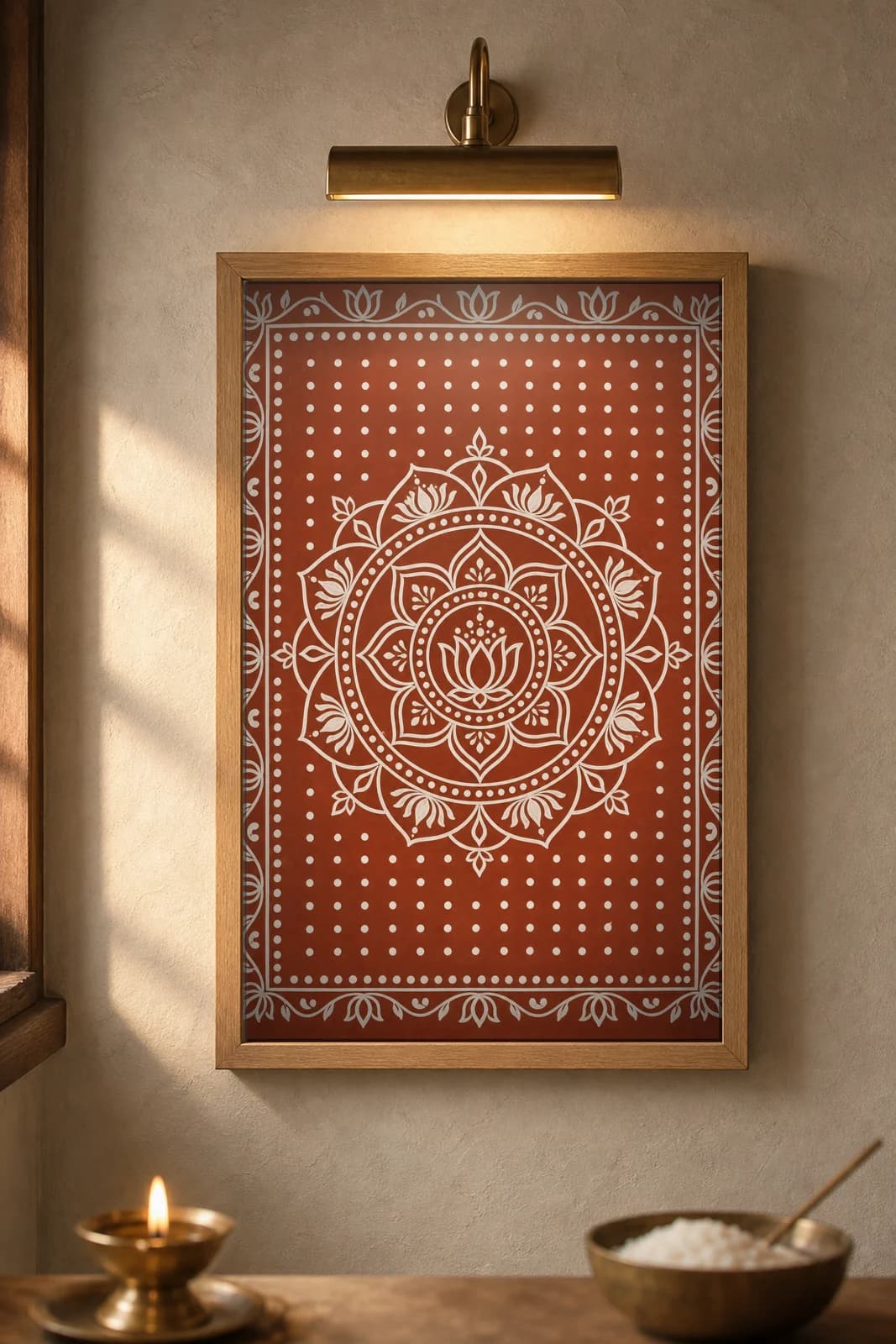
Meditative — 21 museum-grade prints that set the mood. Aipan is the ritual floor- and wall-art of the Kumaon region of Uttarakhand, made traditionally by Kumaoni women with white rice-paste (biswar) drawn by fingertip onto a geru — red-ochre earth — ground. The ashtadal kamal, the eight-petal lotus, is a classic Lakshmi-yantra form drawn at Diwali: the lotus is the seat of the goddess of fortune, and the lamps and conches set between its petals are the offerings of the rite. Kyoto served as Japan's capital from 794 to 1868 and remains dense with UNESCO-listed temples, shrines, and gardens. Fushimi Inari-taisha's torii tunnels, Kiyomizu-dera's wooden stage, and the Yasaka Pagoda in Higashiyama are among the most photographed landmarks in the country — especially during momiji season when maple foliage turns the hills vermilion and gold. The padma mandala — the lotus laid out as a radial diagram with a deity at its centre and figures ringed around like petals — is a recurring form in Kerala temple painting, often spread across sanctum ceilings as well as walls. Here it is rendered in bhitti chitra, Kerala's temple-mural tradition that flourished roughly from the 16th to 19th century and is still painted today: flat panchavarna pigments (red, yellow, green, black, white over an ochre ground), a bold lamp-black outline, the radial lotus geometry and the school's elongated lotus-shaped eyes.