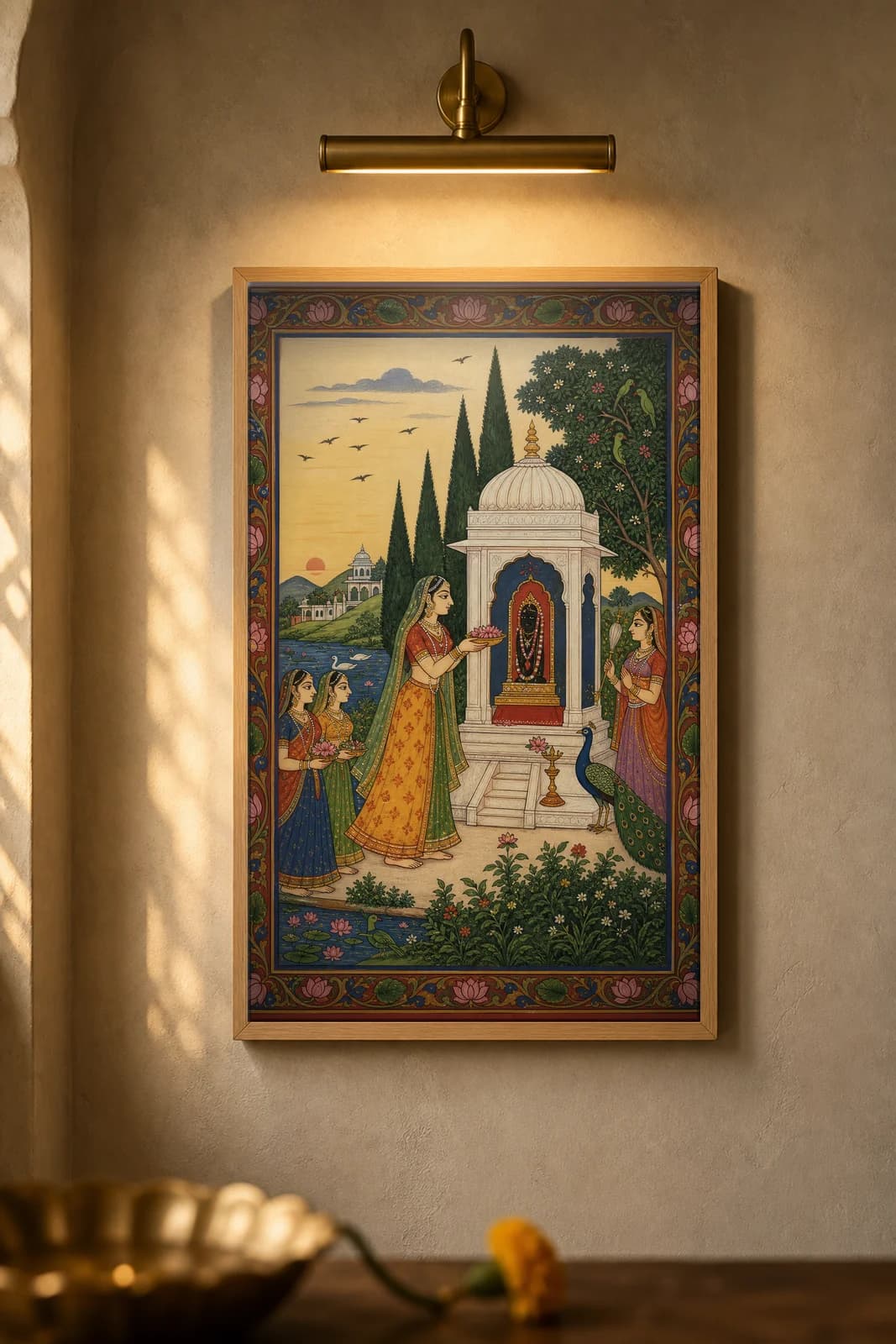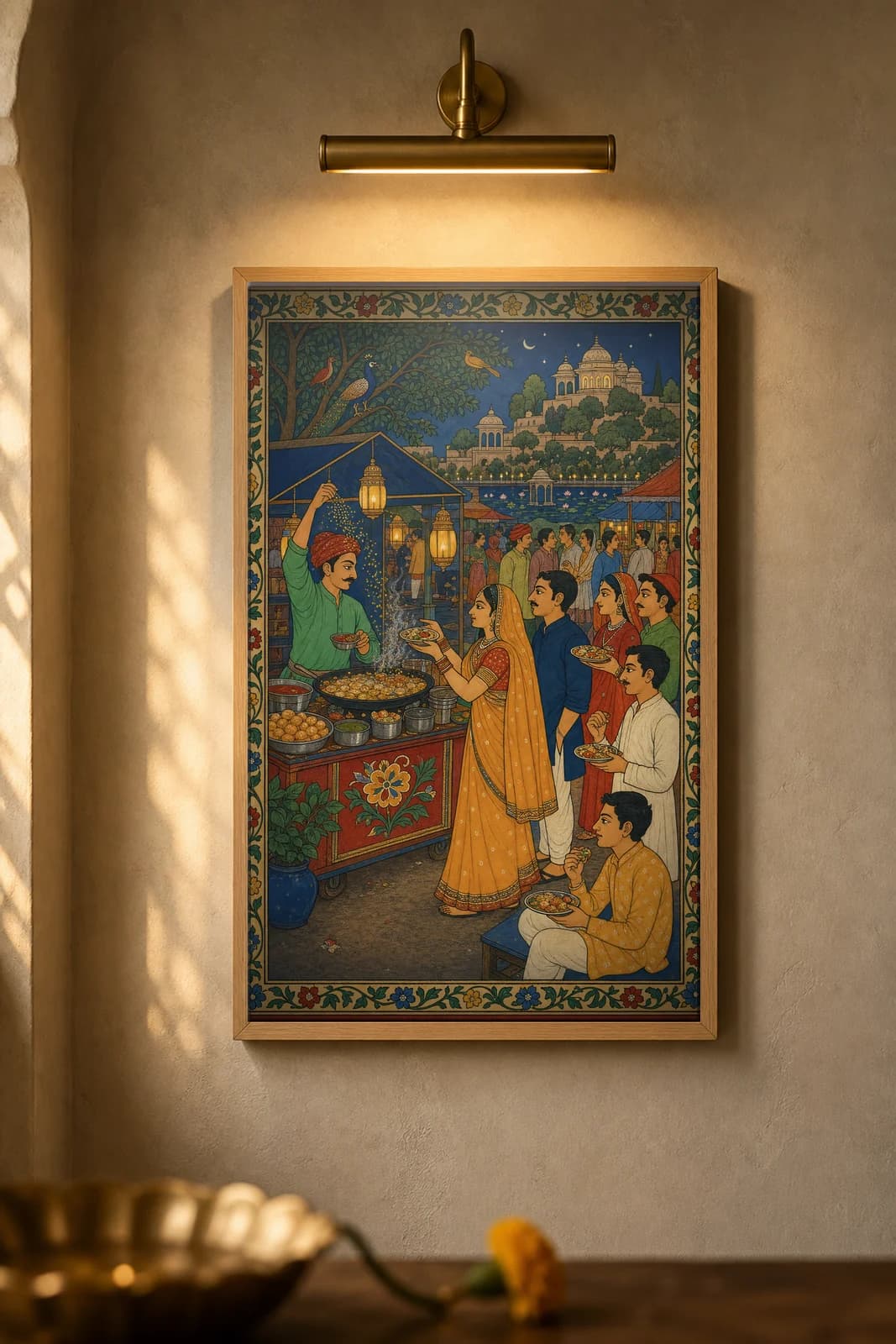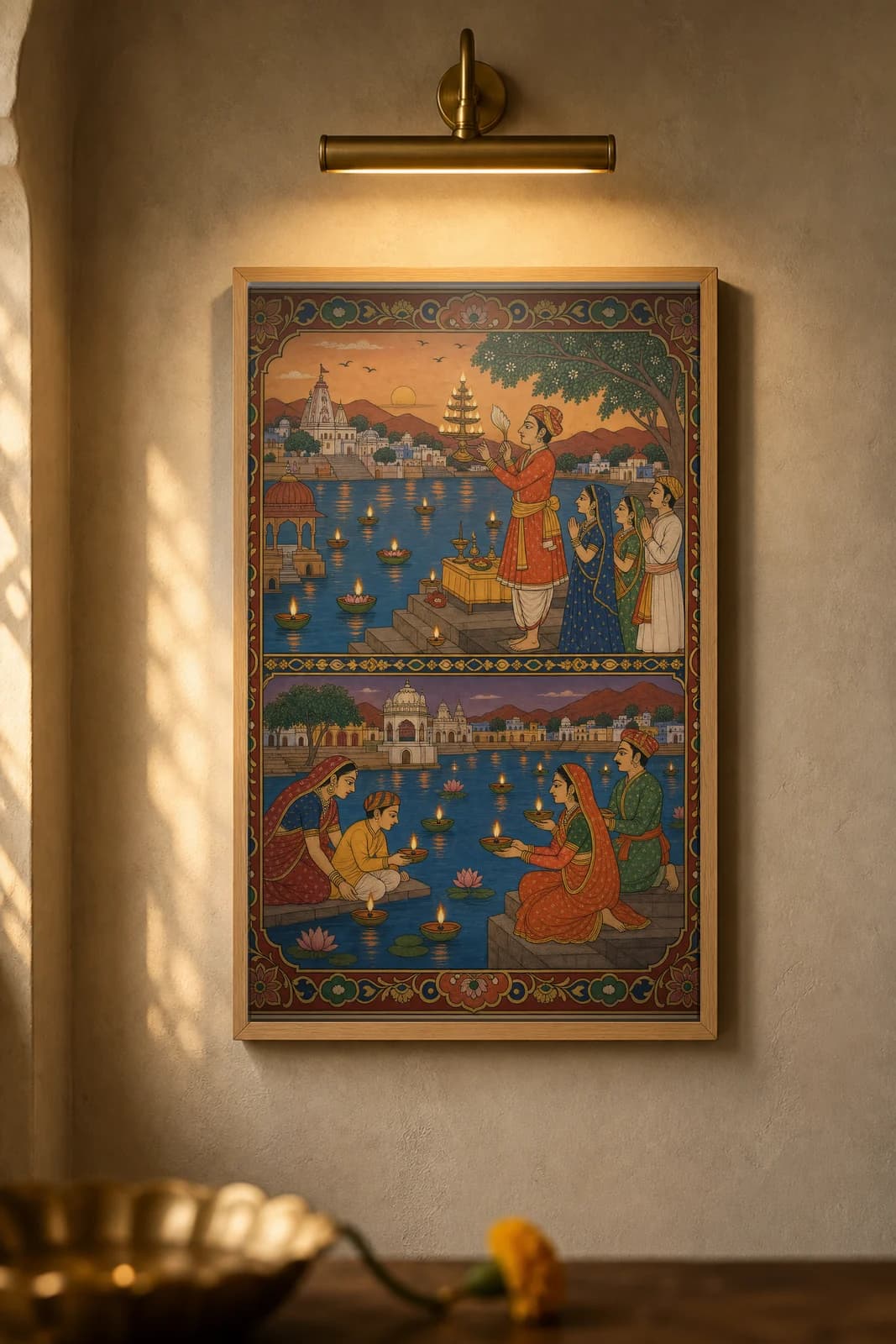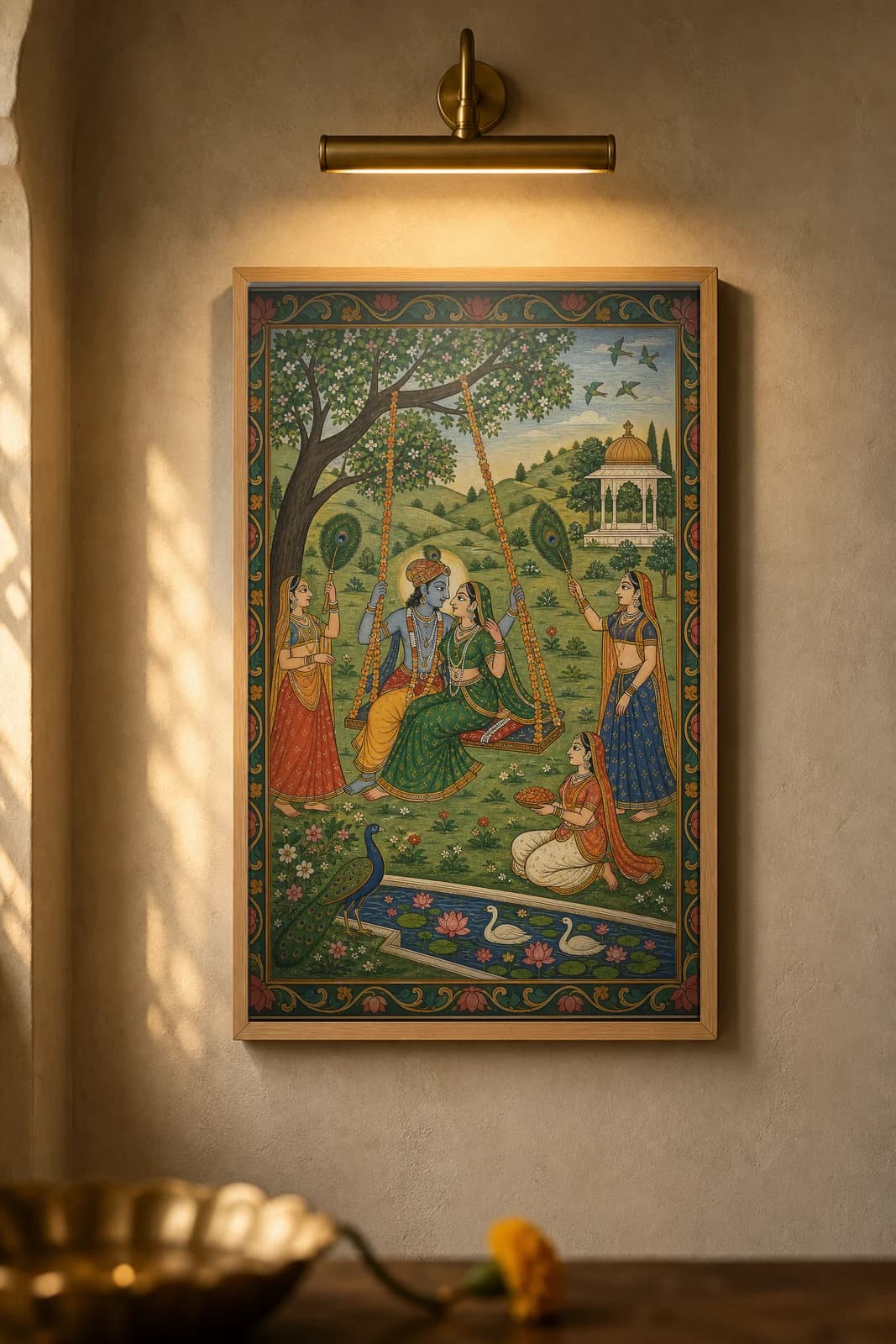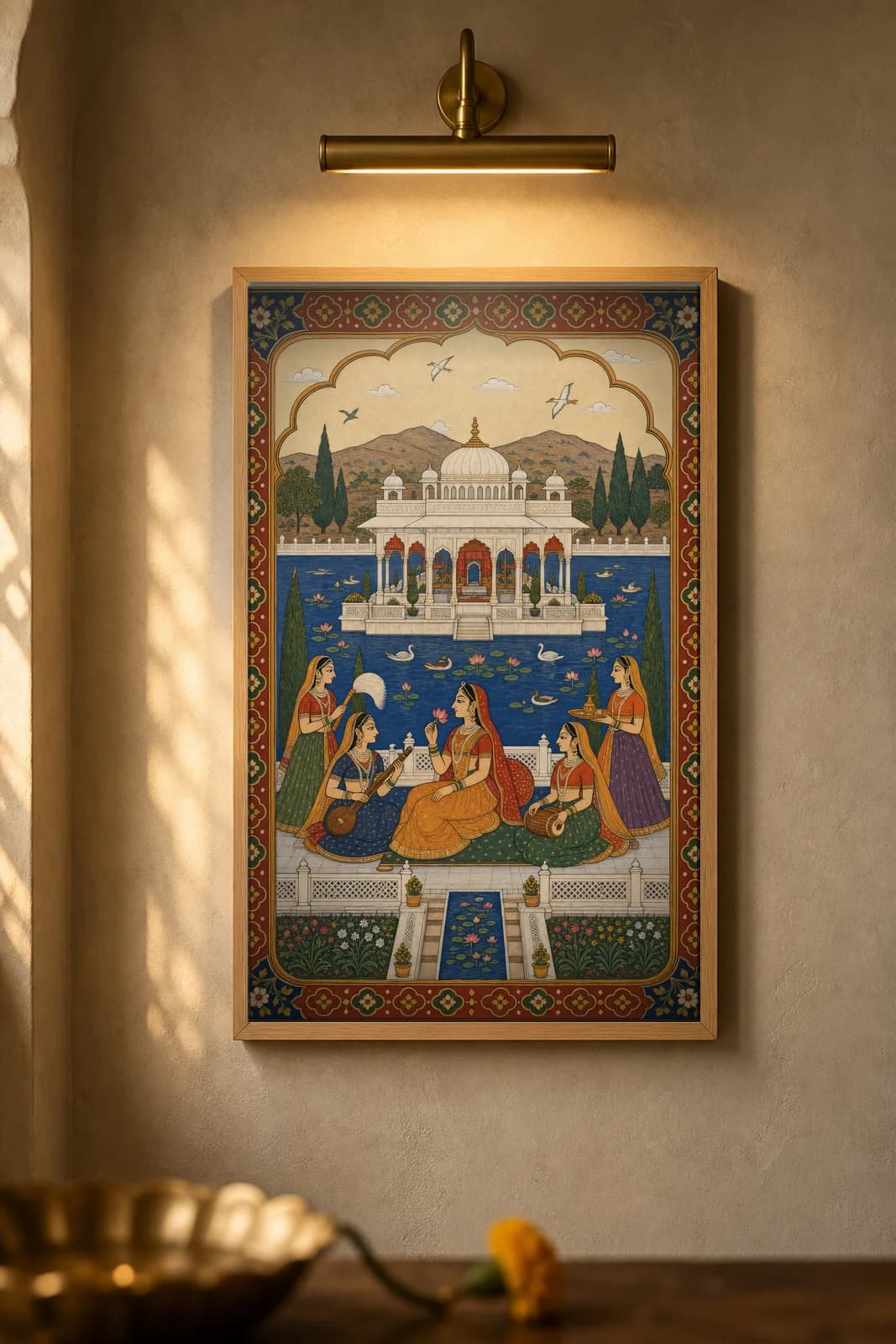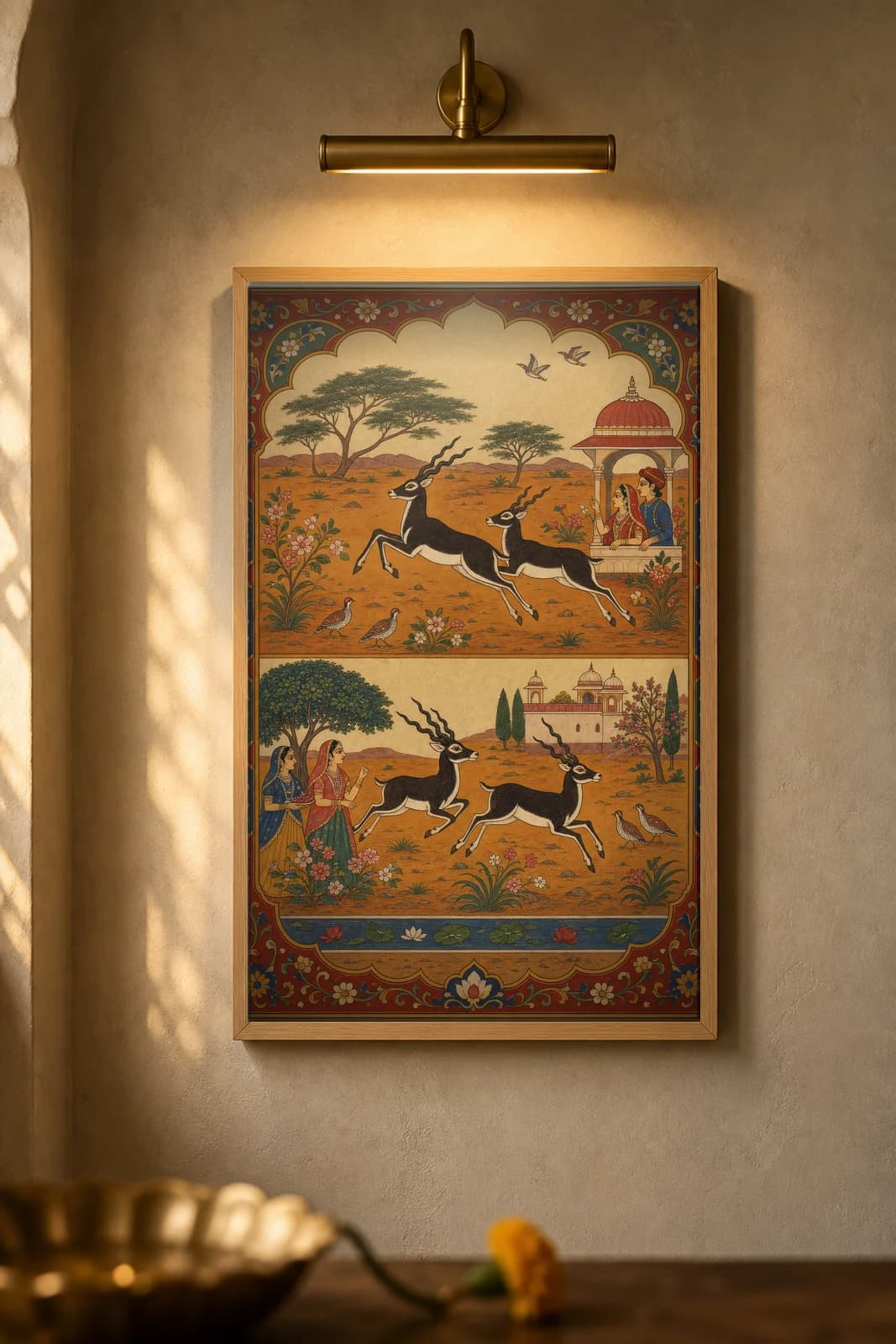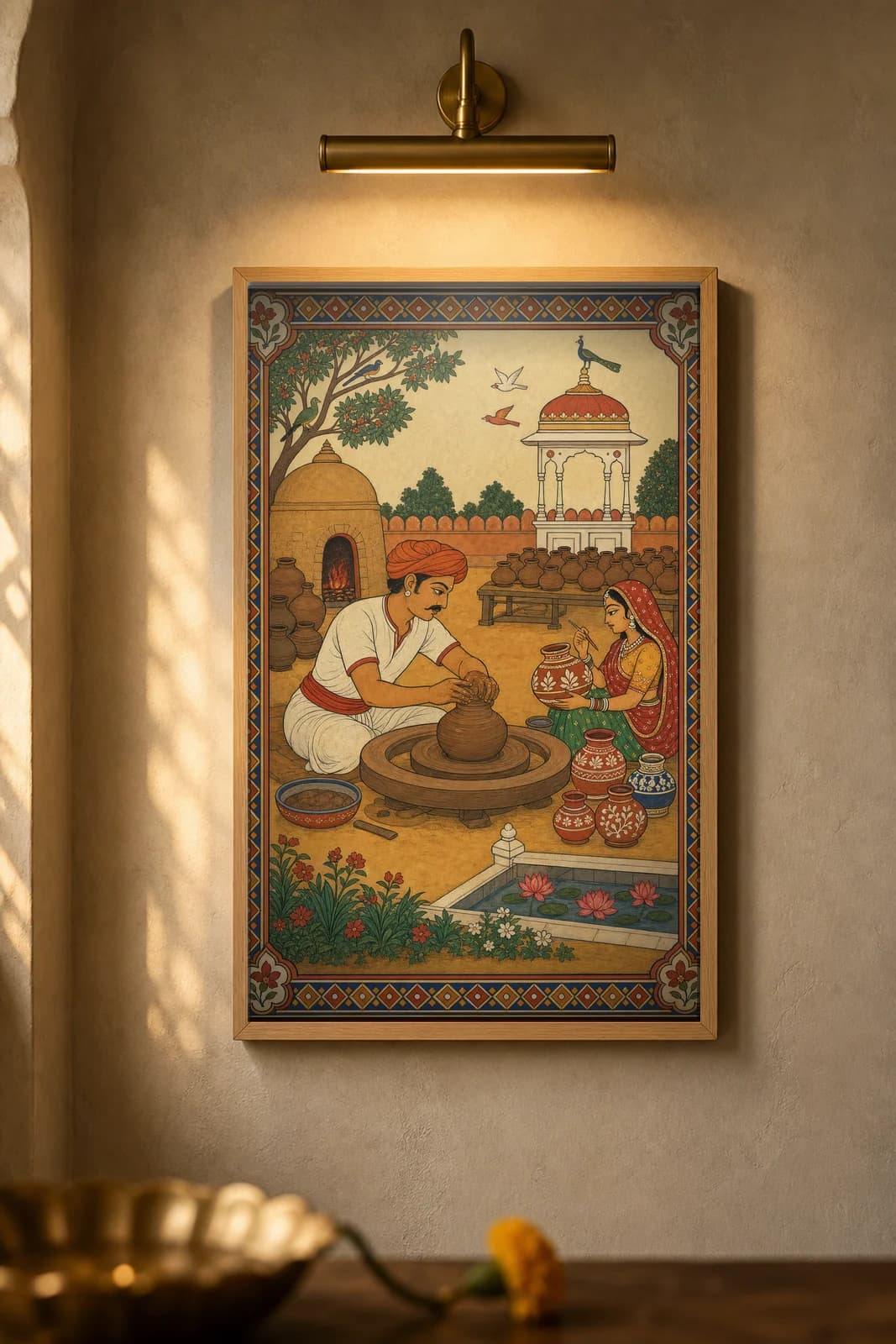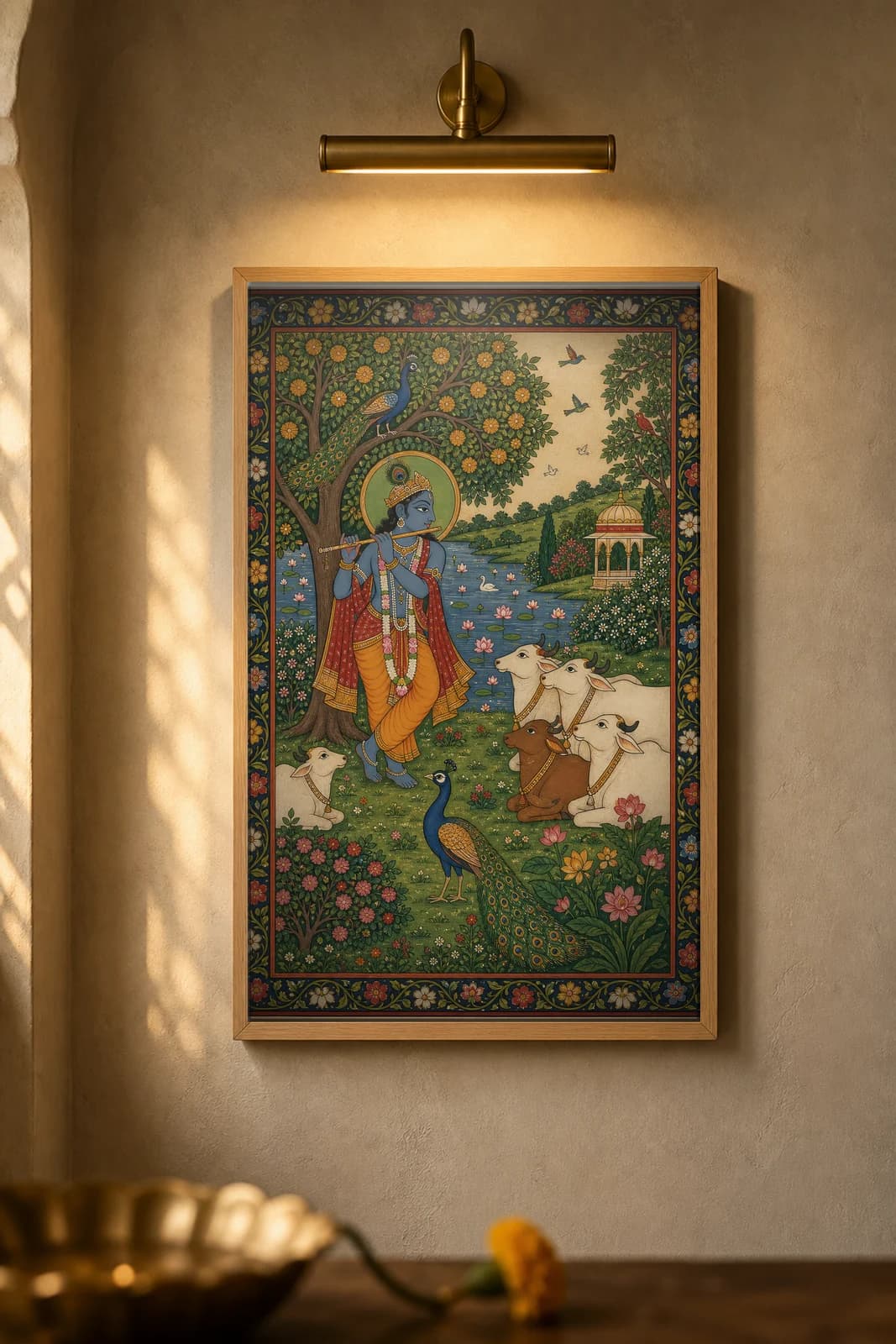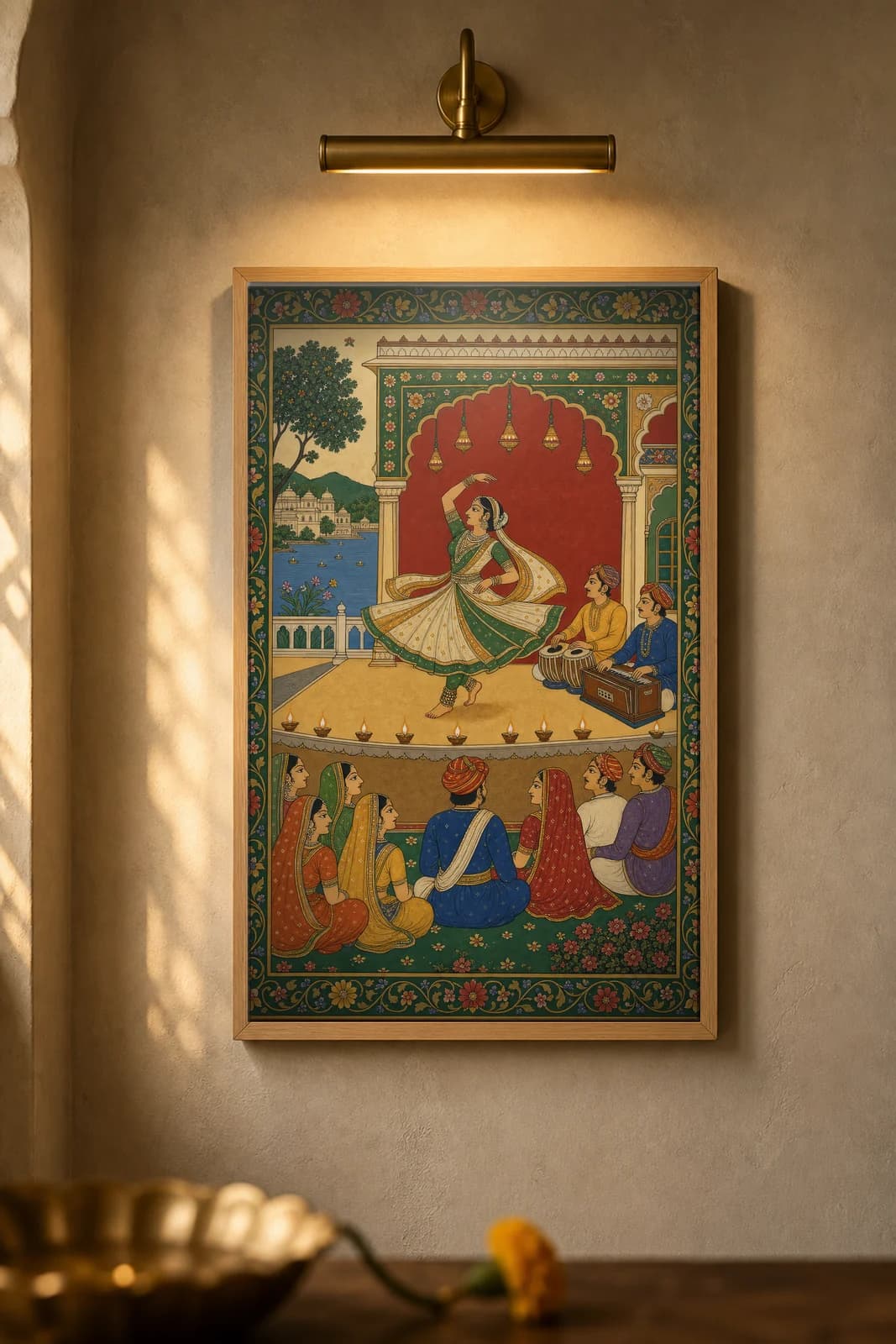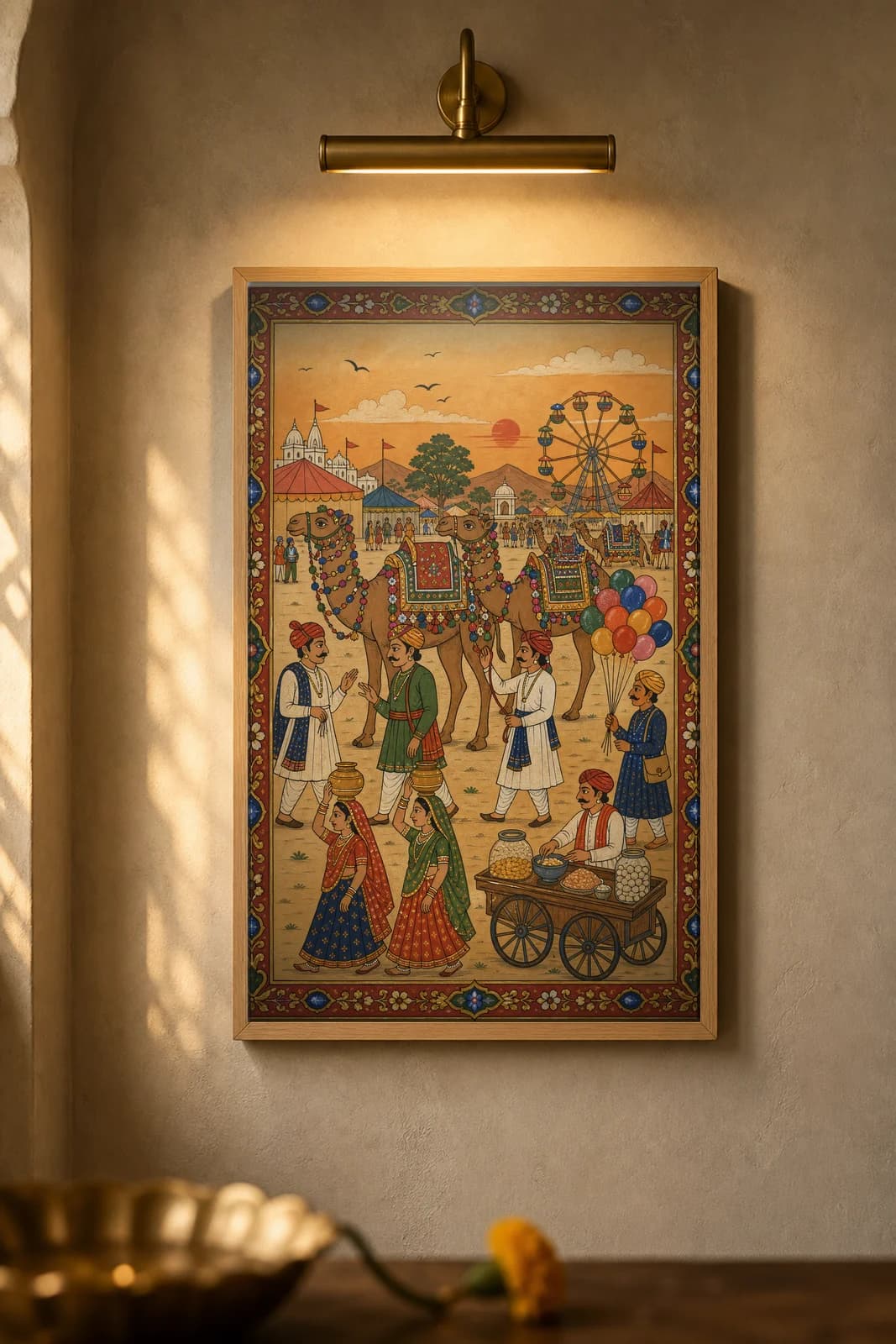
Hingul Vermillion — 31 museum-grade prints in this palette. This fusion is built on the Baramasa-Sawan convention of the Pahari and Rajasthani courts, in which the monsoon month is staged as a marble terrace, storm clouds, lightning and dancing peacocks — usually carrying the mood of viraha, a heroine's longing for her absent beloved. The grammar here follows the Kangra Pahari school, prized within the Rajput miniature umbrella for soft green hills and lyrical naturalism. The Baramasa ('twelve months') is a poetic cycle that pairs each month with a mood of love and a seasonal scene; Grishma, the high-summer month, is conventionally shown with fountains, water channels and khus-grass screens that cooled palace interiors. This treatment follows the Marwar school centred on Jodhpur, known within the Rajput miniature umbrella for intense saffron and deep-red desert grounds and a jewel-bright palette. The abhisarika is one of the classic ashta-nayika (eight heroine types) of Sanskrit and Hindi love poetry — the woman who sets out at night to meet her beloved, braving rain, darkness and serpents. It was a favourite of the Kangra school, which flourished in the Himachal foothills in the late 18th and early 19th centuries under Raja Sansar Chand, with painters trained in the Guler-Kangra lineage who softened Rajput flatness with naturalistic hills, tender skies and lyrical figures.


$49


$49


$49

$49

$49


$49


$49


$49


$49

$49

$49