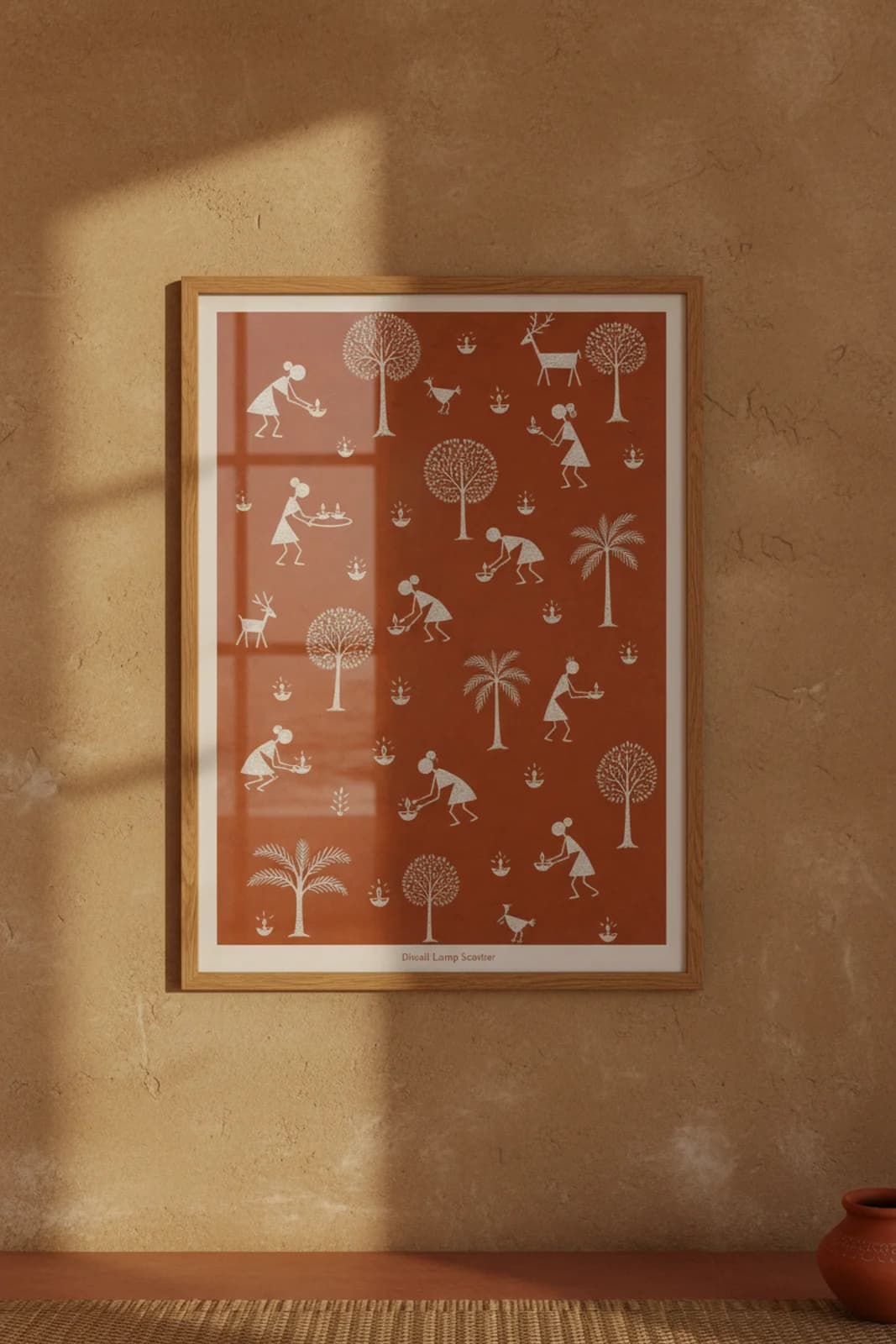
Classical Warli Prints — 6 museum-grade prints on the theme. Warli painting belongs to the Warli Adivasi community of the North Sahyadri Range in Maharashtra — villages across Dahanu, Talasari, Jawhar, Palghar, Mokhada, and Vikramgad where women traditionally painted rice-paste white pigment on red ochre cow-dung-washed hut walls during life-cycle rituals. Bird flocks appear throughout classical Warli nature vocabulary as messengers between earthly and spiritual realms — flying V-formations and dot flocks symbolise movement, seasonal return, and the cyclical day without importing tarpa dance ring geometry reserved for harvest celebration. Warli art belongs to the Warli Adivasi community of the North Sahyadri range in Maharashtra — villages across Dahanu, Talasari, Jawhar, Palghar, Mokhada, and Vikramgad where rice-paste white pigment on geru-red ochre mud walls has documented daily life for centuries. Traditionally painted by women on hut plaster coated with cow dung and red earth, scenes mark harvests, marriages, and seasonal cycles without preliminary tracing — design flows directly from bamboo-stick brush to wall. Diwali (Deepavali) is pan-Indian festival of light; Warli communities in Dahanu and coastal Sahyadri celebrate with clay diyas, harvest gratitude, and wall paintings during auspicious periods. Warli festival scenes traditionally encode social activity — lighting lamps, procession, dance — through stick-figure grammar on geru walls.