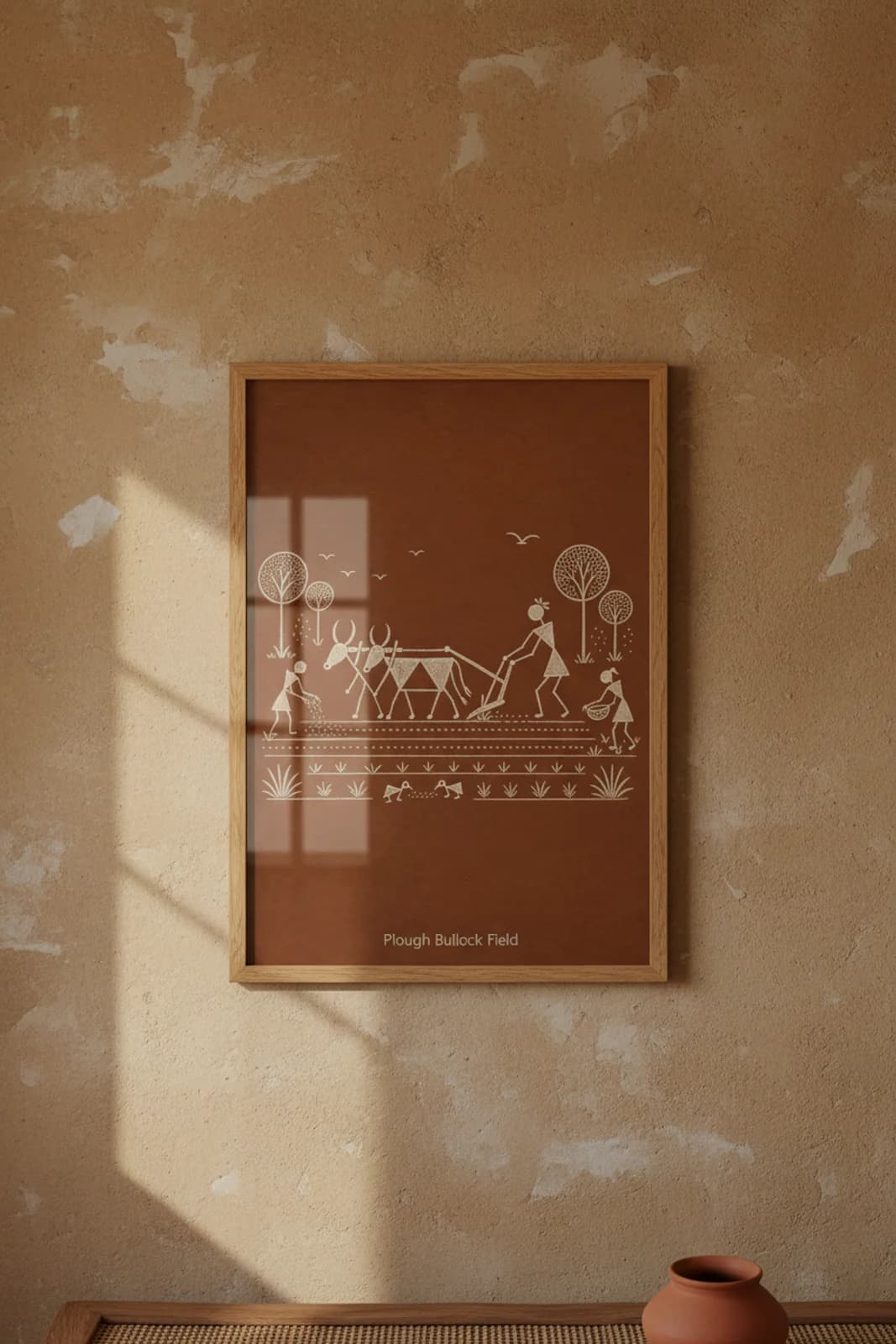
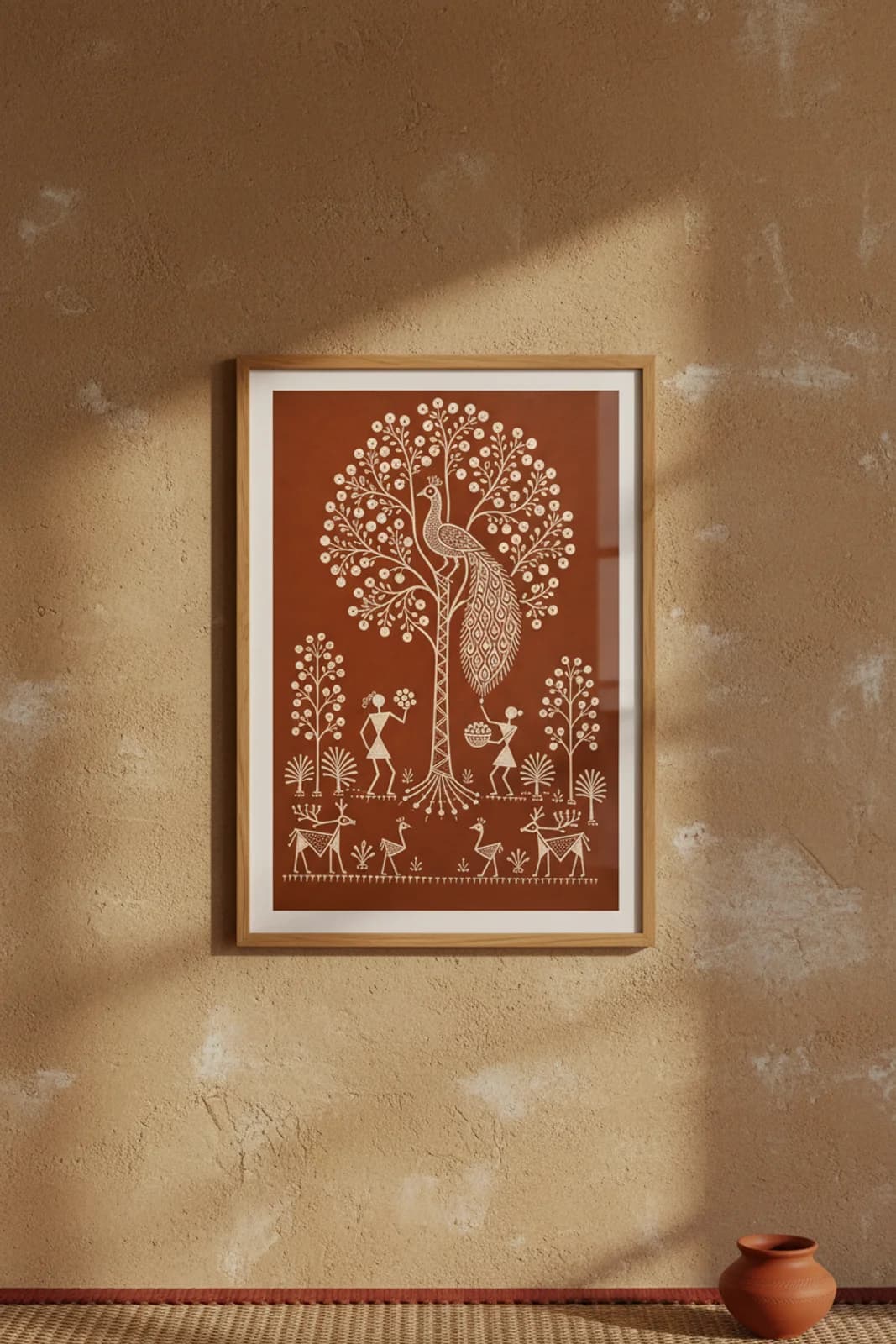
DESIGN BRIEF: Forest-life Warli panels fail when every pastoral scene collapses into the tourist default — sun, moon, hut cluster, and tarpa spiral on one ochre field. This subject demanded horizontal-band symmetry instead: cattle and herders read as a single procession band across a rolling slope, the way Mokhada padas describe evening grazing without importing ritual dance geometry. I refused a central chauk square and any concentric ring — those belong to marriage and harvest rites, not open-hill pasture. The hill path is built from parallel wavy lines with a dot row between them — a classic Warli ground-texture device that suggests furrow or trail without perspective recession. Cattle bodies carry stipple-dot infill rather than hollow triangles because herd animals in village wall tradition often read as textured mass when moving in groups; the dot field gives each beast weight while keeping the monochrome line discipline intact. Three herders anchor left, crest, and right so the band balances without a single heroic centre figure — daily pastoral labour distributed across the slope, not a spotlight solo. Circle-canopy trees punctuate the band at even intervals; V-birds above stay sparse so the upper ochre breathes. Light density was non-negotiable: ~45% fill leaves the terracotta ground visible, matching classical Warli wall practice where mud plaster shows through white rice-paste line.
 WALLIMILIST