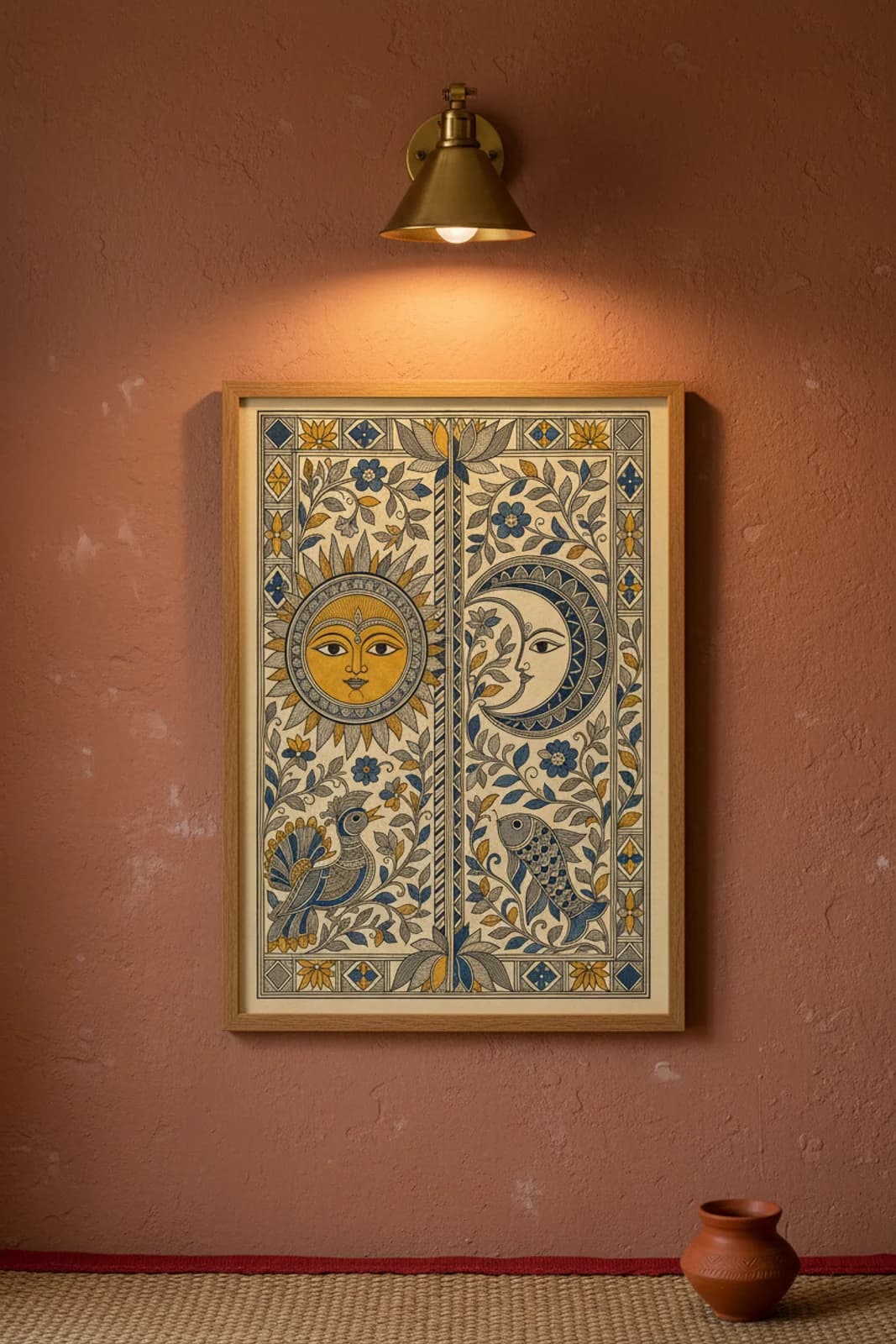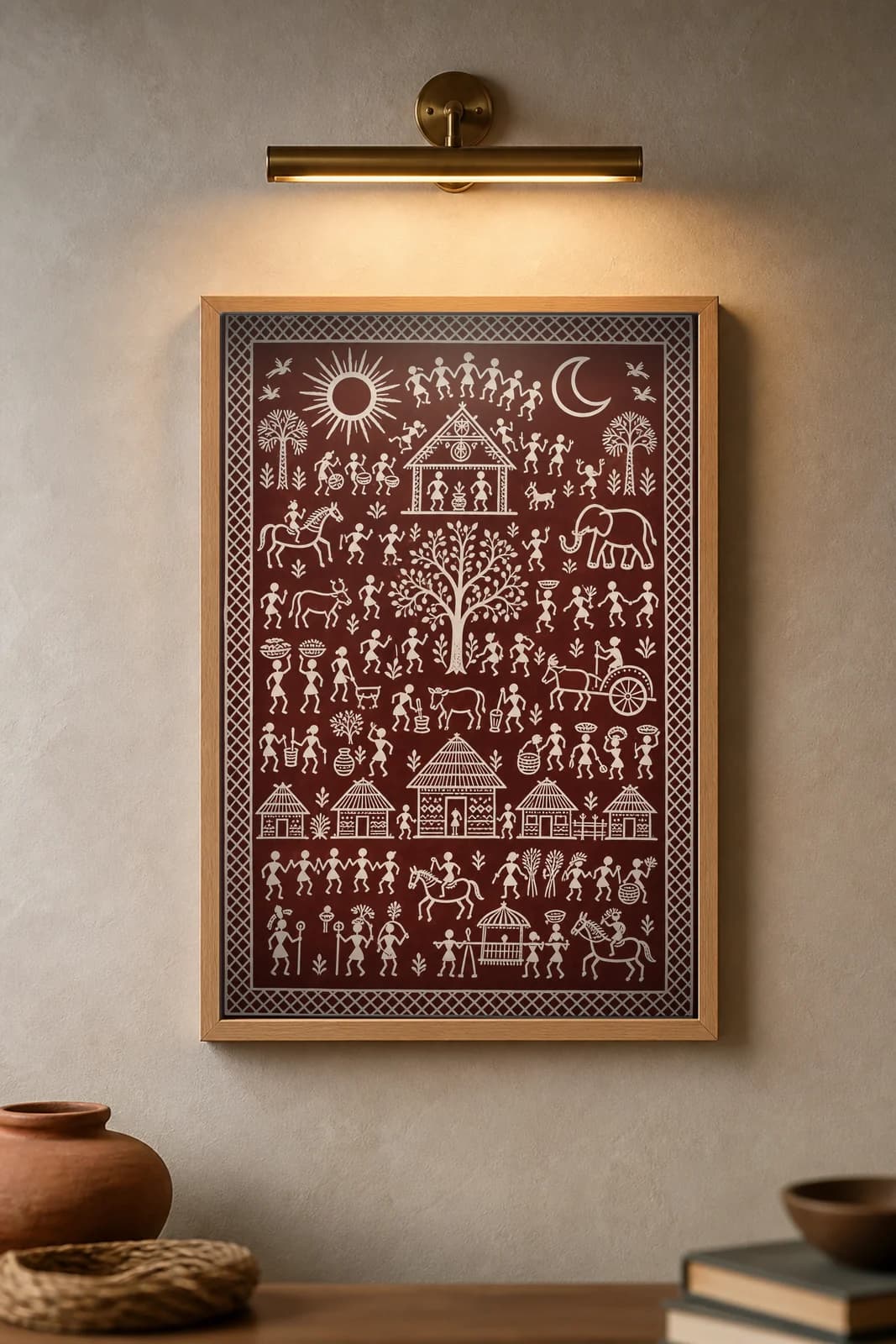
Sun and Moon — 3 museum-grade prints, engineered to a wall. Kachni — from the Hindi root for line — is the Madhubani style associated with Kayastha women artists who built depth through parallel hatching, stipple, and cross-hatch rather than the saturated flat fills of Brahmin Bharni panels. In Mithila folk cosmology, Surya (sun) and Chandra (moon) embody the duality Mithila painters express as day-night, masculine-feminine, and life-preserving cosmic rhythm; they appear repeatedly on Kohbar wedding-chamber walls where newlyweds sleep beneath painted witnesses to eternal cycles. Pithora is the ritual wall-painting tradition of the Rathwa, Bhil and Bhilala Adivasi communities of Chhota Udepur in eastern Gujarat and the adjoining belt of Madhya Pradesh and Rajasthan. The Lakhara priest-painter opens the sacred wall by drawing the sun and the moon — the first marks that orient the cosmos before the gods, the wedding and the earthly world are added below. Saura (also Sora or Saora) is one of the oldest Adivasi communities of southern Odisha; the Lanjia Saura sub-group of the Rayagada and Gajapati hills are known for their ritual wall paintings, called ikon or idital, painted by a kuranmaran (shaman-priest) in white rice paste on the deep-maroon inner wall of a house to honour deities and ancestors. Sun and moon commonly crown the top band of a Saura ikon, presiding over the tree of life, houses, animals and rows of dancers and workers built border-inward inside a fish-net (jali) frame.

$49

$49

$49