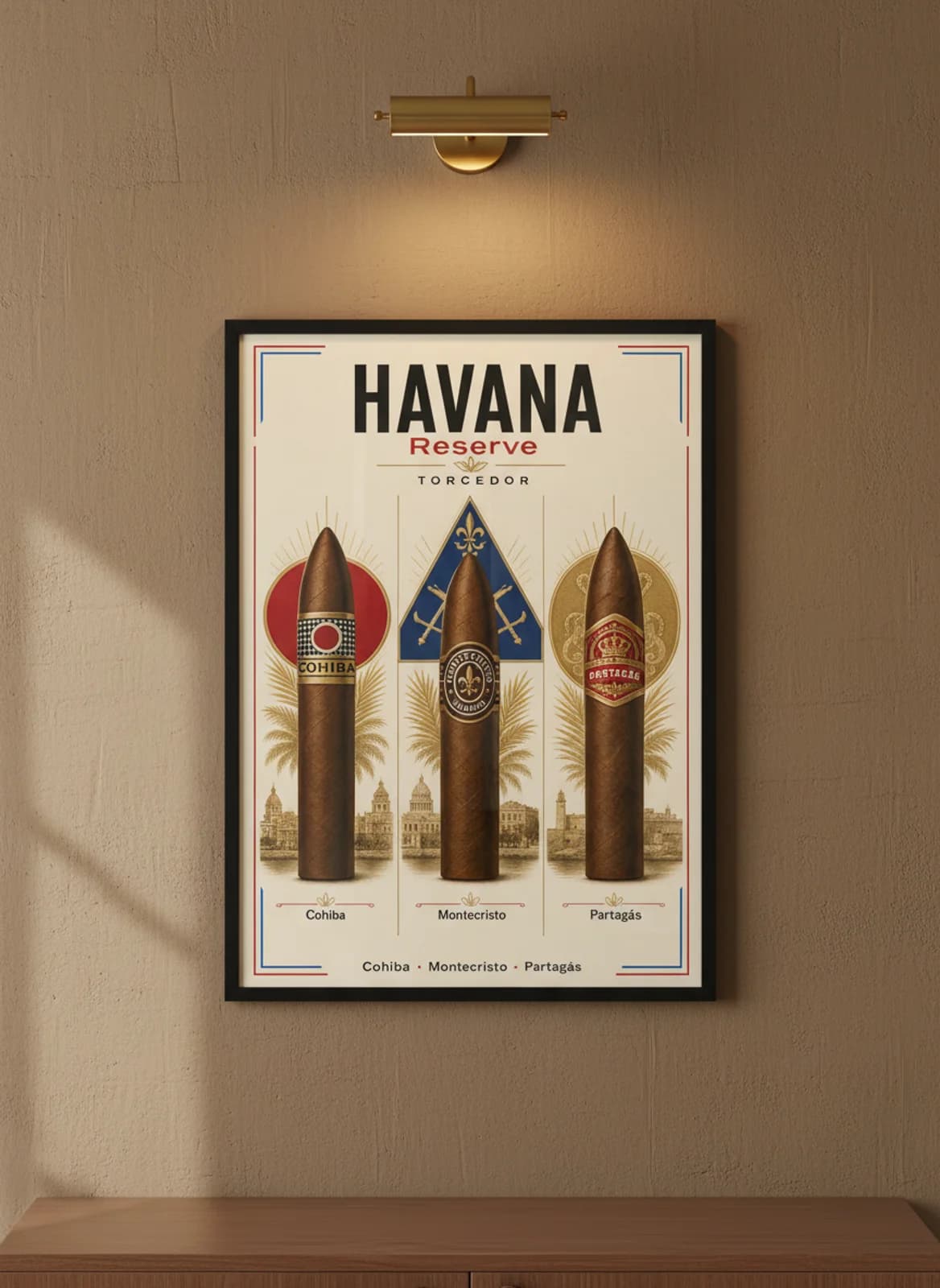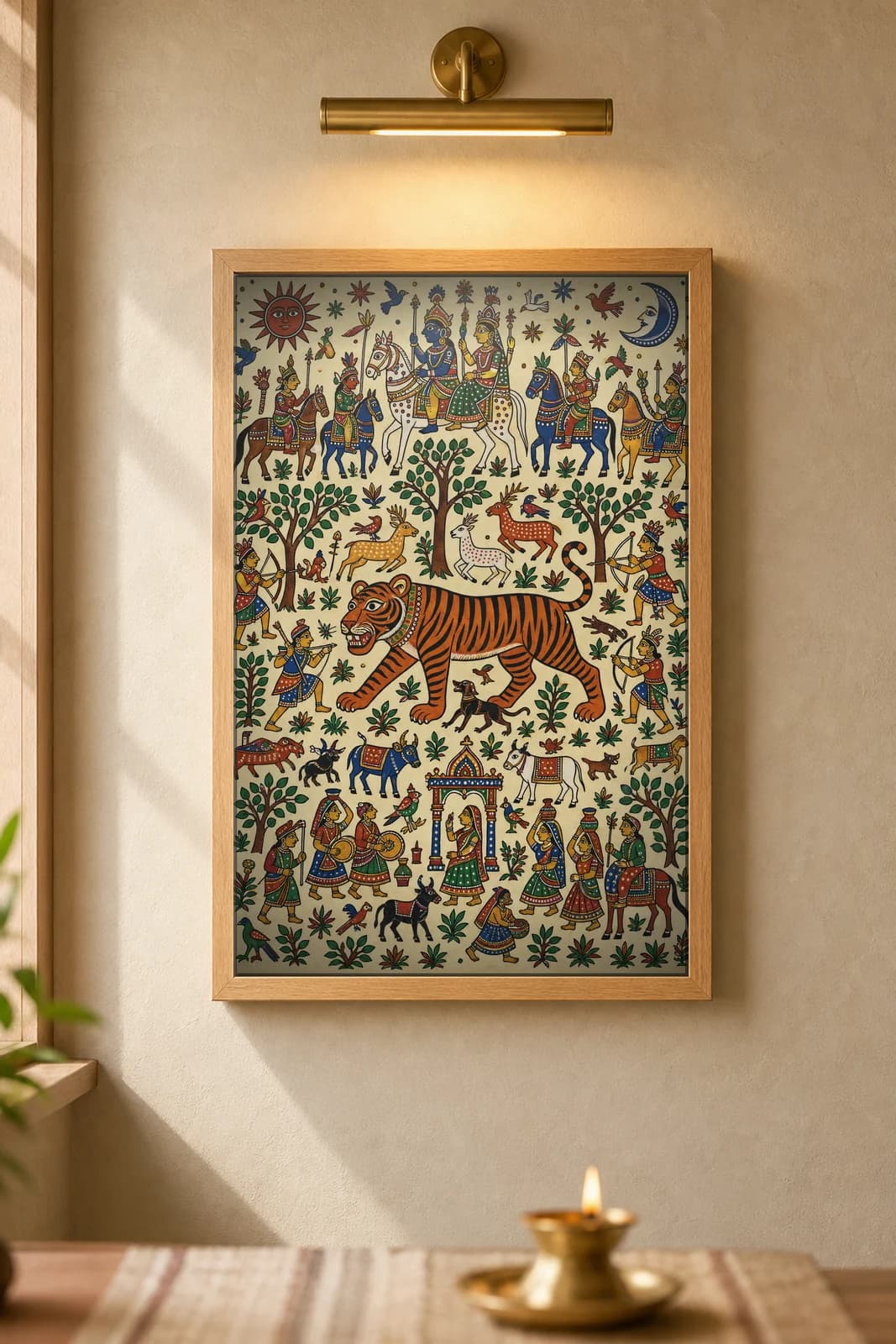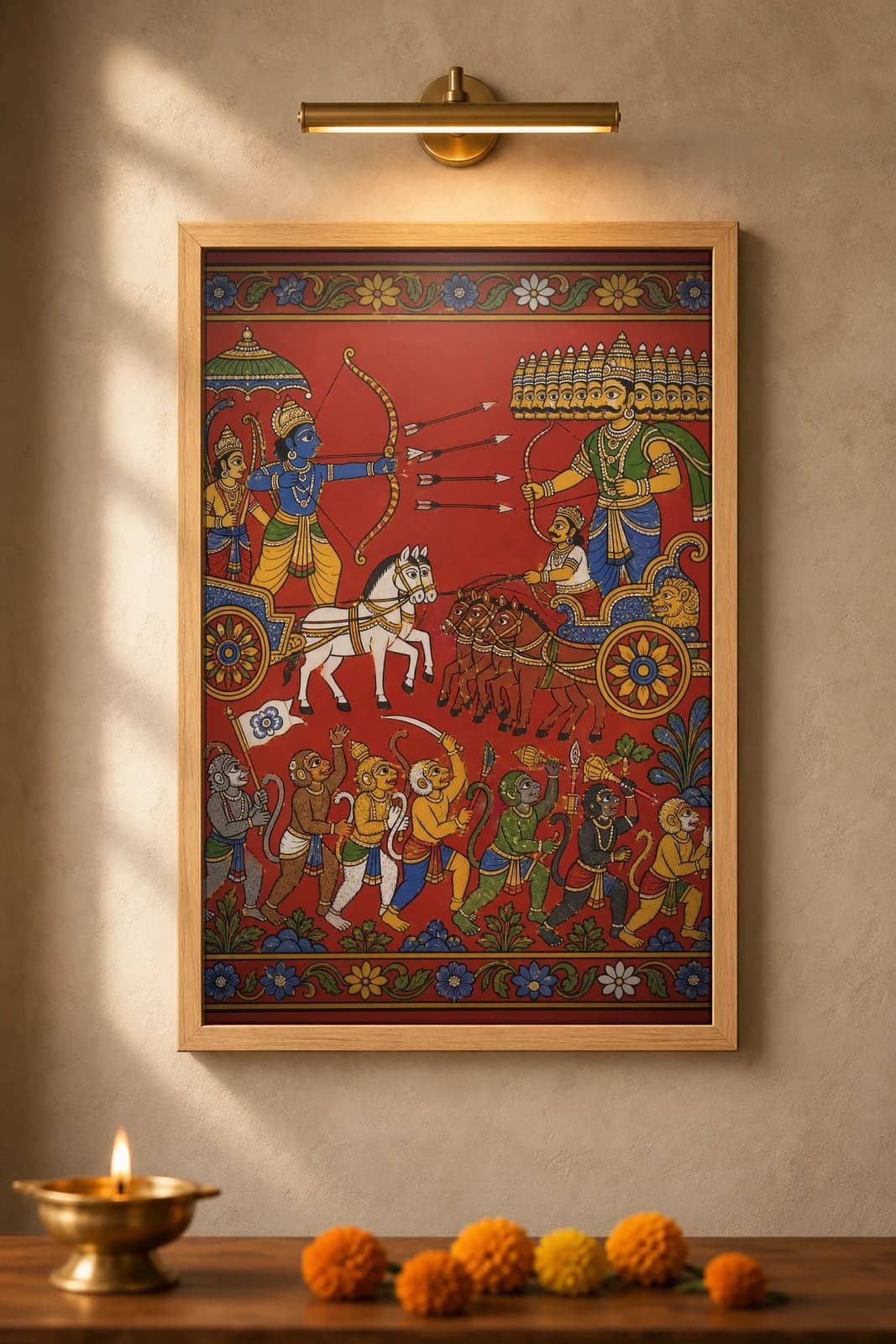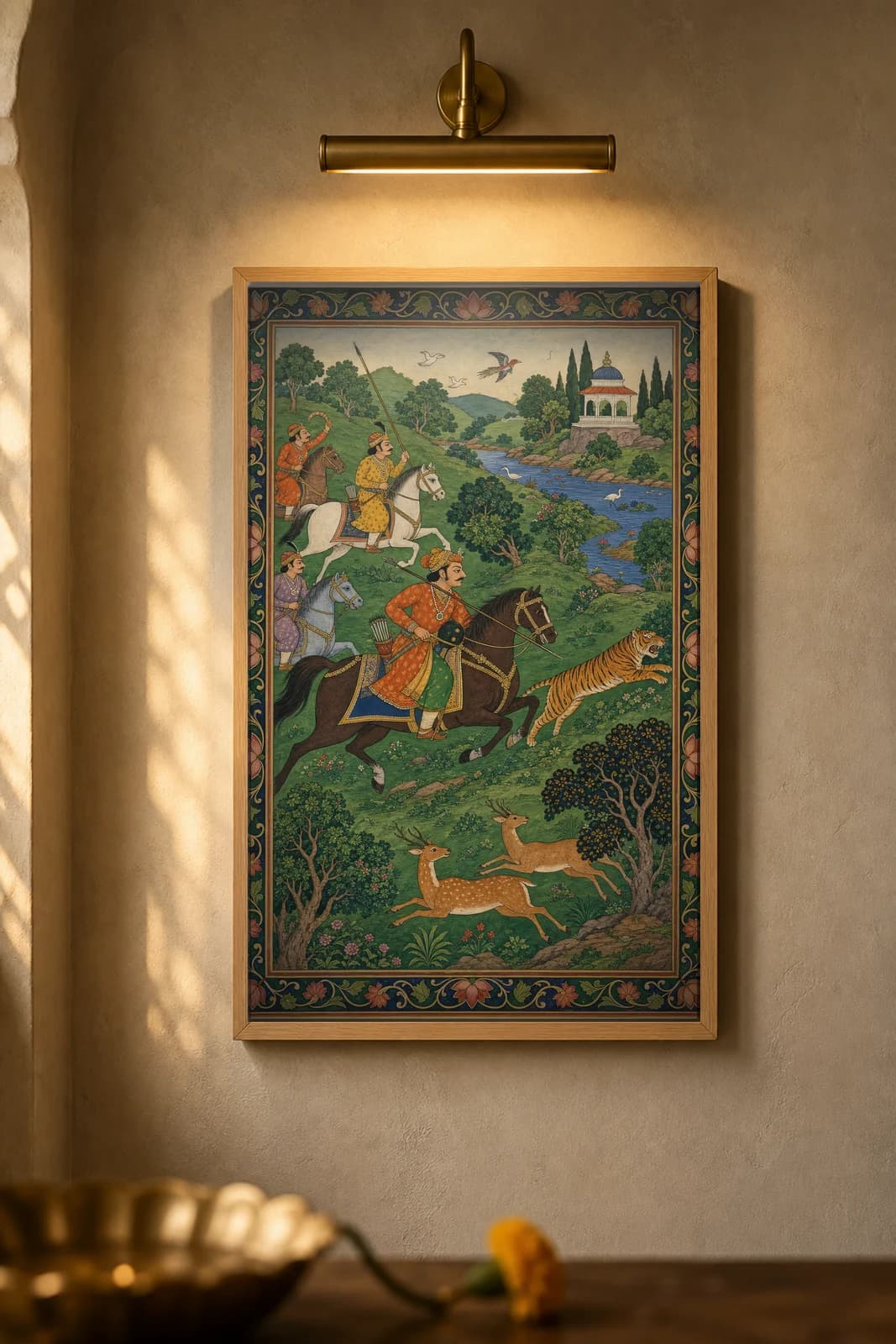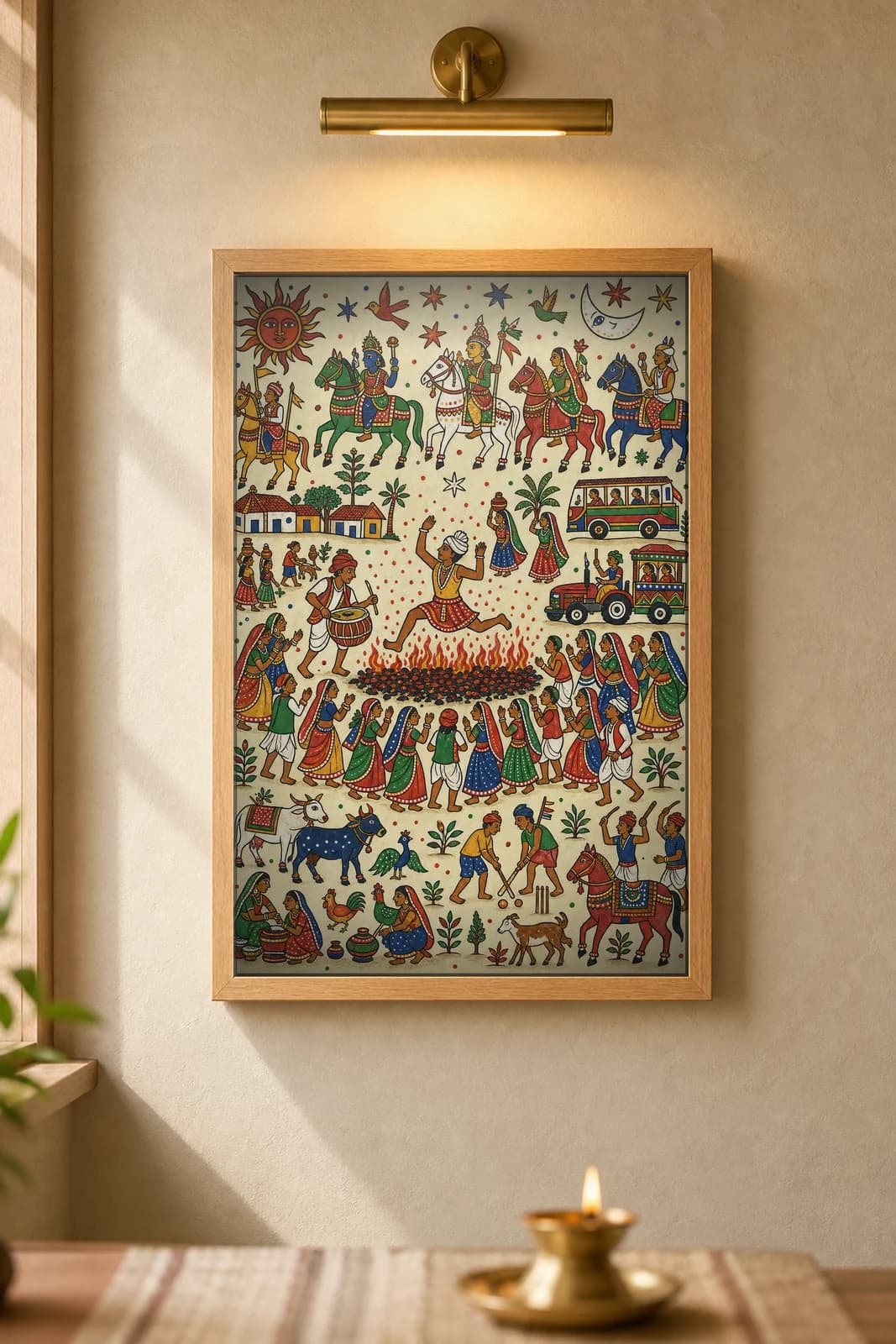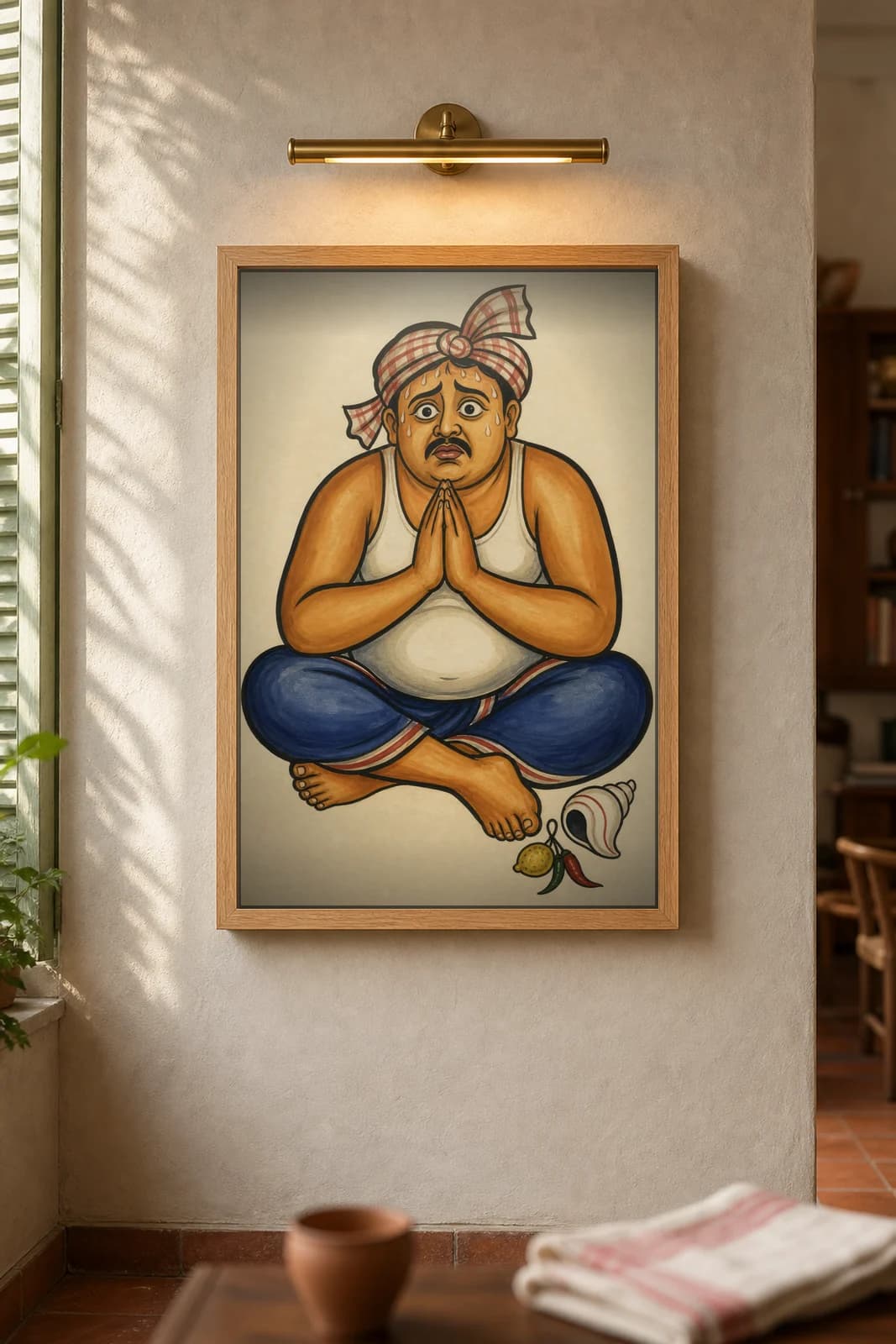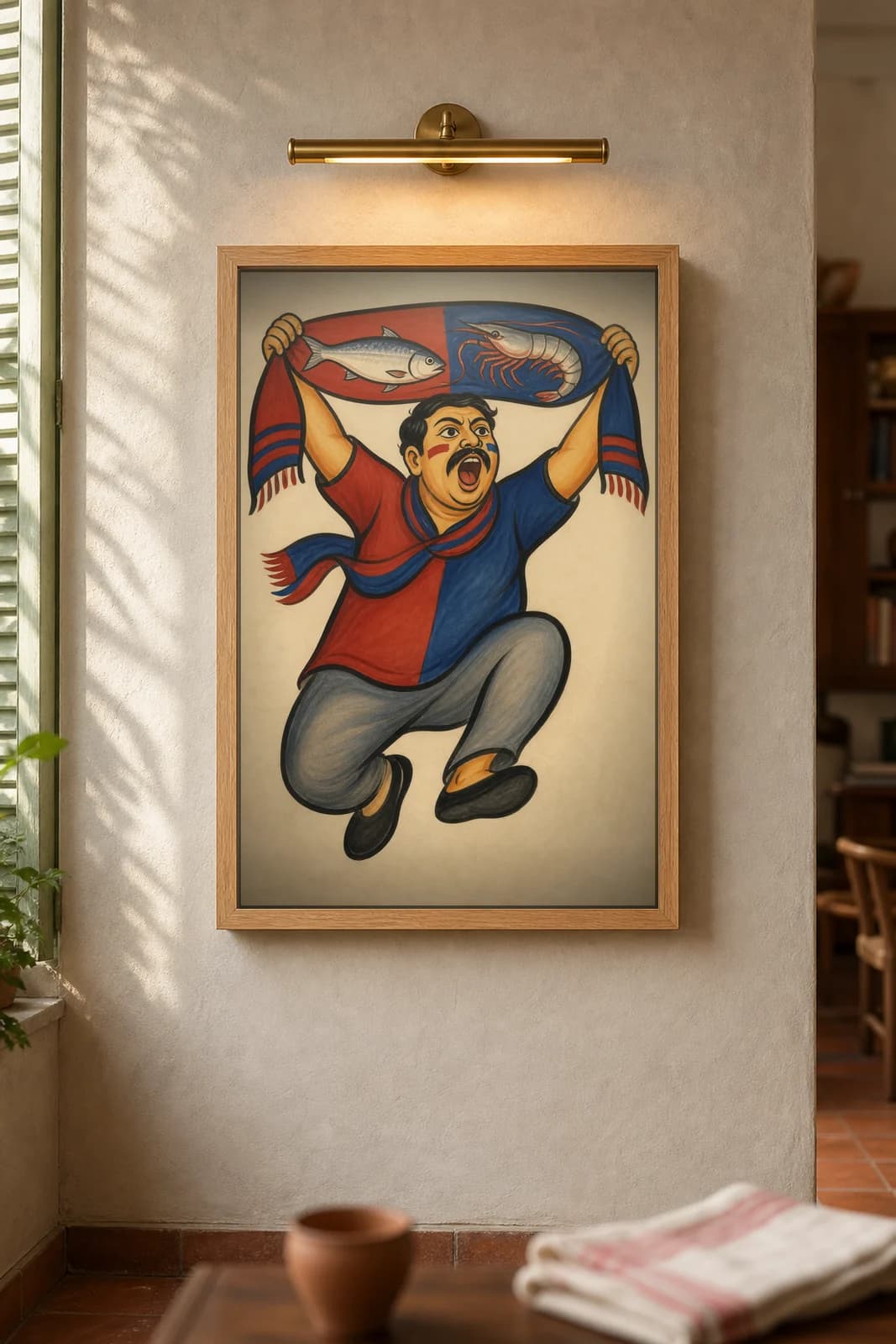
Den — 21 museum-grade prints sized and toned for the room. Kalighat Pat grew up in 19th-century Kolkata, painted by migrant patua (chitrakar) scroll-painters who settled near the Kalighat Kali temple and sold quick watercolour souvenirs to pilgrims. Working on mill-made paper with a bold single black brush outline and soft 'boneless' shaded strokes on a plain ground, they painted gods and goddesses alongside what is often called India's first modern social satire — sharp, affectionate caricatures of the colonial 'babu' and the hypocrisies of Calcutta life. Havana's cigar factories — from Partagás on Calle Industria to the rolling floors that trained generations of torcedores — anchor Cuba's most exportable craft tradition. Cohiba began as diplomatic gift stock before becoming a global prestige name; Montecristo borrowed Dumas for its fleur-de-lis romance; Partagás paired bold bands with Don Jaime's blending legacy. Cheriyal scrolls come from Cheriyal village in Telangana's Siddipet district, painted for generations by the Nakashi artist community for travelling balladeers who sang the Ramayana episode by episode. The yuddha — Rama's final chariot duel with the ten-headed Ravana, king of Lanka, with Hanuman and the vanara army at his side — is the epic's great battle climax, traditionally one of the most dramatic panels a scroll could carry.