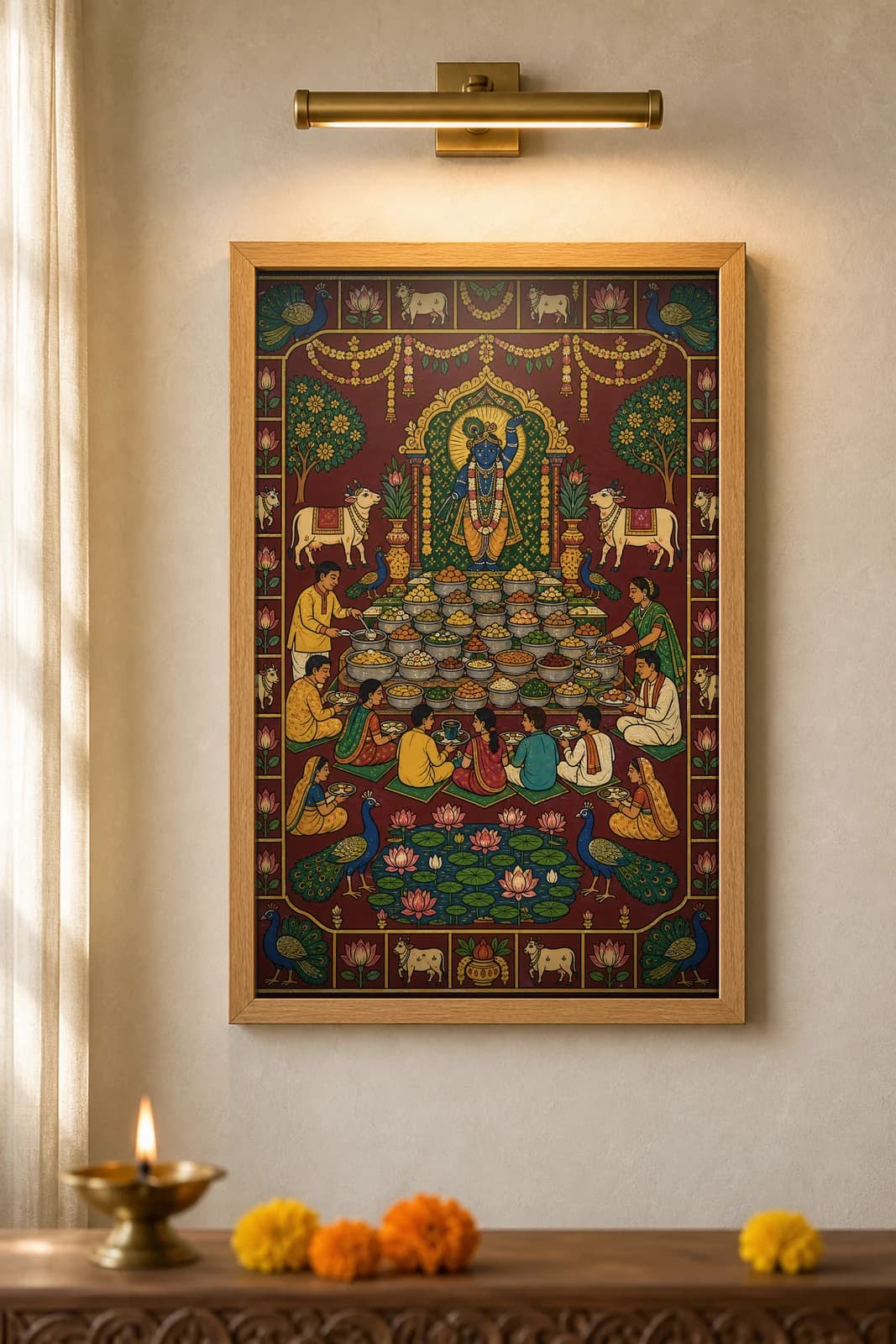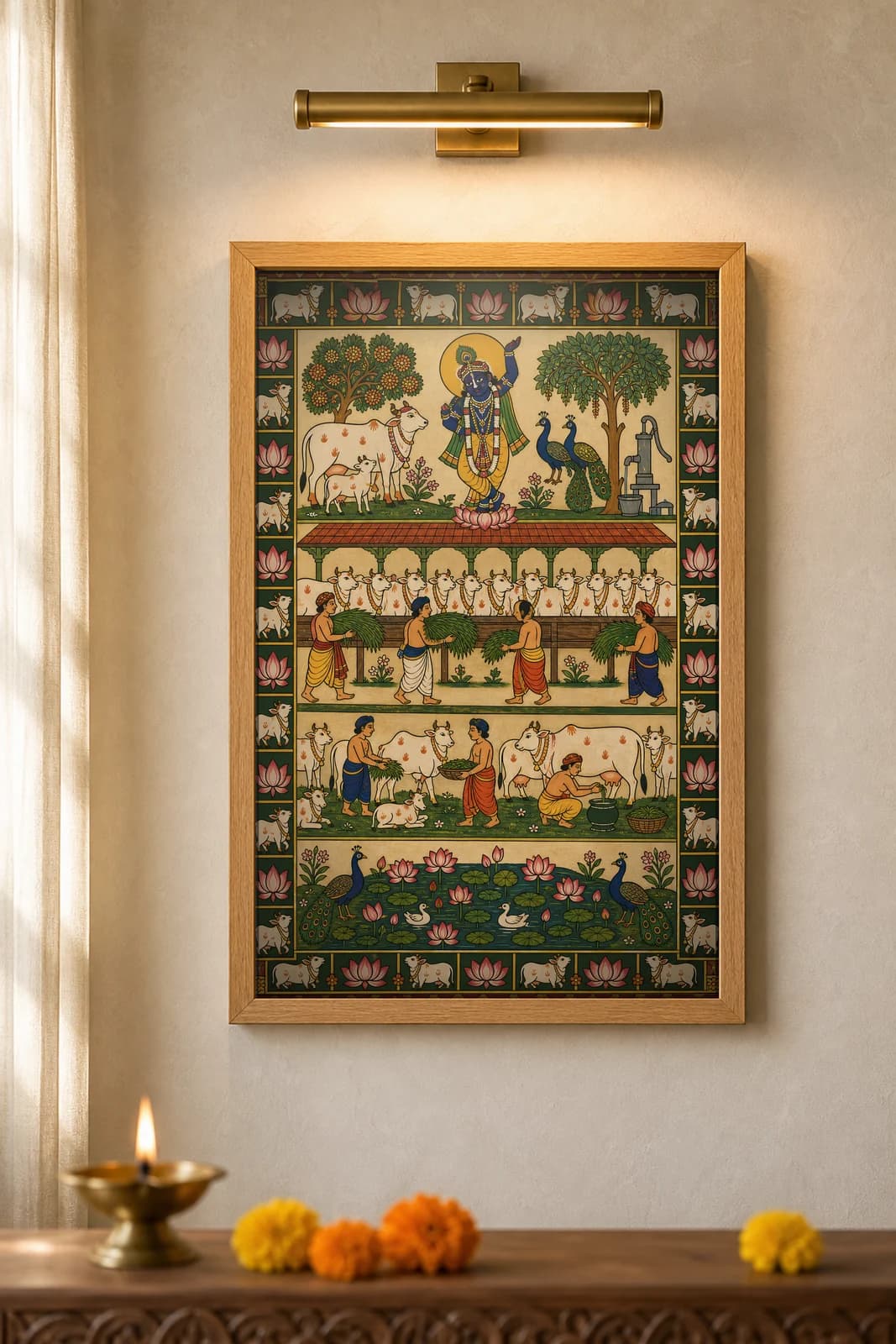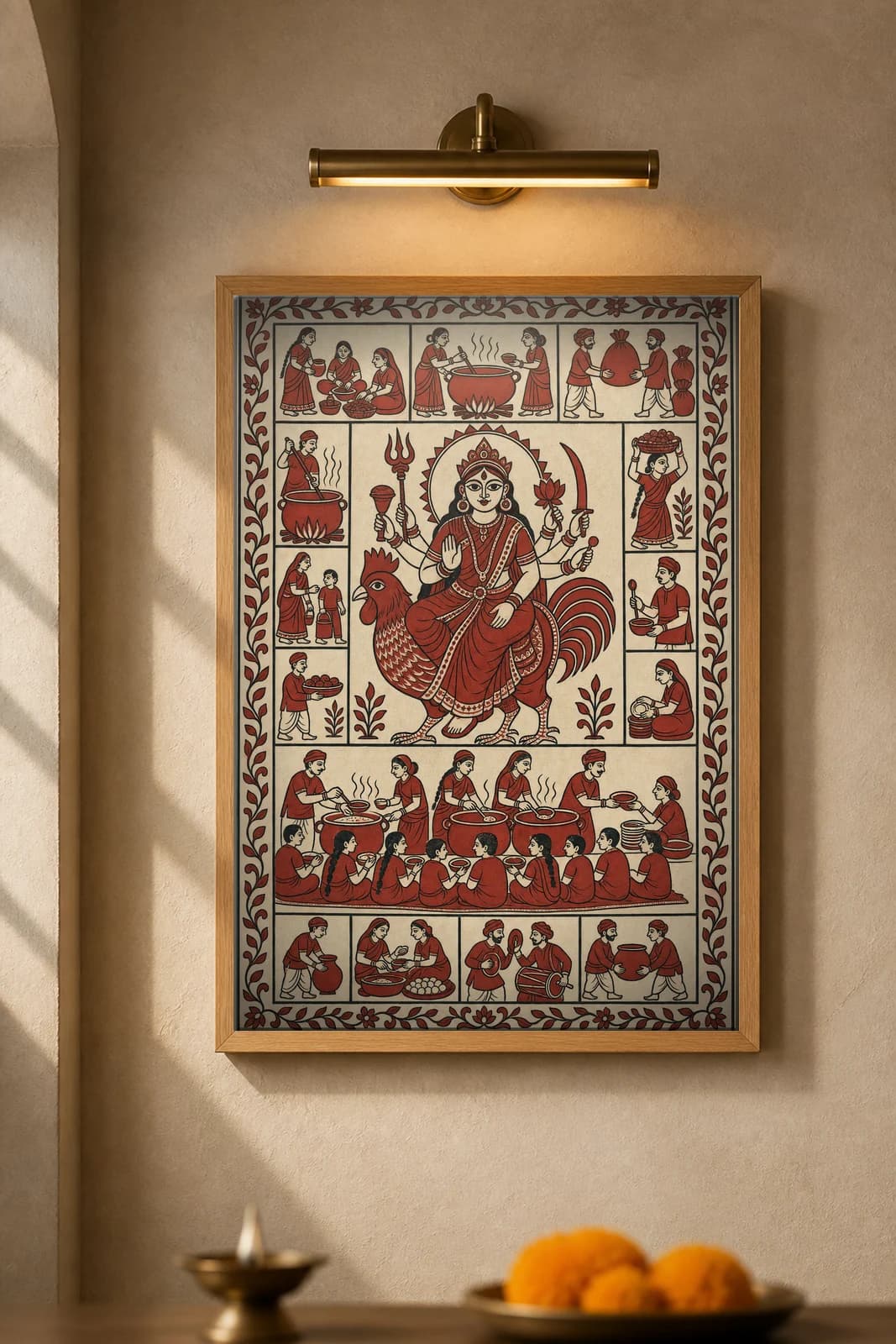
Community Hall — 5 museum-grade prints sized and toned for the room. Mata ni Pachedi means 'the cloth of the Mother Goddess' — a shrine textile of the Vaghri / Devipujak community of Ahmedabad, Gujarat, who, historically barred from temples, painted the Goddess on cloth to create their own portable shrine. The annakshetra is the temple free-meal kitchen where all who come are fed; the act of feeding is understood as service to the Mother. Annakut ('mountain of food') is the great offering after Diwali in the Pushtimarg (Vallabh) tradition, when a heap of cooked dishes is offered to Shrinathji — the child-Krishna who lifted Mount Govardhan — at the Nathdwara haveli-temple in Rajasthan. A pichhwai (literally 'that which hangs at the back') is the painted cloth hung behind the deity to set the seasonal scene; this design borrows that grammar to frame a community bhandara. A goshala is a shelter for cows, often community- or temple-run; cow-protection and go-seva are central to Pushtimarg (Vallabh) devotion, inseparable from worship of Shrinathji, the cowherd child-Krishna of the Nathdwara haveli-temple in Rajasthan. The horizontal cow-register is a classic pichwai motif; here it carries the labour of a modern cow-shelter.