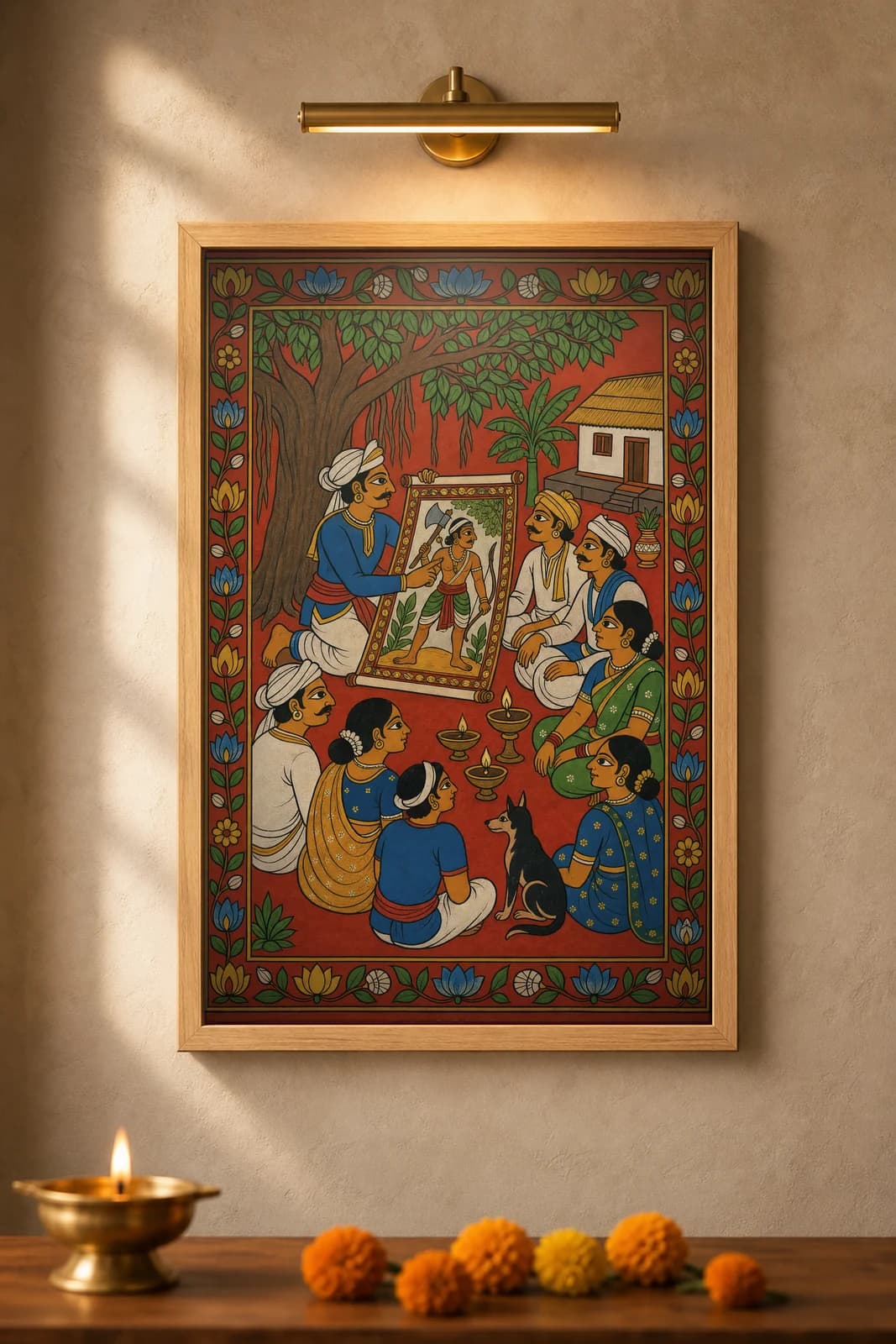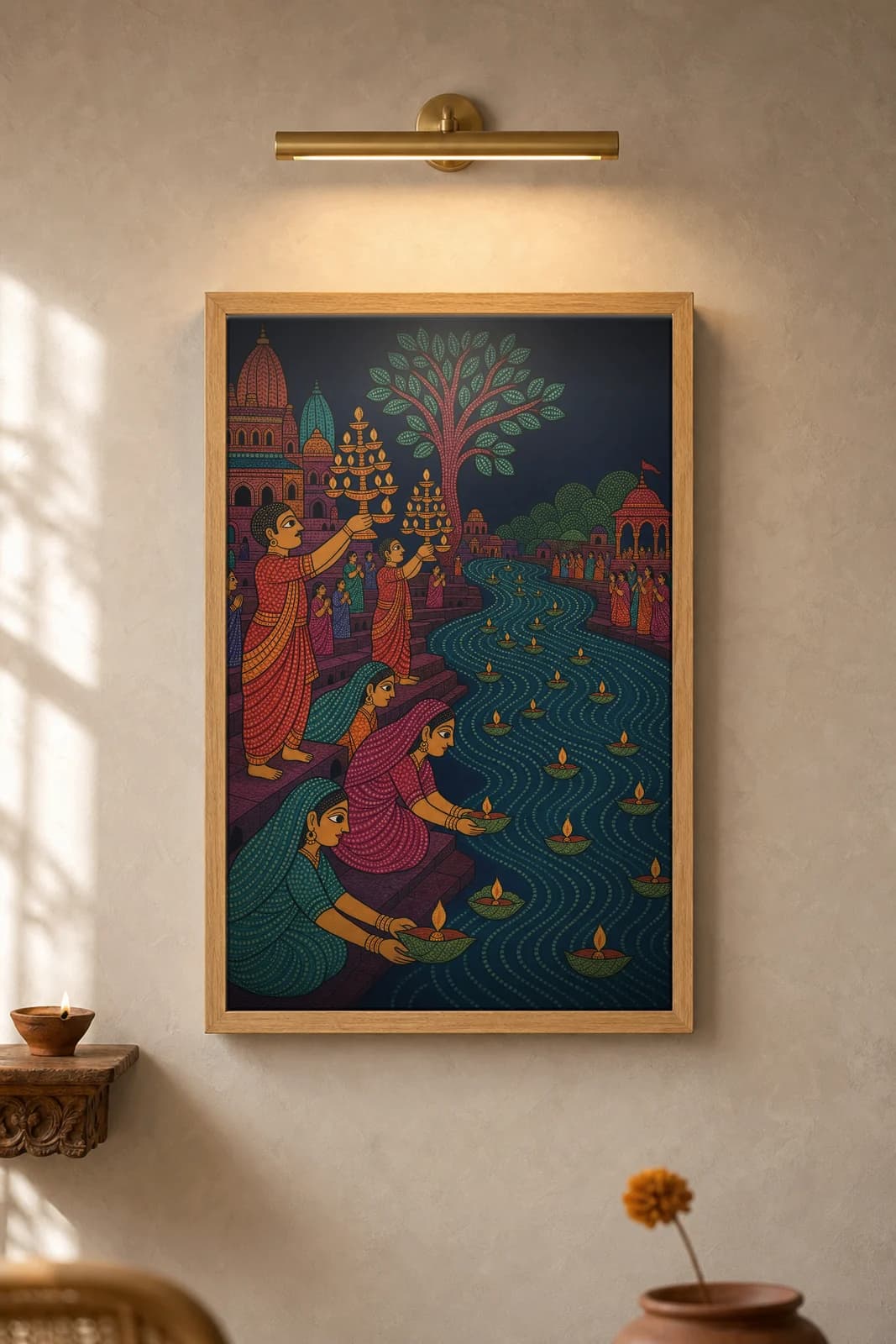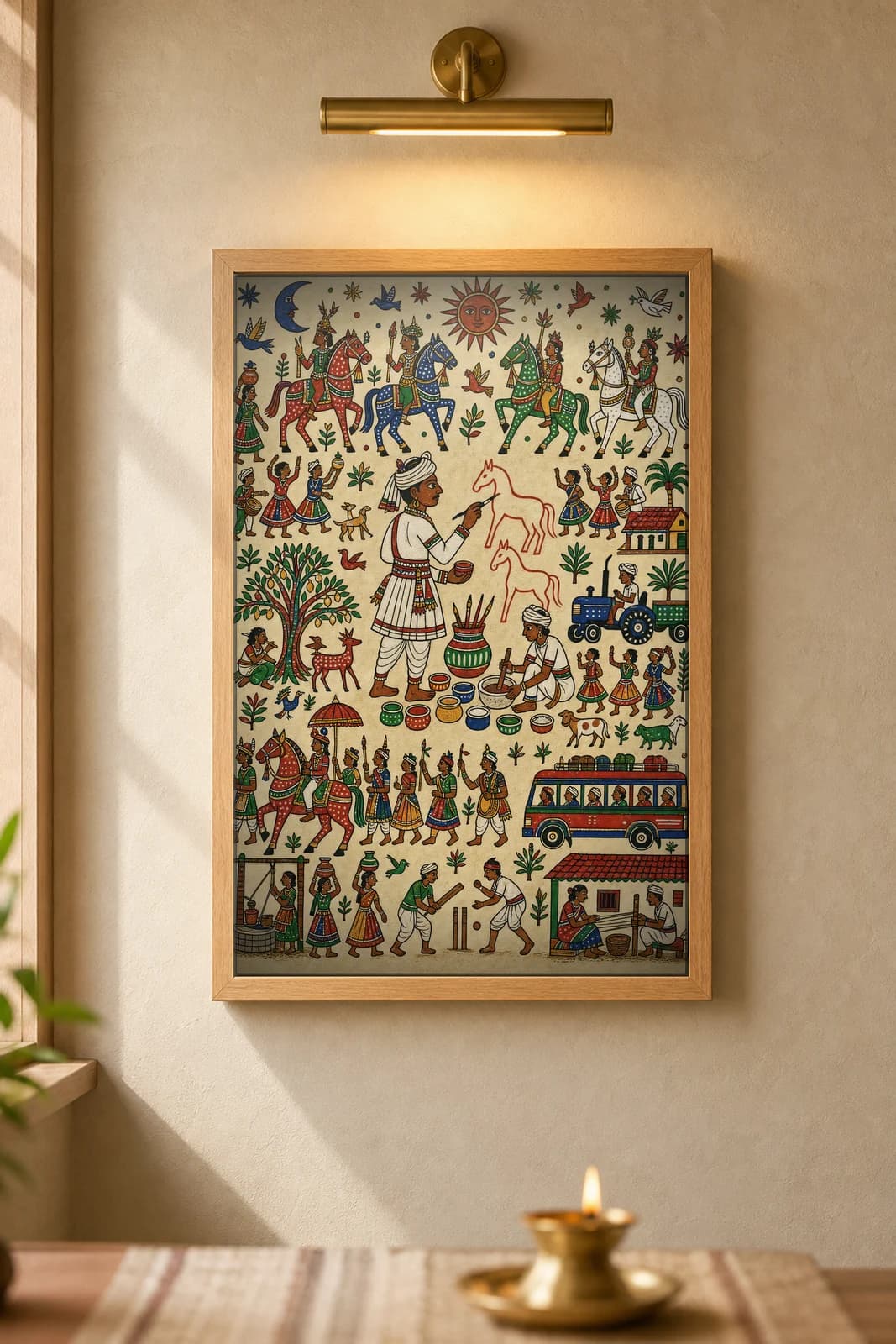
Reflective — 3 museum-grade prints that set the mood. Komaram Bheem (1900–1940) was a Gond adivasi leader of Adilabad who fought the Asaf Jahi rule of Hyderabad for tribal land rights under the slogan 'Jal, Jangal, Zameen' (water, forest, land). His story was carried village to village by balladeer-storytellers — exactly the role the Nakashi scroll-painters of Cheriyal served, painting long cloth scrolls that travelling bards unrolled episode by episode to recite epics and community histories. Gond painting comes from the Gond Adivasi communities of central India, with its best-known school formed by the Pradhan Gond of Patangarh and the wider Dindori region of Madhya Pradesh. The contemporary form is largely the legacy of Jangarh Singh Shyam (1962–2001), whose line-and-in-fill manner — every form bounded by a bold outline, then filled with rows of dots, dashes, commas and scales — became known as Jangarh Kalam and was carried on by his family and students. Pithora is the ritual wall-painting tradition of the Rathwa, Bhil and Bhilala Adivasi communities of Chhota Udepur in eastern Gujarat (and the adjoining belt of Madhya Pradesh and Rajasthan). The wall is vowed to Babo Pithoro and painted on the inner wall of the home as thanksgiving or to fulfil a wish; only the Lakhara — the priest-painter, also called the Gor — may carry out the sacred wall, working to the chants of the badva, while the bhopa narrates.