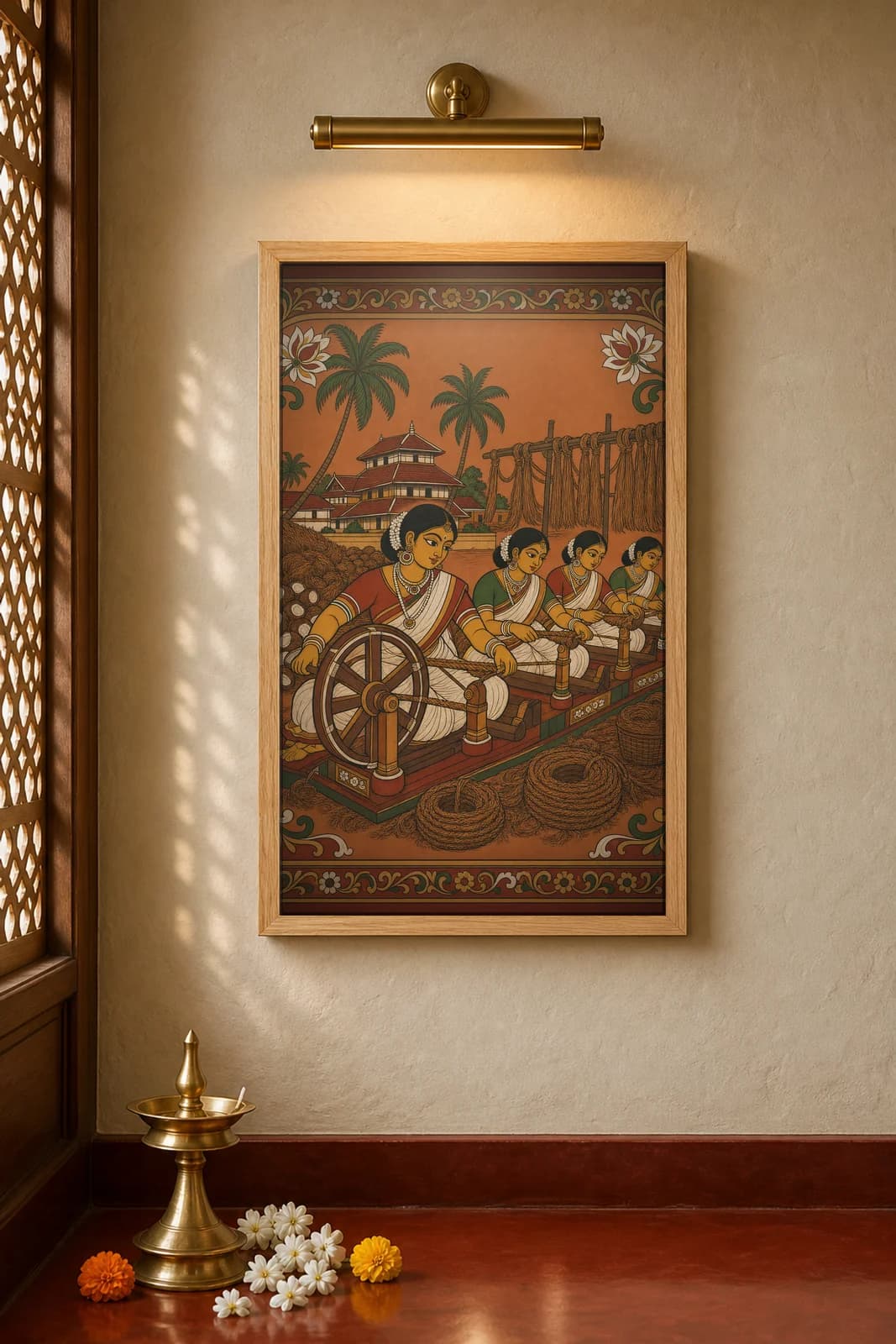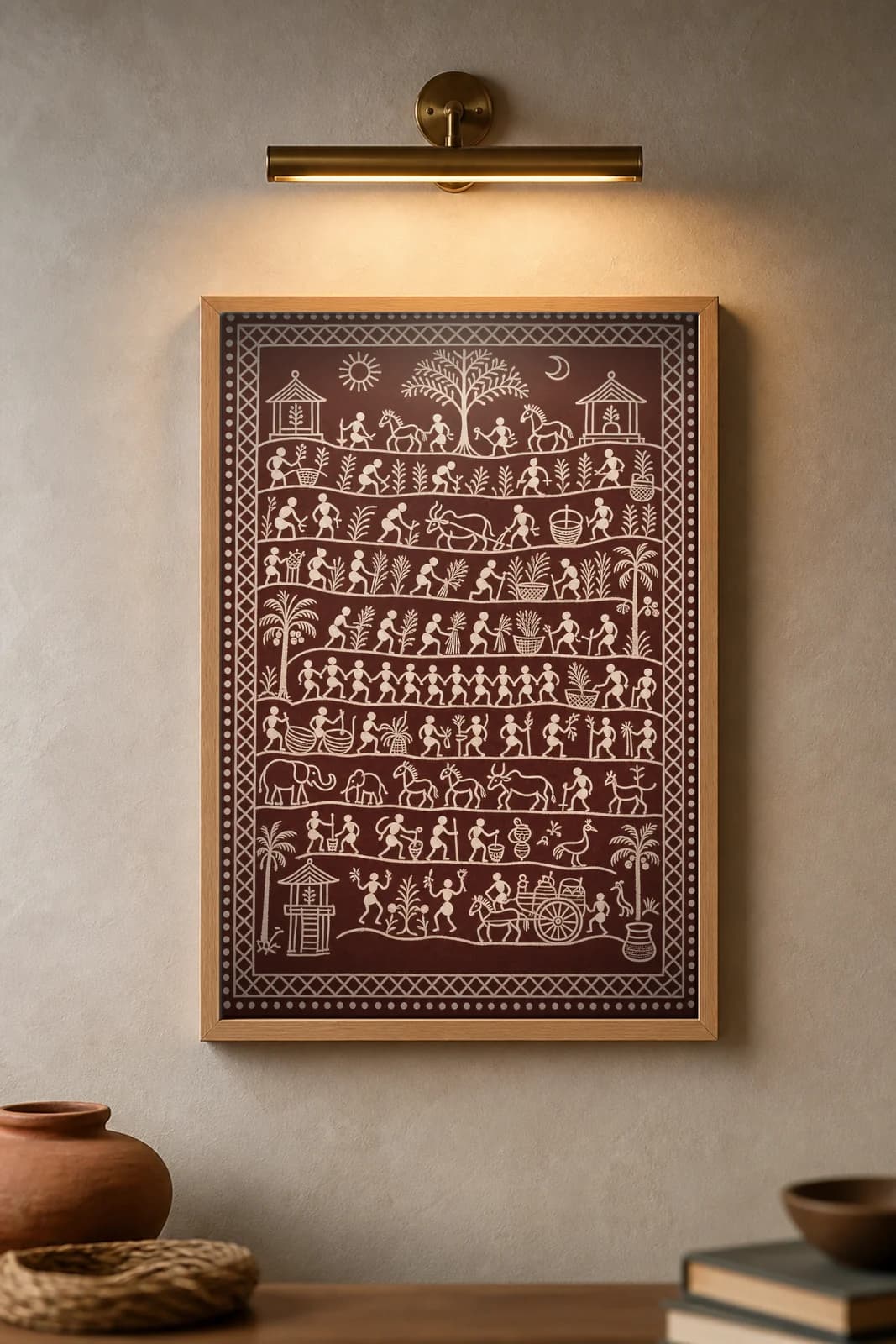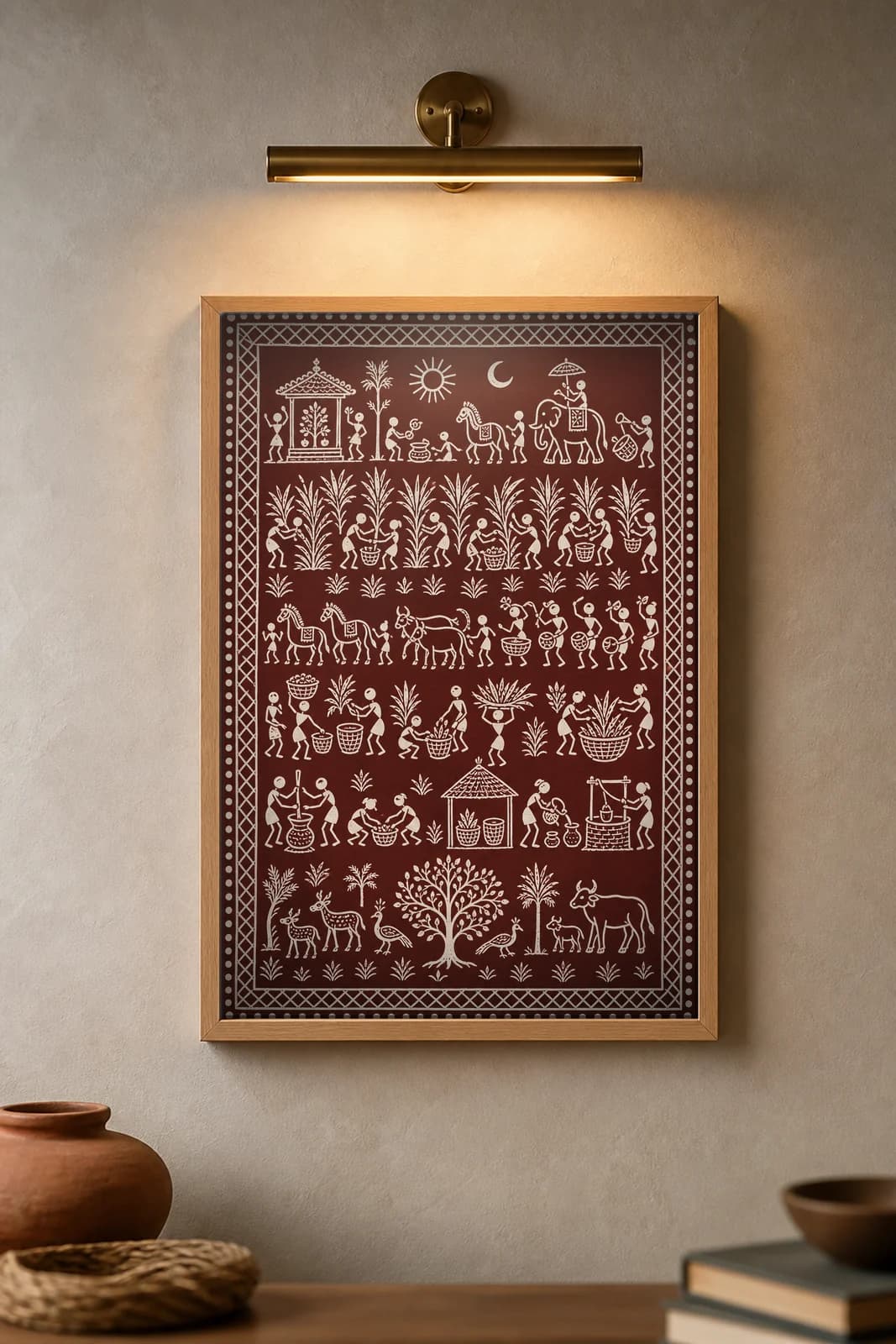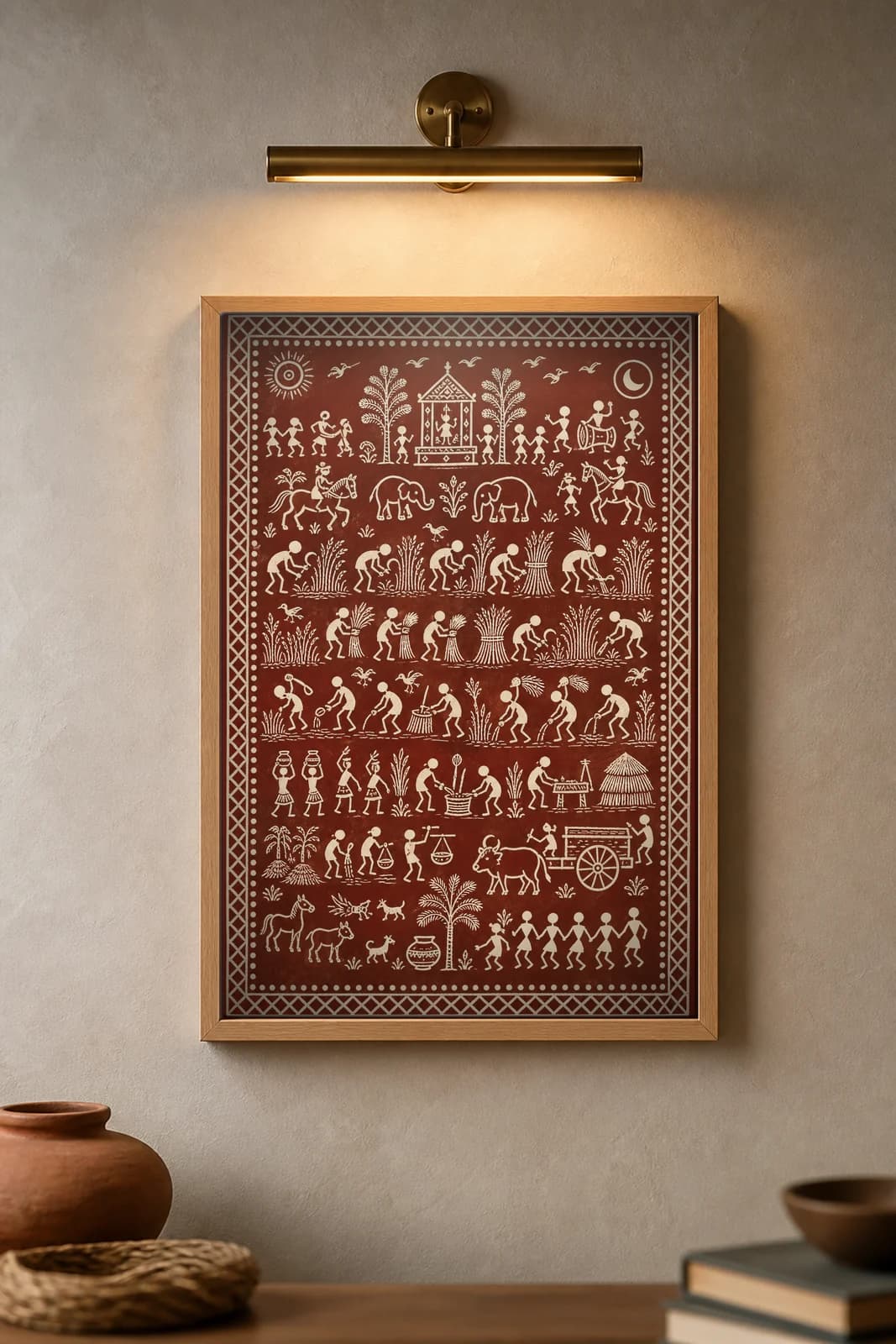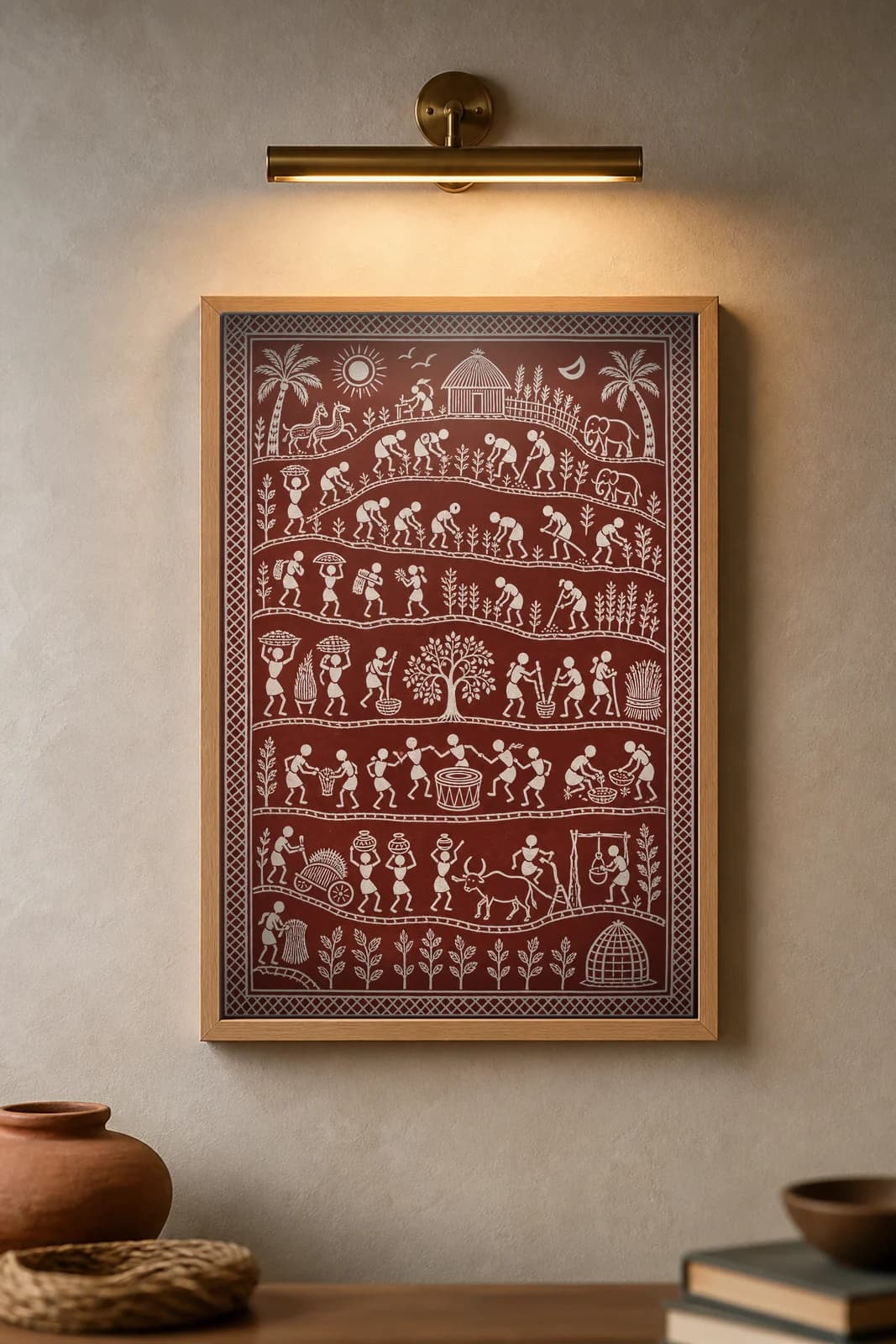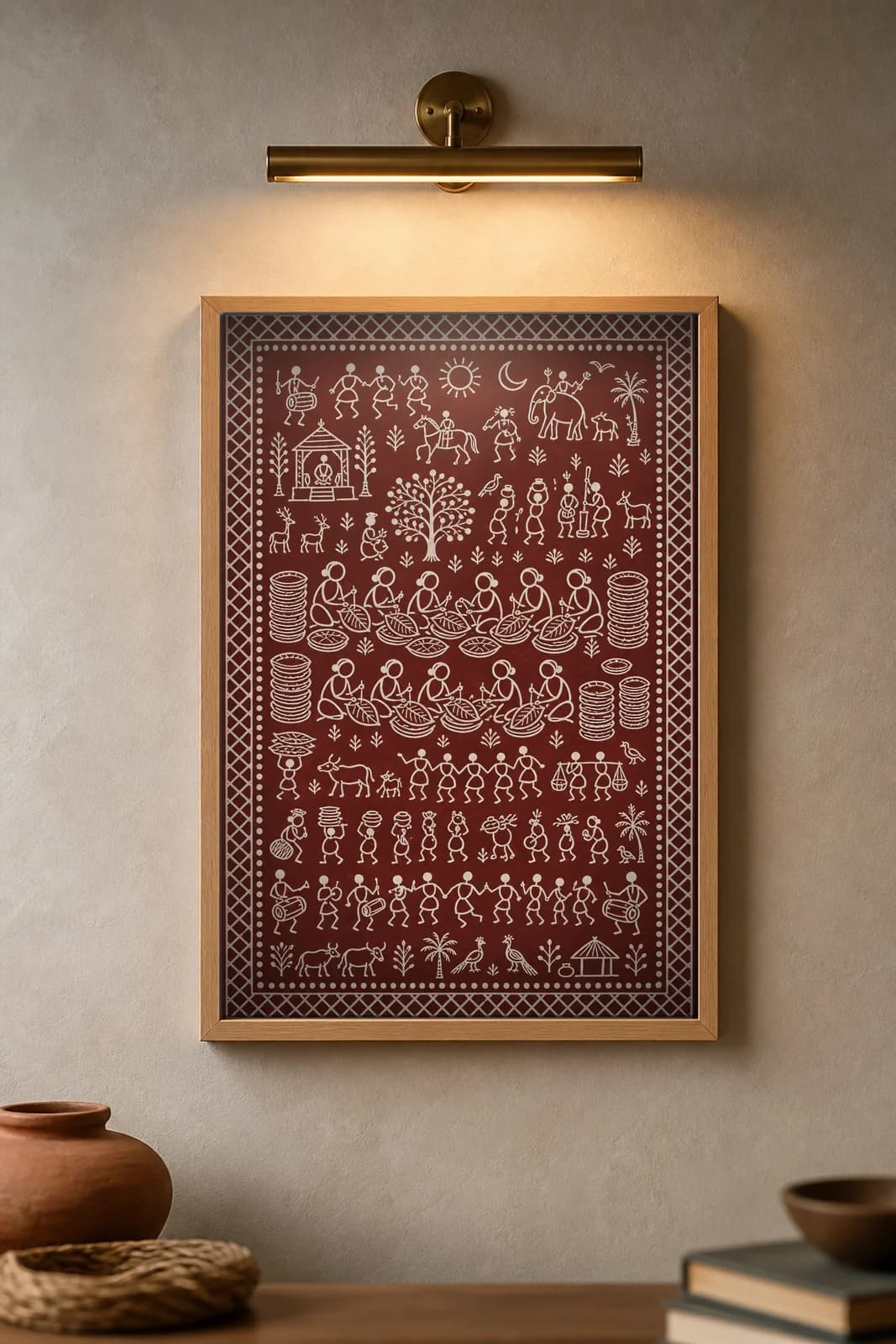
Industrious Calm — 7 museum-grade prints that set the mood. Coir — the fibre spun from coconut husk — is one of Kerala's signature crafts, centred on Alappuzha and the coastal belt, and the spinning is largely women's work done on traditional wheels in open yards. This print sets that scene inside bhitti chitra, Kerala's temple-mural tradition that flourished roughly from the 16th to 19th century and is still painted today: flat panchavarna pigments (red, yellow, green, black, white over an ochre ground), a bold lamp-black outline and the school's elongated lotus-shaped eyes. Kasavu — the cream handloom cloth with its signature gold-thread border — is Kerala's most recognised textile, worn for Onam, weddings and temple visits and woven at handloom centres such as Balaramapuram and Chendamangalam. This print sets a weaver at the loom inside bhitti chitra, Kerala's temple-mural tradition that flourished roughly from the 16th to 19th century and is still painted today: flat panchavarna pigments (red, yellow, green, black, white over an ochre ground), a bold lamp-black outline and the school's elongated lotus-shaped eyes. Saura (also Sora or Saora) is one of the oldest Adivasi communities of southern Odisha; the Lanjia Saura sub-group of the Rayagada and Gajapati hills are known for their ritual wall paintings, called ikon or idital, painted by a kuranmaran (shaman-priest) in white rice paste on the deep-maroon inner wall of a house to honour deities and ancestors. Stitching siali (Bauhinia vahlii) leaves into plates and bowls is a real forest-craft livelihood across the eastern-Indian hill belt, much of it women's work; daily-craft scenes recur across Saura panels alongside ritual subjects.