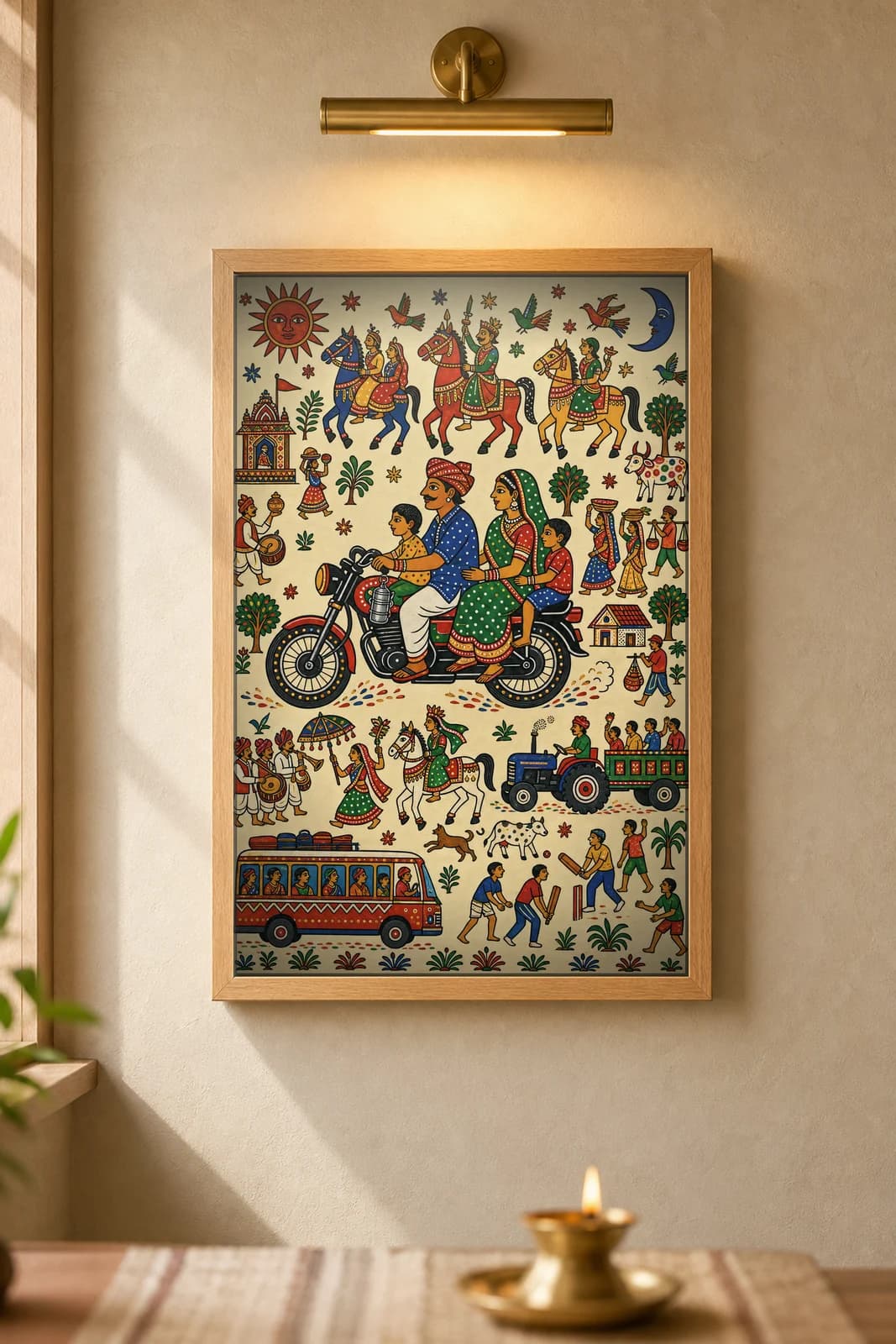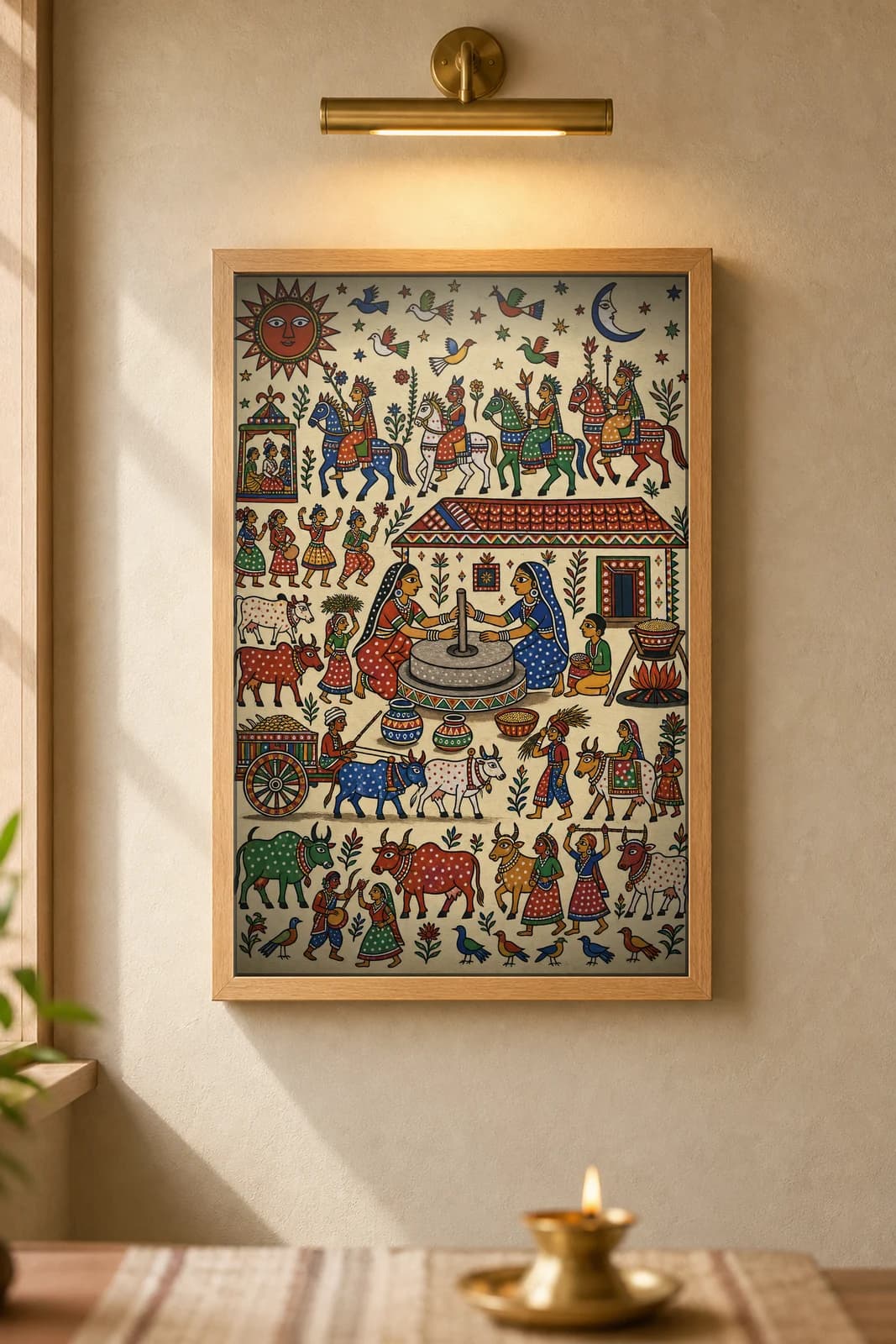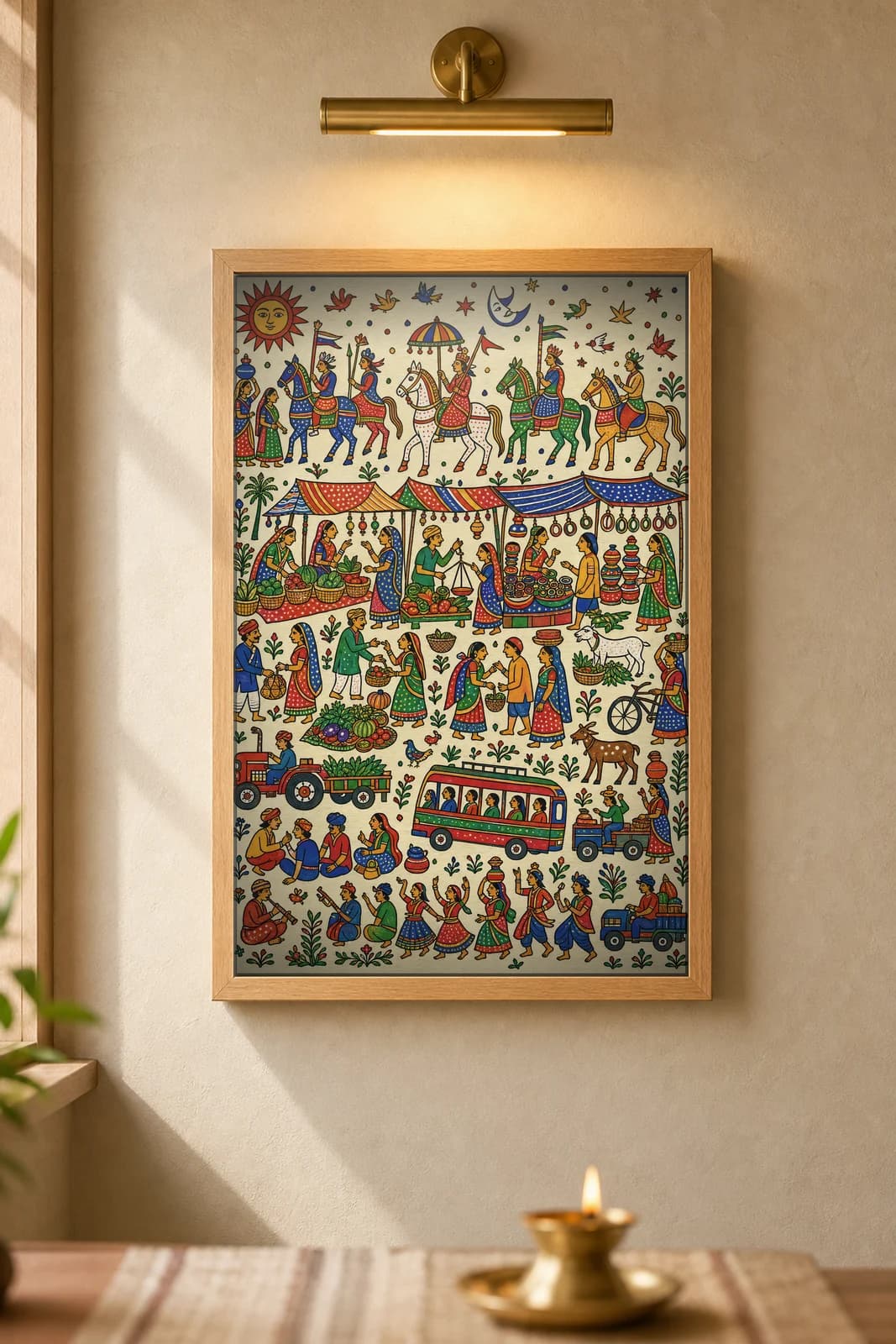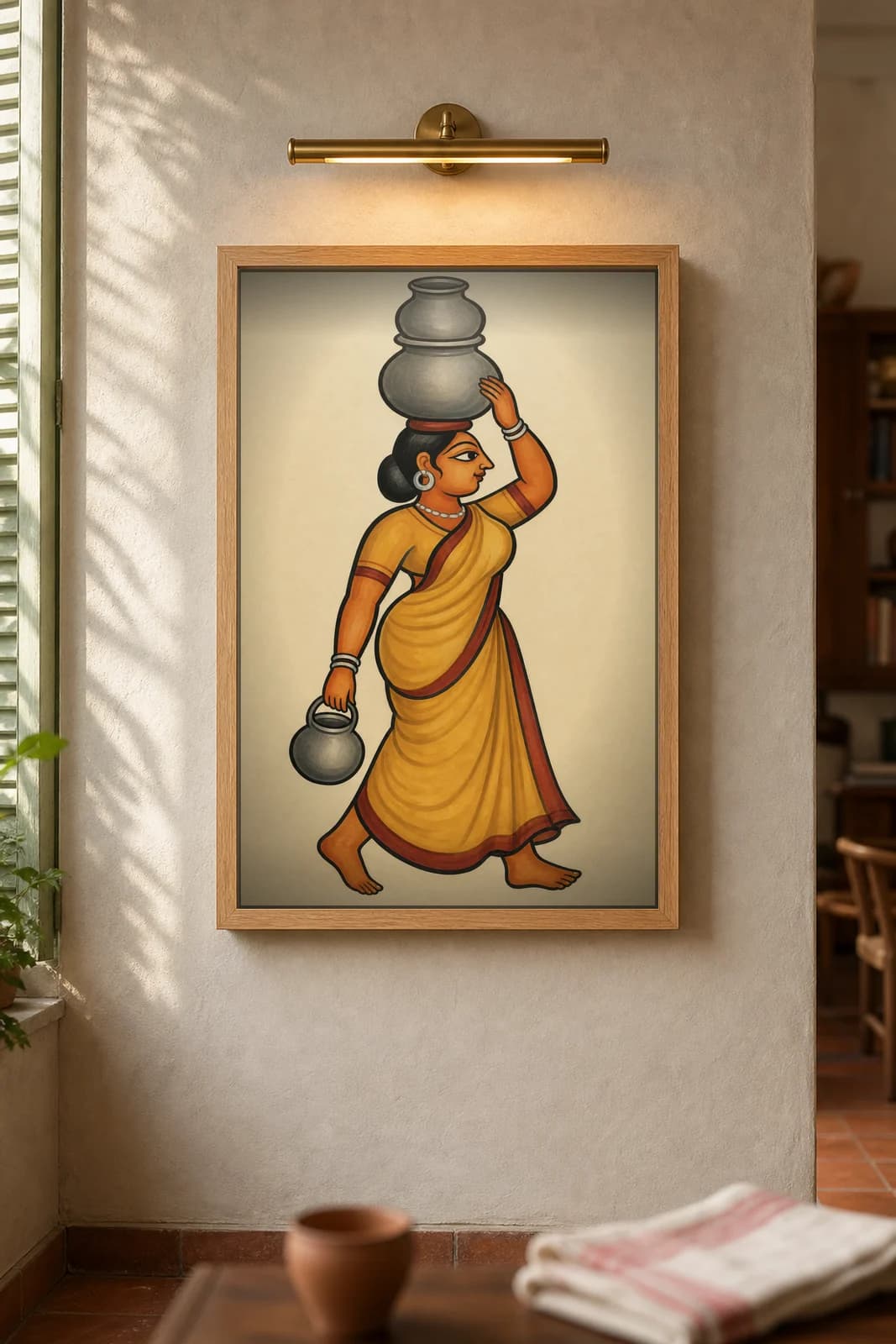
Everyday — 9 museum-grade prints that set the mood. Kalighat Pat grew up in 19th-century Kolkata, painted by patua (chitrakar) scroll-painters who settled near the Kalighat Kali temple and sold quick watercolours to pilgrims. Alongside gods and goddesses they painted the everyday people of Calcutta — milkmaids, fish-sellers, musicians and dandies — in the same economical brush, which is why the form is often called India's first modern popular art. Pithora is the ritual wall-painting tradition of the Rathwa, Bhil and Bhilala Adivasi communities of Chhota Udepur in eastern Gujarat (and the adjoining belt of Madhya Pradesh and Rajasthan). The wall is vowed to Babo Pithoro and painted on the inner wall of the home as thanksgiving or to fulfil a wish; only the Lakhara — the priest-painter, also called the Gor — may execute the sacred wall, working to the chants of the badva. Amber and Jaipur are the refined Rajput court schools, known for friezes of figures along bazaar and durbar grounds. This contemporary fusion borrows that market-frieze grammar for the sabzi mandi, the morning vegetable market that anchors daily life in every Indian town — the baskets, the bargaining, the hand-carts of produce.


$49


$49

$49

$49

$49