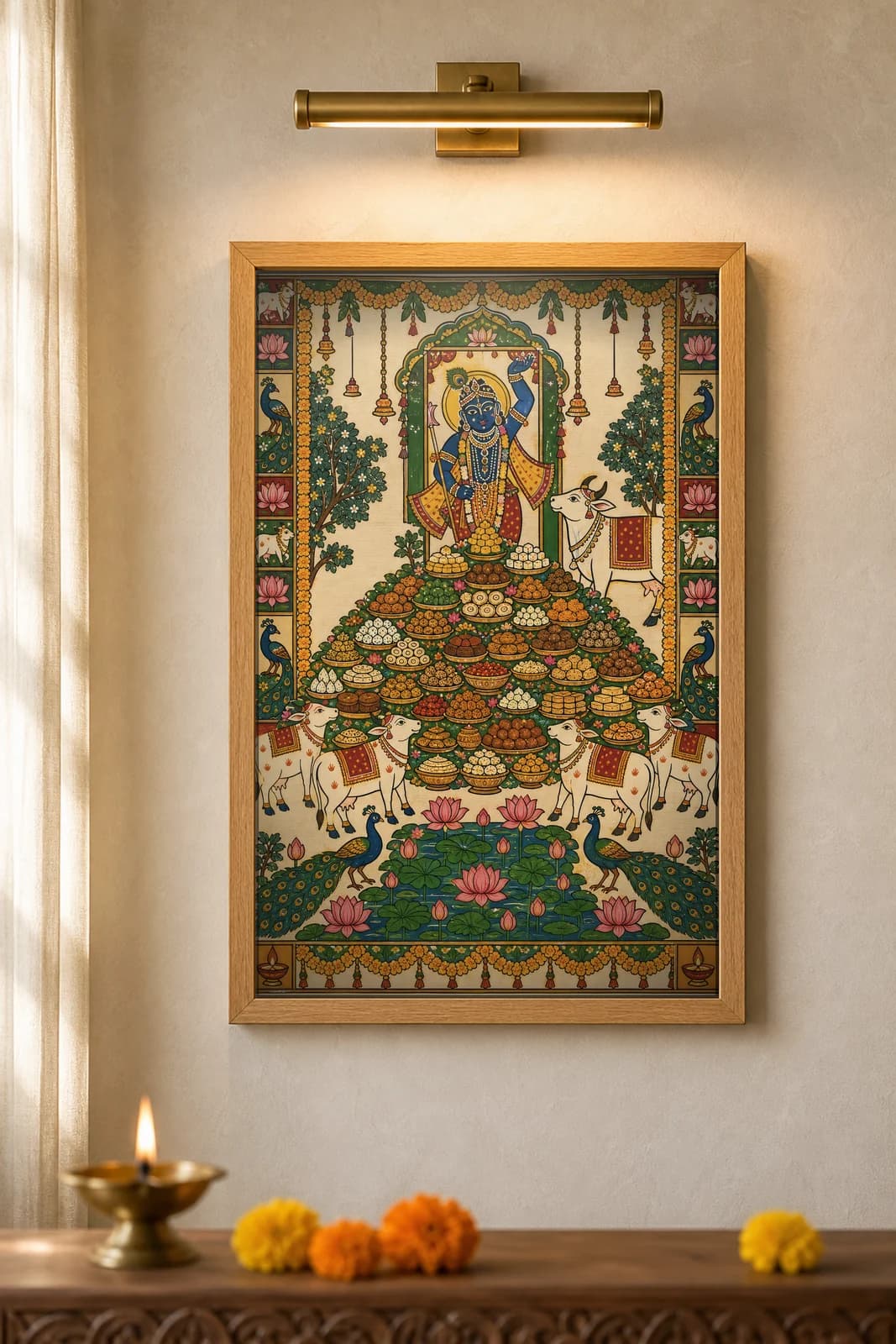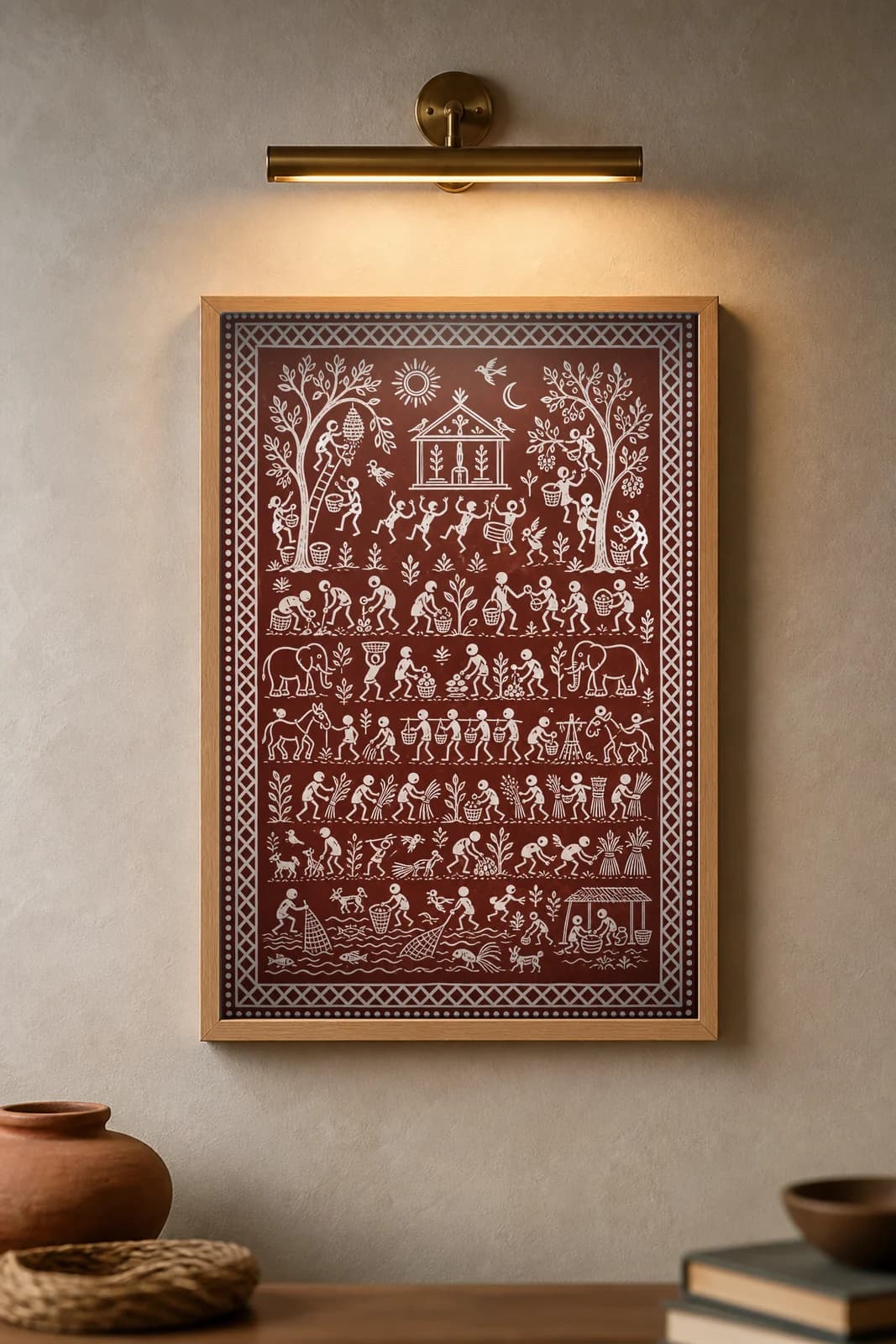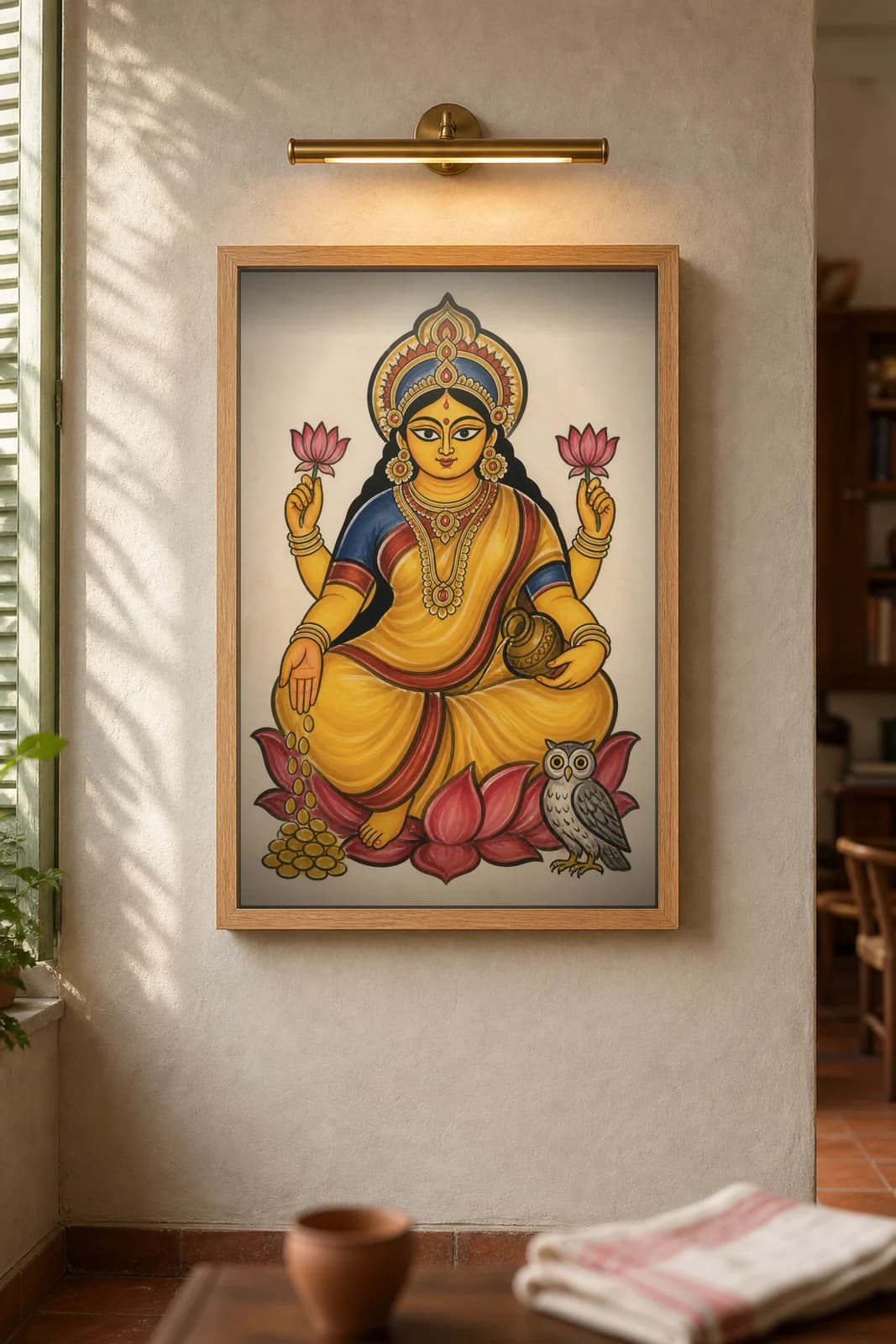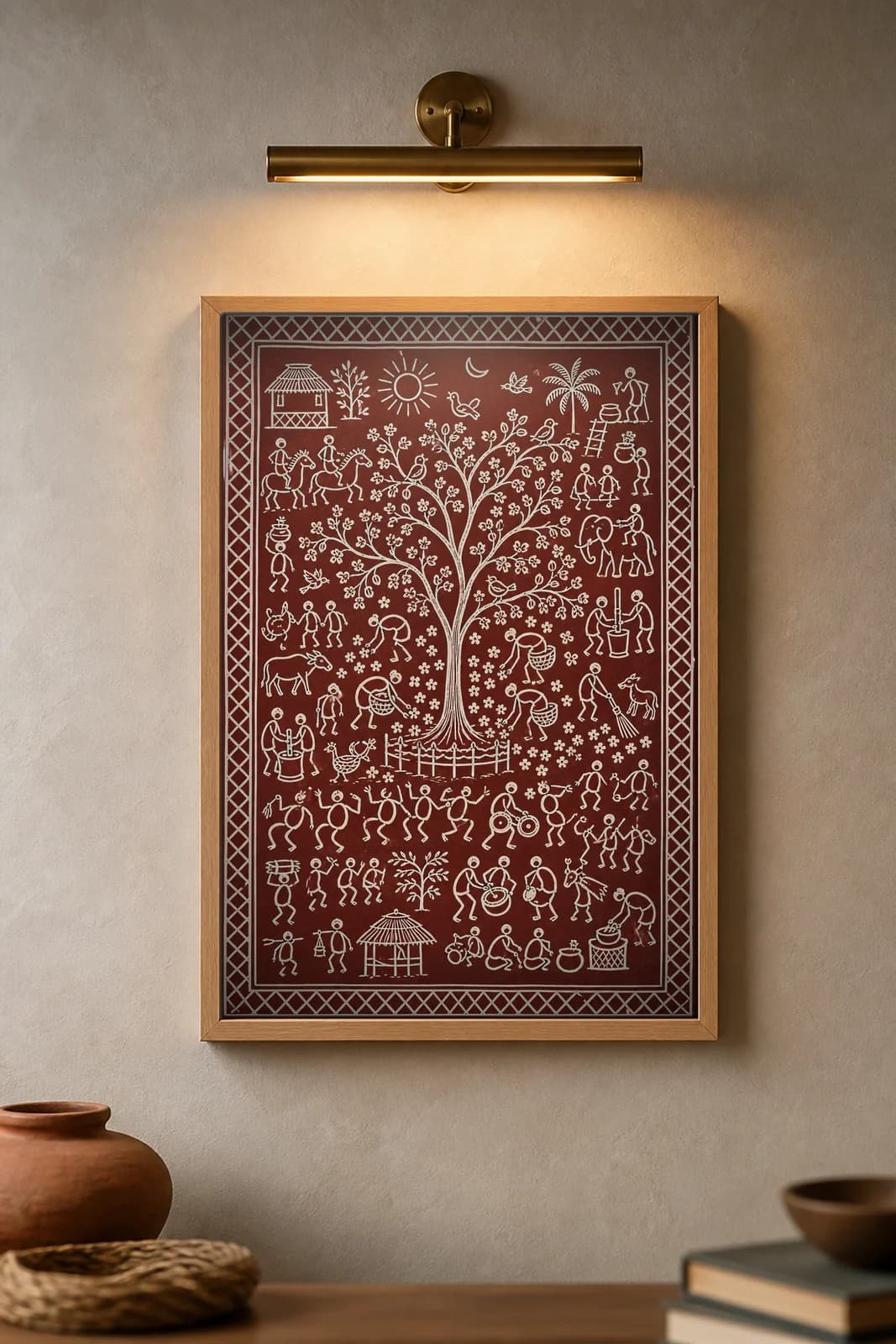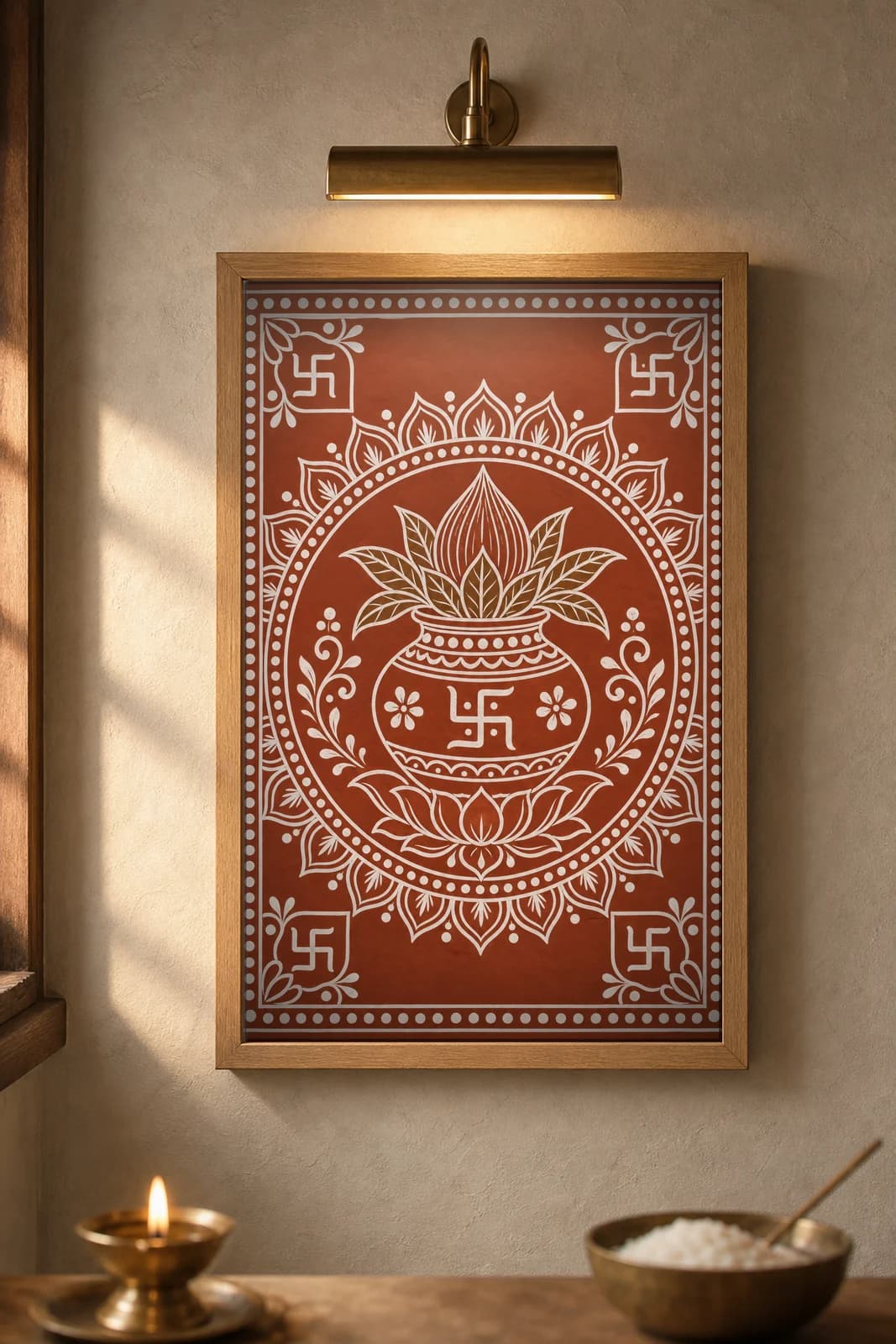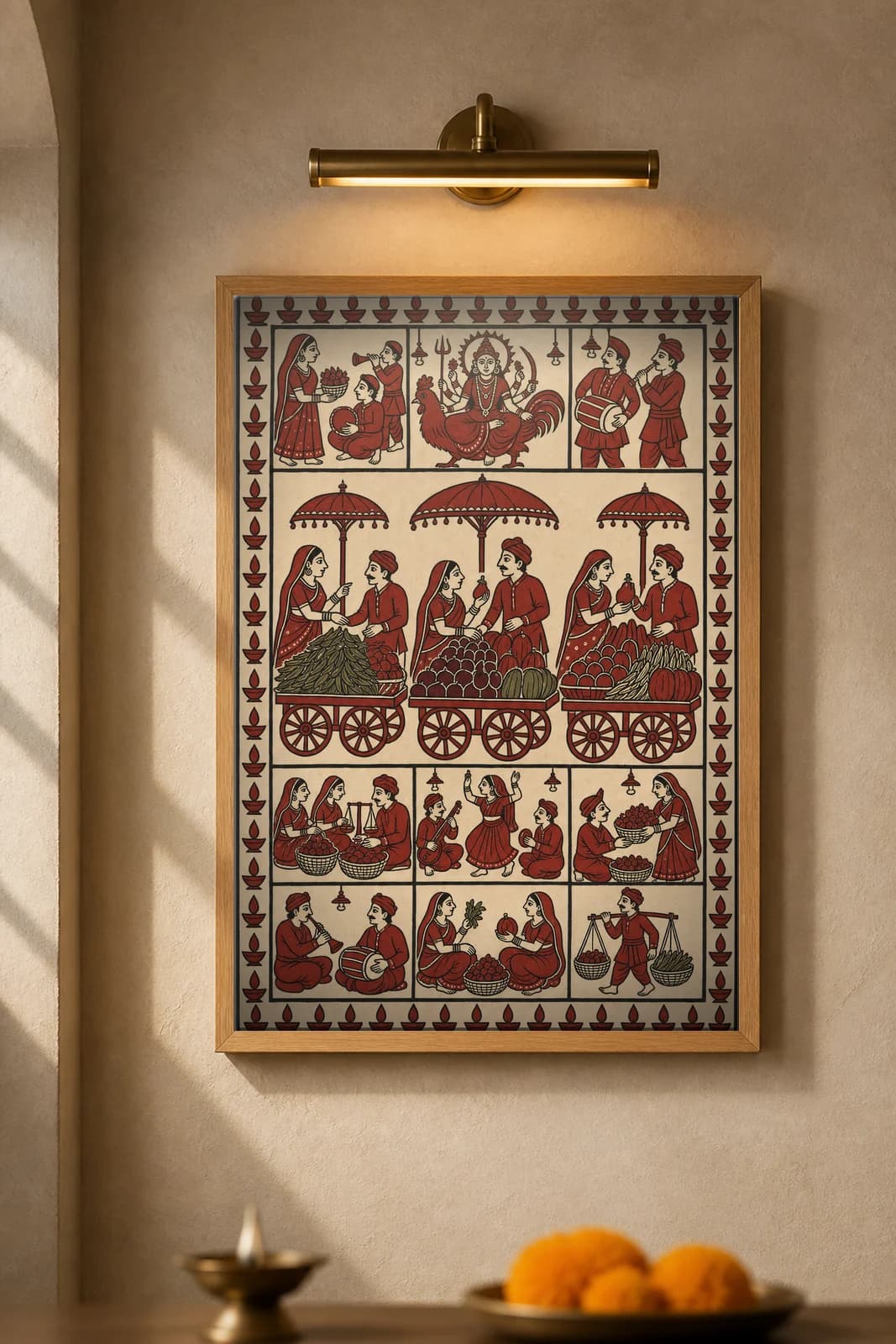
Abundant — 11 museum-grade prints that set the mood. Kalighat Pat grew up in 19th-century Kolkata, painted by migrant patua (chitrakar) scroll-painters who settled near the Kalighat Kali temple and sold quick watercolour souvenirs to pilgrims. Working on mill-made paper with a bold single black brush outline and soft 'boneless' shaded strokes on a plain ground, they painted gods and goddesses alongside what is often called India's first modern social satire — sharp, affectionate caricatures of the colonial 'babu' and the hypocrisies of Calcutta life. Sohrai is a harvest-season wall art of Hazaribagh district, Jharkhand, painted by women of tribal and Kurmi communities to welcome cattle home after the rice harvest, around Diwali. The lotus pond, blooming with lotus, fish and ducks, is a recurring Sohrai blessing of water and abundance — the ponds that water the plateau fields and feed its life. Aipan is the ritual floor- and wall-art of the Kumaon region of Uttarakhand, drawn traditionally by Kumaoni women with white rice-paste (biswar) on a geru (red-ochre) earth ground. A festival thali — the round plate of many small katori bowls laid for tyohar — is a circle of plenty shared with guests and offered to the gods.