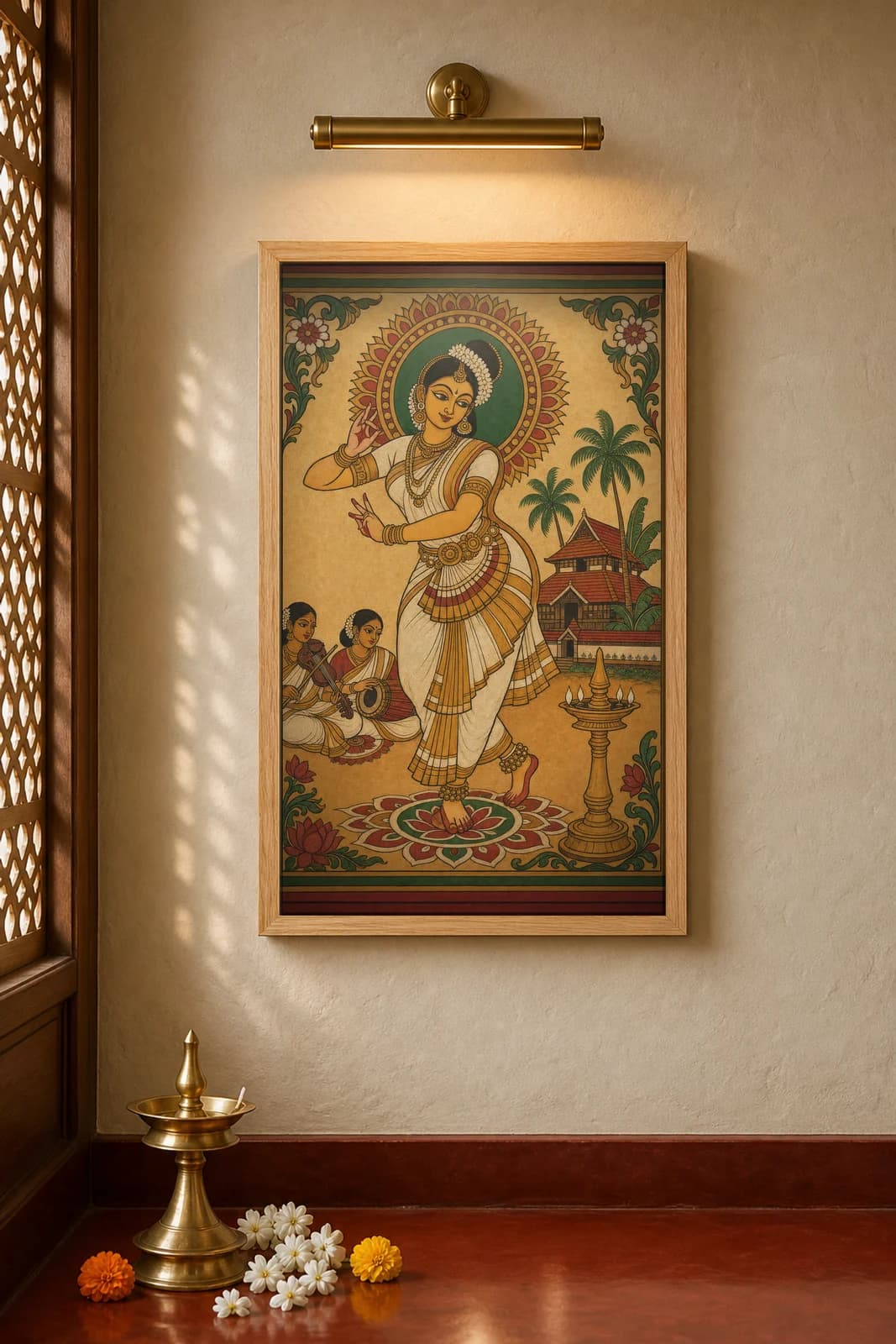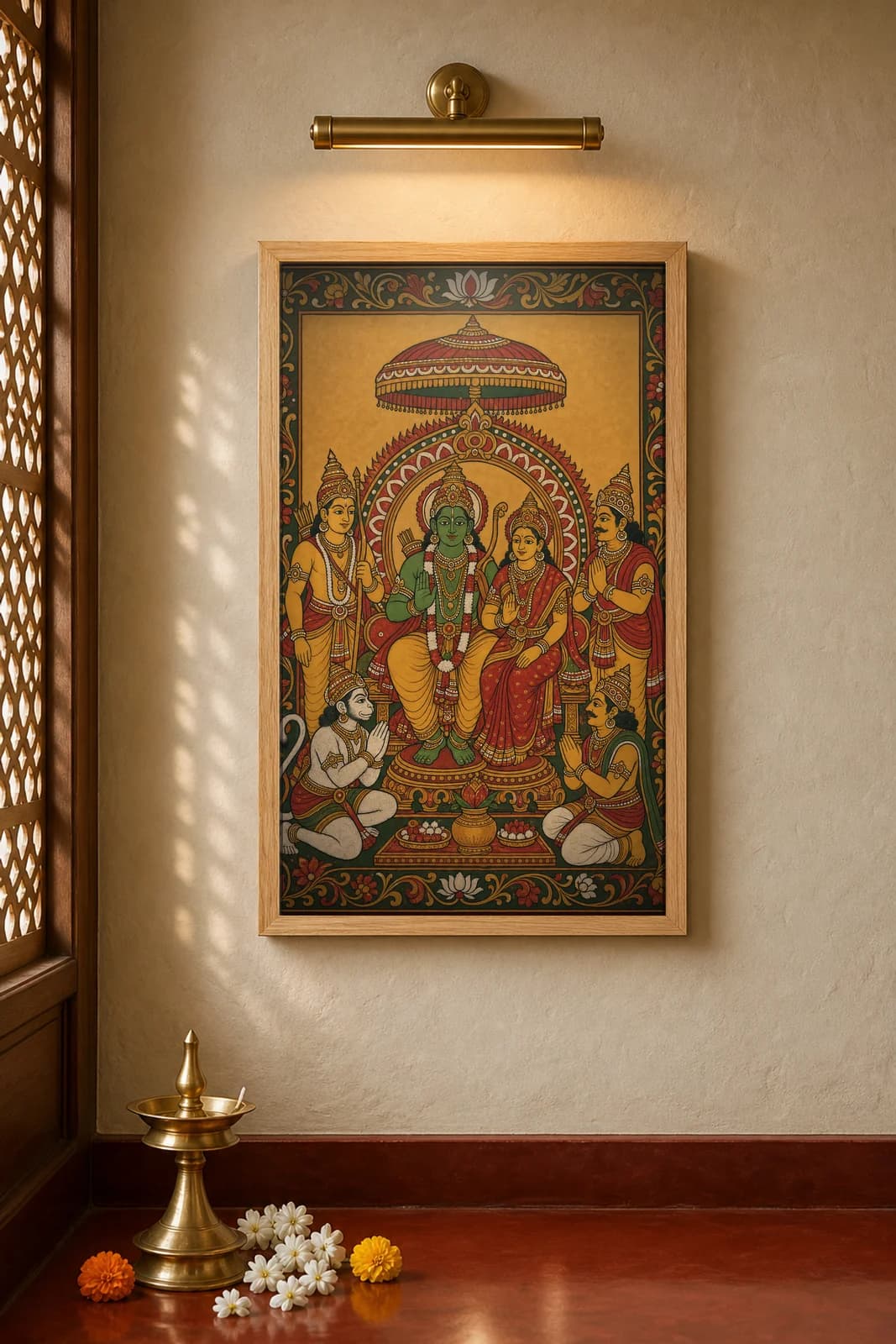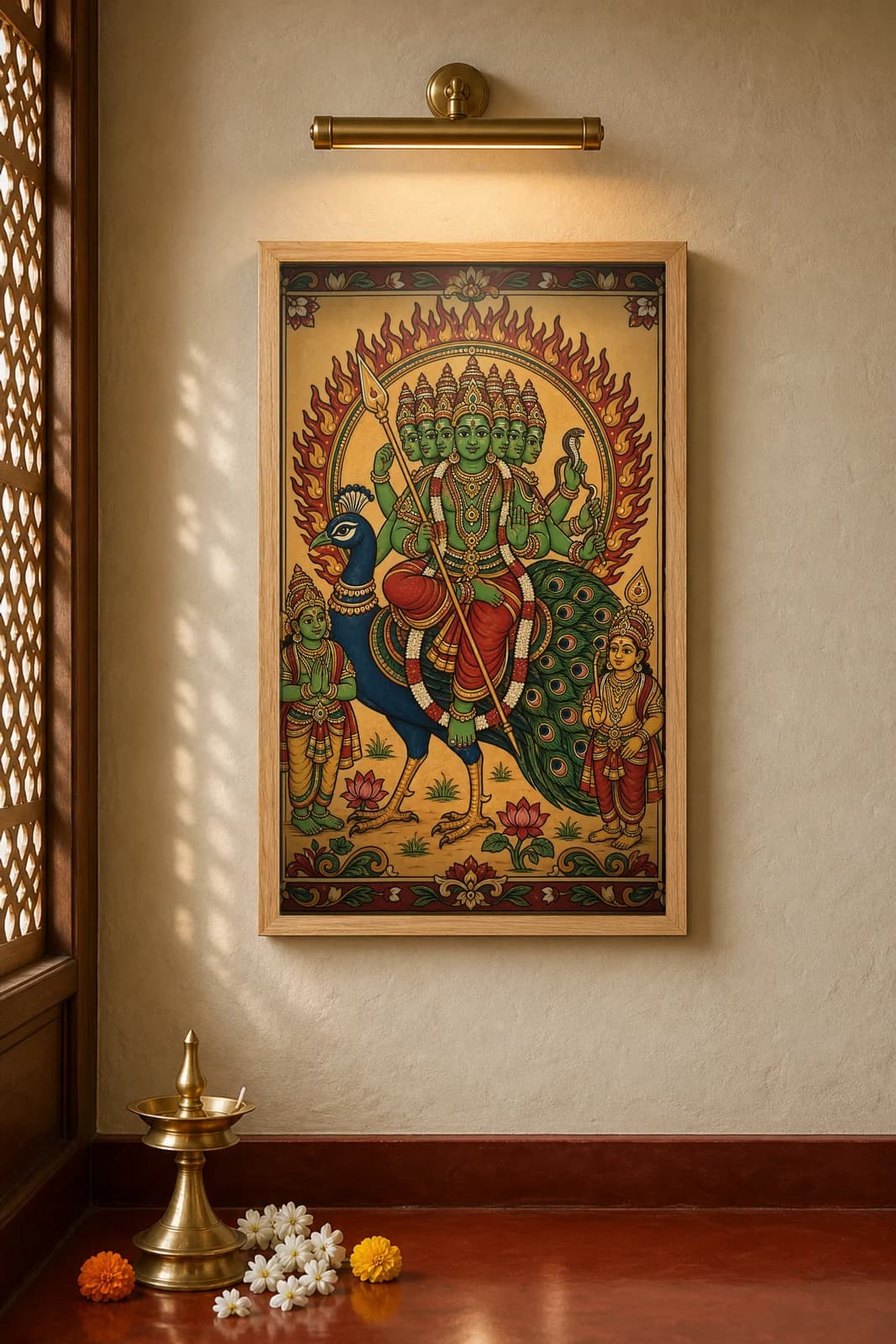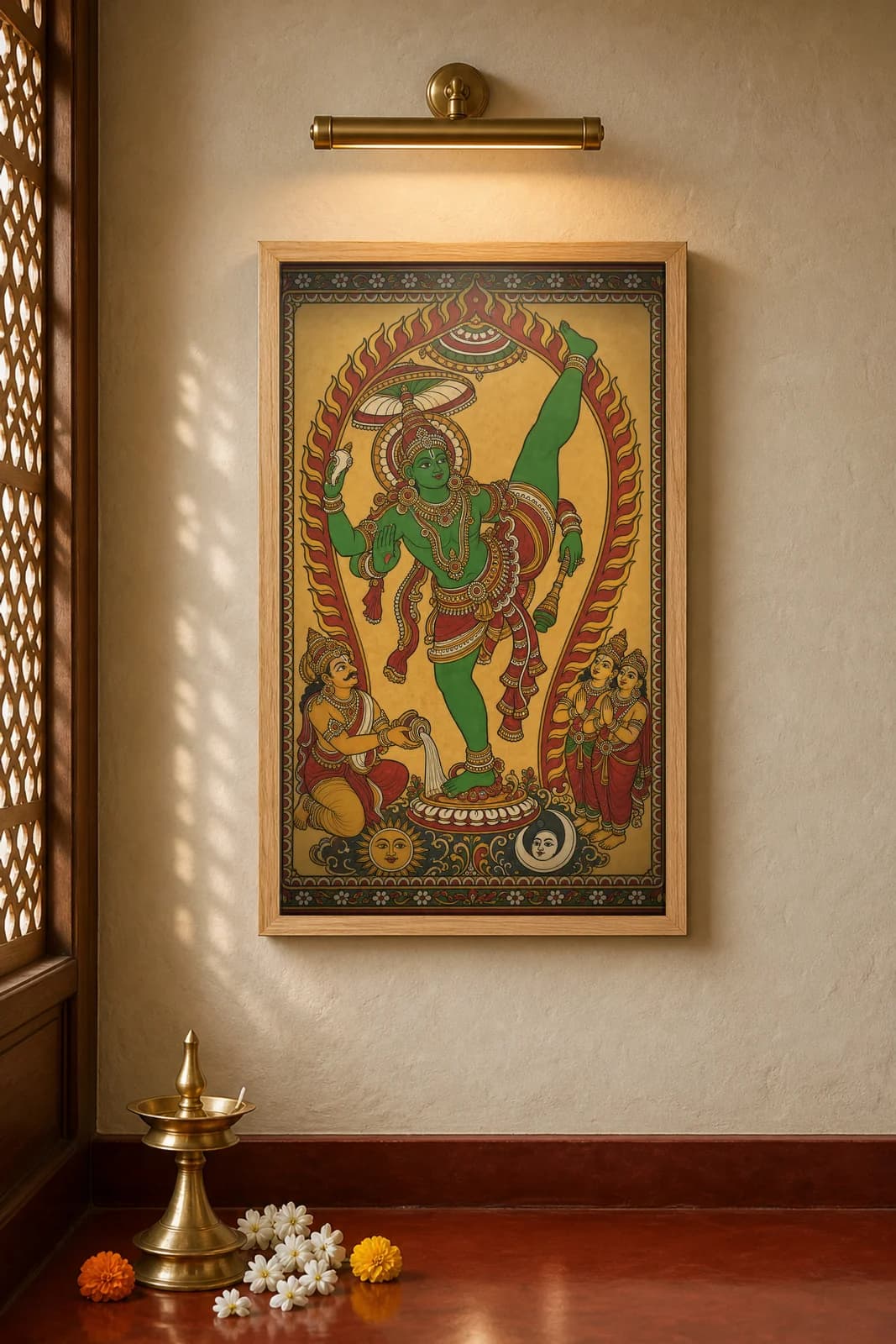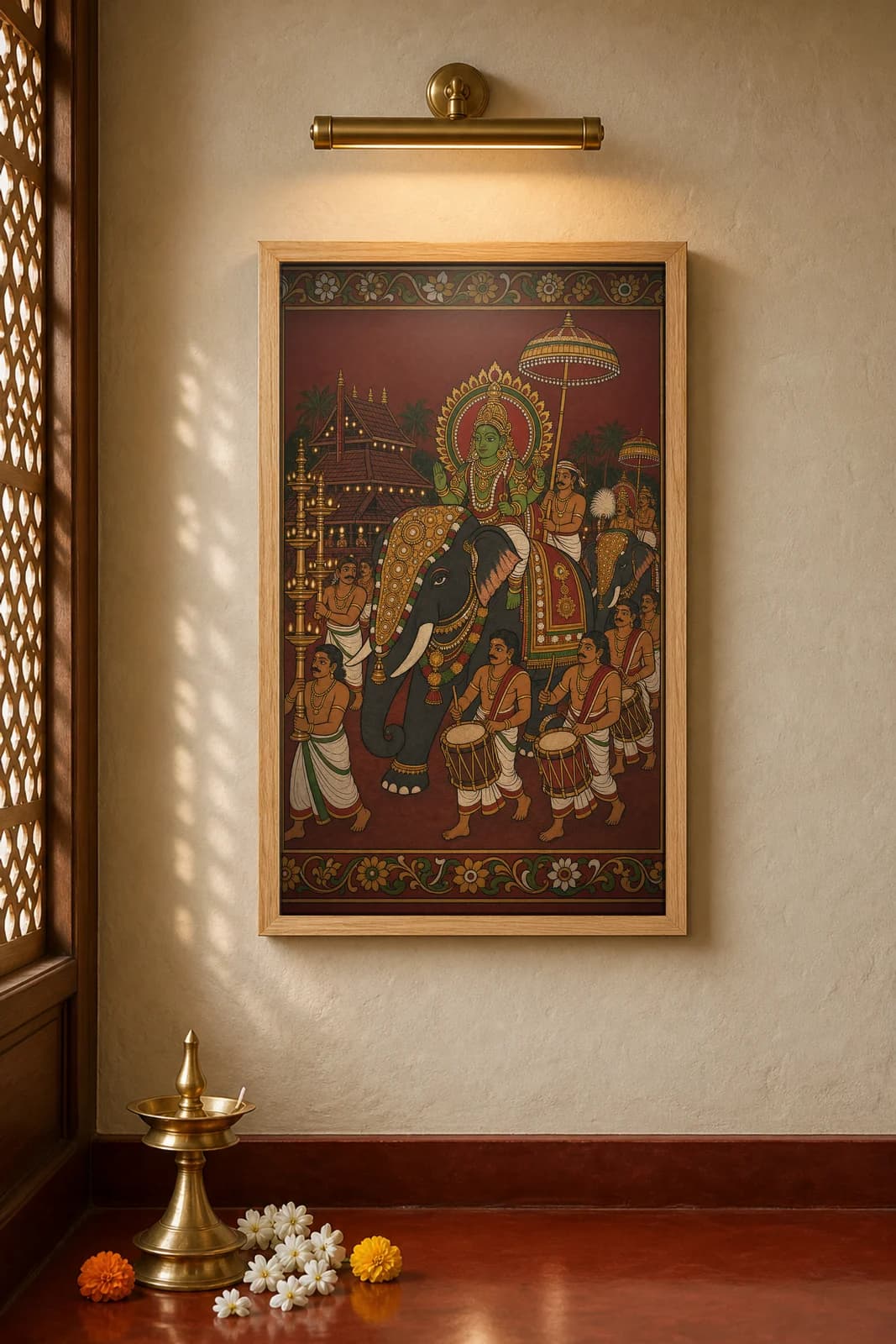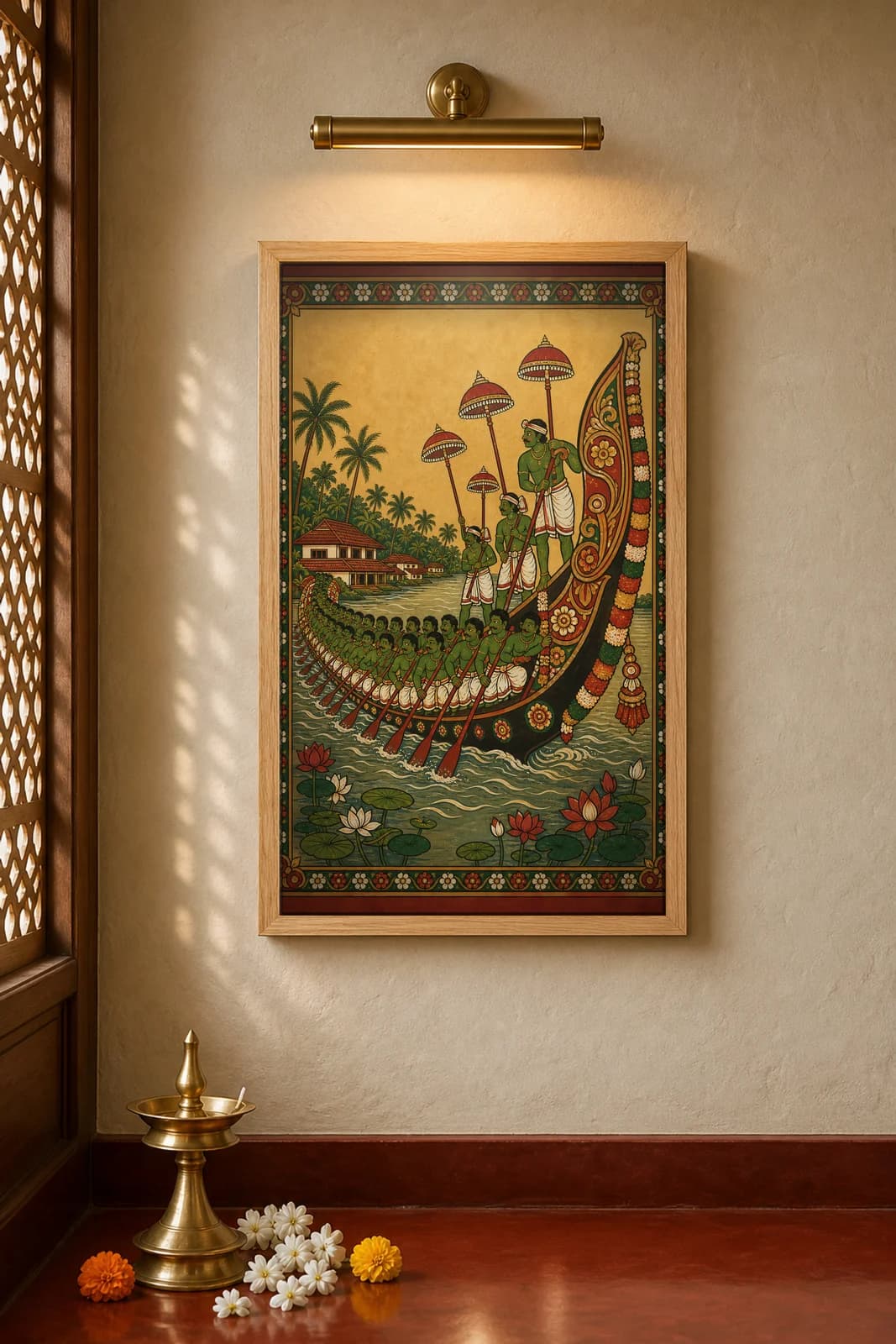
Temple Green — 19 museum-grade prints in this palette. Mohiniyattam — the dance of the mohini, the enchantress — is one of Kerala's classical solo dance forms, marked by gentle swaying lasya movement, the half-seated araimandi stance, and the plain off-white-and-gold kasavu costume seen here; its modern repertoire was consolidated at Kerala Kalamandalam in the twentieth century. The picture is built in the idiom of bhitti chitra, Kerala's temple-mural tradition, which uses the panchavarna five-colour system — red, yellow, green, black and white over an ochre ground — in flat opaque fields bounded by a bold lamp-black outline, with the school's signature elongated lotus-shaped eyes. Bhitti chitra is Kerala's temple wall-painting tradition, flourishing from roughly the sixteenth to the nineteenth century and still painted today by trained artists who grind their own mineral and vegetable pigments. The picture shows the actual method: pigment ground on stone, mixed in shallow bowls, and laid down in flat opaque fields over a confident lamp-black line drawing — the deity on the wall is left half-drawn to reveal exactly that sequence. Narasimha is the fourth avatar of Vishnu — the man-lion who emerges at twilight from a pillar to kill the demon king Hiranyakashipu, neither man nor beast, neither inside nor outside, neither day nor night, closing every clause of the demon's boon to protect his devotee Prahlada. He is a recurring subject of bhitti chitra, Kerala's temple-mural tradition, which uses the panchavarna five-colour system — red, yellow, green, black and white over an ochre or red ground — in flat opaque fields bounded by a bold lamp-black outline, with the school's signature elongated lotus-shaped eyes.


$49

$49


$49


$49

$49