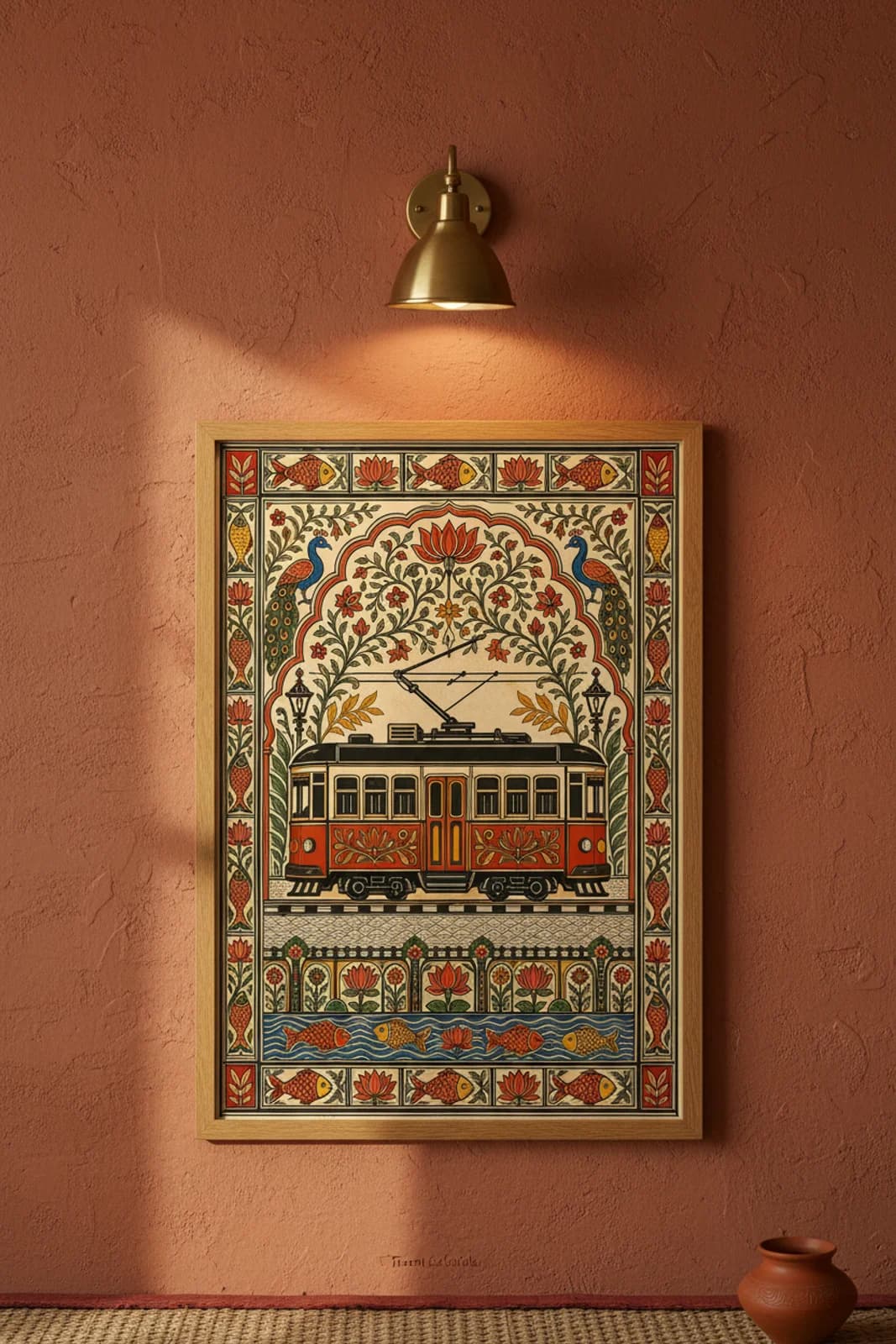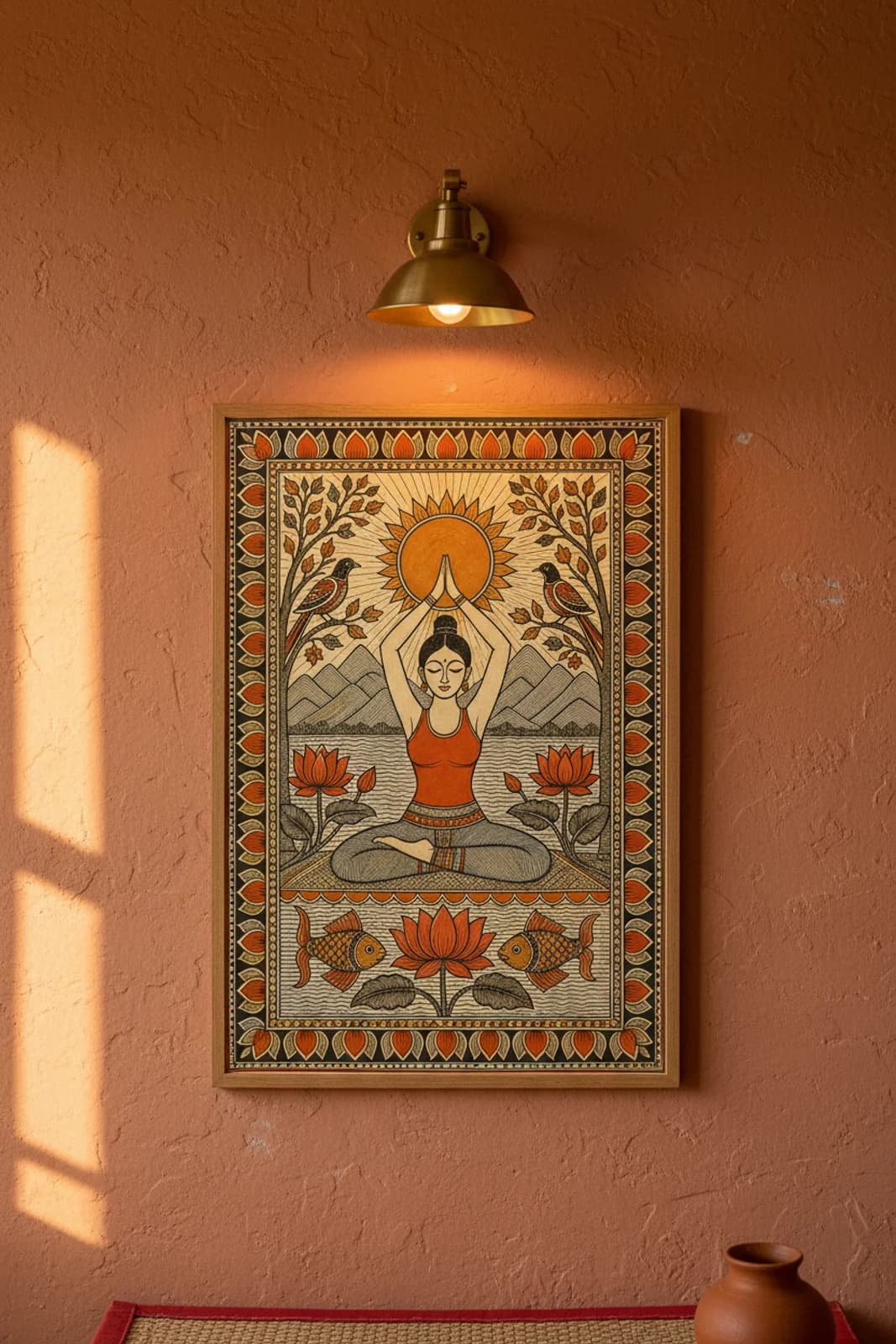
Contemporary Madhubani Fusion — 11 museum-grade prints on the theme. Kachni — from the Hindi word for fine line — is the Madhubani tradition associated with Kayastha women painters who built form through dense parallel hatching, cross-hatch, and stippling inside bold double black outlines, distinct from Brahmin Bharni flat colour floods and Dusadh Godna tattoo dot grammar. On classical walls Kachni rendered bamboo, fish scales, peacock feathers, and manuscript page fields; on paper it became the line discipline of villages like Ranti and Jitwarpur after the 1960s famine-era transfer from mud-wall ritual to market craft. Kachni — meaning line — is the Kayastha women's tradition within Madhubani painting: figures and motifs built from dense parallel hatching, cross-hatch, and stippling inside double black outlines, historically associated with fine narrative detail on cream or cow-dung-washed grounds rather than Bharni flat colour floods. Manuscript and palm-leaf folio pages appear in classical Mithila panels as path-line texture fields; open books in folk grammar extend that reading without importing Mughal miniature perspective. Kachni is the Kayastha women's line tradition within Madhubani painting — historically distinct from Brahmana Bharni flat-fill work. Where Bharni shouts in vermillion and lampblack solids, Kachni whispers through parallel hatching, stippling, and cross-hatching laid down with bamboo sticks, twigs, and fingers on cream or mud-plaster ground.