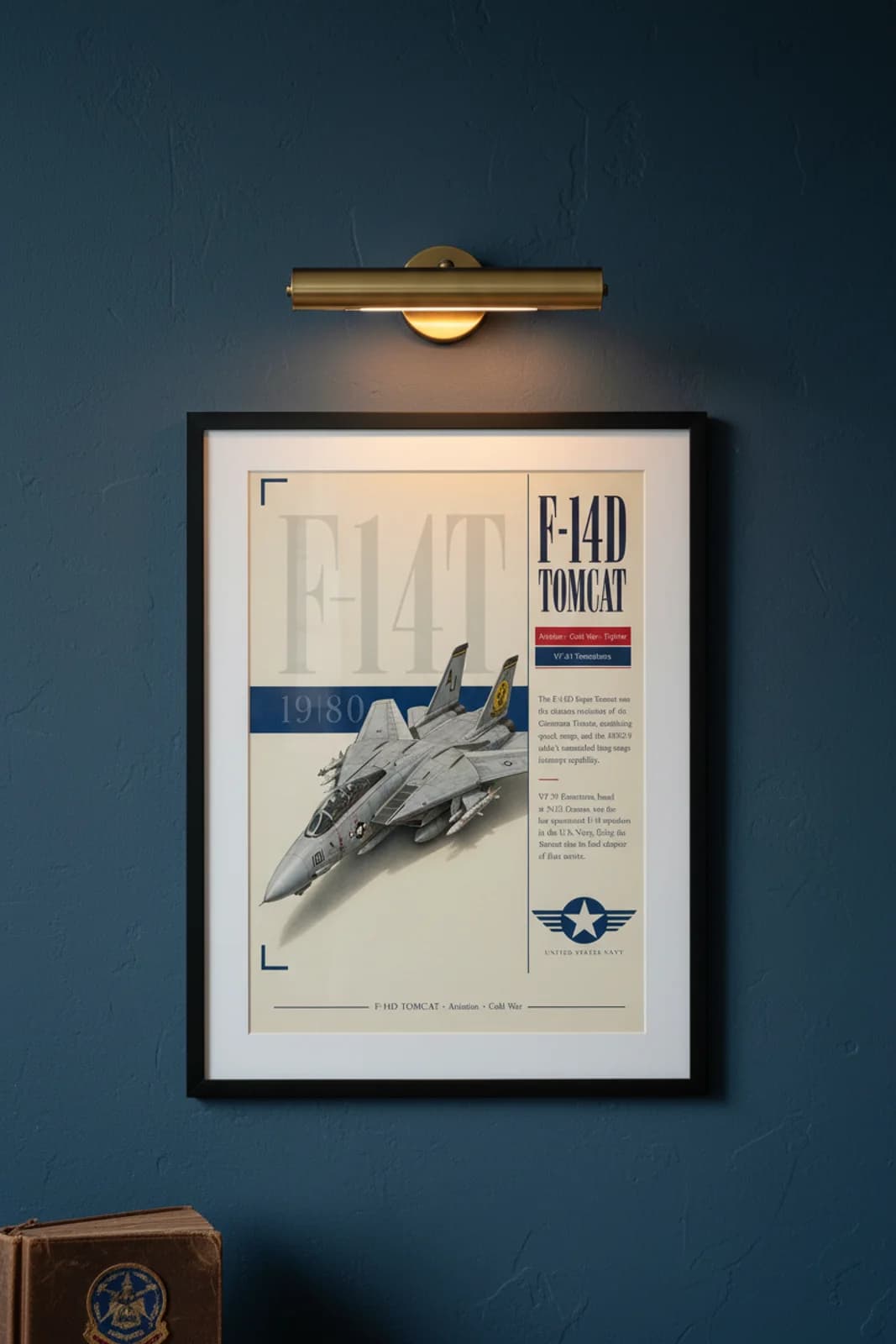
Aviation Heroes Fighter Planes — 7 museum-grade prints on the theme. VF-31 Tomcatters adopted Felix the Cat as squadron mascot decades before the Tomcat era, and the yellow roundel on the tail fin became one of the most recognisable markings in US Navy fighter aviation. The Tomcatters were the Navy's last operational F-14 squadron, disestablished after the Tomcat's 2006 retirement — a final-cruise CVW-8 Theodore Roosevelt deployment remains a reference point for profile-print collectors hunting AJ-coded Tomcats from the type's closing chapter. Marine Light Attack Helicopter Squadron 167 — call sign Warriors — has flown attack helicopters from MCAS New River, North Carolina, since the Cobra era, transitioning to the AH-1Z Viper as part of the USMC H-1 upgrade programme that paired Zulu gunships with UH-1Y Venom utility helicopters in composite HMLA units. The AH-1Z, nicknamed Zulu, carries the Cobra's tandem cockpit and stub-wing weapons architecture forward with four-blade rotors, improved survivability, and precision Hellfire employment — the platform East Coast Marines reach for when MAGTF ground teams need responsive close air support. The legacy F/A-18 Hornet — community shorthand for the A/B/C/D family before the larger F/A-18E/F Super Hornet earned the Rhino nickname at the boat — defined US Navy carrier strike-fighter ops from the 1980s through the 2010s. McDonnell Douglas built the type around twin engines, canted twin tails, and leading-edge root extensions that let the Hornet trade between fleet defence, tanker escort, and precision strike without swapping airframes.