WALLIMILIST
  • Interiors
  • Best of
  • Cultural
  • Interiors
  • Best of
  • Cultural
WALLIMILIST© 2026 · Archival prints, made to order
CollectionsGift cardsTrack order
WallimilistWALLIMILIST

Interior-specification art. Every print is engineered to a wall — palette, proportion, room fit and edition — and made to order on archival fine-art paper.

India · Worldwide
Follow us on Google

Shop

  • All collections
  • Interior art
  • Cultural & folk art
  • Gift cards
  • Redeem a gift card
  • Search the catalogue

Collections

  • NASA — Space Heritage Collector Prints
  • Aviation Heroes — Fighter & Attack Aircraft Prints
  • City Stamps — World Cities Philatelic Prints
  • Heritage Icons — Museum Specimen Prints
  • Warli · Maharashtra
  • F1 Technical Archive — Blueprint Engineering Prints
  • F1 Drivers — Grand Prix Heritage Collector Prints
  • Madhubani · India
  • Aircraft Cutaways — Split-View Blueprint Prints
  • WEC Masters — Minimal Cream Racing Posters
  • F1 Grid — Grand Prix Editorial Prints
  • Gallery Sets — Multi-Panel Wall Art
  • Show all collections

Browse by

  • Subject
  • Manufacturer
  • Era
  • Country
  • Operator
  • Room
  • Colour
  • Mood
  • Style
  • Topic
  • Best-of guides
  • Comparisons
  • Wall art guides
  • Blog

Help

  • Help centre
  • Track your order
  • Wall art guides
  • What size art above a sofa?
  • Sizes & framing guide
  • Shipping & delivery
  • Returns & damages
  • Contact us

Account

  • Sign in
  • Your account
  • Order history
  • Wishlist
  • Saved addresses

Company

  • Our atelier
  • Trade & hospitality
  • Authenticity & editions
  • Privacy policy
  • Terms of sale
  • Visa
  • Mastercard
  • American Express
  • Apple Pay
  • Google Pay
  • PhonePe · UPI
  • Paytm · UPI
  • SSL Encrypted
  • Secure Checkout
  • Worldwide Shipping
  • Easy Returns

© 2026 Wallimilist. Archival prints made to order.

Original artwork, designed in-house — independent interpretations, not affiliated with or endorsed by any brand or rights holder.
Home›Rooms

Rooms

Browse prints by where they hang — curated for each room's tone, scale and palette. 195 curated rooms span 16,537 museum-grade prints — from the Study, Home Office, Entryway and beyond — each sized, toned and framed for where it hangs.

195 rooms

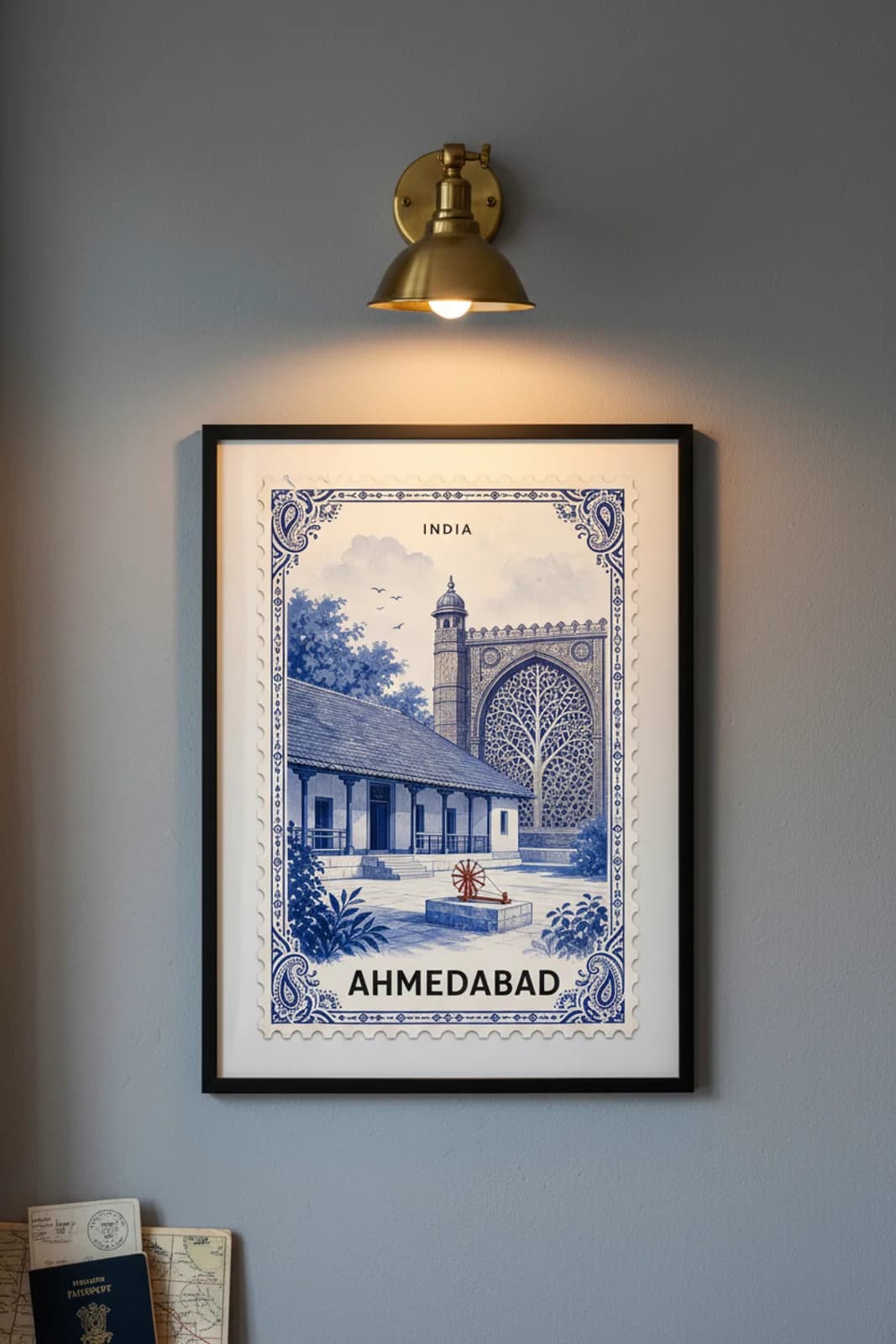
  • Ahmedabad — framed museum print, City Stamps
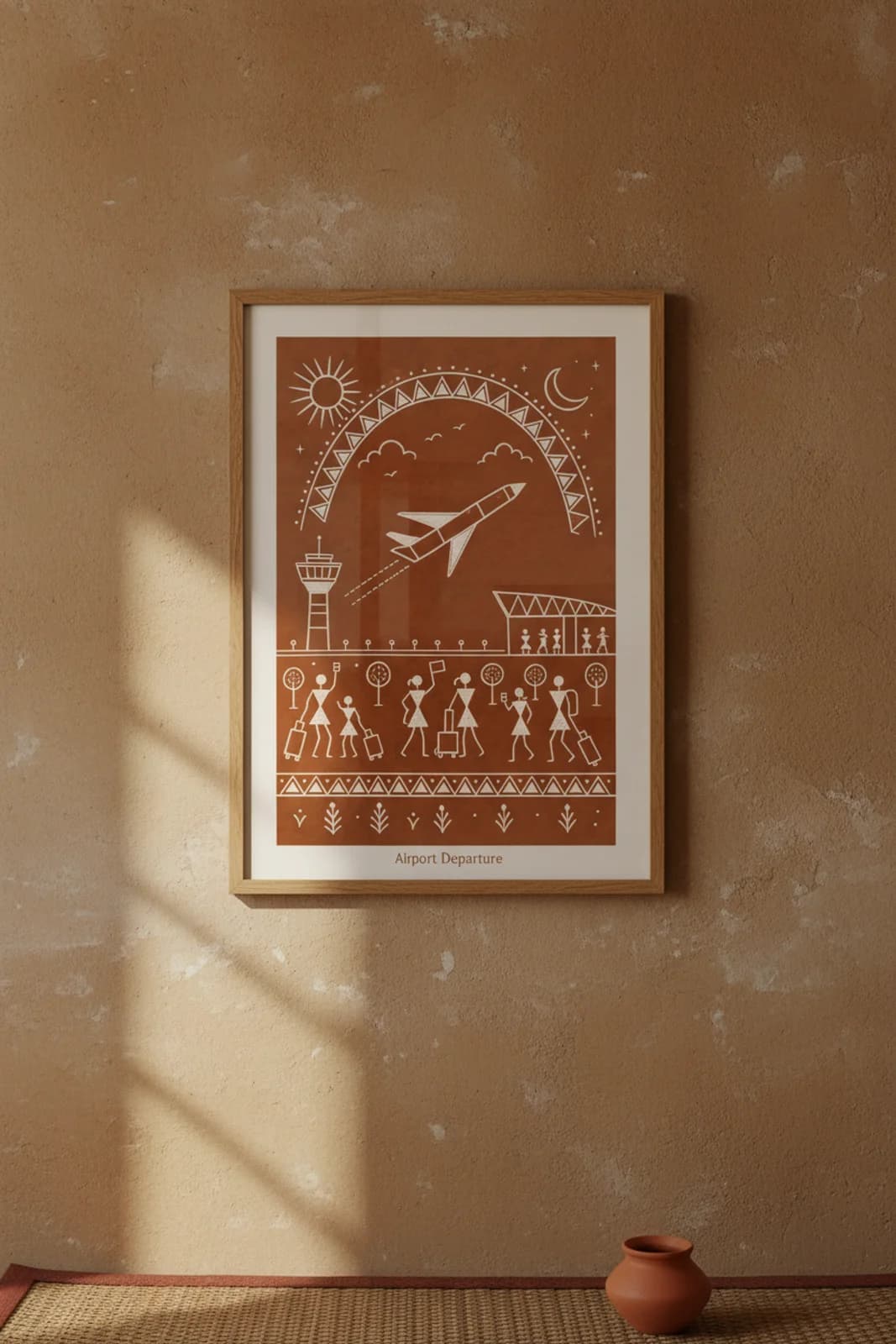
    Airport Departure — framed museum print, Warli
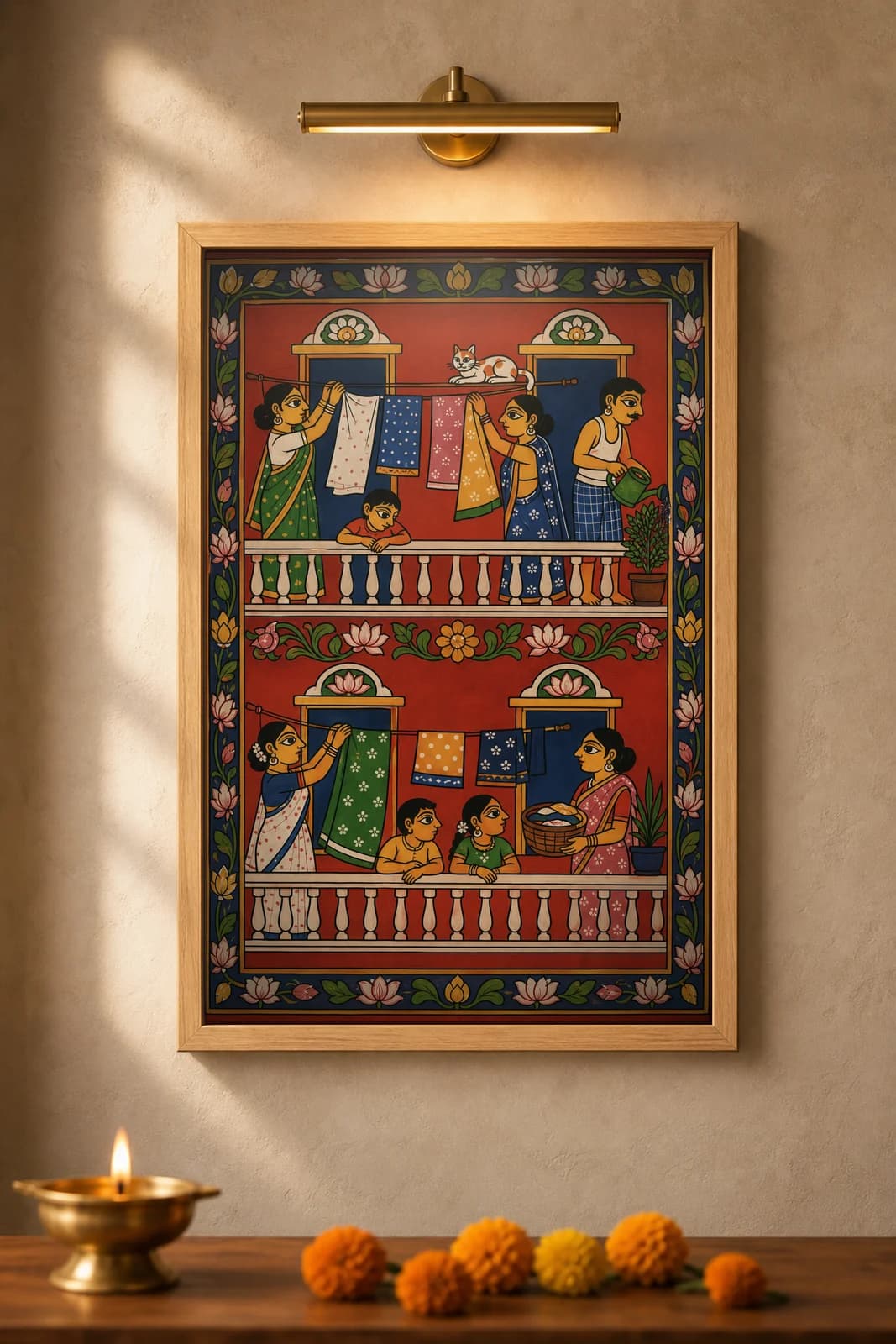
    Apartment Balcony Life — framed museum print, Cheriyal
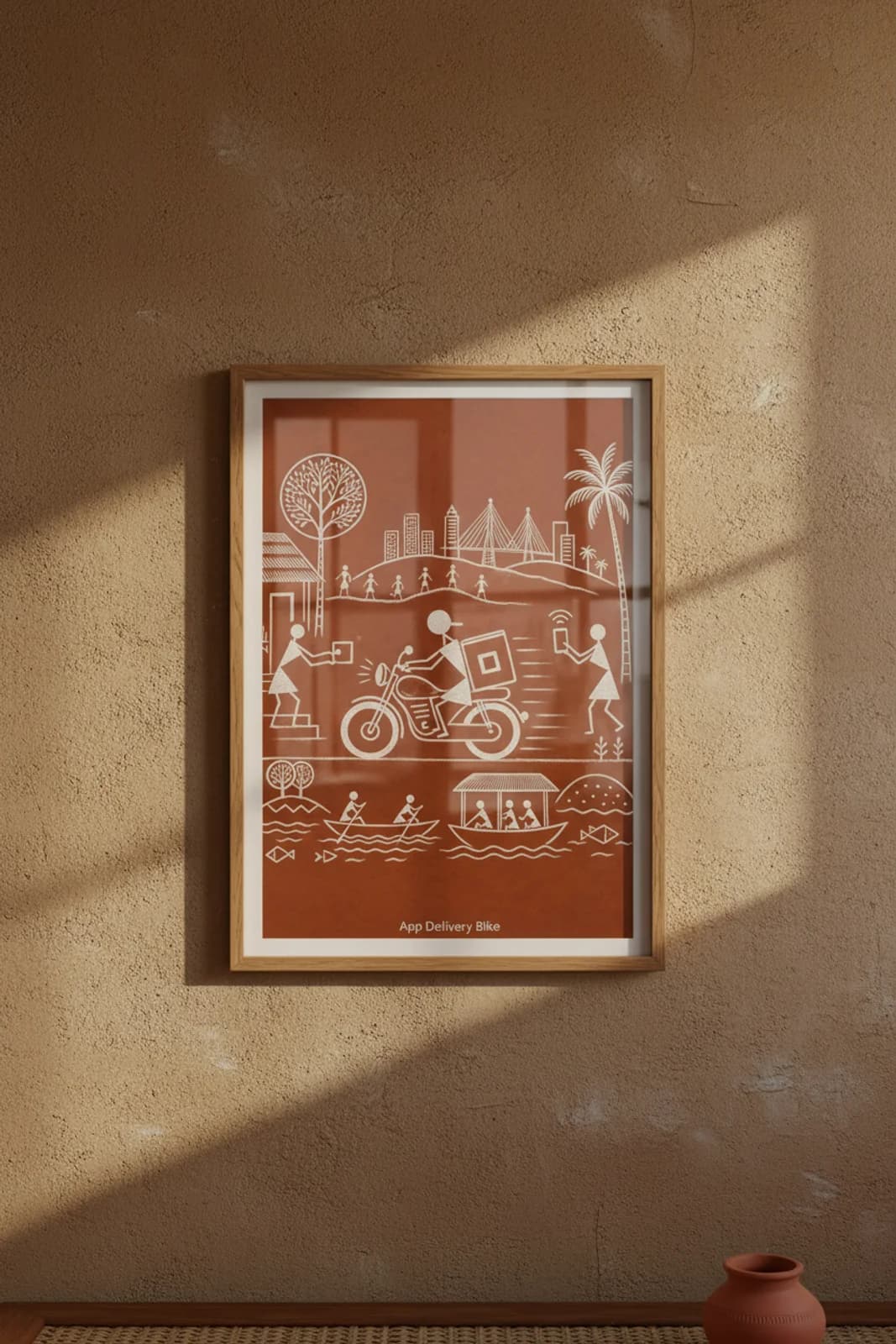
    App Delivery Bike — framed museum print, Warli
    Room

    Studio Apartment

    151 prints

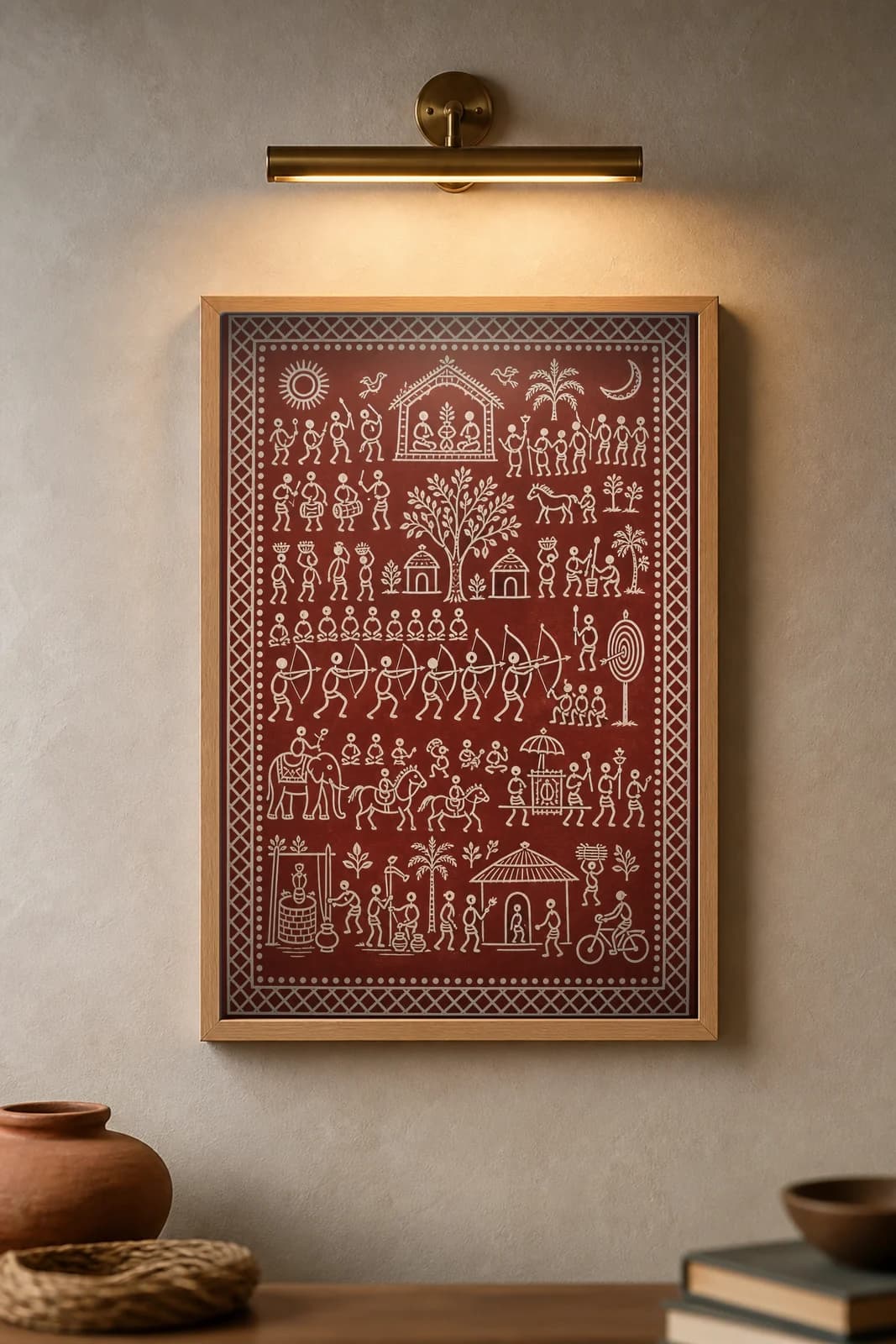
    Warli painting is a tribal mural tradition of the Warli (Varli) Adivasi community in the North Sahyadri Range of Maharashtra and adjoining Gujarat — villages in Palghar, Jawhar, Dahanu, Talasari, and Mokhada where rice-paste white pigment on red ochre cow-dung or geru-coated walls recorded harvests, hunts, weddings, and daily labour. Women historically painted lagnacha chauk and dev chauk ritual squares for nuptial and festival occasions; tarpa circle dance appears in harvest-eve scenes with musicians at the centre — motifs this fusion piece deliberately omits because the subject is urban remote work, not ritual dance. Non-ritual Warli scenes already scatter daily activities — farming bands, forest paths, children at play — across ochre walls as simultaneous narratives rather than single focal tableaux; the co-working cafe extends that scatter grammar with laptops and espresso counters the way contemporary Warli artists and licensed cooperatives have depicted bicycles, trains, and phones as village life meets modernity. Jivya Soma Mashe of Maharashtra's Thane district is widely credited with moving Warli art from ephemeral wall ritual to paper and canvas in the 1970s, making geometric stick figures legible to national and international collectors; projects like Bangalore skyline murals in Warli grammar and café branding inspired by Warli community gathering show how the stick-line aesthetic adapts to tech-city interiors without abandoning ochre-and-white discipline. Warli art received Geographical Indication (GI) recognition for Maharashtra, and ethical sourcing discussions in the tribal art market distinguish community-made work from unattributed tourist reproductions. This print is Warli-inspired contemporary fusion art — not attributed to a specific Warli artist, Adivasi council, or co-working brand.

    from $49

  • Airport Departure — framed museum print, Warli
    App Delivery Bike — framed museum print, Warli
    Auto Rickshaw Delhi — framed museum print, Madhubani
    Auto Rickshaw Fusion — framed museum print, Warli
    Room

    Guest Room

    148 prints

    Warli painting is a tribal mural tradition of the Warli (Varli) Adivasi community in the North Sahyadri Range of Maharashtra and adjoining Gujarat — villages in Palghar, Jawhar, Dahanu, Talasari, and Mokhada where rice-paste white pigment on red ochre cow-dung or geru-coated walls recorded harvests, hunts, weddings, and daily labour. Women historically painted lagnacha chauk and dev chauk ritual squares for nuptial and festival occasions; tarpa circle dance appears in harvest-eve scenes with musicians at the centre — motifs this fusion piece deliberately omits because the subject is urban remote work, not ritual dance. Non-ritual Warli scenes already scatter daily activities — farming bands, forest paths, children at play — across ochre walls as simultaneous narratives rather than single focal tableaux; the co-working cafe extends that scatter grammar with laptops and espresso counters the way contemporary Warli artists and licensed cooperatives have depicted bicycles, trains, and phones as village life meets modernity. Jivya Soma Mashe of Maharashtra's Thane district is widely credited with moving Warli art from ephemeral wall ritual to paper and canvas in the 1970s, making geometric stick figures legible to national and international collectors; projects like Bangalore skyline murals in Warli grammar and café branding inspired by Warli community gathering show how the stick-line aesthetic adapts to tech-city interiors without abandoning ochre-and-white discipline. Warli art received Geographical Indication (GI) recognition for Maharashtra, and ethical sourcing discussions in the tribal art market distinguish community-made work from unattributed tourist reproductions. This print is Warli-inspired contemporary fusion art — not attributed to a specific Warli artist, Adivasi council, or co-working brand.

    from $49

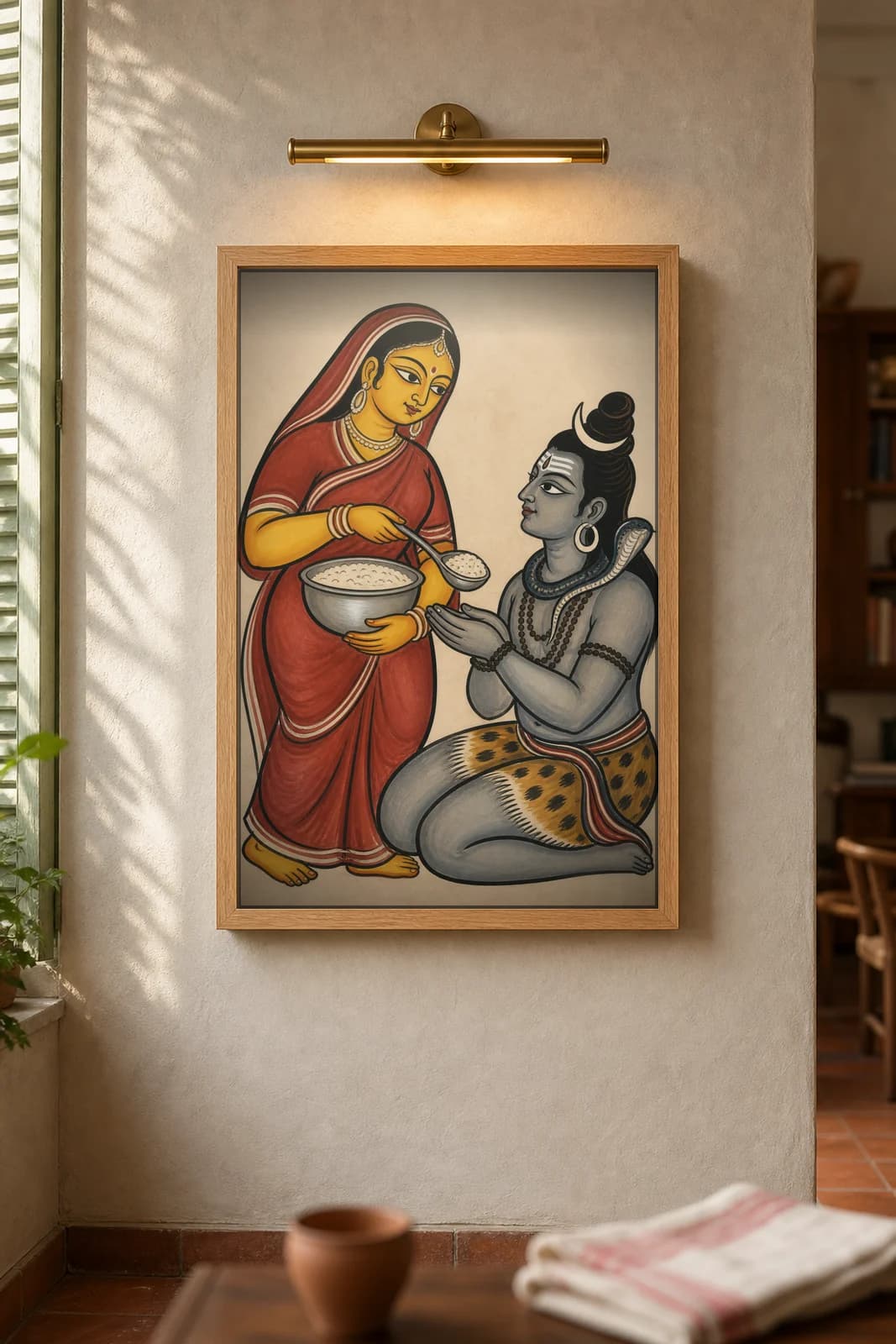
  • Annapurna — framed museum print, Kalighat
    Apartment Balcony Life — framed museum print, Cheriyal
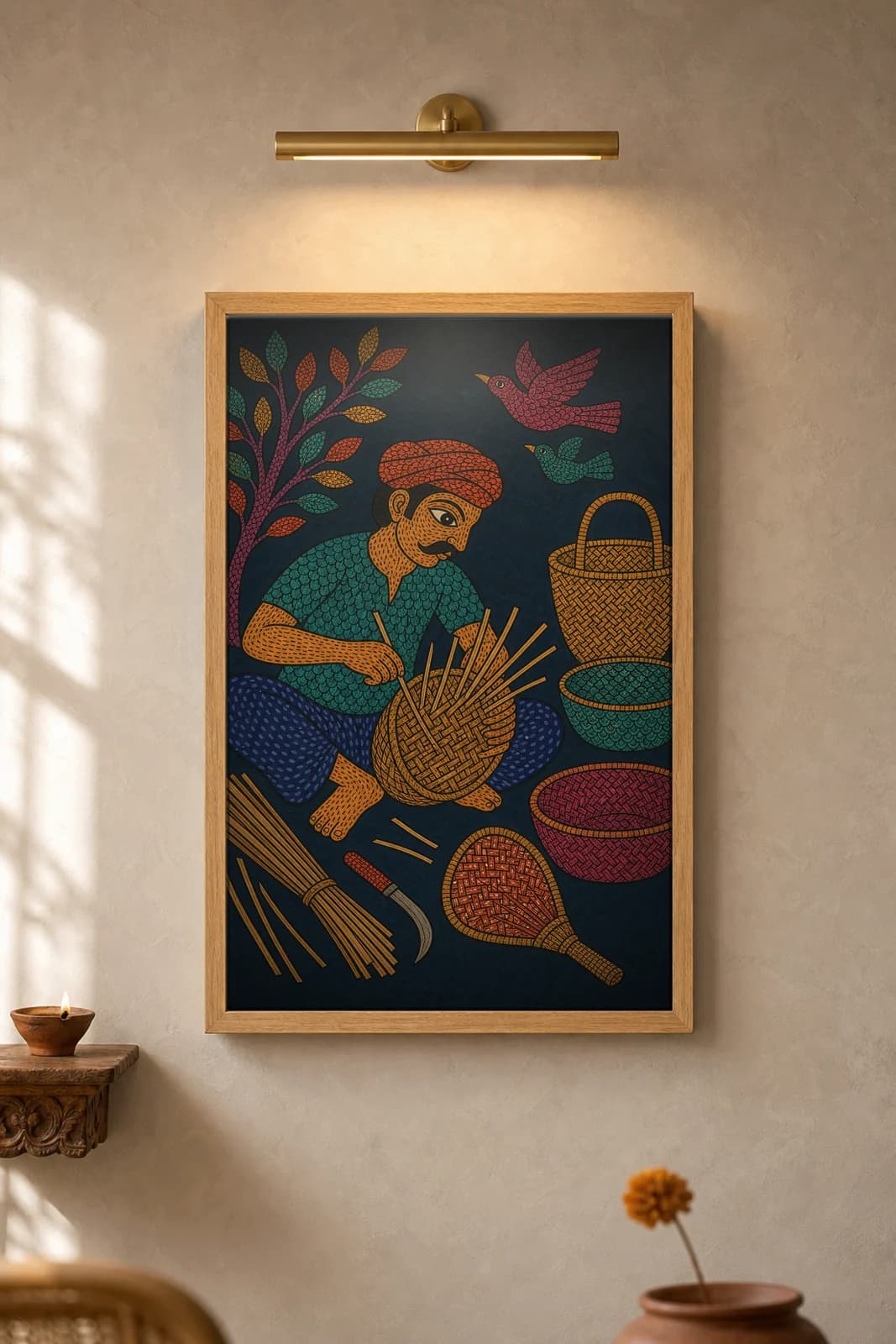
    Bamboo Basket Maker — framed museum print, Gond
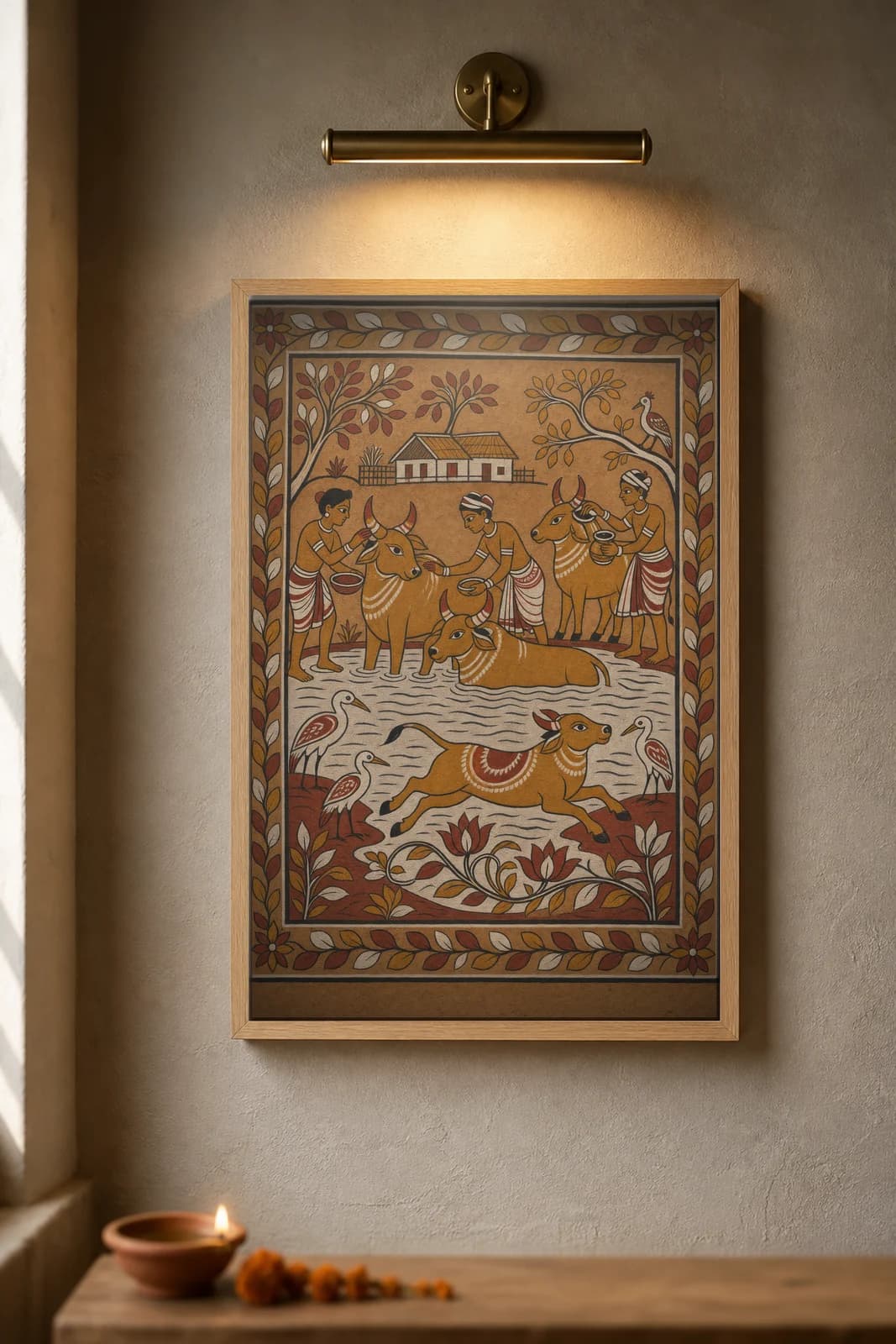
    Bandna Cattle Wash — framed museum print, Sohrai Khovar
    Room

    Kitchen

    128 prints

    DESIGN BRIEF: the brief was the moment after the cut, so the hero is a large oval medallion holding the threshing floor itself — pairs of yoked oxen walking a circle over the grain while figures drive them and toss it with winnowing forks — and the rest of the harvest stacks in bands above and below. We held the fill to medium and kept the fish-net frame open rather than a packed mesh, with clear oxblood ground around the oval so the oxen, the sheaves and the winnowing read at a glance. The figures are the rounded, faceless, bent-knee Saura type — never Warli's joined triangles — and there is no perspective depth; the oval is a flat enclosure, not a bird's-eye view. Threshing by treading is how paddy and millet are separated on a Lanjia Saura hill village floor, a shared task that the granary box at the top and the carriers along the foot tie together.

    from $49

  • Abhisarika Nayika — framed museum print, Rajput Miniature
    Ancestor Feast — framed museum print, Saura
    Archery Contest — framed museum print, Saura
    Baarat — framed museum print, Rajput Miniature
    Room

    Gallery Wall

    110 prints

    DESIGN BRIEF: the brief was the moment after the cut, so the hero is a large oval medallion holding the threshing floor itself — pairs of yoked oxen walking a circle over the grain while figures drive them and toss it with winnowing forks — and the rest of the harvest stacks in bands above and below. We held the fill to medium and kept the fish-net frame open rather than a packed mesh, with clear oxblood ground around the oval so the oxen, the sheaves and the winnowing read at a glance. The figures are the rounded, faceless, bent-knee Saura type — never Warli's joined triangles — and there is no perspective depth; the oval is a flat enclosure, not a bird's-eye view. Threshing by treading is how paddy and millet are separated on a Lanjia Saura hill village floor, a shared task that the granary box at the top and the carriers along the foot tie together.

    from $49

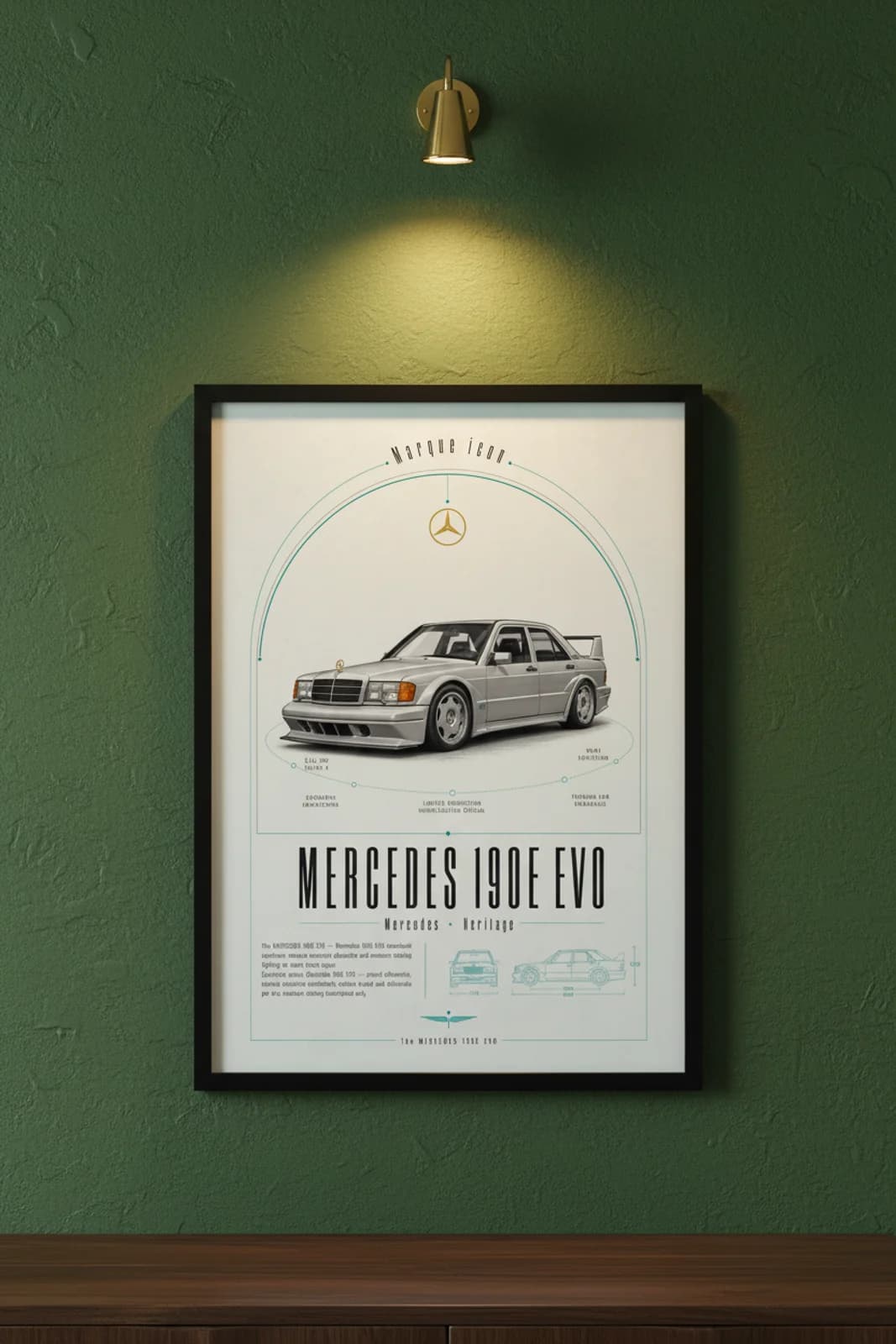
  • 190E Evo II — framed museum print, Heritage Icons
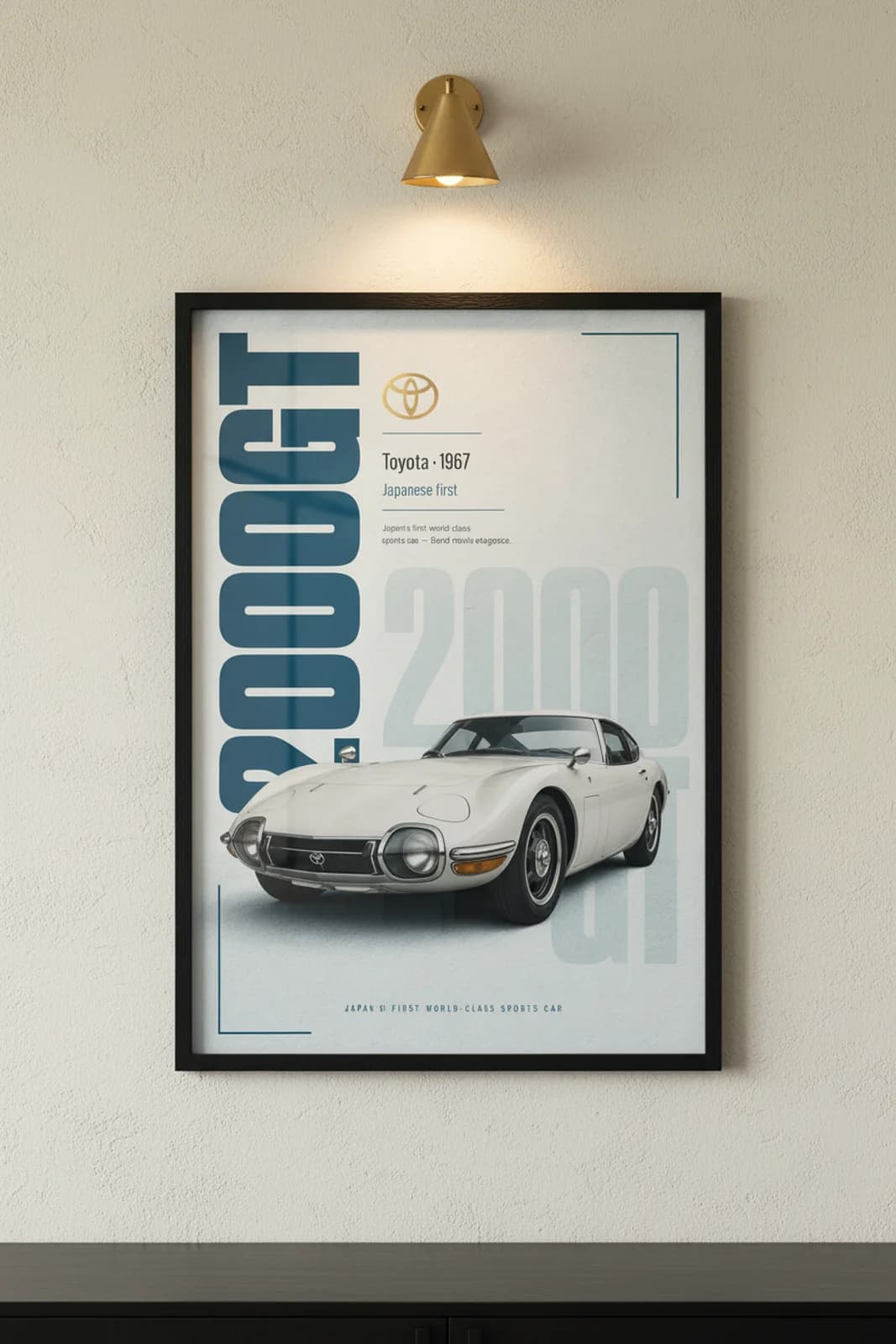
    2000GT — framed museum print, Heritage Icons
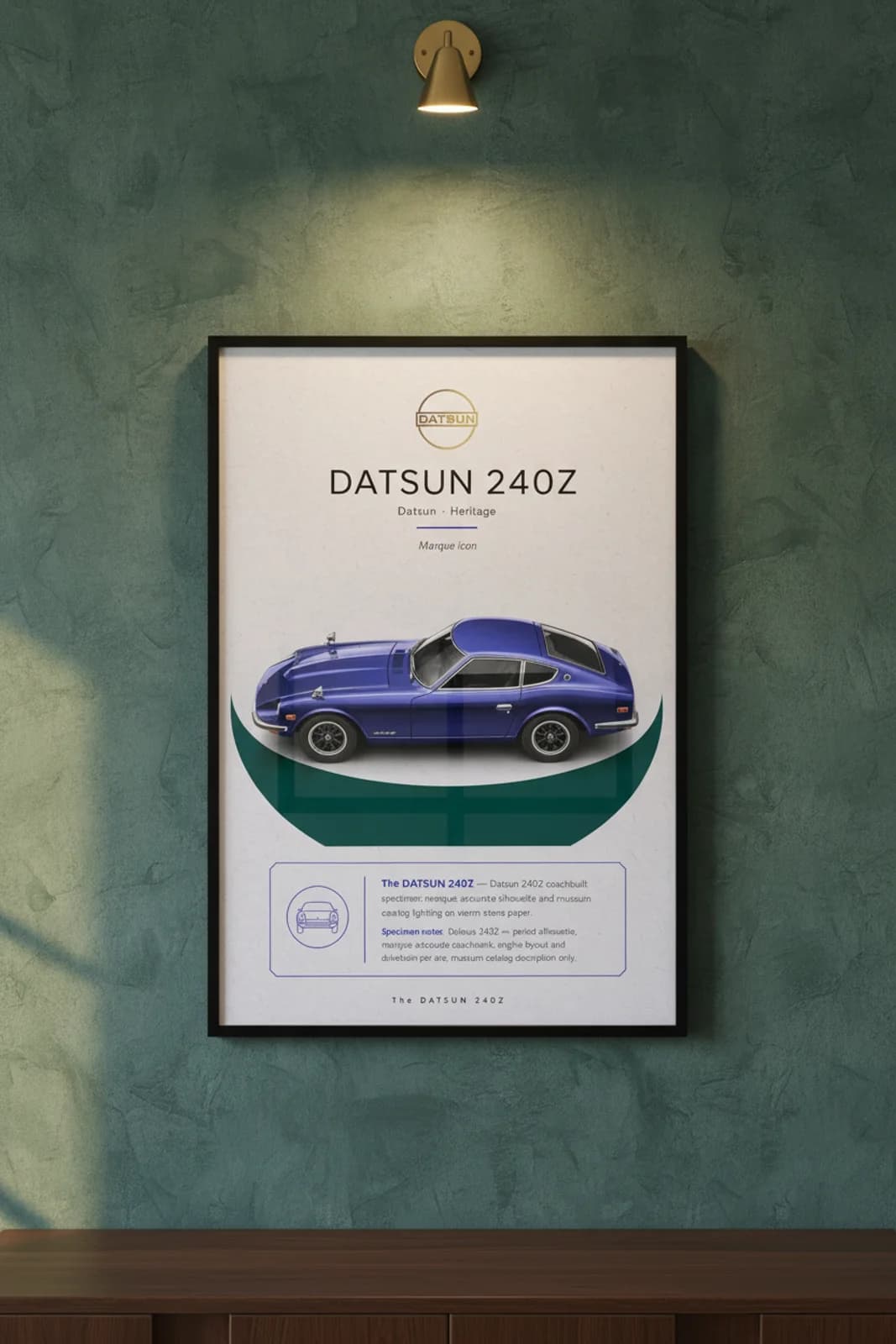
    240Z — framed museum print, Heritage Icons
    260 — framed museum print, Heritage Icons
    Room

    Automotive Themed Room

    100 prints

    The Jaguar XJ220 was produced from 1992 to 1994 with a 3.5-litre twin-turbo V6 producing 542 hp. It briefly held the Guinness production-car speed record. Approximately 281 examples were built. The concept debuted in 1988; production differed from the show car's V12 specification.
    from $49

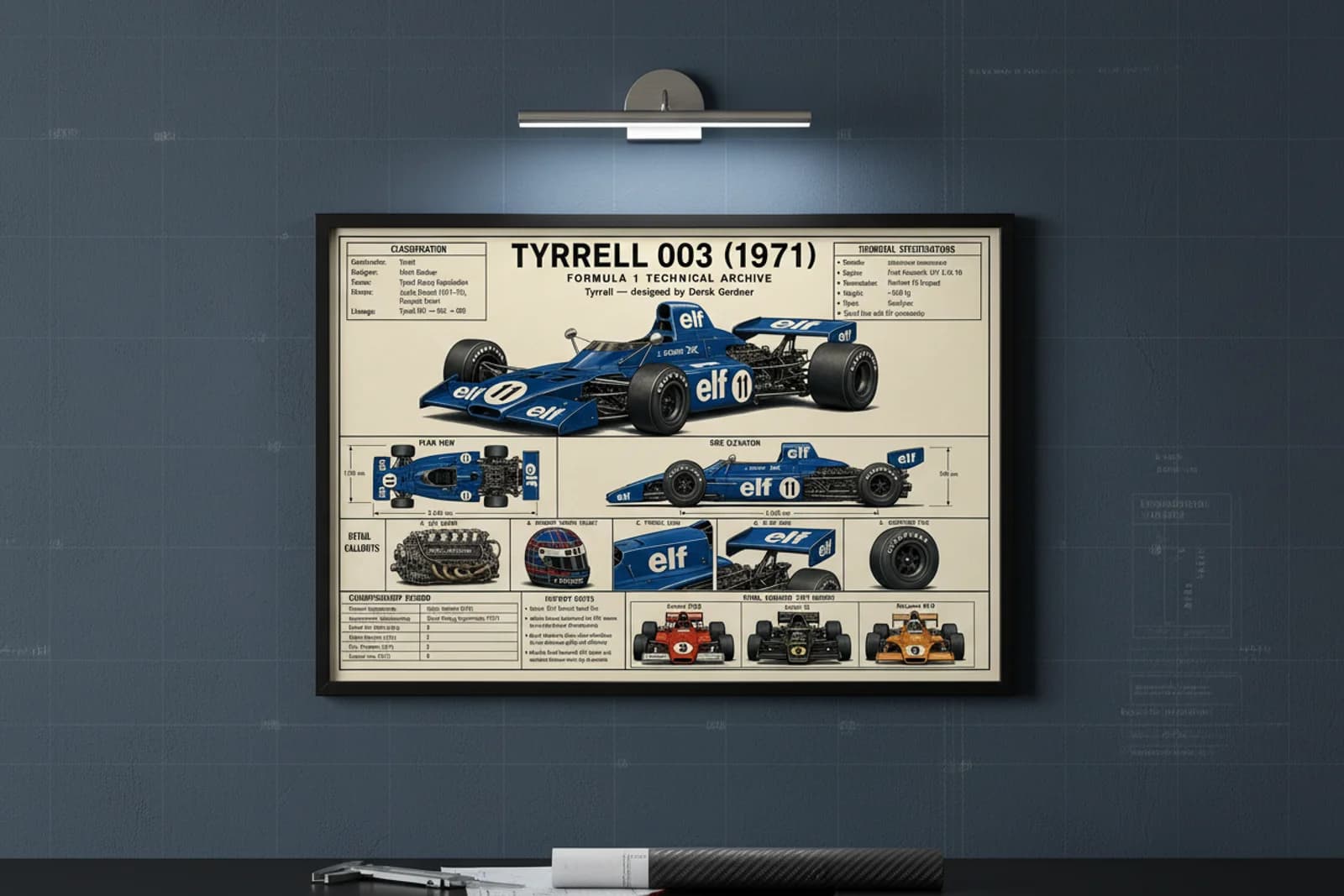
  • 003 — framed museum print, F1 Technical Archive
    006 — framed museum print, F1 Technical Archive
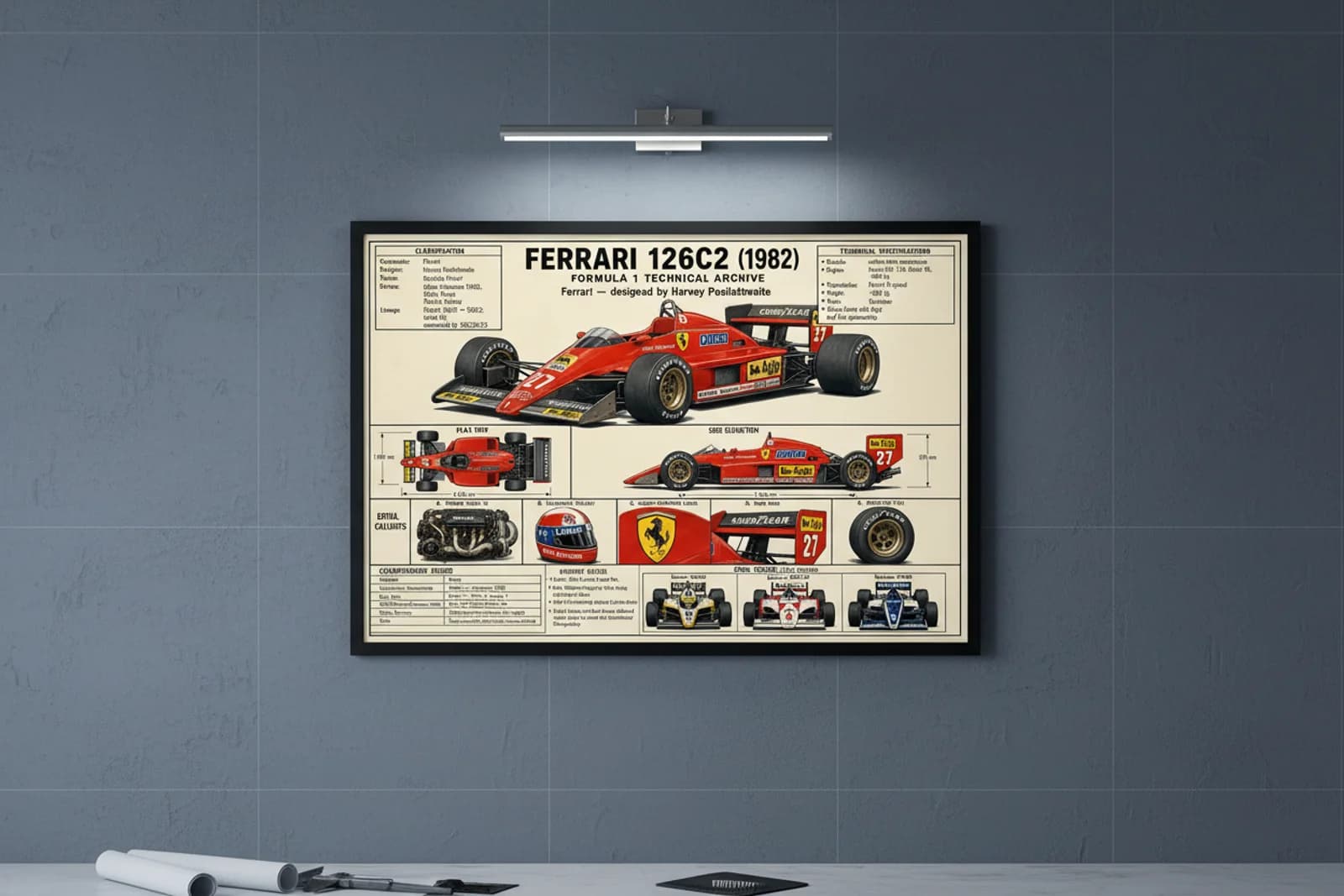
    126C2 — framed museum print, F1 Technical Archive
    156 SHARKNOSE — framed museum print, F1 Technical Archive
    Room

    Engineering Studio

    99 prints

    COOPER T51 (Europe, 1959) — independent Formula 1 engineering tribute art; not affiliated with FIA, Formula One, or Cooper Car Company. Fan-art disclaimer applies.

    from $49

  • 2026 Grid — 2026 Australian Grand Prix opener — framed museum print, F1 Grid
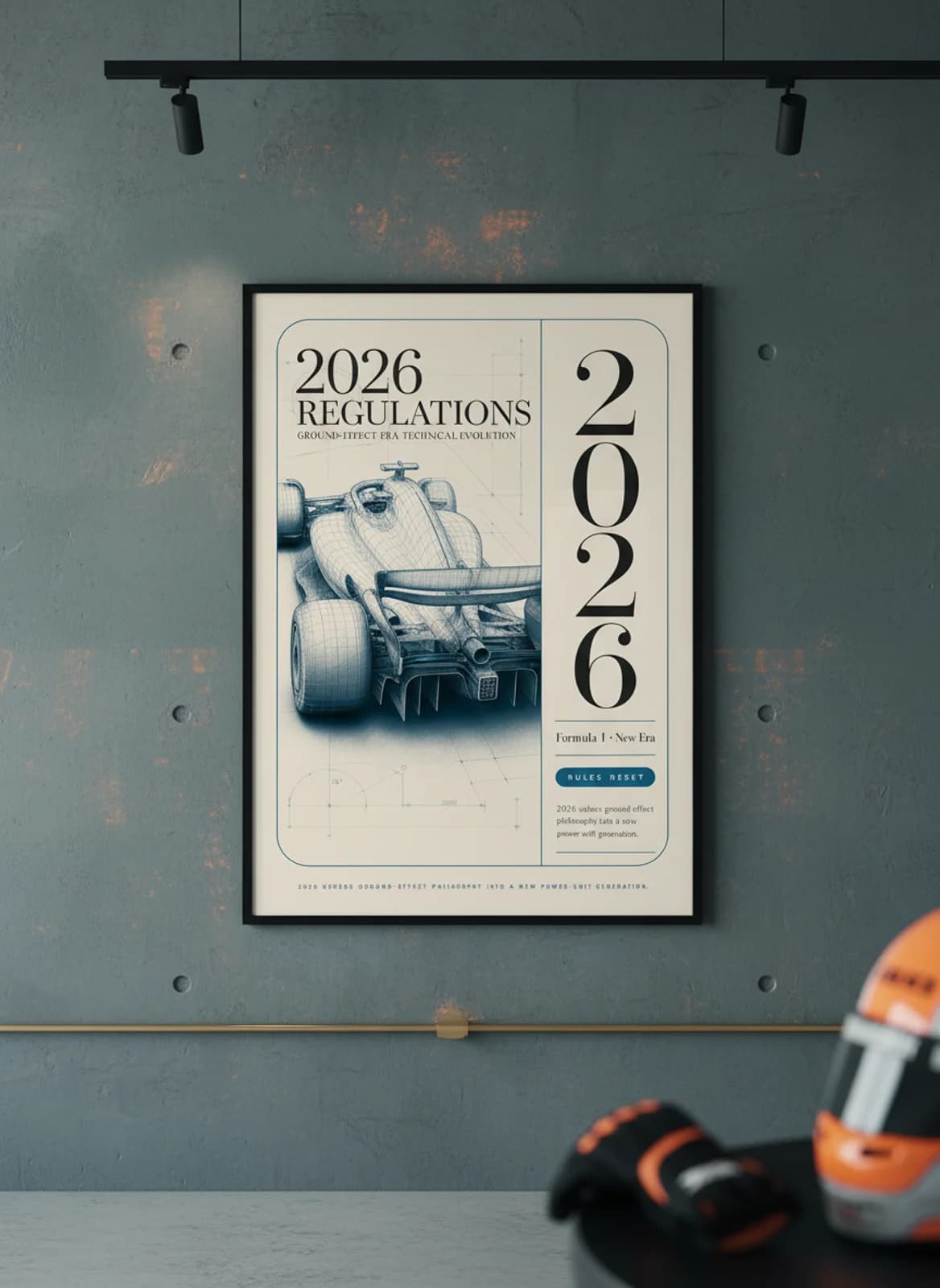
    2026 Regulations — Ground-effect era technical evolution — framed museum print, F1 Grid
    2026 Season — 2026 F1 calendar grid — framed museum print, F1 Grid
    Alain Prost — 1988 MP4/4 title duel — framed museum print, F1 Grid
    Room

    Automotive Media Room

    64 prints

    Valtteri Bottas · Cadillac F1 Team CAD-26 (United States, undefined) — independent Formula 1 tribute art; not affiliated with FIA, Formula One, Cadillac F1 Team, or Valtteri Bottas. Fan-art disclaimer applies.

    from $49

  • Abhisarika Nayika — framed museum print, Rajput Miniature
    Ancestor Feast — framed museum print, Saura
    Arjuna's Fish-Eye Shot — framed museum print, Cheriyal
    Baarat — framed museum print, Rajput Miniature
    Room

    Reading Corner

    59 prints

    Aipan is the ritual floor- and wall-art of the Kumaon region of Uttarakhand, drawn traditionally by Kumaoni women with white rice-paste (biswar) applied by fingertip onto a geru (red-ochre) earth ground. This fusion piece carries an everyday Pahari monsoon scene into that same two-tone line, anchoring it with the lotus chowki and swastika marks of the tradition's vocabulary. The strict white-on-geru discipline — here even the rain is drawn as line — distinguishes Aipan from multicolour Mithila/Madhubani painting; the craft received a Geographical Indication (GI) tag around 2021 as a craft of Uttarakhand.

    from $49

  • Auto Rickshaw Fusion — framed museum print, Warli
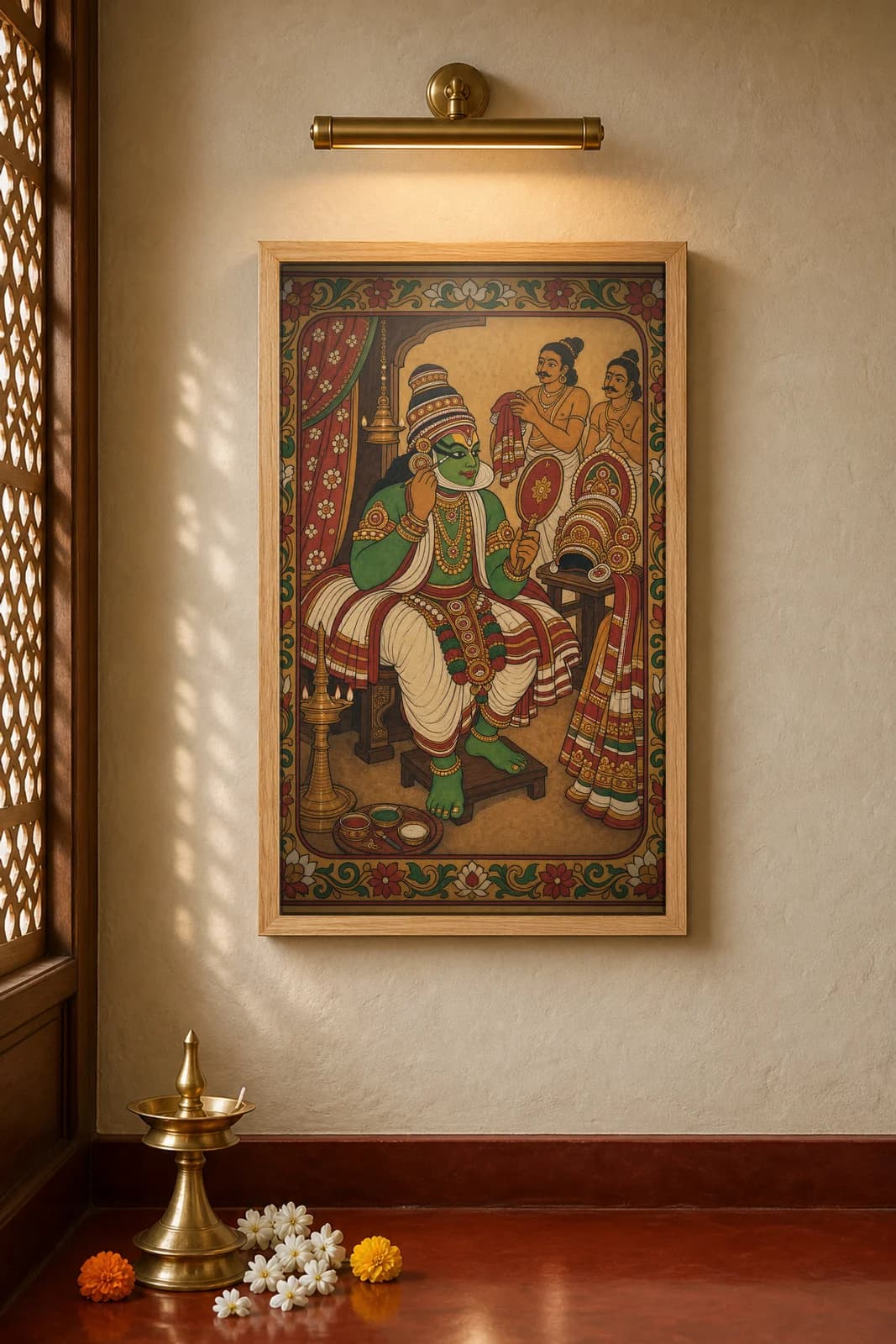
    Backstage — framed museum print, Kerala Mural
    Barsaat Chai — framed museum print, Aipan
    Bus Stop Queue — framed museum print, Warli
    Room

    Cafe

    52 prints

    Kalighat Pat grew up in 19th-century Kolkata, painted by migrant patua (chitrakar) scroll-painters who settled near the Kalighat Kali temple and sold quick watercolour souvenirs to pilgrims. Working on mill-made paper with a bold single black brush outline and soft 'boneless' shaded strokes on a plain ground, they painted gods and goddesses alongside what is often called India's first modern social satire — sharp, affectionate caricatures of the colonial 'babu' and the hypocrisies of Calcutta life. Kalighat has no standalone GI; it sits within the Bengal Patachitra tradition, which received its GI tag in 2018.

    from $49

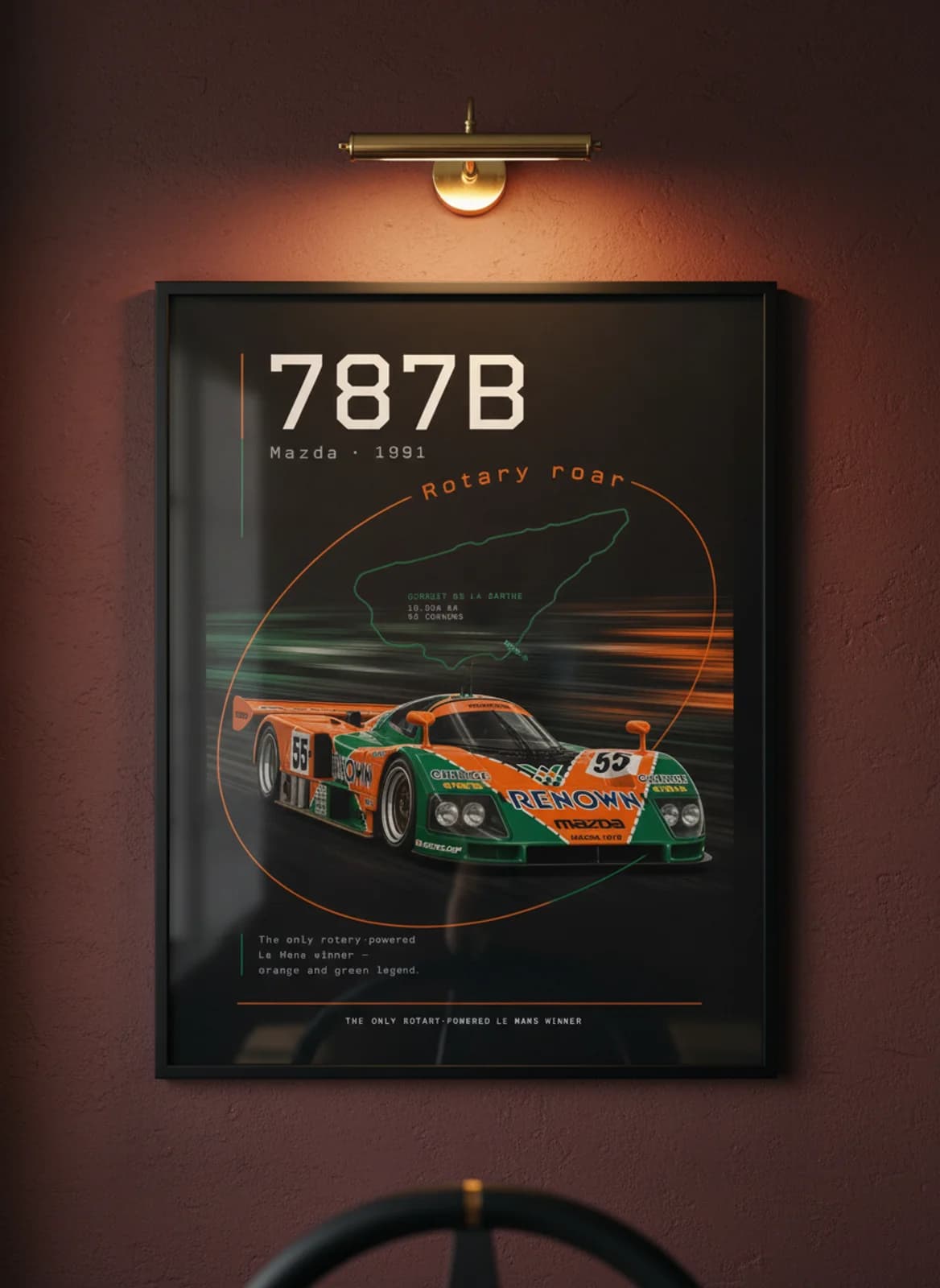
  • 787B Renown — framed museum print, Lemans
    905 Evo 1 bis — framed museum print, Lemans
    908 HDi FAP — framed museum print, Lemans
    956 Rothmans — framed museum print, Lemans
    Room

    Club Lounge

    51 prints

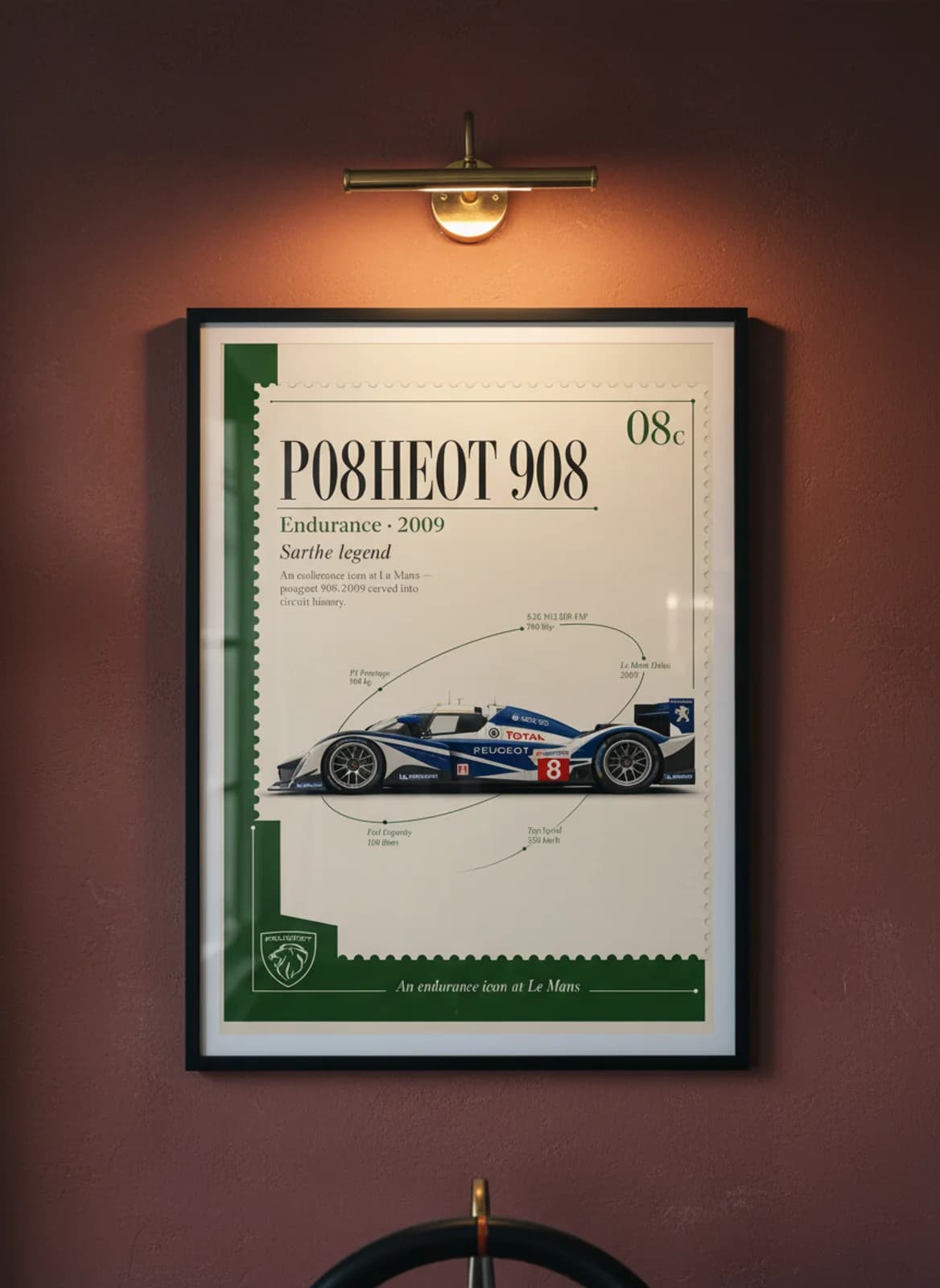
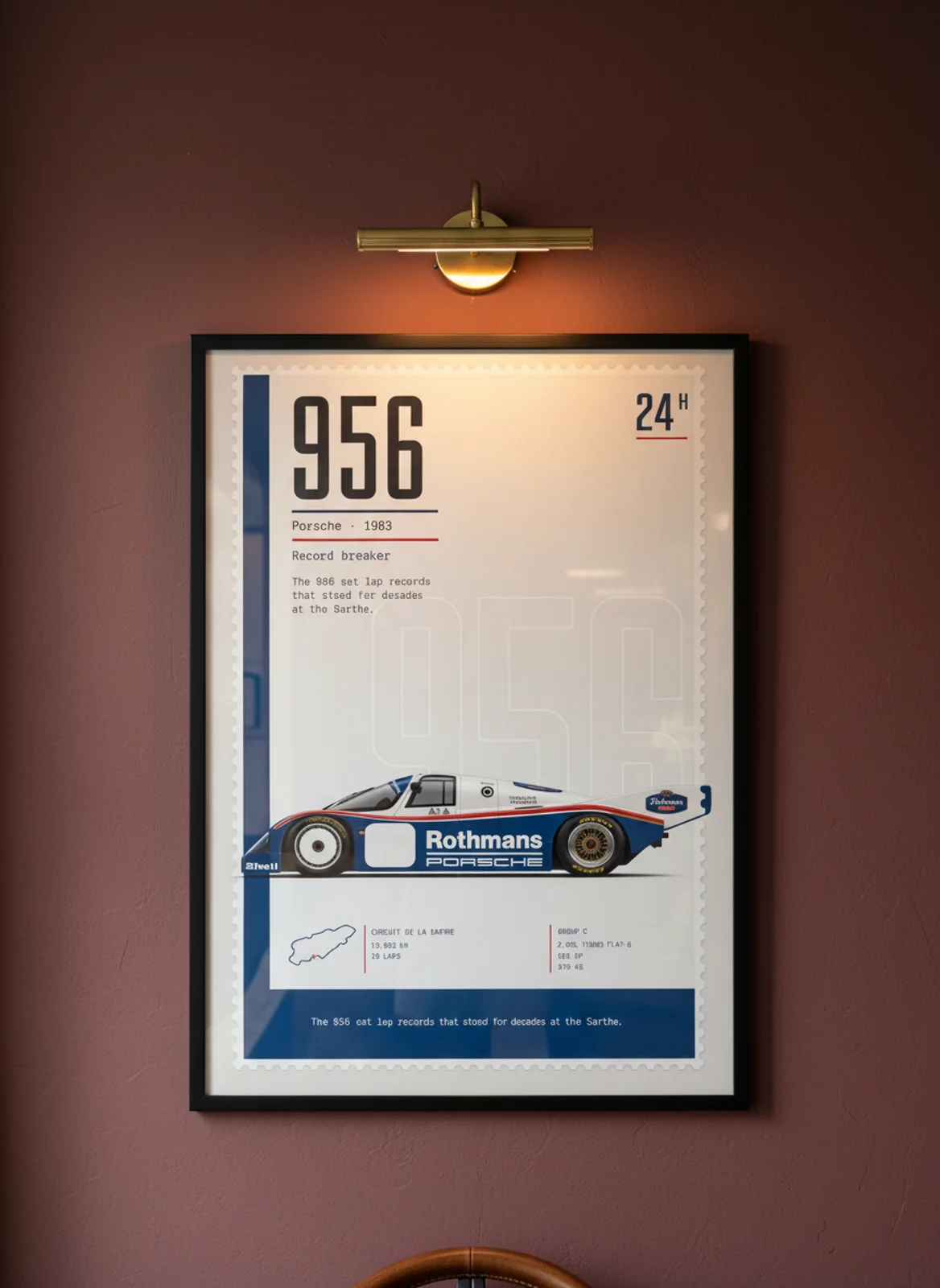
    The XJR-14's 1991 World Sportscar Championship sweep arrived as Group C transitioned from turbocharged fuel-formula cars to 3.5-litre naturally aspirated rules — a regulatory reset that favoured Jaguar's clean-sheet Brawn design over aging Porsche and Mercedes entries. Silk Cut sponsorship made purple-and-white Jaguar prototypes among the most photographed sports cars of the early 1990s, even though the XJR-14's calendar excluded Le Mans that year. The specimen's Sarthe legend framing connects championship pedigree to the Circuit de la Sarthe mythology the Le Mans catalog celebrates — endurance identity beyond a single start list.

    from $49

  • Aditya-L1 — framed museum print, Intl Space
    Aryabhata — framed museum print, Intl Space
    Astrosat — framed museum print, Intl Space
    Bhaskara 1 — framed museum print, Intl Space
    Room

    Observatory Lounge

    49 prints

    Tiangong represents the culmination of China's decades-long human spaceflight programme — from Shenzhou capsules to a permanent orbital facility capable of hosting international experiment payloads and domestic science priorities. The station's T-shaped configuration optimised module docking and solar array exposure while demonstrating CNSA's ability to assemble complex structures in orbit through robotic and crewed operations. Tiangong sits in cultural conversation with Mir and ISS as the third major paradigm of modular station architecture in low Earth orbit.

    from $49

  • Anantashayana — framed museum print, Kerala Mural
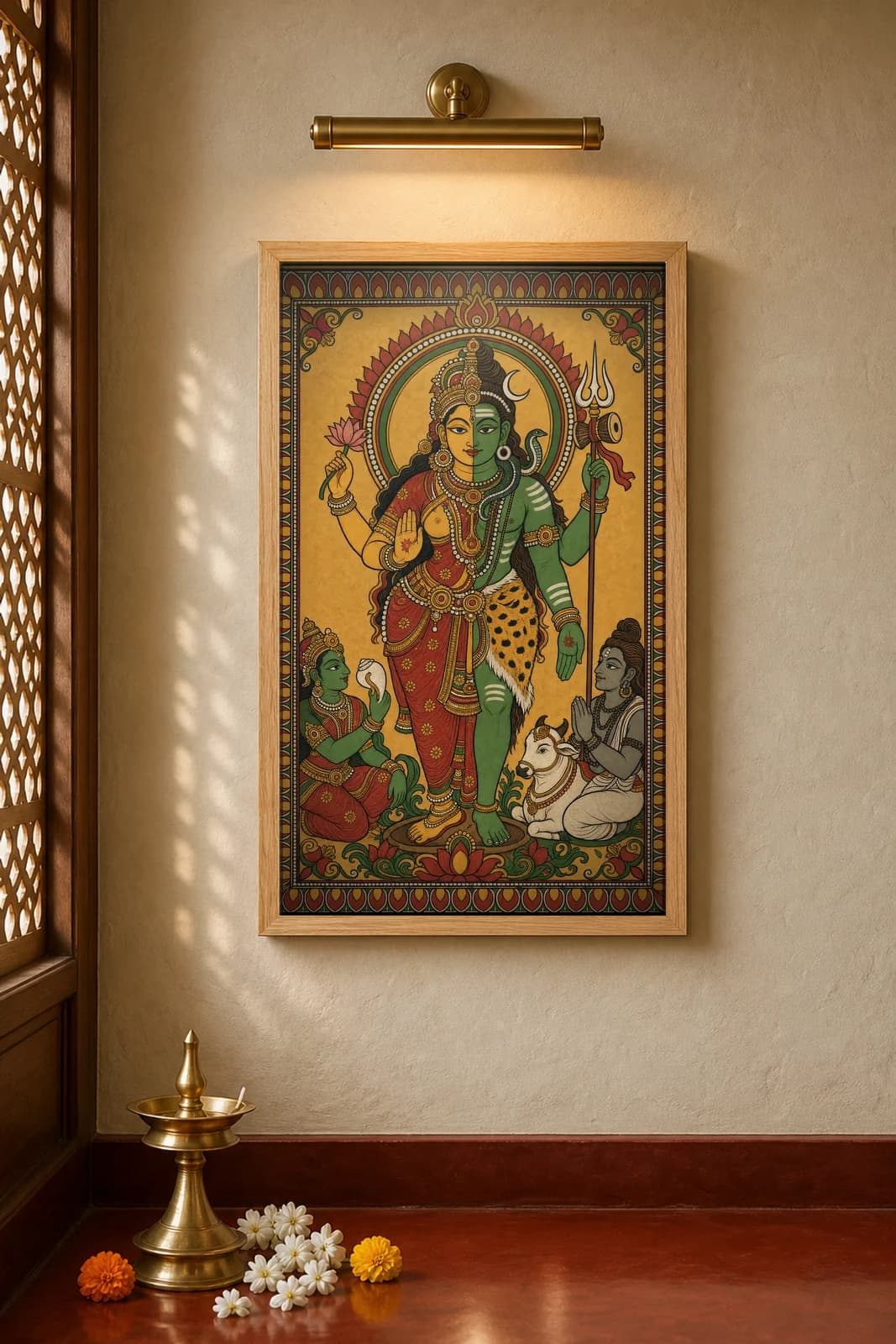
    Ardhanareeswara — framed museum print, Kerala Mural
    Ayyappa — framed museum print, Kerala Mural
    Bamboo Grove — framed museum print, Madhubani
    Room

    Puja Room

    49 prints

    Bharni — from the Hindi word for filling — is the Madhubani style associated with Brahmin women's ritual wall painting in the Mithila region, distinct from Kayastha Kachni line hatching and Dusadh Godna tattoo dot work. Bharni artists in villages like Jitwarpur and Ranti applied bold flat vermillion, turmeric, indigo, and lampblack within double outlines to depict festival deities, garden birds, and auspicious symbols on cow-dung-washed walls during Saraswati Puja, Durga Puja, and wedding seasons. Goddess Saraswati — consort of Brahma, patron of vidya, music, and the arts — traditionally holds the veena, rides the hamsa swan symbolising discernment between milk and water, and is invoked before examinations and creative pursuits across the Hindi belt and diaspora. Peacock motifs in Mithila panels signal rain, beauty, and royal garden abundance; lotus seats denote purity and divine birth from water. Ranti village in Madhubani district remains noted for classical Bharni colour discipline. Madhubani art received Geographical Indication status in 2007. This print is contemporary Mithila-inspired reproduction — not a named Ranti master work or GI-certified village original.

    from $49

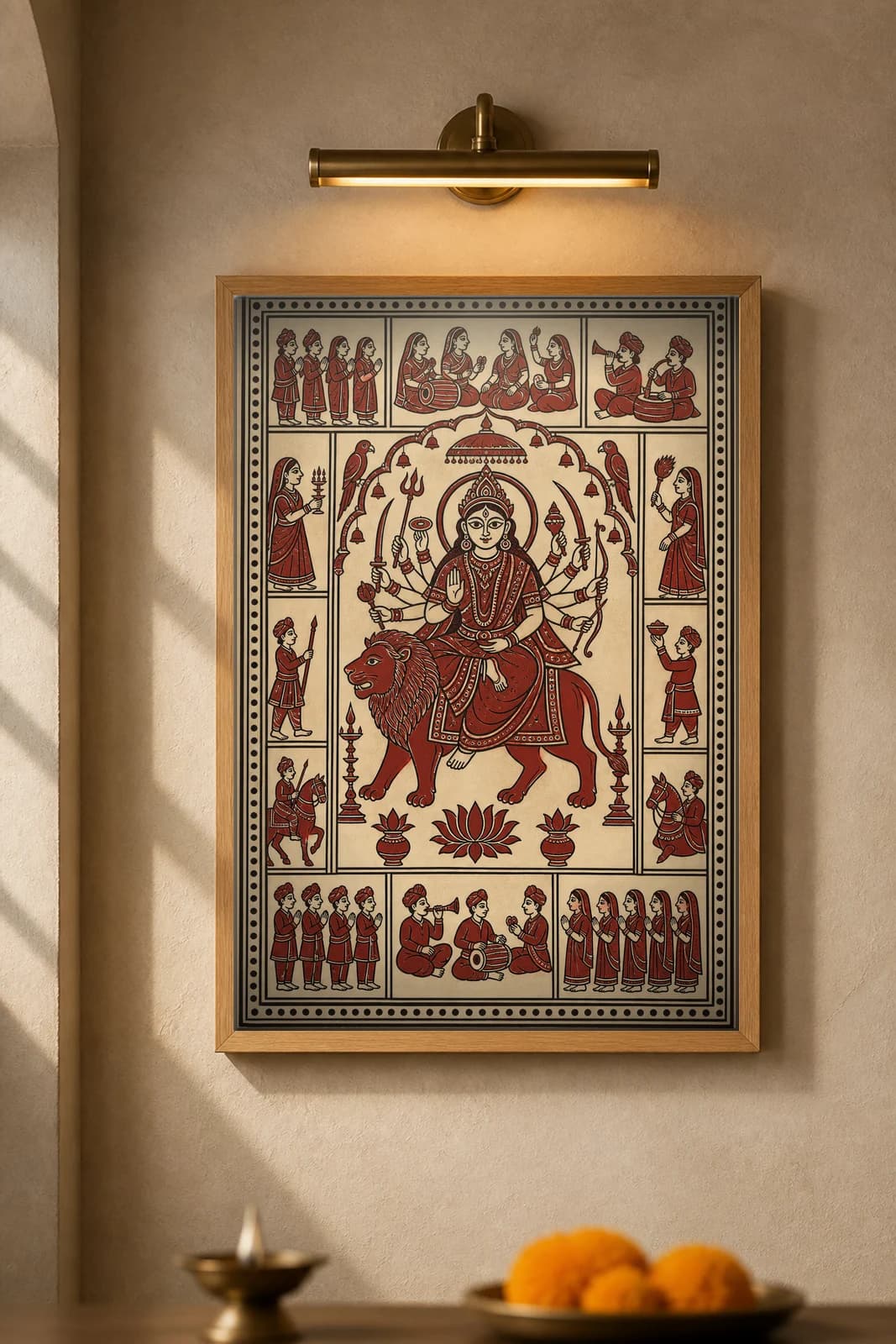
  • Amba Mata on the Lion — framed museum print, Mata Ni Pachedi
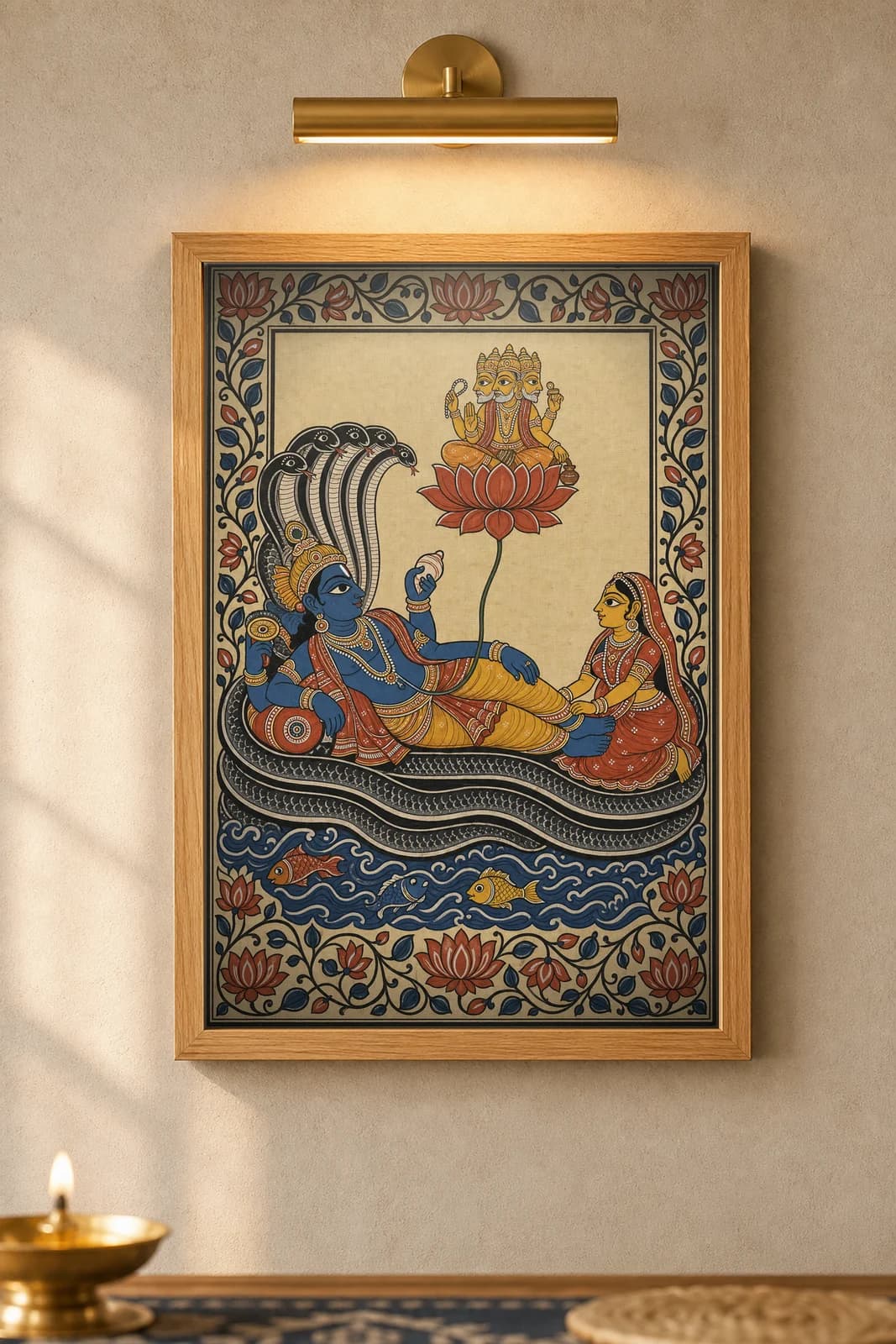
    Ananta Shayana — framed museum print, Pattachitra
    Anasara Pati — framed museum print, Pattachitra
    Ardhanareeswara — framed museum print, Kerala Mural
    Room

    Meditation Room

    48 prints

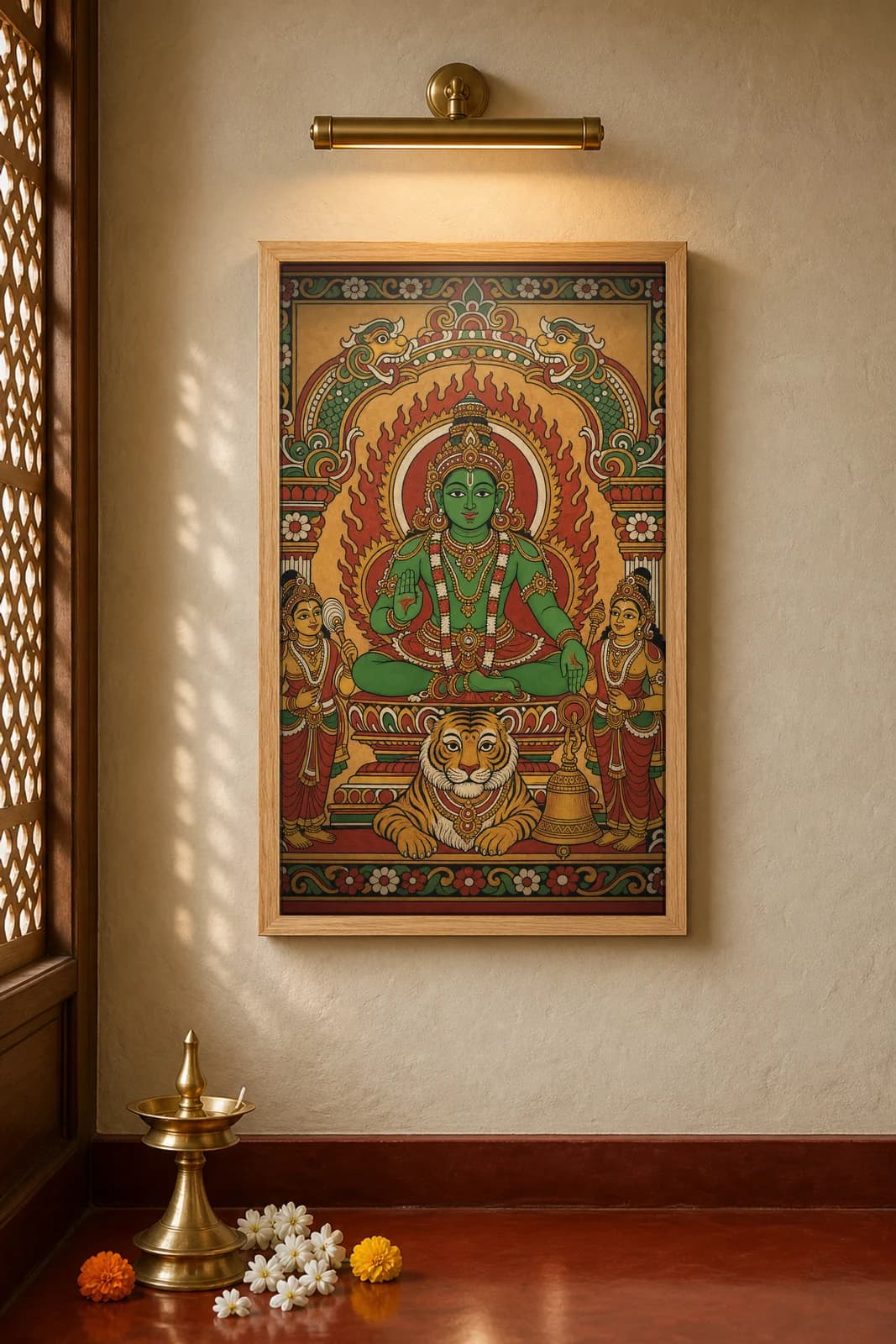
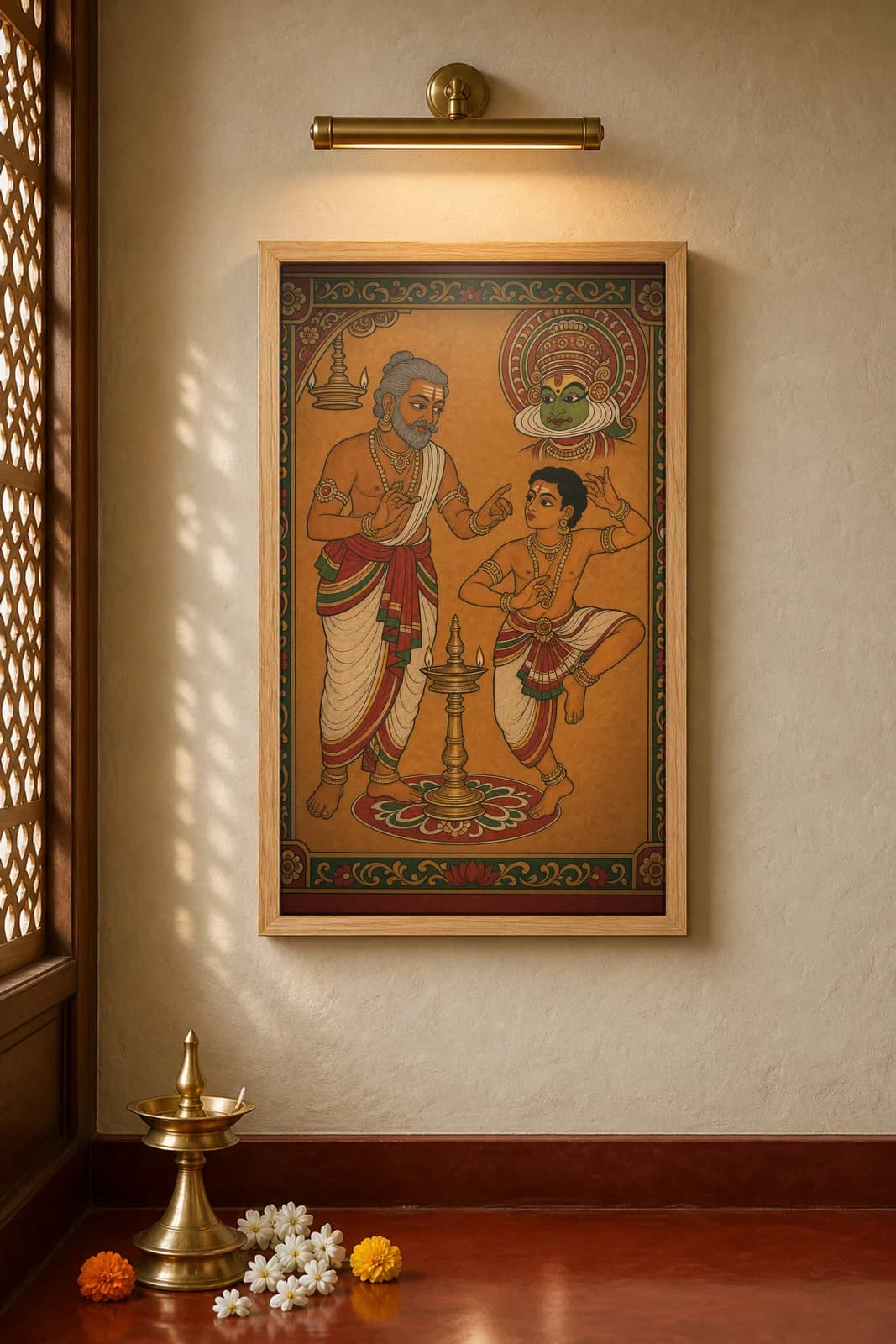
    Ardhanareeswara — the half-Shiva, half-Parvati form — embodies the inseparability of the masculine and feminine principles, and it is a natural subject for bhitti chitra, Kerala's temple-mural tradition that flourished roughly from the 16th to 19th century and is still painted today. These murals use the panchavarna five-colour system — red, yellow, green, black and white over an ochre ground — in flat opaque fields bounded by a bold lamp-black outline, with the school's elongated lotus-shaped eyes. Body colour carries meaning here: green marks the sattvic, serene divine, which is why the Shiva half is painted green while Parvati's half stays warm red and gold. Kerala's mural heritage is kept alive at Shiva sites such as Ettumanoor, Vaikom and Mattancherry Palace. This is a shared living temple-art heritage, not a registered geographical indication, and the print is an artwork in the mural idiom — shown as a mockup, never a consecrated temple object.

    from $49

  • Akhra Night Dance — framed museum print, Sohrai Khovar
    Arangettam — framed museum print, Kerala Mural
    Backstage — framed museum print, Kerala Mural
    Bana Fiddle Singer — framed museum print, Gond
    Room

    Music Room

    48 prints

    DESIGN BRIEF: the brief was the women's pot dance, so the hero is full-width rows of dancers each balancing a stack of pots on her head, knees bent into the step, with barrel-drummers anchoring the ends of the rows. We held the fill to medium and kept the fish-net frame open rather than a packed mesh, leaving clear deep-maroon ground between the rows so the balanced pots and the bent-knee bodies read at a glance and never blur into one mass. The figures are the rounded, faceless Saura type — never Warli's joined triangles — and there is no perspective depth; the rows stack up the panel from a foot of village life to a house-shrine crown. Carrying and dancing with pots is part of Saura festival life, and the grinding, the tree of life and the cattle ranged around the dance keep it rooted in the everyday water-fetching it grows from.

    from $49

  • Aripana Floor Lotus — framed museum print, Madhubani
    Bali Ubud — framed museum print, Suncities
    Bamboo Grove — framed museum print, Madhubani
    Bhutan Paro — framed museum print, Suncities
    Room

    Yoga Studio

    40 prints

    The gopuram — from Sanskrit gopura, gateway tower — is the monumental pyramidal entrance of Dravidian Hindu temple architecture across Tamil Nadu, Karnataka, Andhra Pradesh, and Kerala, famously exemplified by the polychrome tiers of Madurai Meenakshi Amman Temple and Chennai Kapaleeshwarar Temple. Unlike Nagara shikhara spires of North India, gopurams widen visually through stacked horizontal tiers crowded with stucco deities, mythological figures, and ornamental yali balustrades. Dvarapalas — threshold guardian deities — traditionally flank temple doorways holding trishula, gada, or abhaya mudra. Kolam (Tamil) and rangoli are daily floor diagrams drawn at thresholds, often geometric and rotational, sharing formal kinship with Mithila Aripana courtyard patterns though rooted in distinct regional ritual practice. Bharni Madhubani — historically associated with Brahmin women painters of Mithila — means to fill: bold lampblack outlines flooded with natural vermillion, turmeric, indigo, and green on cream or cow-dung-washed grounds, traditionally for festival deities and Kohbar wedding chambers in Bihar and adjacent Nepal Mithila. This print applies Bharni fill grammar to a South Indian architectural subject as contemporary fusion — not a reproduction of a specific Jitwarpur master panel or a consecrated temple document. Madhubani art received Geographical Indication status in 2007 for the Mithila region; Dravidian gopuram sculpture belongs to a separate living craft tradition of stucco and granite temple arts.

    from $49

  • Ahlspiess — Forgotten Weapons — framed museum print, Forgotten Weapons
    Bec de Corbin — Forgotten Weapons — framed museum print, Forgotten Weapons
    Billhook — Forgotten Weapons — framed museum print, Forgotten Weapons
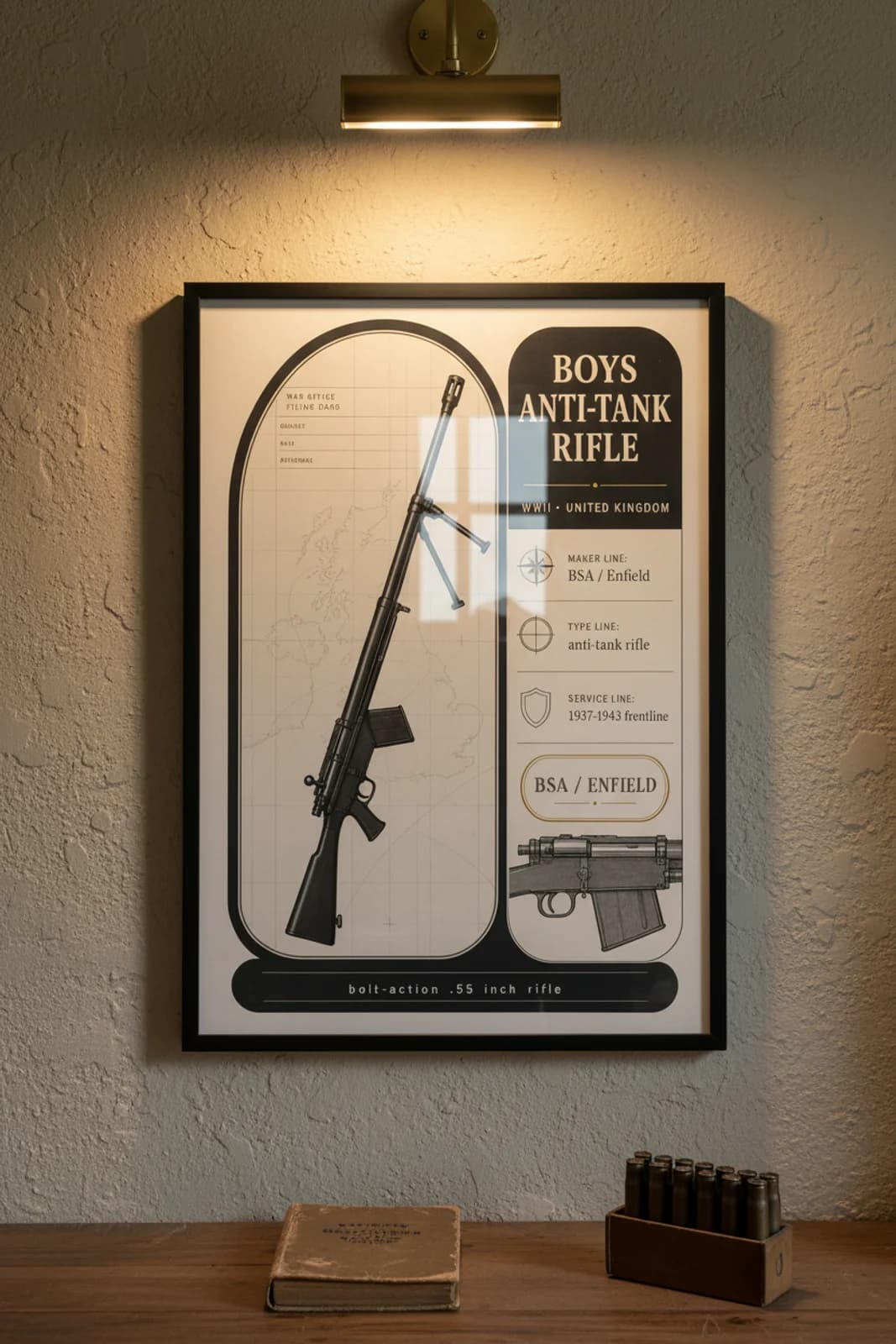
    Boys Anti-Tank Rifle — Forgotten Weapons — framed museum print, Forgotten Weapons
    Room

    Armoury Study

    37 prints

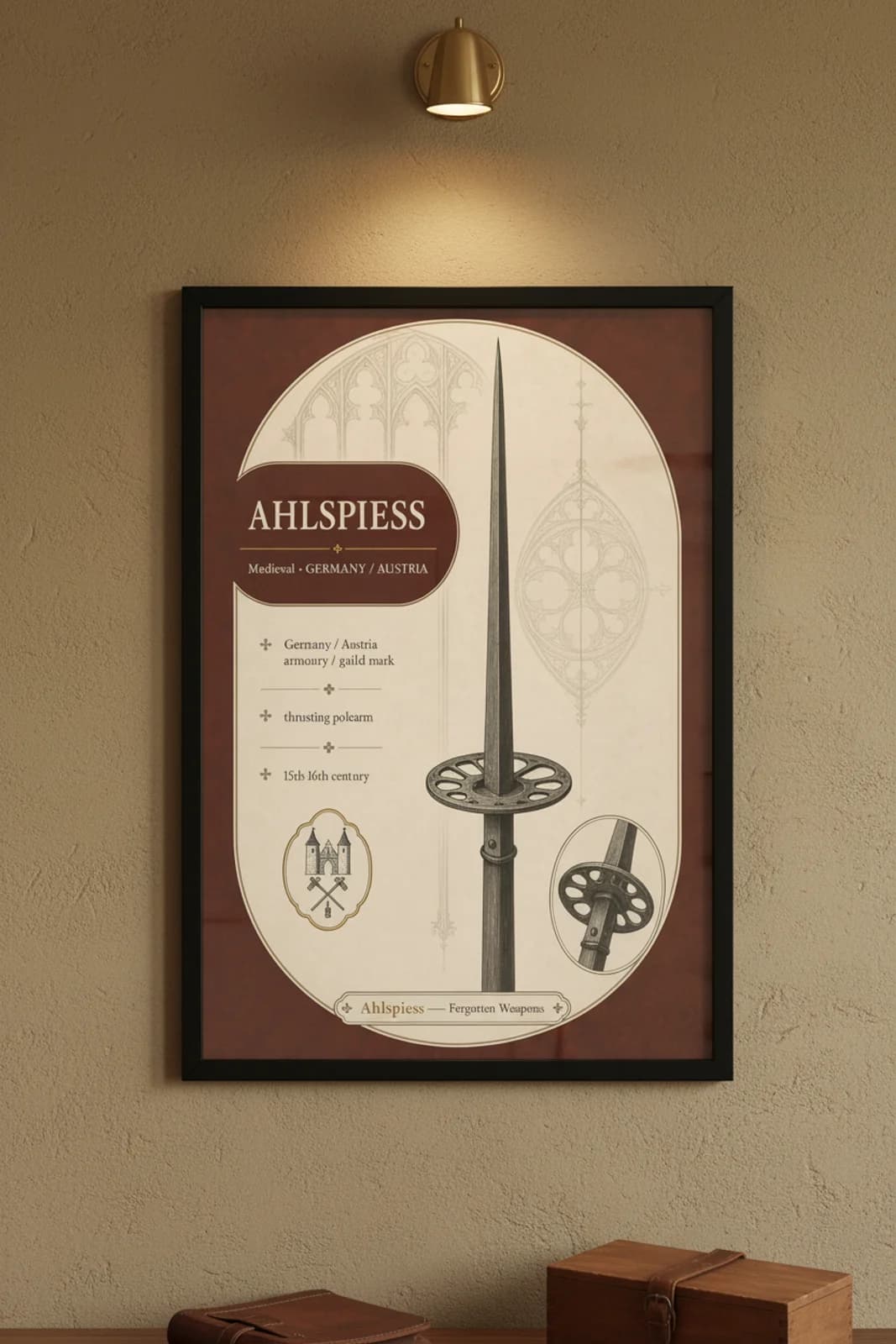
    Chauchat M1915 (WWI, France) — built for walking fire; 8 mm Lebel CSRG pattern; notorious magazine dirt exposure. Wallimilist Forgotten Weapons prints are independent military history tribute art; not affiliated with any manufacturer or government agency.

    from $49

  • Ahlspiess — Forgotten Weapons — framed museum print, Forgotten Weapons
    Bec de Corbin — Forgotten Weapons — framed museum print, Forgotten Weapons
    Billhook — Forgotten Weapons — framed museum print, Forgotten Weapons
    Boys Anti-Tank Rifle — Forgotten Weapons — framed museum print, Forgotten Weapons
    Room

    Military History Room

    37 prints

    Chauchat M1915 (WWI, France) — built for walking fire; 8 mm Lebel CSRG pattern; notorious magazine dirt exposure. Wallimilist Forgotten Weapons prints are independent military history tribute art; not affiliated with any manufacturer or government agency.

    from $49

  • 458 GT3 — framed museum print, Wec Masters
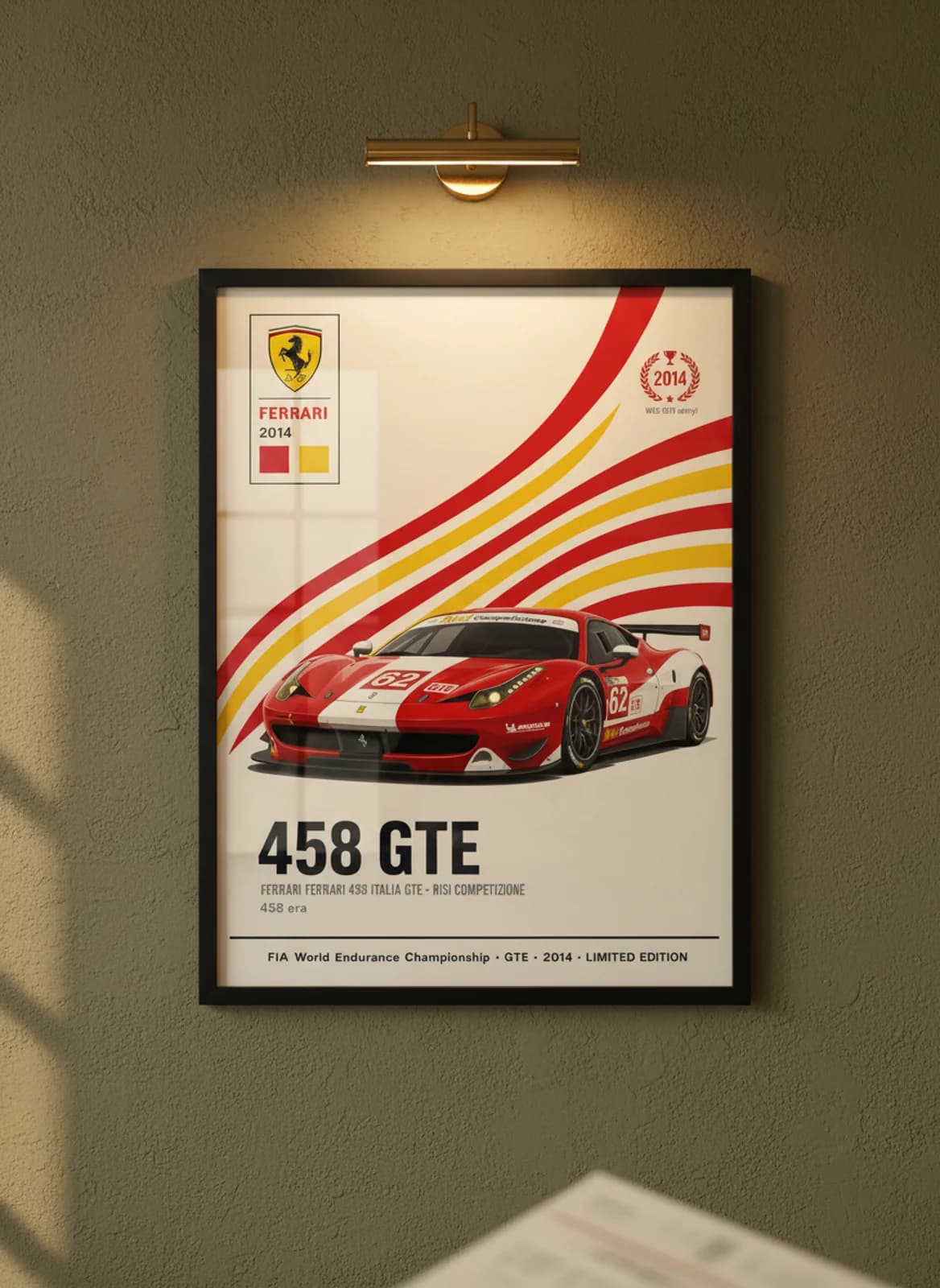
    458 GTE — Risi Competizione #62 — framed museum print, Wec Masters
    488 GT3 — framed museum print, Wec Masters
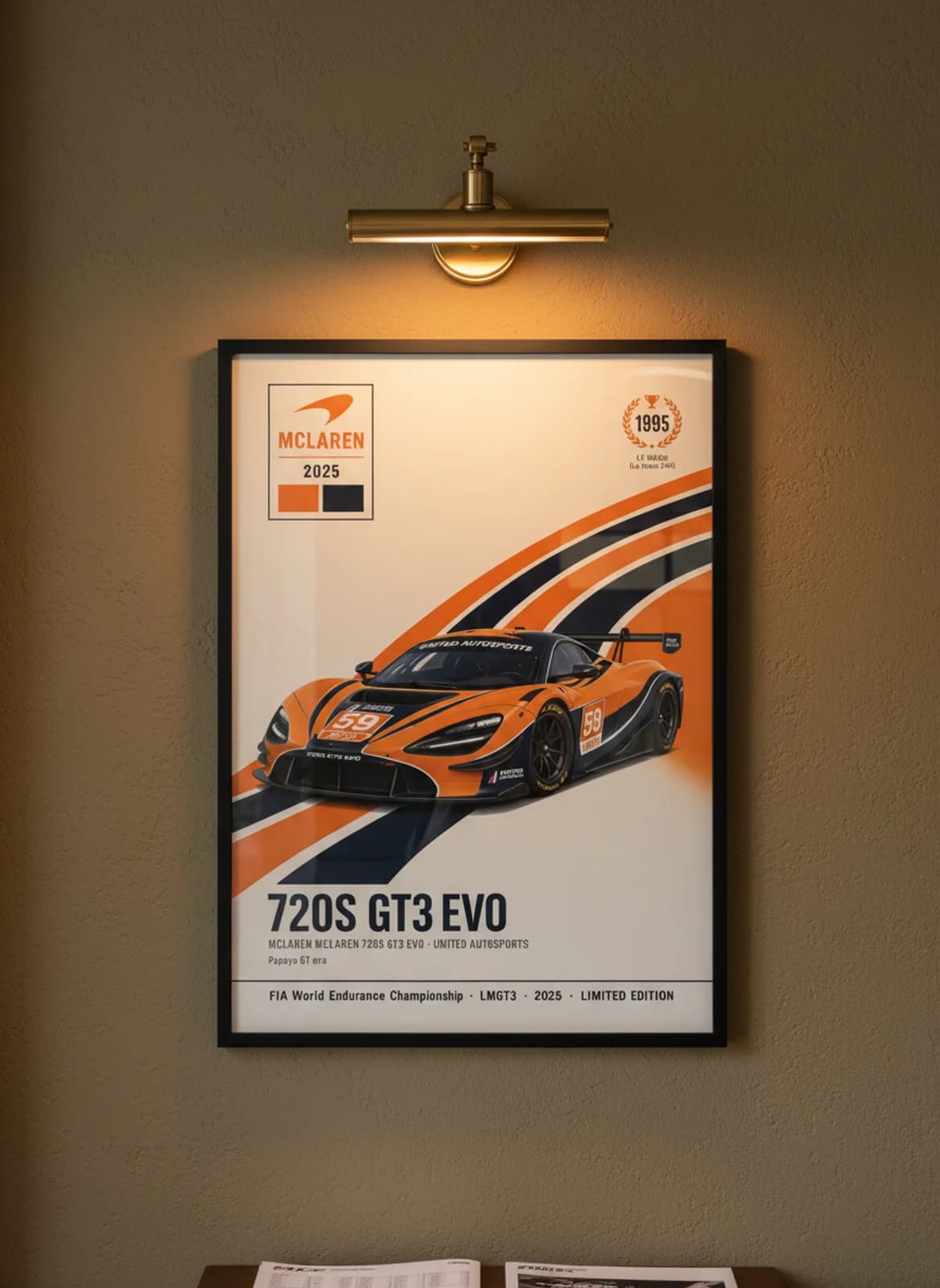
    720S GT3 EVO — framed museum print, Wec Masters
    Room

    Garage Lounge

    36 prints

    Marc VDS Racing built its reputation in GT and touring-car paddocks across Europe before expanding into Formula E and other programmes; the Z4 GT3 era sits in the gap between BMW's first GT3 homologation and the later M6 GT3 successor. The laurel badge references WEC GT3 entry context while the footer anchors the 2012 GT World Challenge Europe season.

    from $49

  • Bhitti Chitrakara — The Mural Painter — framed museum print, Kerala Mural
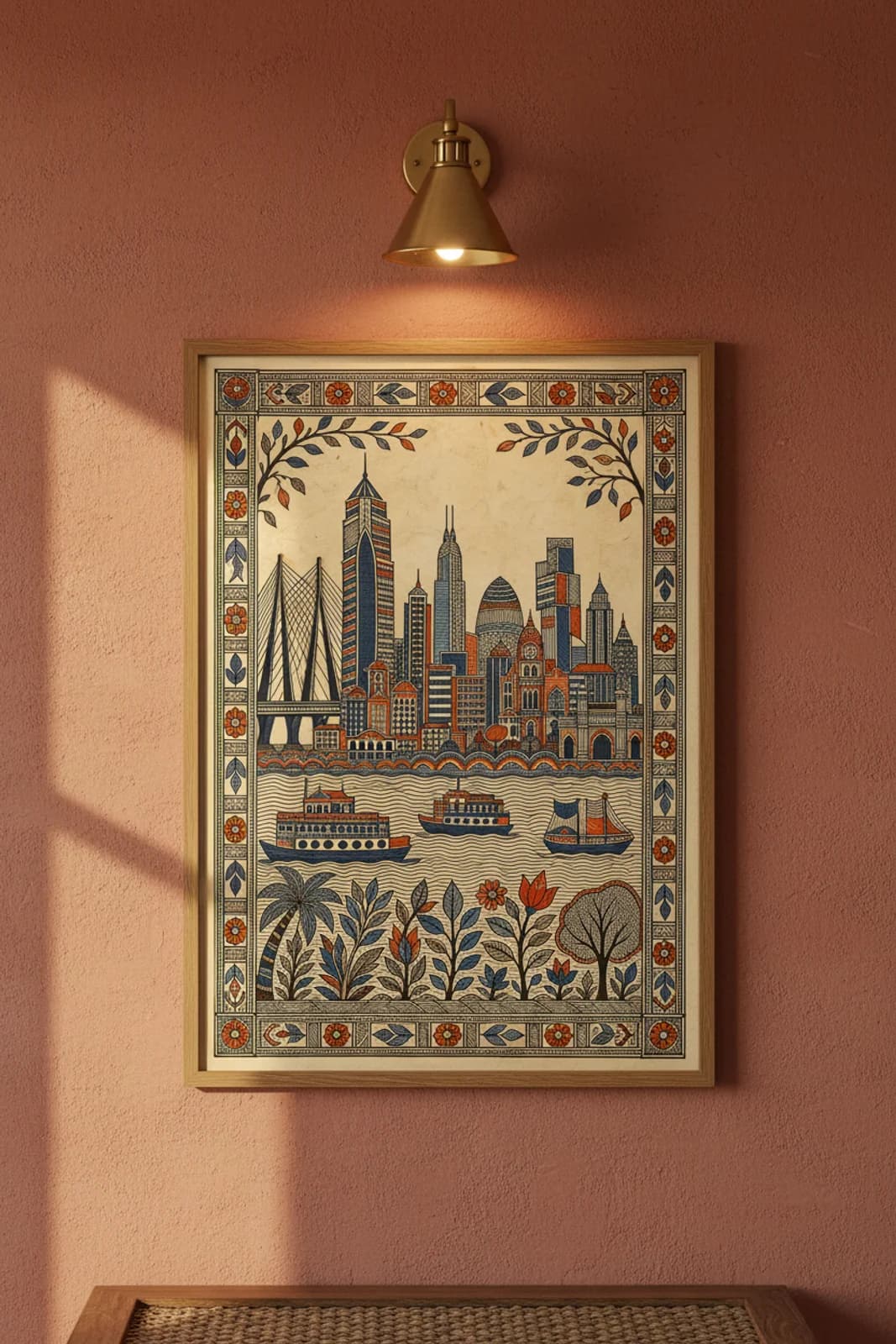
    City Skyline — framed museum print, Madhubani
    Dokra Lost-Wax Casting — framed museum print, Sohrai Khovar
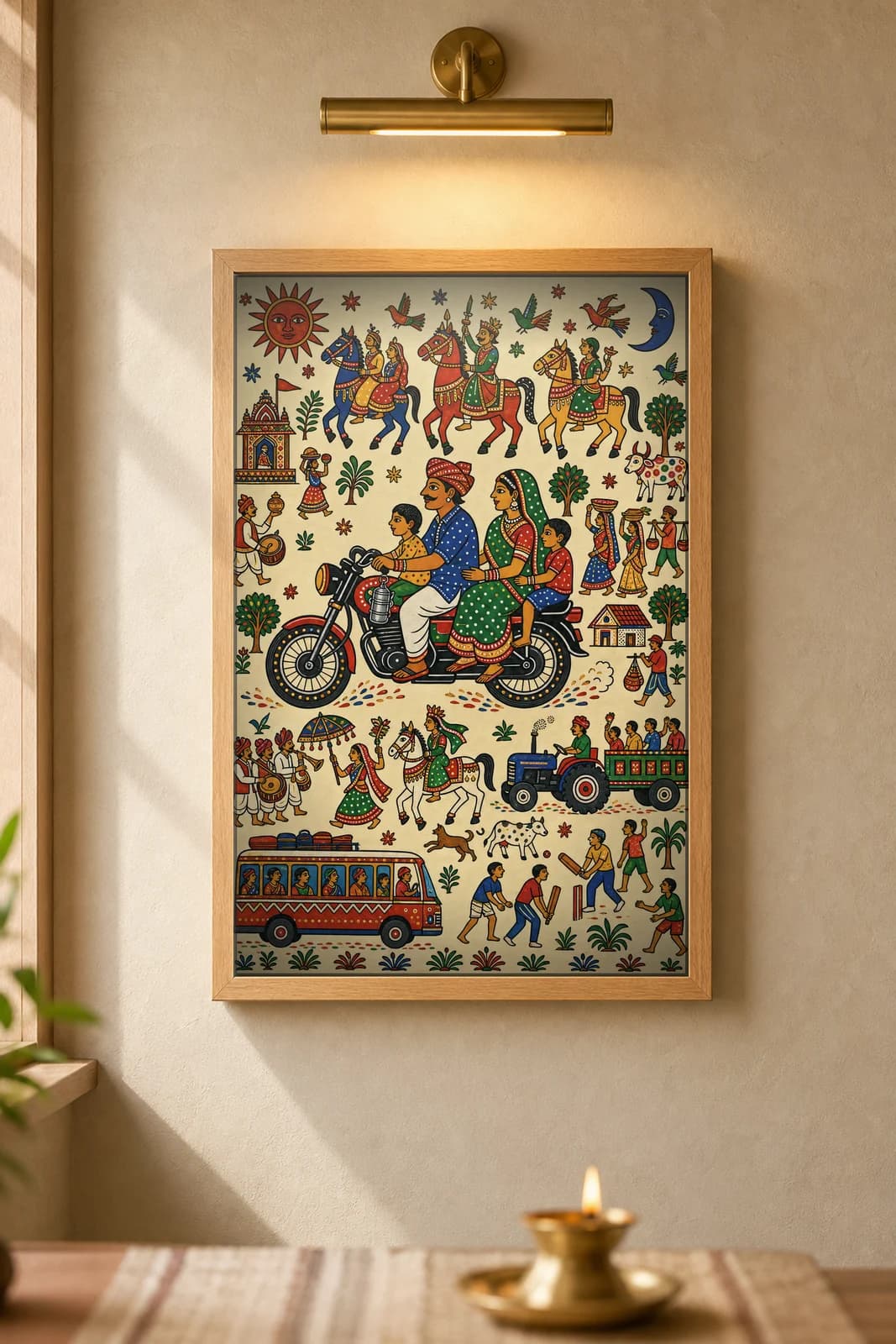
    Family Ride — framed museum print, Pithora
    Room

    Studio

    36 prints

    Mugello sits in Ferrari heartland and doubles as the marque's private test laboratory, which is why the circuit feels less like a rented venue and more like a family estate with guardrails. The MotoGP Italian Grand Prix crowd's passion — especially the Rossi-era yellow sea — is inseparable from the circuit's mythology, but this poster stays layout-first: a map for people who can name Arrabbiata from a silhouette and know the main straight is where horsepower meets Apennine air.

    from $49

  • Babo Ind — framed museum print, Pithora
    Family Ride — framed museum print, Pithora
    Garba Night — framed museum print, Pithora
    Gully Cricket — framed museum print, Pithora
    Room

    Family Room

    34 prints

    Aipan is the ritual floor- and wall-art of the Kumaon region of Uttarakhand, drawn traditionally by Kumaoni women with white rice-paste (biswar) on a geru (red-ochre) earth ground. Diwali is the festival of lights, when courtyards are swept and lit with diyas, children play with sparklers (phuljhadi), and the lotus, lit lamp, and swastika carry the auspicious welcome of the season. This is a contemporary fusion piece — a festive courtyard scene translated into Aipan's strict two-tone white-on-geru line, which distinguishes the form from multicolour Mithila/Madhubani painting. Aipan received a Geographical Indication (GI) tag around 2021 as a craft of Uttarakhand.

    from $49

  • Abhisarika Nayika — framed museum print, Rajput Miniature
    Baarat — framed museum print, Rajput Miniature
    Bani Thani — framed museum print, Rajput Miniature
    Bhairavi — Dawn Raga — framed museum print, Rajput Miniature
    Room

    Diaspora Living Room

    33 prints

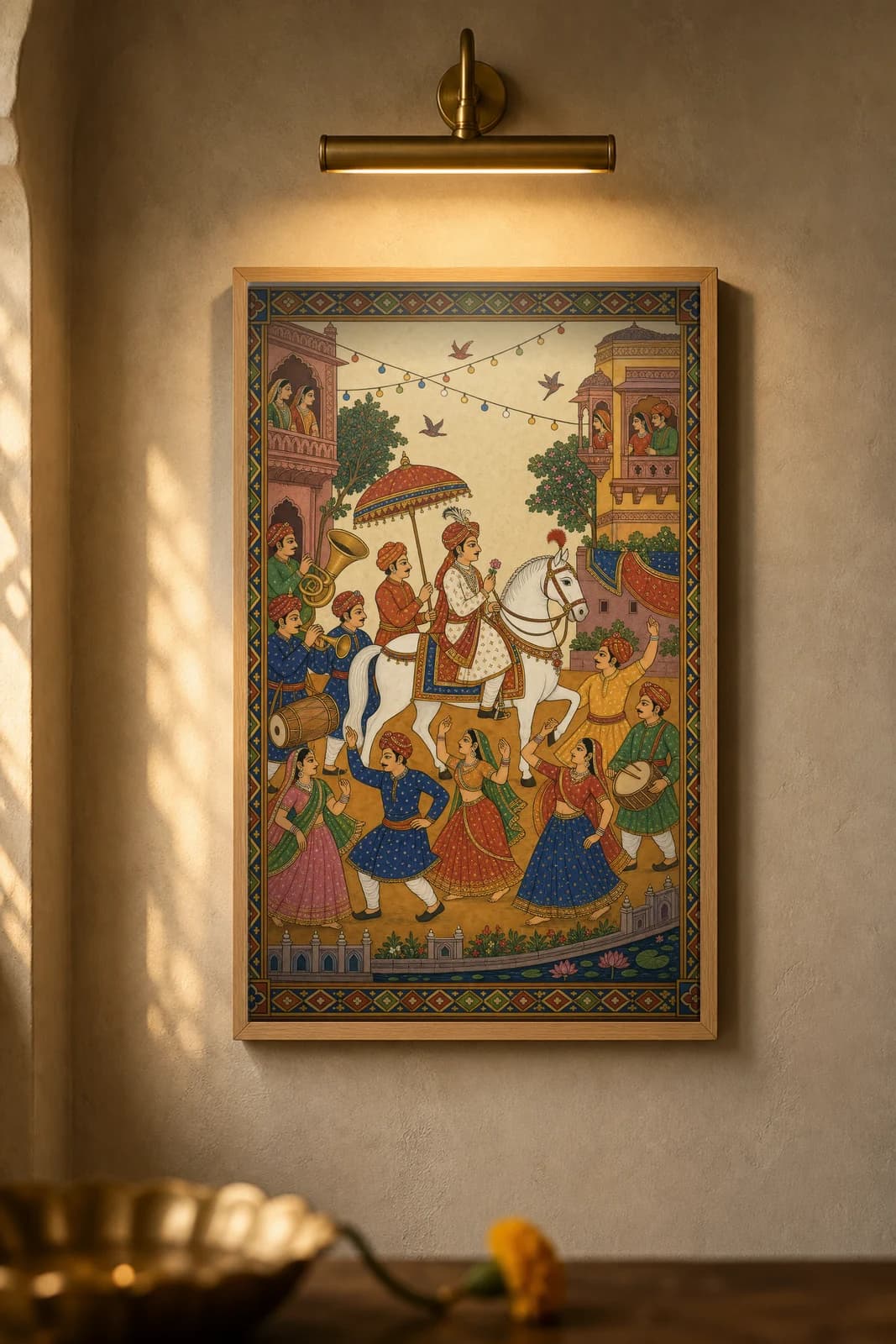
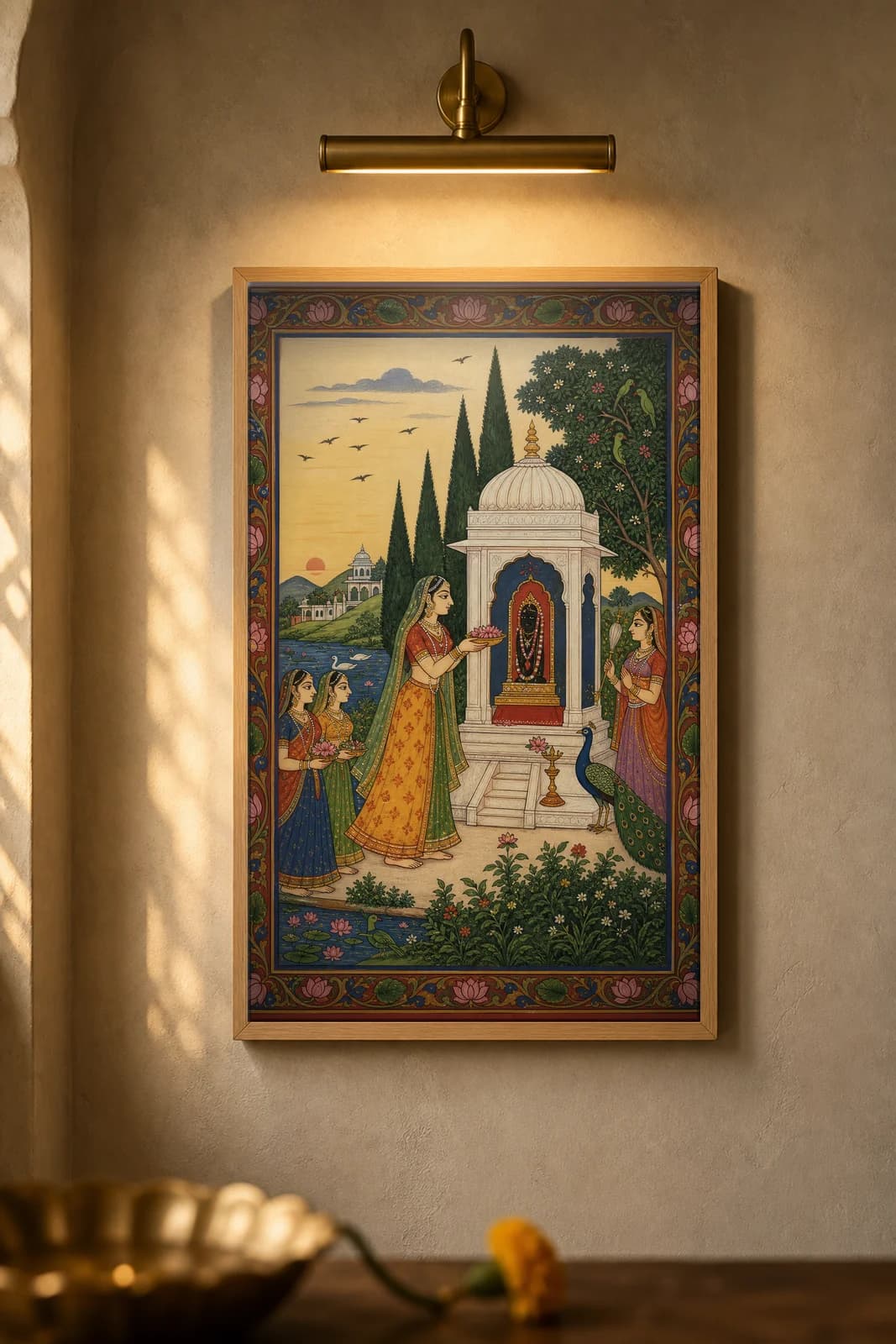
    This fusion is built on the Baramasa-Sawan convention of the Pahari and Rajasthani courts, in which the monsoon month is staged as a marble terrace, storm clouds, lightning and dancing peacocks — usually carrying the mood of viraha, a heroine's longing for her absent beloved. The grammar here follows the Kangra Pahari school, prized within the Rajput miniature umbrella for soft green hills and lyrical naturalism. Kangra sits alongside the Rajasthani courts of Mewar, Bundi, Kishangarh, Marwar and Amber, all painted in mineral pigments — lapis, malachite, orpiment, hingul vermillion — and ochre 'gold' on burnished wasli paper, in flat symbolic perspective. There is no single Geographical Indication for the umbrella style; this is a contemporary scene retold in that grammar, not a historical painting.

    from $49

  • Ancestor Feast — framed museum print, Saura
    Bhajan Mandali Evening — framed museum print, Pichwai
    Bindu Chowki — framed museum print, Aipan
    Bindu Mandala — framed museum print, Aipan
    Room

    Meditation Corner

    28 prints

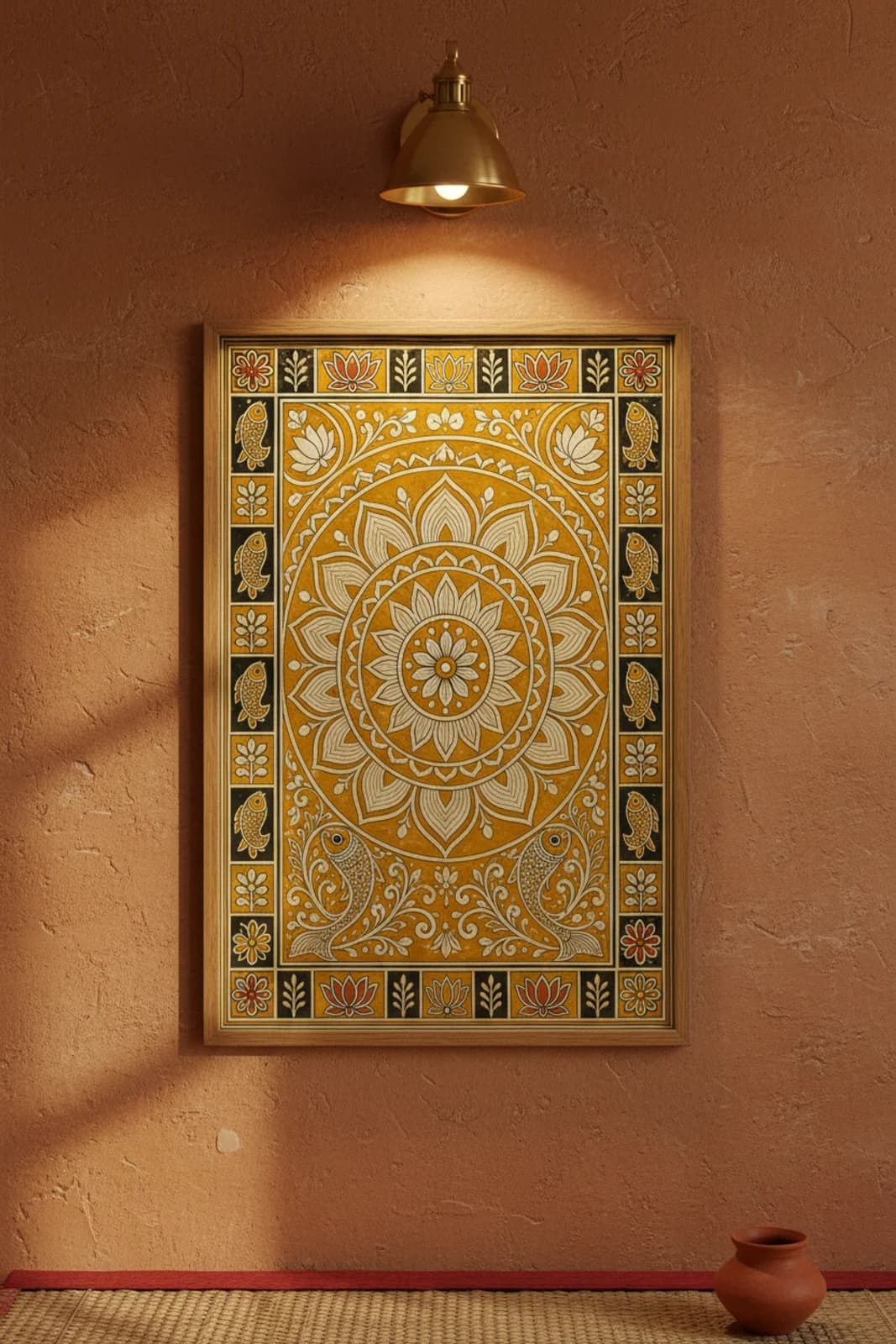
    Aipan is the ritual floor- and wall-art of the Kumaon region of Uttarakhand, made traditionally by Kumaoni women with white rice-paste (biswar) drawn by fingertip onto a geru — red-ochre earth — ground. The bindu, the single point, is where a diagram begins, and vasudhara dot-rows honour the giving earth; a concentric dot mandala distils that vocabulary to pure radiating points. The strict two-tone white-on-geru discipline distinguishes Aipan from multicolour Mithila work; the craft received a Geographical Indication (GI) tag around 2021.

    from $49

  • Abhisarika Nayika — framed museum print, Rajput Miniature
    Baarat — framed museum print, Rajput Miniature
    Bani Thani — framed museum print, Rajput Miniature
    Bhairavi — Dawn Raga — framed museum print, Rajput Miniature
    Room

    Boutique Hotel Room

    26 prints

    This fusion is built on the Baramasa-Sawan convention of the Pahari and Rajasthani courts, in which the monsoon month is staged as a marble terrace, storm clouds, lightning and dancing peacocks — usually carrying the mood of viraha, a heroine's longing for her absent beloved. The grammar here follows the Kangra Pahari school, prized within the Rajput miniature umbrella for soft green hills and lyrical naturalism. Kangra sits alongside the Rajasthani courts of Mewar, Bundi, Kishangarh, Marwar and Amber, all painted in mineral pigments — lapis, malachite, orpiment, hingul vermillion — and ochre 'gold' on burnished wasli paper, in flat symbolic perspective. There is no single Geographical Indication for the umbrella style; this is a contemporary scene retold in that grammar, not a historical painting.

    from $49

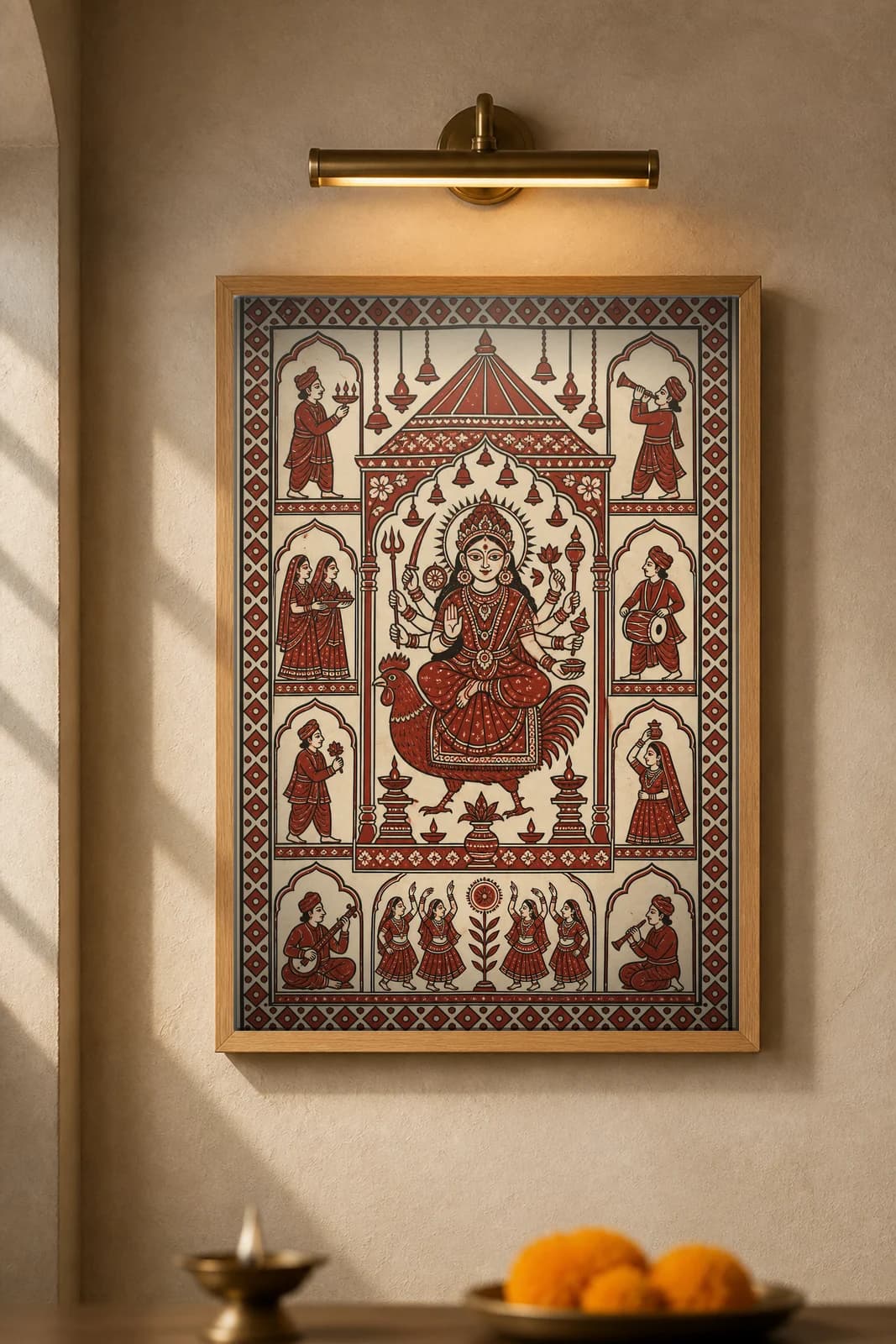
  • Meldi Mata — framed museum print, Mata Ni Pachedi
    Nagada Procession — framed museum print, Mata Ni Pachedi
    Navaratri Shrine — framed museum print, Mata Ni Pachedi
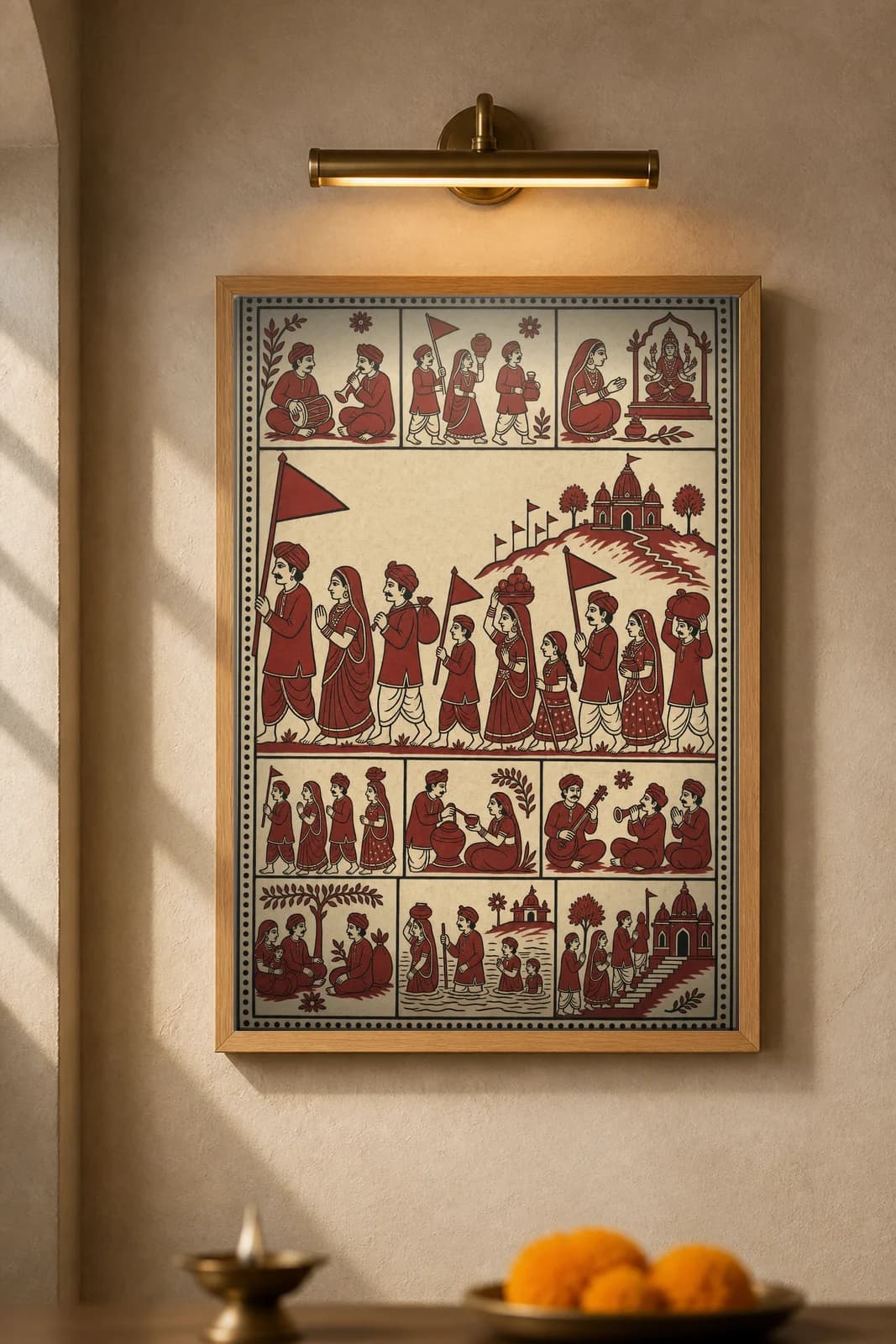
    Pilgrim Walk to the Madh — framed museum print, Mata Ni Pachedi
    Room

    Collector Wall

    26 prints

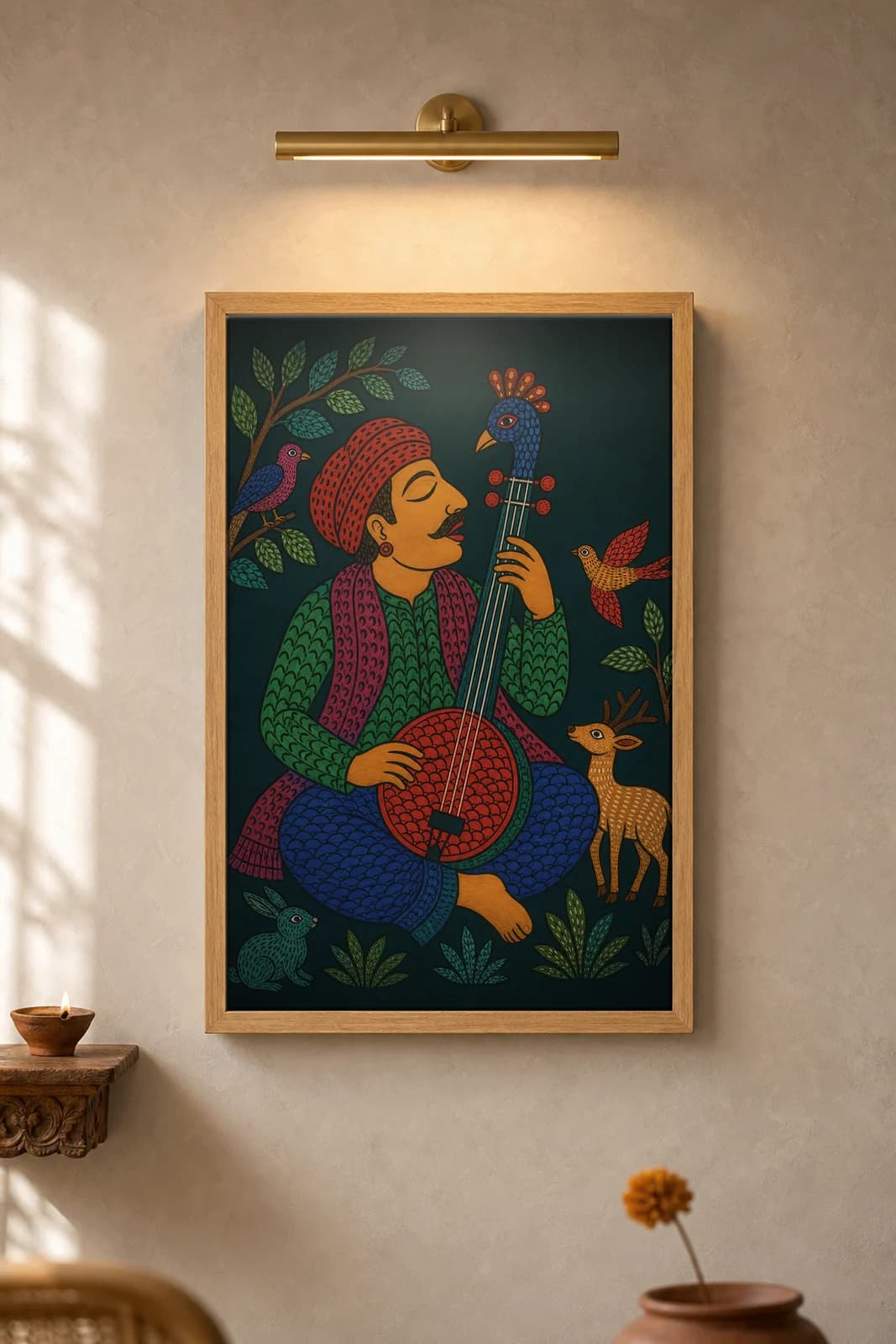
    Gond painting comes from the Gond Adivasi communities of central India, with its best-known school formed by the Pradhan Gond of Patangarh and the wider Dindori region of Madhya Pradesh. The contemporary form is largely the legacy of Jangarh Singh Shyam (1962–2001), whose line-and-in-fill manner — every form bounded by a bold outline, then filled with rows of dots, dashes, commas and scales — became known as Jangarh Kalam and was carried on by his family and students. The interlocking of tree and creature into one continuous form is a hallmark of the school, reflecting a worldview in which plant and animal life are inseparable. The marks are meaning-bearing: scale-rows read as feather, comma-rows as fur, dot-bands as serpent, seed-rows as growth. Subjects are largely secular — the Mahua tree, forest animals, birds, serpents and rivers. Gond art received a Geographical Indication tag in 2023. This print is a contemporary Gond-style work inspired by that tradition — not attributed to a specific Gond artist, the Shyam family, or any institution.

    from $49

Loading more rooms…Load more

Shopping prints by room — questions answered

How do I choose wall art for a specific room?
Match scale, tone and palette to the space: pick a print sized to the wall, a colour palette that echoes the room's accents, and a frame finish that suits the trim. Each Wallimilist room hub is pre-curated for exactly that — tone, scale and palette tuned for the space.
How many rooms can I shop prints for at Wallimilist?
Wallimilist curates 195 rooms — including Study, Home Office, Entryway, Living Room — across 16,537 museum-grade prints, each made to order and shipped worldwide.
What's the starting price for a room print?
Open-edition prints start from $49 — museum-grade matte or framed, with free worldwide shipping and a 14-day return window.