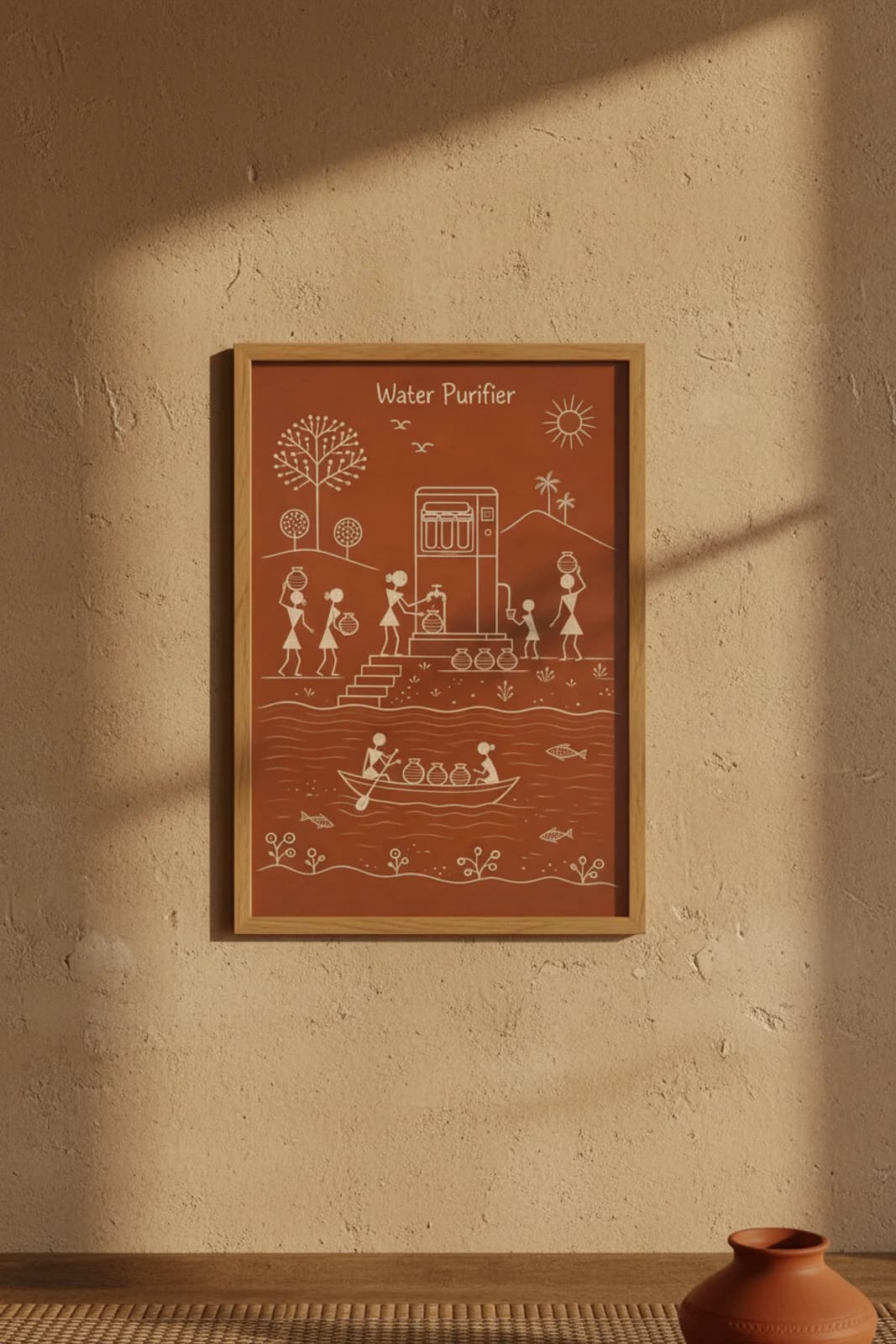
Kitchen Nook — 7 museum-grade prints sized and toned for the room. Warli painting originates with Warli Adivasi communities of Maharashtra's North Sahyadri — white rice paste on geru walls narrating agricultural cycles. Rice transplanting during monsoon is central livelihood across Dahanu, Palghar, and Jawhar — bent figures in repetitive rows document women's communal labour distinct from tarpa ritual dance. Warli painting narrates village water life — pond vessels, well gatherings, river fishing — in white line on geru walls across Jawhar, Palghar, and Dahanu talukas. Rural India's clean-water mission added community purifiers and household RO units to that story; fusion entries translate infrastructure rectangles into stick-line grammar beside classical matka circles. Warli art belongs to the Warli Adivasi community of the North Sahyadri range in Maharashtra — villages across Dahanu, Talasari, Jawhar, Palghar, Mokhada, and Vikramgad where rice-paste white pigment on geru-red ochre mud walls has documented daily life for centuries. Traditionally painted by women on hut plaster coated with cow dung and red earth, scenes mark harvests, marriages, and seasonal cycles without preliminary tracing — design flows directly from bamboo-stick brush to wall.