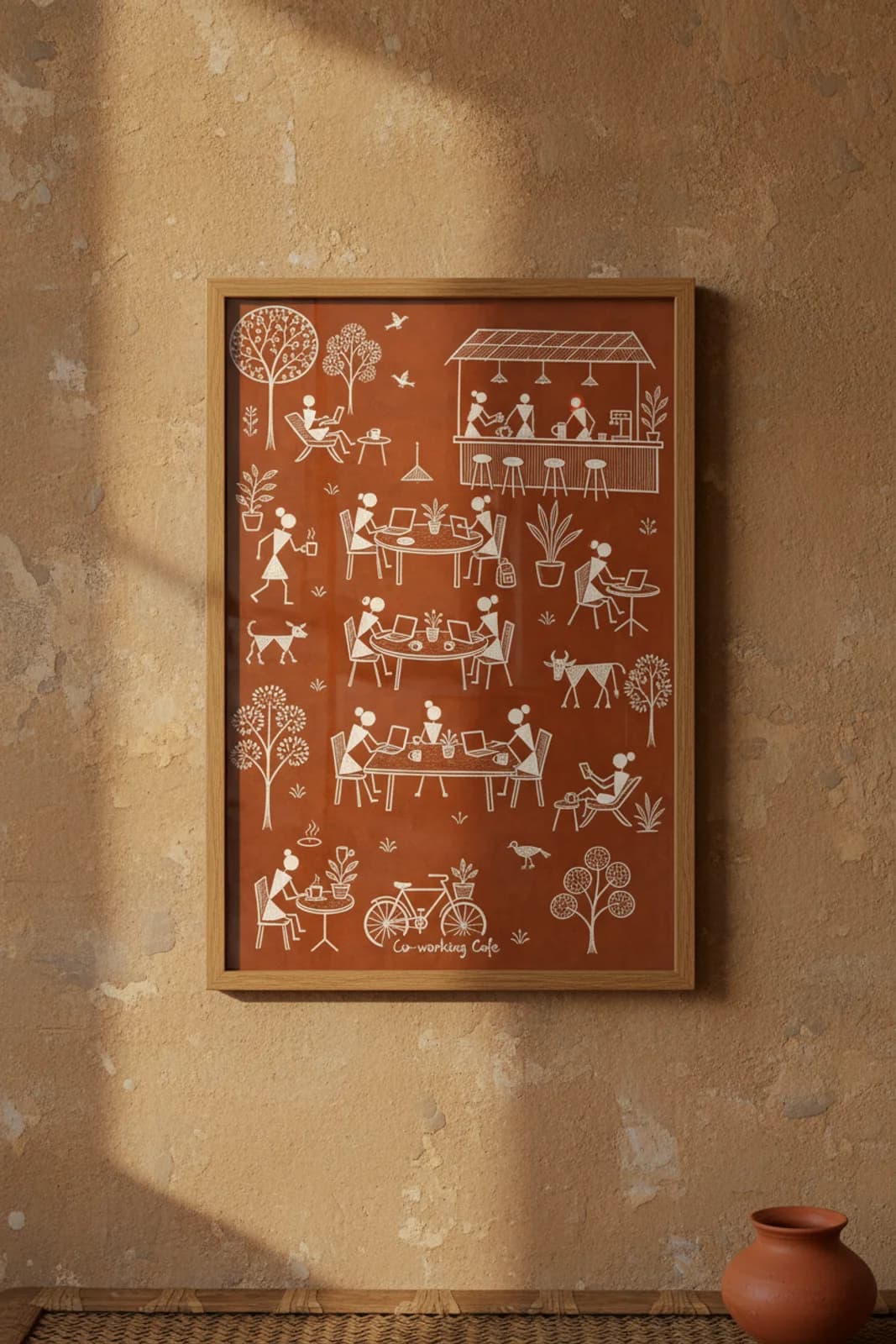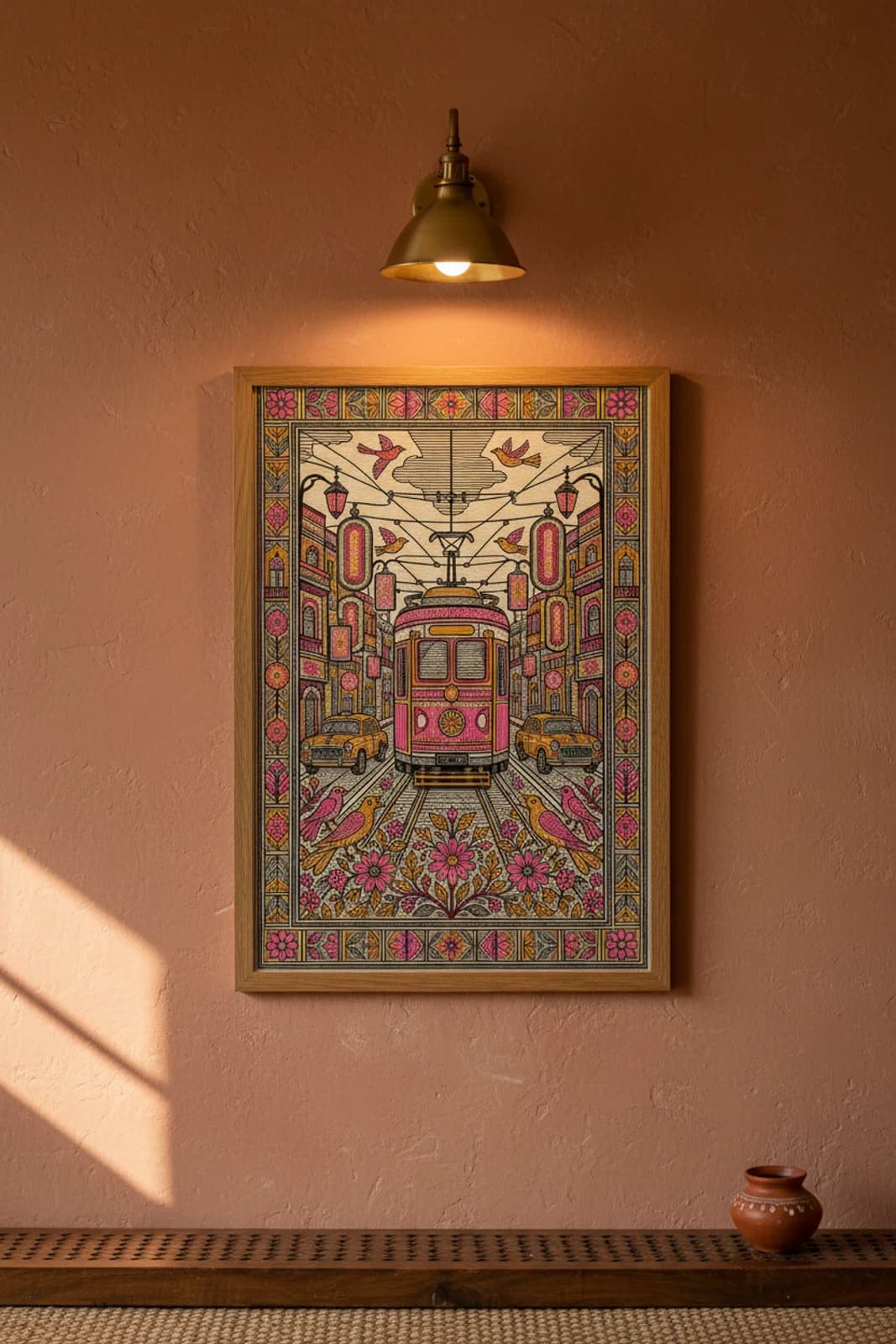
Creative Studio — 4 museum-grade prints sized and toned for the room. Warli painting is a tribal mural tradition of the Warli (Varli) Adivasi community in the North Sahyadri Range of Maharashtra and adjoining Gujarat — villages in Palghar, Jawhar, Dahanu, Talasari, and Mokhada where rice-paste white pigment on red ochre cow-dung or geru-coated walls recorded harvests, hunts, weddings, and daily labour. Women historically painted lagnacha chauk and dev chauk ritual squares for nuptial and festival occasions; tarpa circle dance appears in harvest-eve scenes with musicians at the centre — motifs this fusion piece deliberately omits because the subject is urban remote work, not ritual dance. Melbourne markets itself as Australia's cultural capital — a city of laneway coffee, AFL Saturdays, and street art corridors that draw photographers from Hosier Lane to AC/DC Lane. Flinders Street Station, opened in 1910, remains the city's most photographed facade; the Bunjil arches reference the Kulin nation's wedge-tailed eagle creator spirit along the tourist walking route through the CBD. Kachni — meaning line — is the Kayastha women's tradition within Madhubani painting: motifs built from dense parallel hatching, cross-hatch, and stippling inside double black outlines, historically associated with fine narrative and nature detail rather than Bharni flat deity colour floods. Paired birds and lotus crests appear in classical threshold vocabulary — aerial messengers above, floral abundance below — a layout discipline preserved here even when the middle register holds colonial shopfronts and a tram instead of river boats or wedding processions.