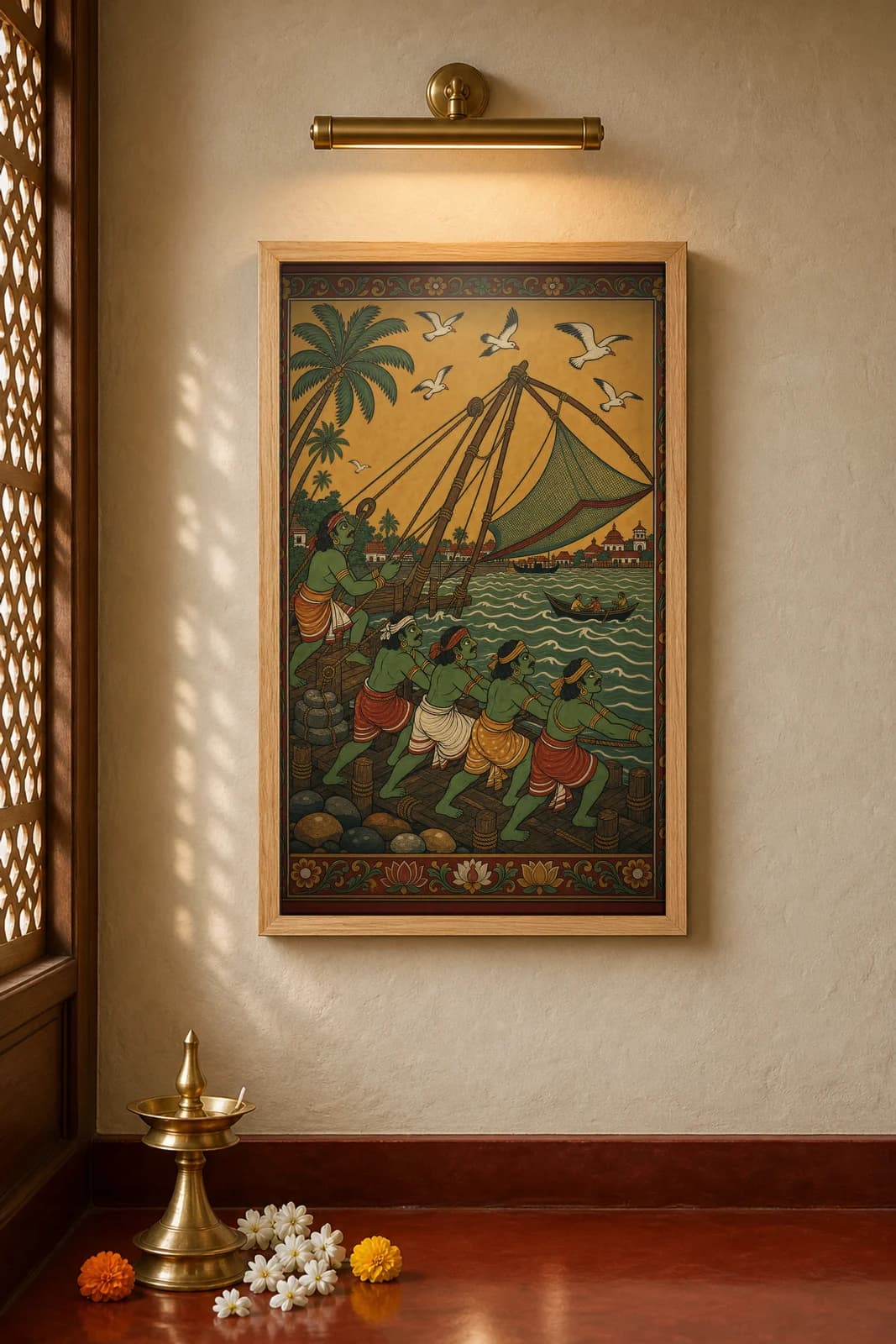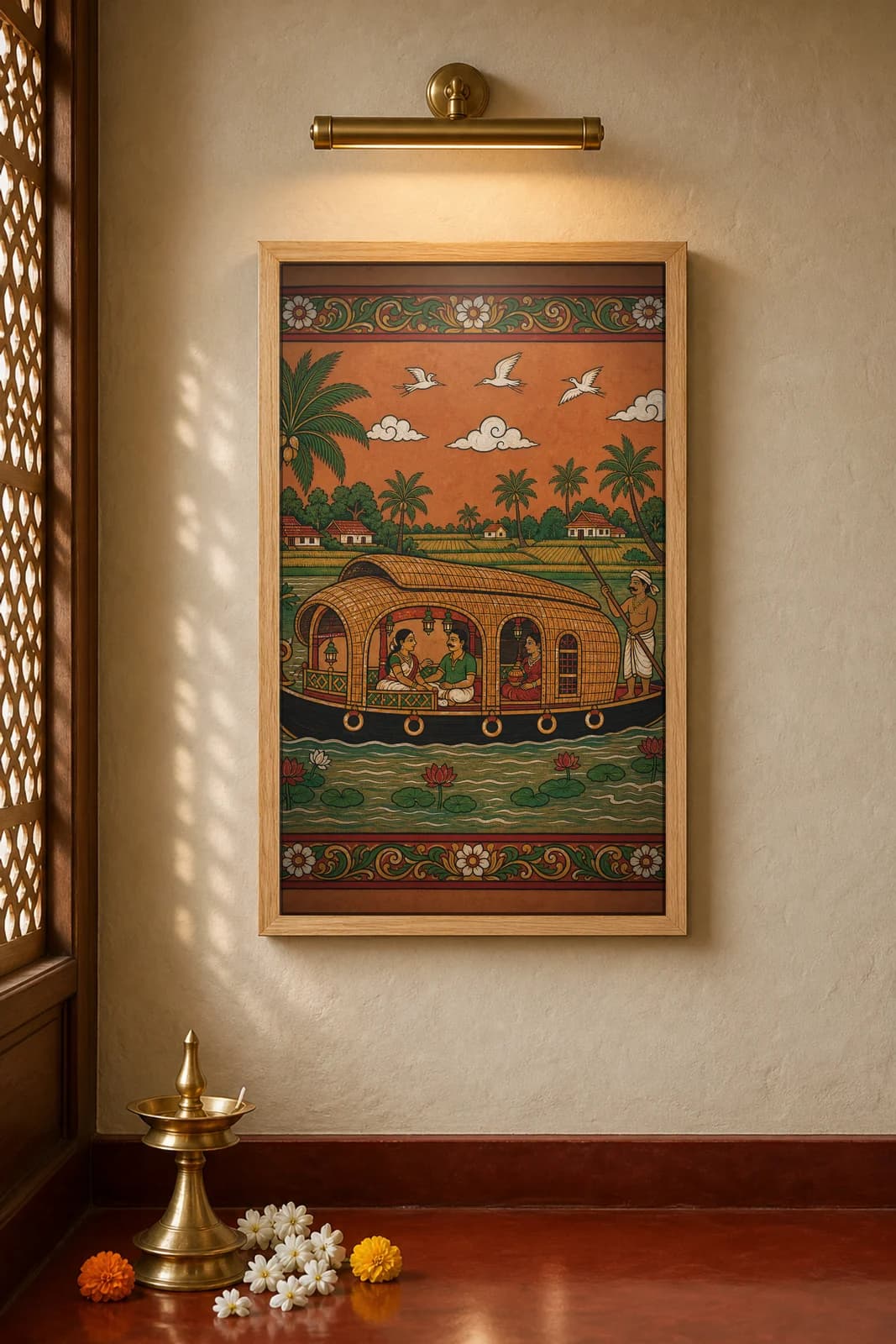
Warm Nostalgic — 7 museum-grade prints that set the mood. The Cheena vala — the shore-operated cantilever lift nets at Fort Kochi — are among Kerala's most recognised sights, by tradition linked to Chinese traders and the Malabar coast's long maritime contact. This print sets them inside bhitti chitra, Kerala's temple-mural tradition that flourished roughly from the 16th to 19th century and is still painted today: flat panchavarna pigments (red, yellow, green, black, white over an ochre ground), a bold lamp-black outline and the school's elongated lotus-shaped eyes. The kettuvallam — literally a 'boat tied with ropes', built without nails from planks lashed with coir — once carried rice and spices on Kerala's backwaters and now glides tourists through Alappuzha and the Vembanad-Kuttanad waterways under its arched thatch roof. This print sets it inside bhitti chitra, Kerala's temple-mural tradition that flourished roughly from the 16th to 19th century and is still painted today: flat panchavarna pigments (red, yellow, green, black, white over an ochre ground), a bold lamp-black outline and the school's elongated lotus-shaped eyes. Kerala's southwest monsoon — mazha — arrives in June and turns the paddy belt vivid green; the banana leaf held overhead is a genuine rural reflex, the broadest free umbrella the land offers. The picture is built in the idiom of bhitti chitra, Kerala's temple-mural tradition, which uses the panchavarna five-colour system — red, yellow, green, black and white over an ochre ground — in flat opaque fields bounded by a bold lamp-black outline, with the school's signature elongated lotus-shaped eyes.