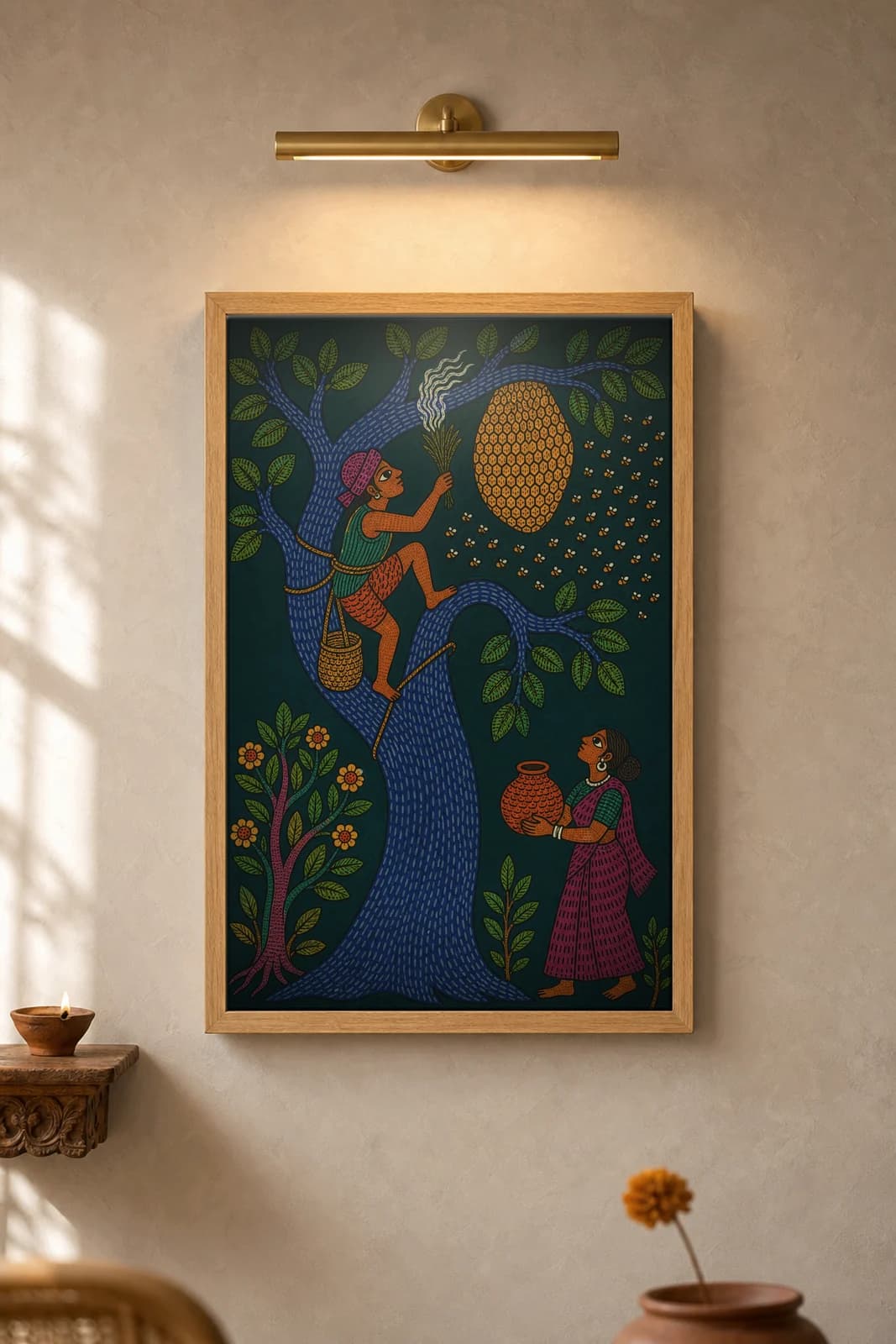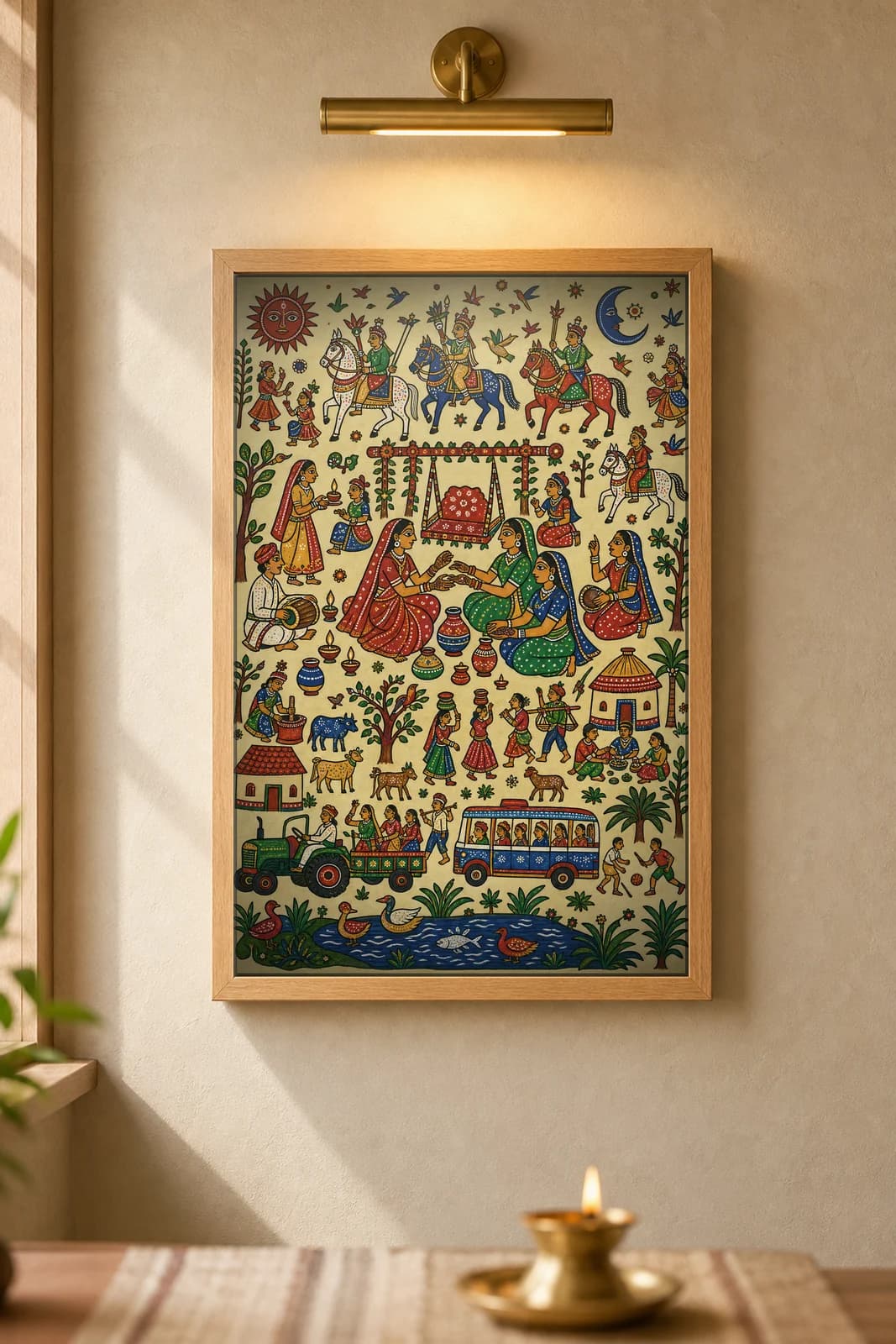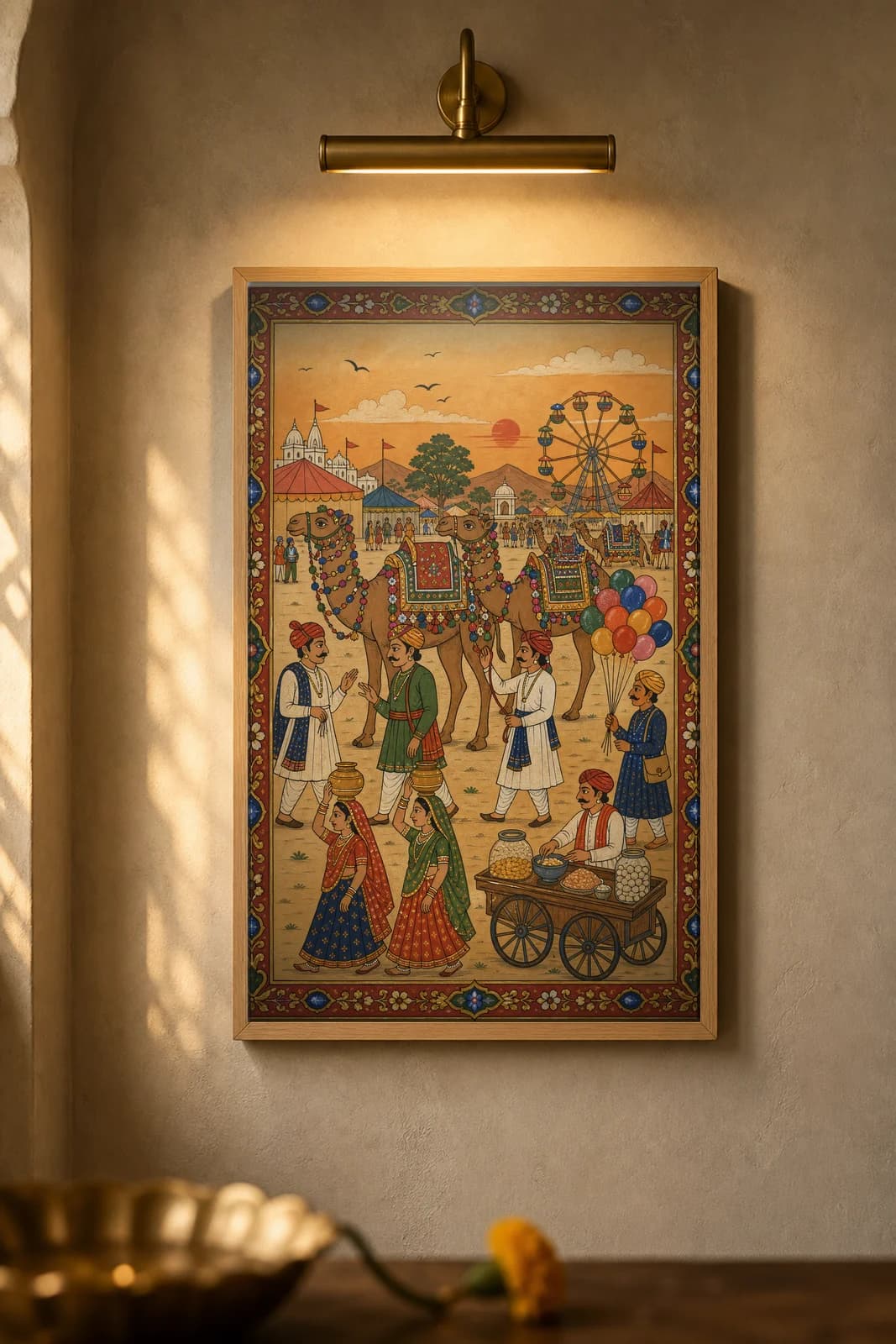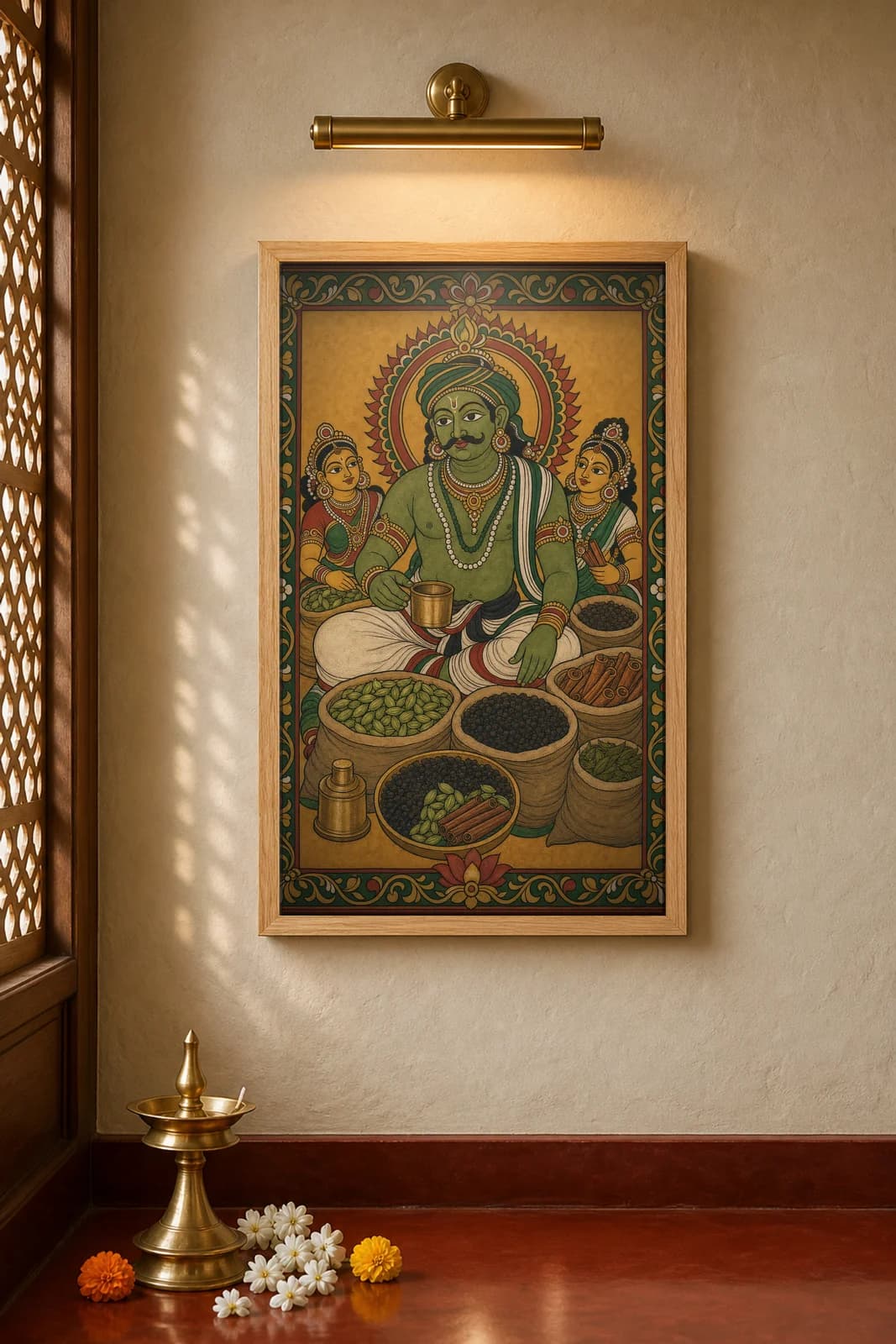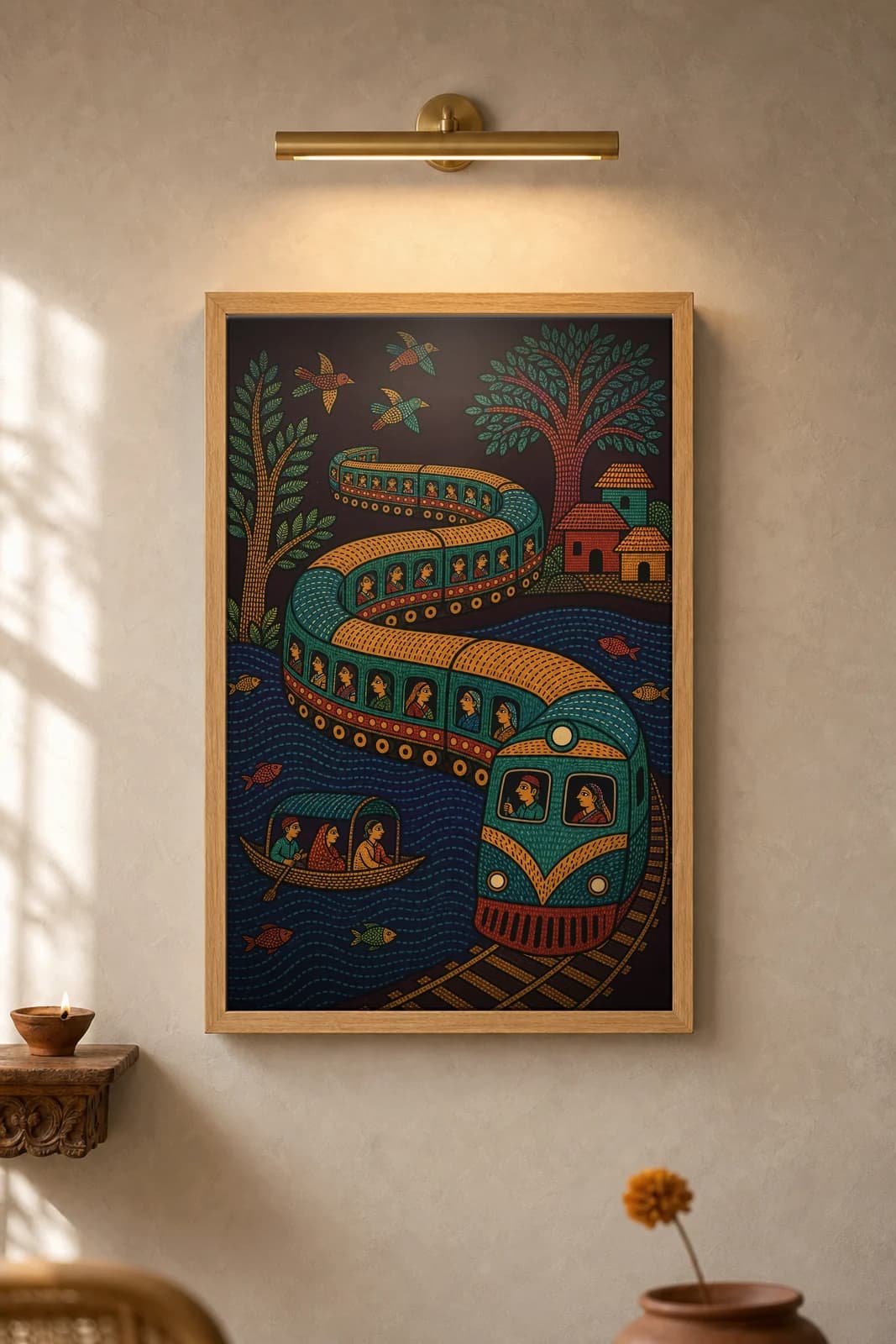
Story Rich — 10 museum-grade prints that set the mood. Kerala's Malabar coast was the hinge of the global spice trade for two millennia — black pepper, cardamom and cinnamon drew Roman, Arab, Chinese and later European ships to Kochi, Kozhikode and Kollam. This print sets that everyday merchant inside bhitti chitra, Kerala's temple-mural tradition that flourished roughly from the 16th to 19th century and is still painted today: flat panchavarna pigments (red, yellow, green, black, white over an ochre ground), a bold lamp-black outline, and the school's elongated lotus-shaped eyes. Kaliya Mardana — Krishna subduing the serpent Kaliya, who had poisoned a pool of the Yamuna, by leaping in and dancing upon his many hoods until the snake submitted and his naga-wives begged for his life — is one of the most beloved Krishna-childhood episodes. Here it is painted in bhitti chitra, Kerala's temple-mural tradition that flourished roughly from the 16th to 19th century and is still painted today: flat panchavarna pigments (red, yellow, green, black, white over an ochre ground), a bold lamp-black outline, the halo and the school's elongated lotus-shaped eyes. Gond painting comes from the Gond Adivasi communities of central India, with its best-known school formed by the Pradhan Gond of Patangarh and the wider Dindori region of Madhya Pradesh. The contemporary form is largely the legacy of Jangarh Singh Shyam (1962–2001), whose distinctive line-and-in-fill manner — every form bounded by a bold outline, then filled with rows of dots, dashes, commas and scales — became known as Jangarh Kalam and was carried on by his family and students.