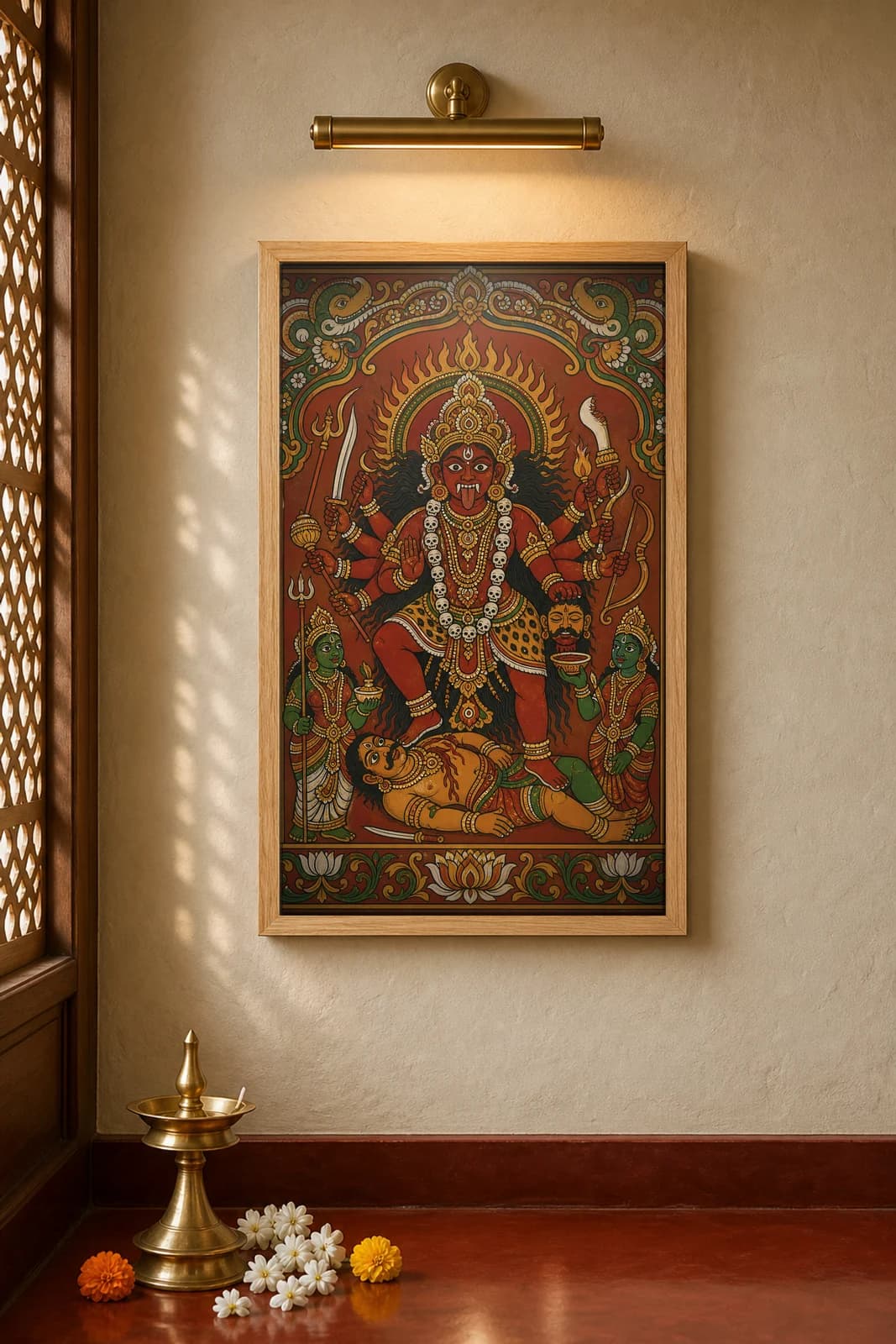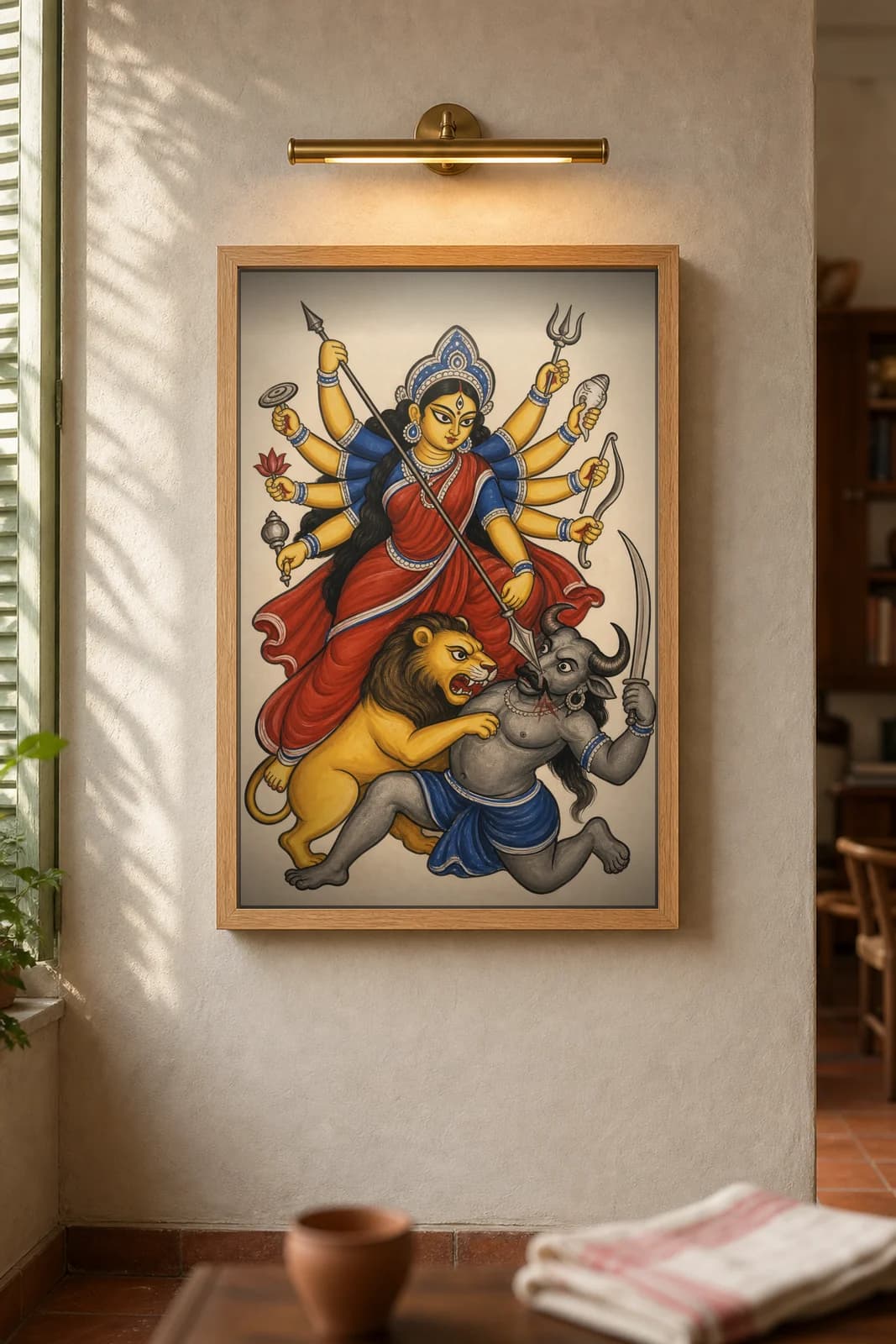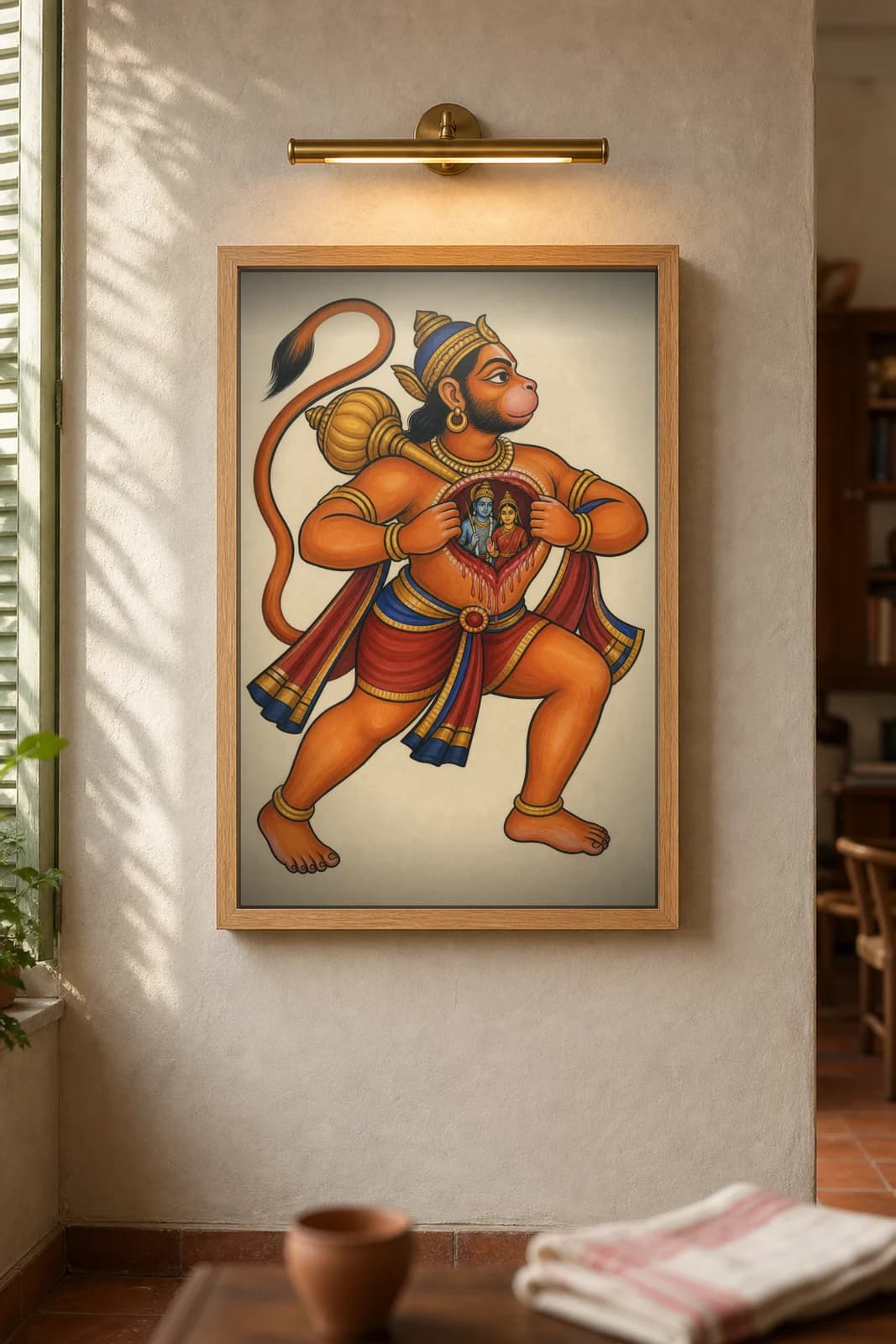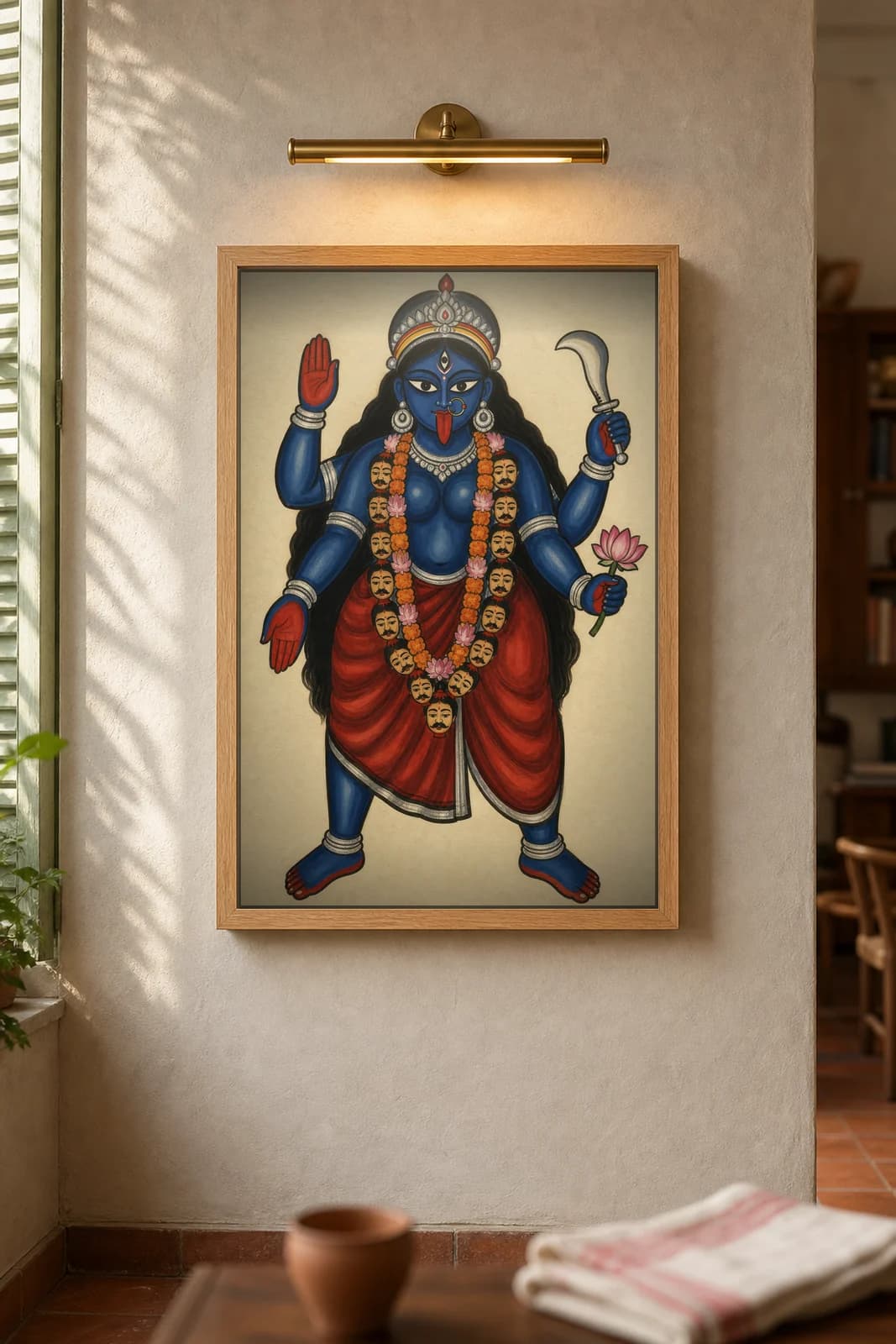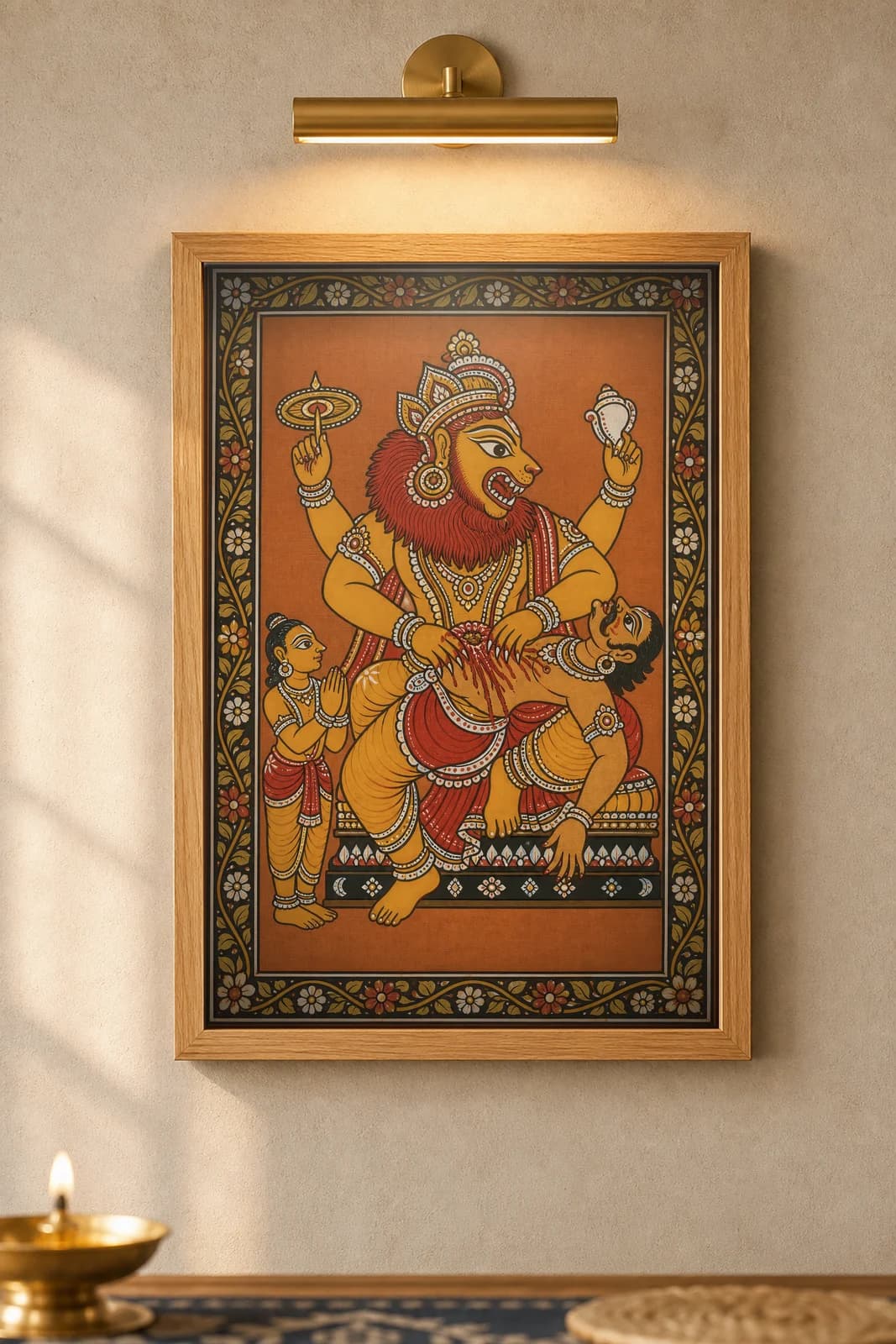
Powerful — 7 museum-grade prints that set the mood. Kalighat Pat grew up in 19th-century Kolkata, painted by migrant patua (chitrakar) scroll-painters who settled near the Kalighat Kali temple and sold quick watercolour souvenirs to pilgrims. Working on mill-made paper with a bold single black brush outline and soft 'boneless' shaded strokes on a plain ground, they painted gods and goddesses alongside what is often called India's first modern social satire — sharp, affectionate caricatures of the colonial 'babu' and the hypocrisies of Calcutta life. Bhadrakali — the fierce form of the Goddess born to slay the demon Darika — is the presiding deity of countless Bhagavati kavus across Kerala, and her myth is enacted in temple rituals and in Mudiyettu, a ritual theatre recognised by UNESCO. In bhitti chitra, Kerala's temple-mural tradition (flourishing roughly 16th–19th century and still painted today), she is shown red-bodied with a flame crown, protruding tongue and skull garland. Durga as Mahishasuramardini — the slayer of the buffalo demon Mahishasura — is among the most beloved forms of the Goddess, and in Kerala she is revered as Bhagavati across countless kavus and temples. Here she is painted in bhitti chitra, Kerala's temple-mural tradition that flourished roughly from the 16th to 19th century and is still painted today: flat panchavarna pigments (red, yellow, green, black, white over an ochre ground), a bold lamp-black outline and the school's elongated lotus-shaped eyes.