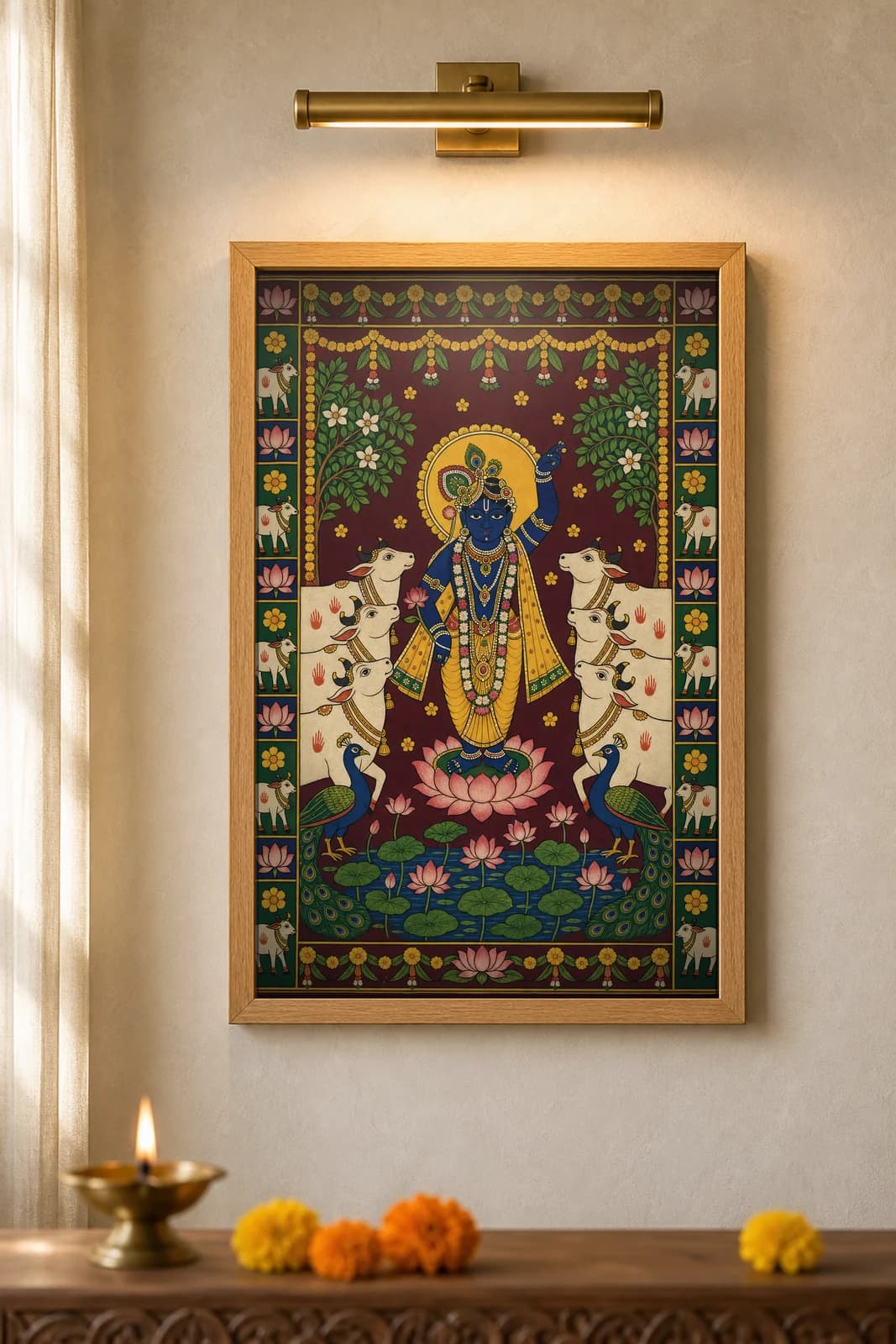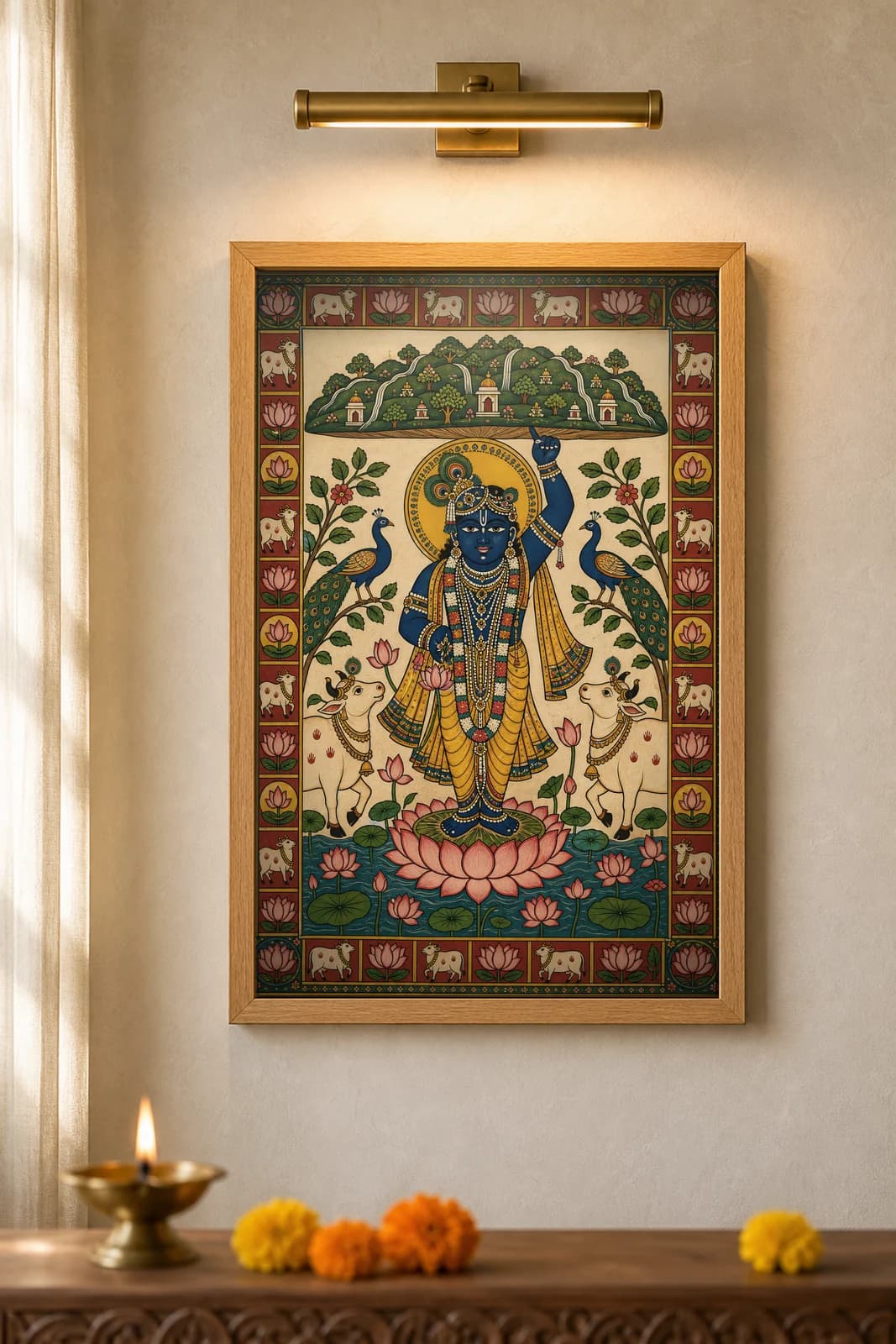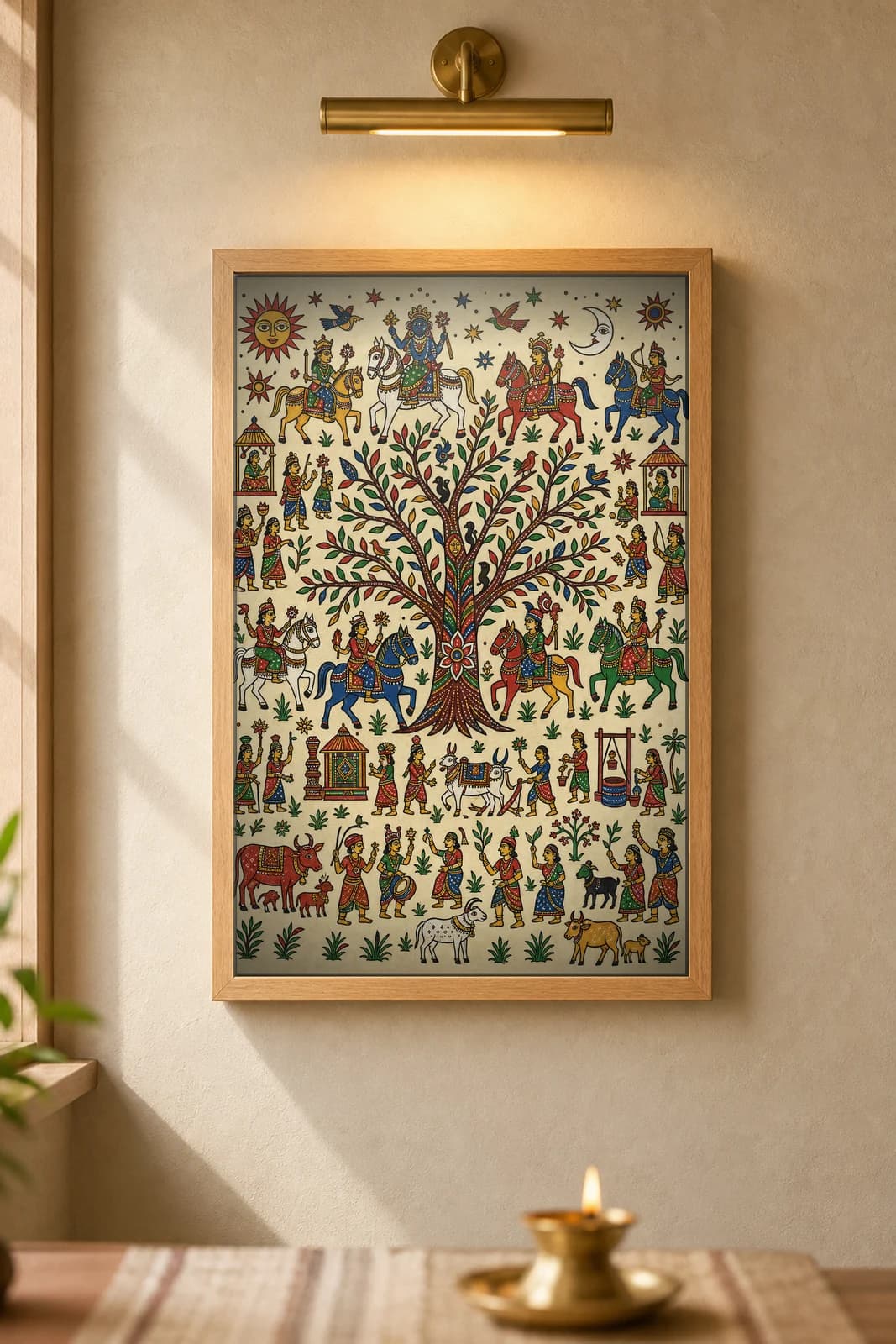
Grounding — 3 museum-grade prints that set the mood. Shrinathji is the child form of Krishna, the seven-year-old Govardhan-lifter, worshipped in the Pushtimarg (Vallabh) tradition centred at the Nathdwara haveli-temple in Rajasthan — and the cow is central to that devotion, where go-seva (service of the cow) and vatsalya (parental love) are core. A pichhwai (literally 'that which hangs at the back') is the painted cloth hung behind the deity to set the seasonal shringar; Shrinathji-with-cows is one of its most beloved subjects. Shrinathji is the child form of Krishna — the seven-year-old who lifted Mount Govardhan to shelter the people of Braj from a storm — worshipped in the Pushtimarg (Vallabh) tradition founded by Vallabhacharya and centred at the Nathdwara haveli-temple in Rajasthan. A pichhwai (literally 'that which hangs at the back') is the painted cloth hung behind the deity to set the seasonal shringar, and the frontal Govardhan-lifter is its central image. Pithora is the ritual wall-painting tradition of the Rathwa, Bhil and Bhilala Adivasi communities of Chhota Udepur in eastern Gujarat (and the adjoining belt of Madhya Pradesh and Rajasthan). The wall is vowed to Babo Pithoro and painted on the inner wall of the home as thanksgiving or to fulfil a wish; only the Lakhara — the priest-painter, also called the Gor — may execute the sacred wall, working to the chants of the badva.