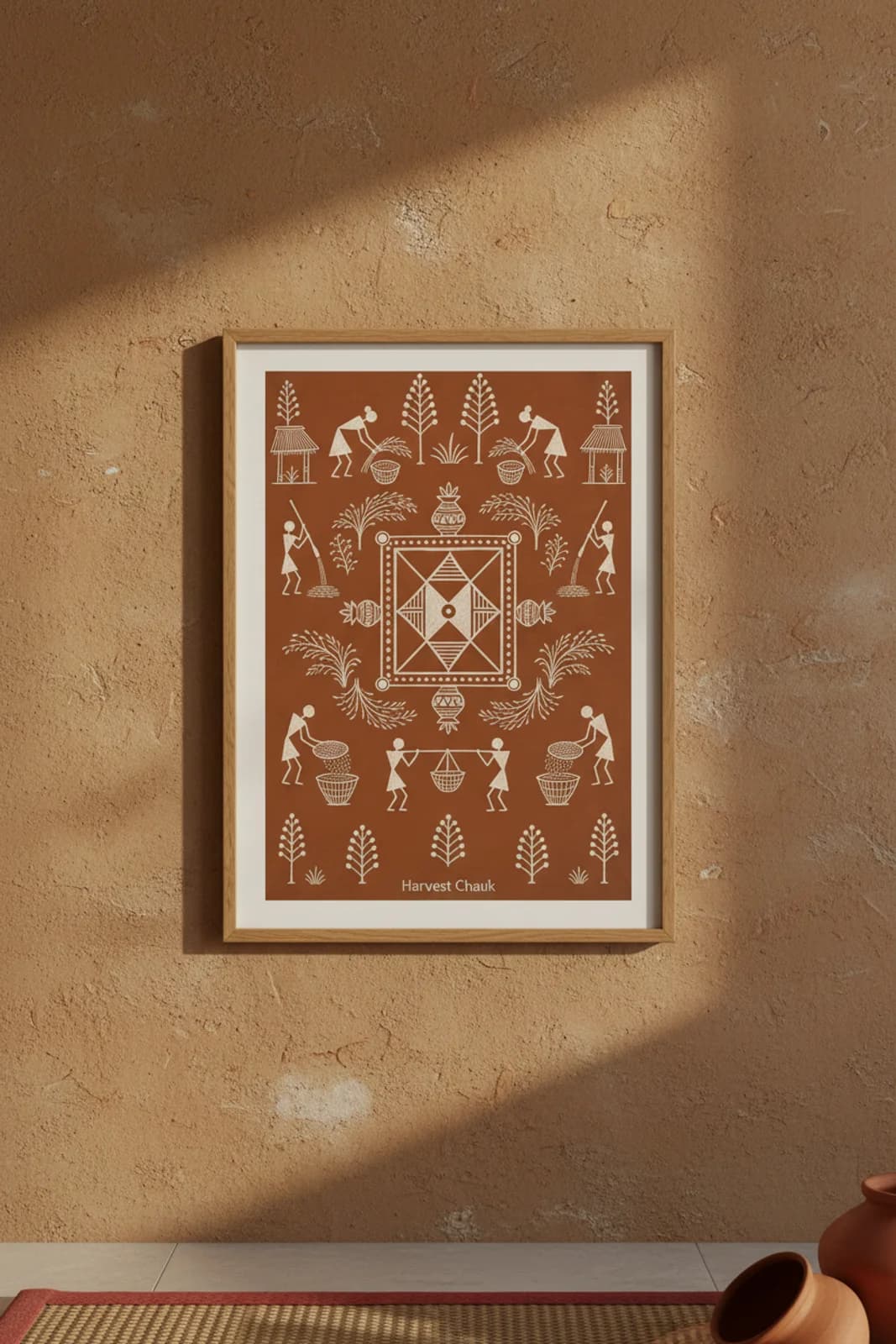
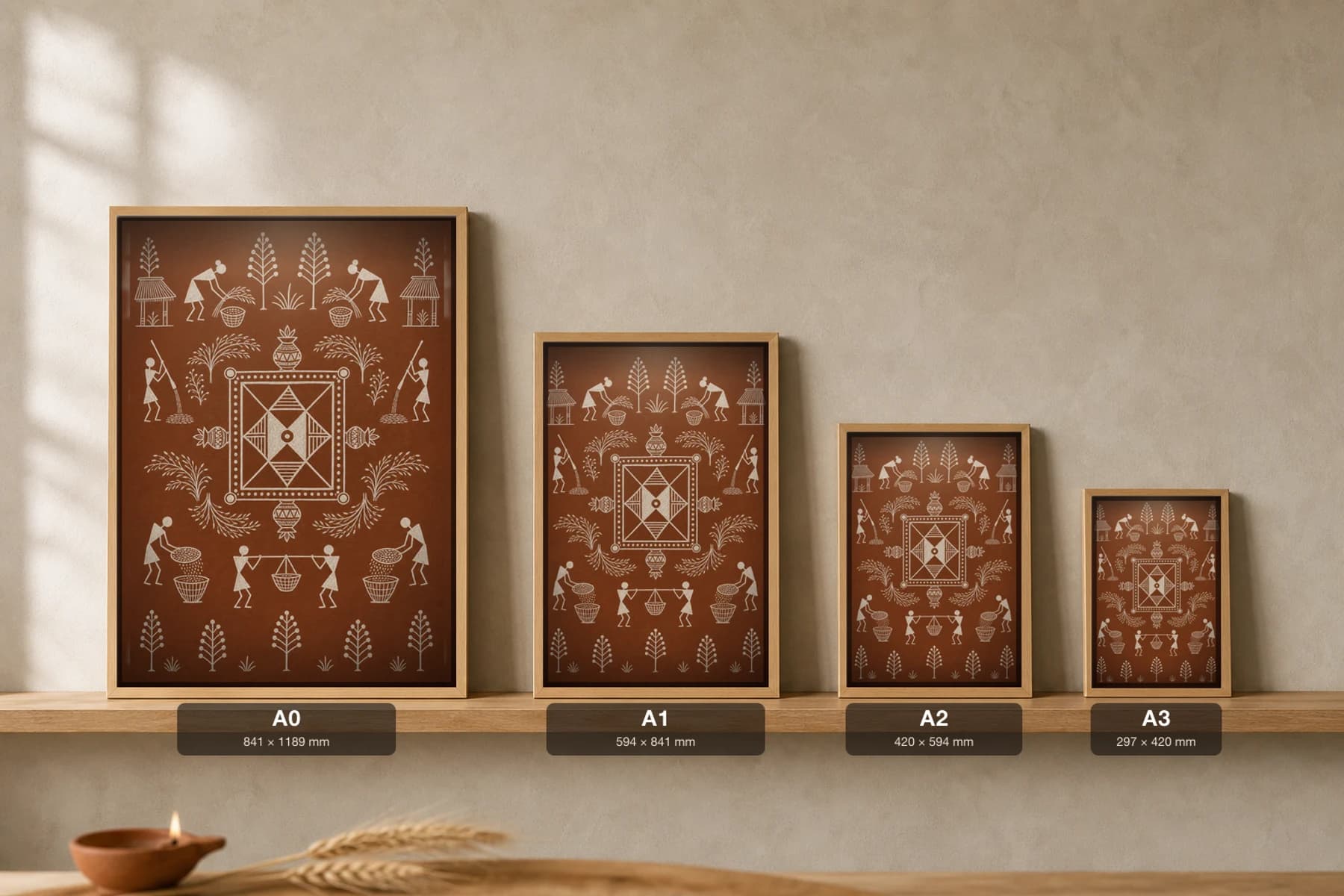
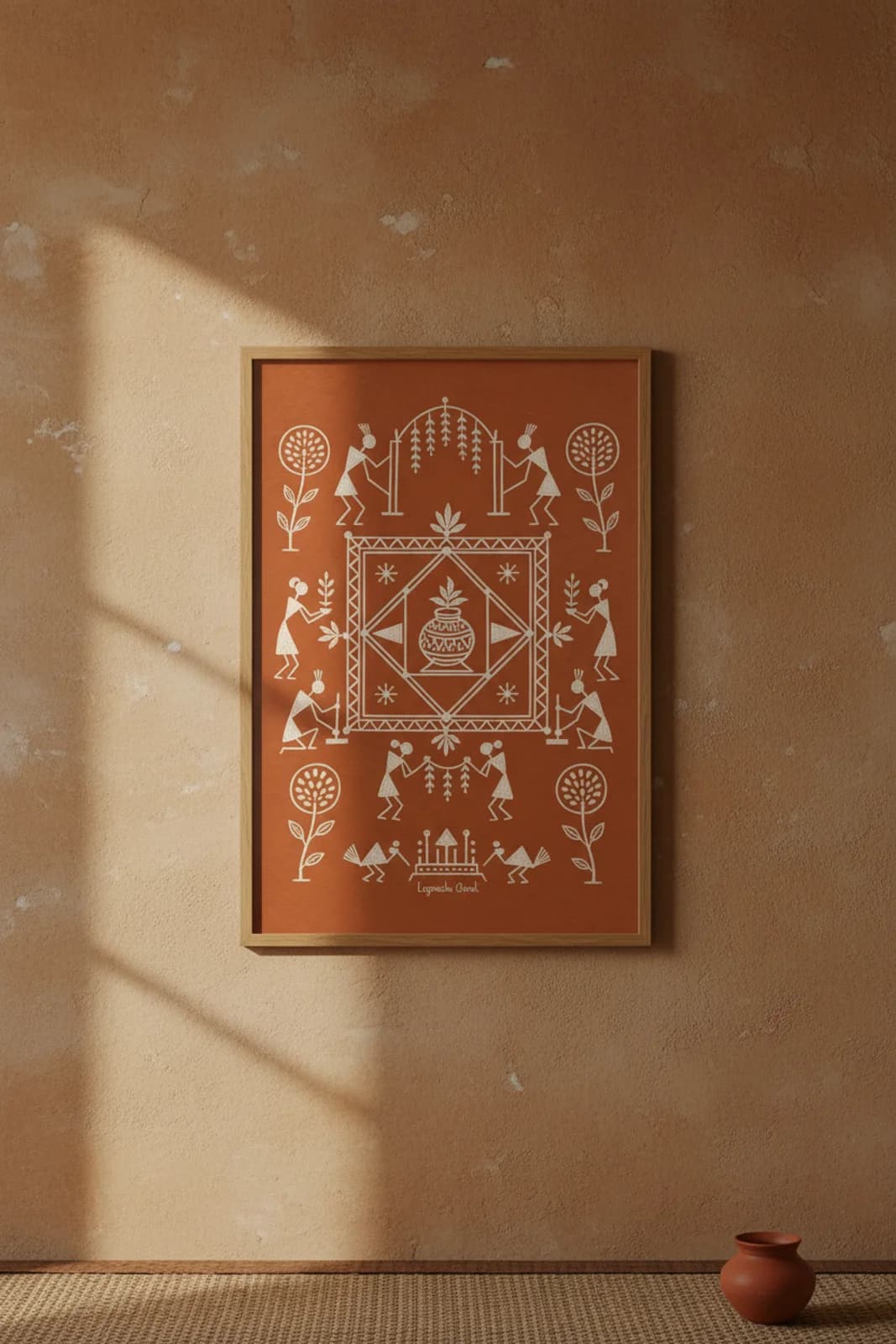
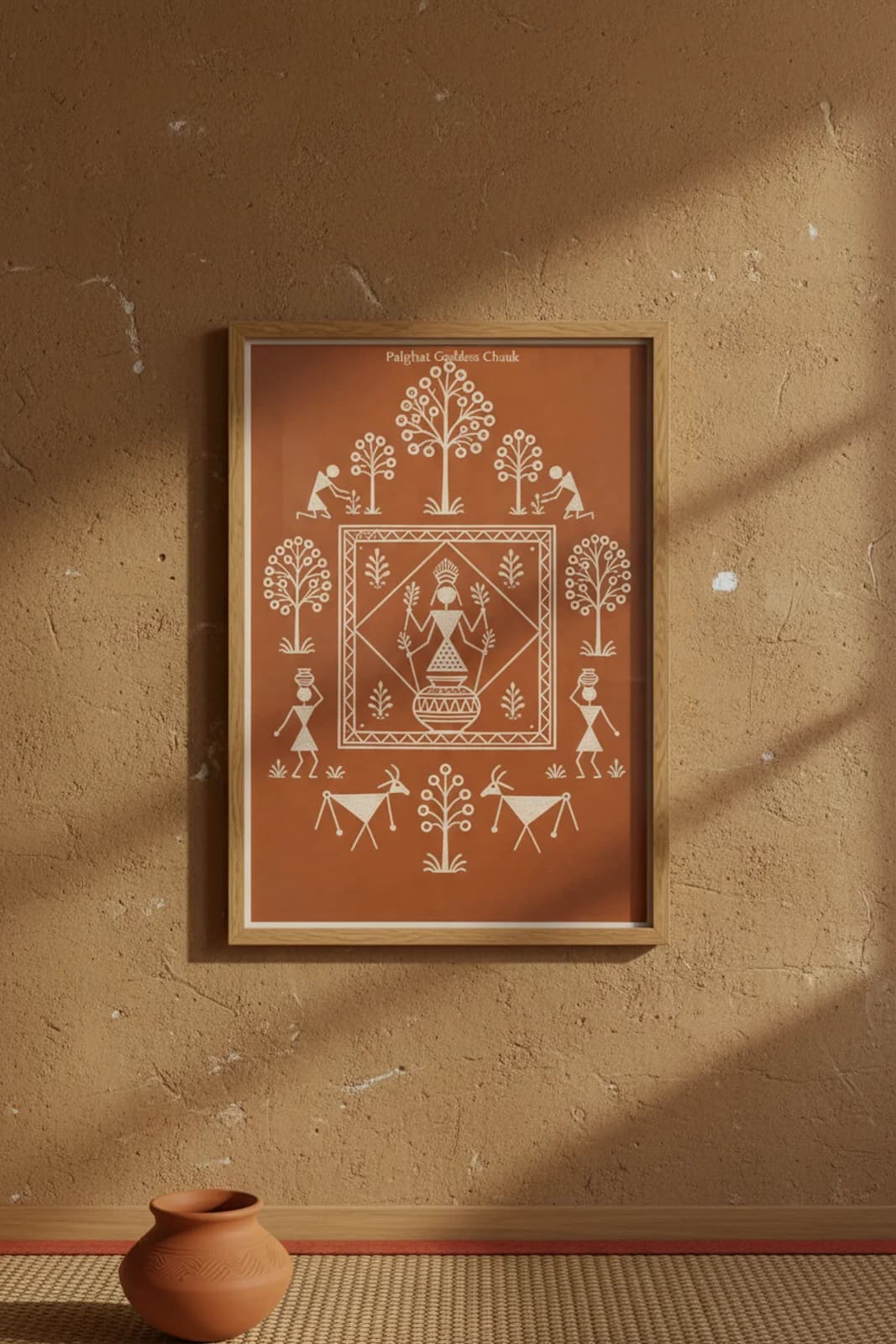
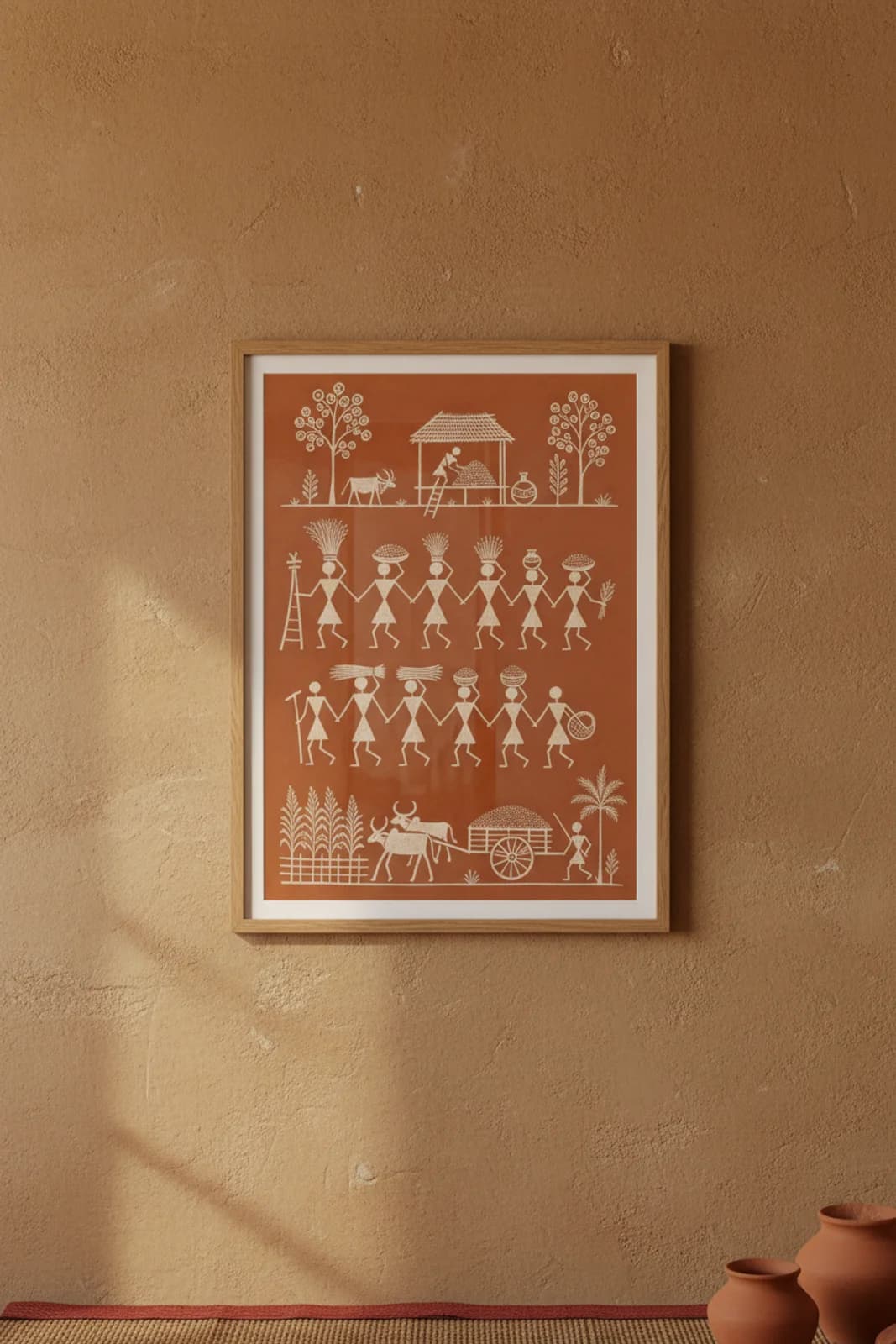
DESIGN BRIEF: This subject is harvest-season chauk, not lagnacha wedding square and not tarpa dance night. Chauk-central symmetry was non-negotiable — the sacred rectangle must dominate the vertical axis so the eye reads ritual geometry before individual farmers. What we refused: a tarpa musician and concentric dancer ring (wrong ceremony), Palghat goddess pot as marriage fertility hero (that belongs on lagnacha-chauk), tourist-poster clutter of sun-moon-hut-spiral in one frame, and any perspective depth that would break Warli's flat mud-wall grammar. What we built instead: a harvest blessing square with grain-circle motifs inside the diamond lattice, four kalash pots marking the cardinal offering points, and a border procession of real pre-harvest labour — cutting stalks, threshing with musal poles, winnowing with supa trays, carrying the load on a shoulder pole. Light-mid density keeps ~half the ochre ground visible; the empty space between chauk and border figures is deliberate wall breath, not unfinished canvas. Farmers sit at four sides of the square, not inside it — classical Warli treats the chauk as invoked enclosure, human work as perimeter witness.
 WALLIMILIST