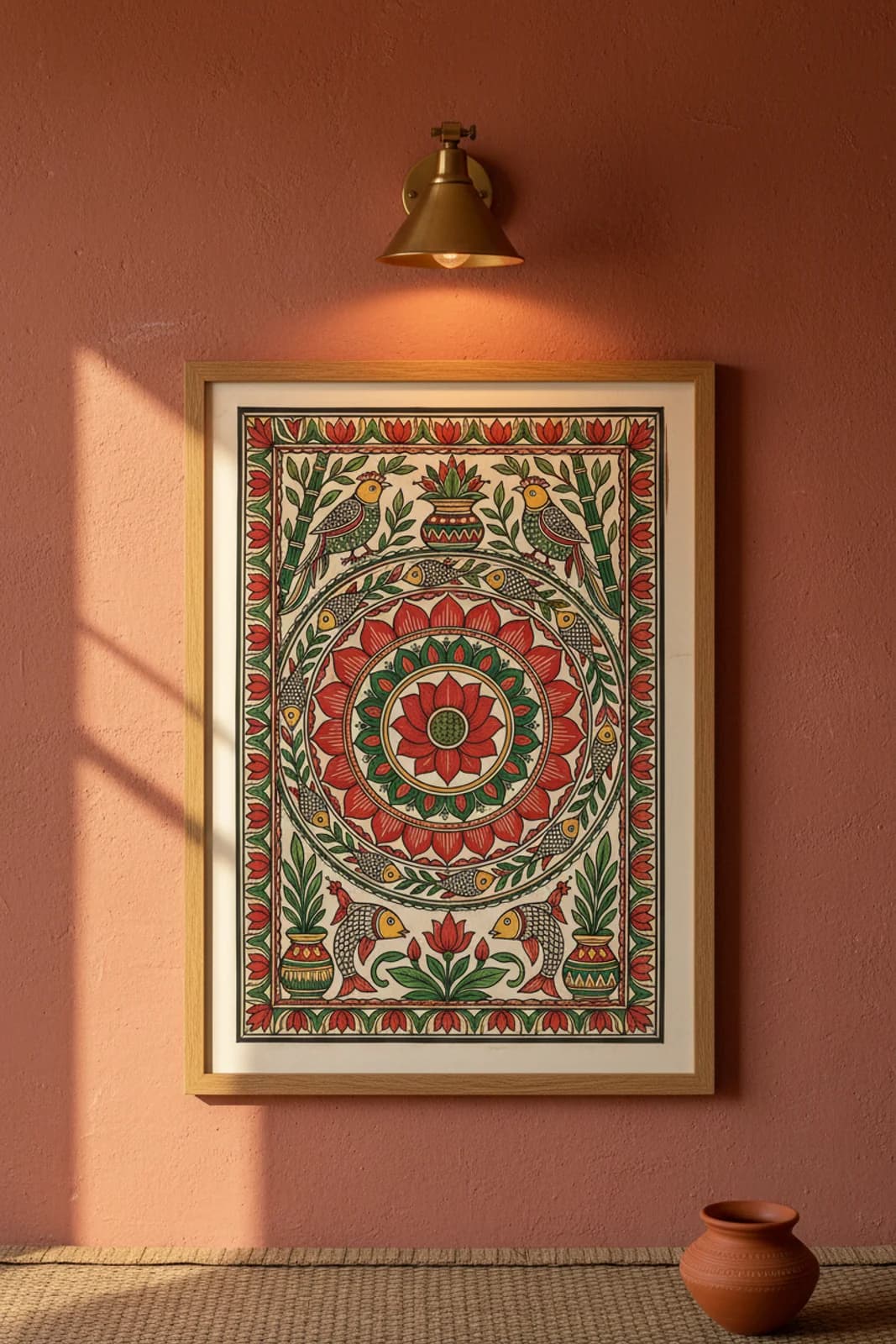
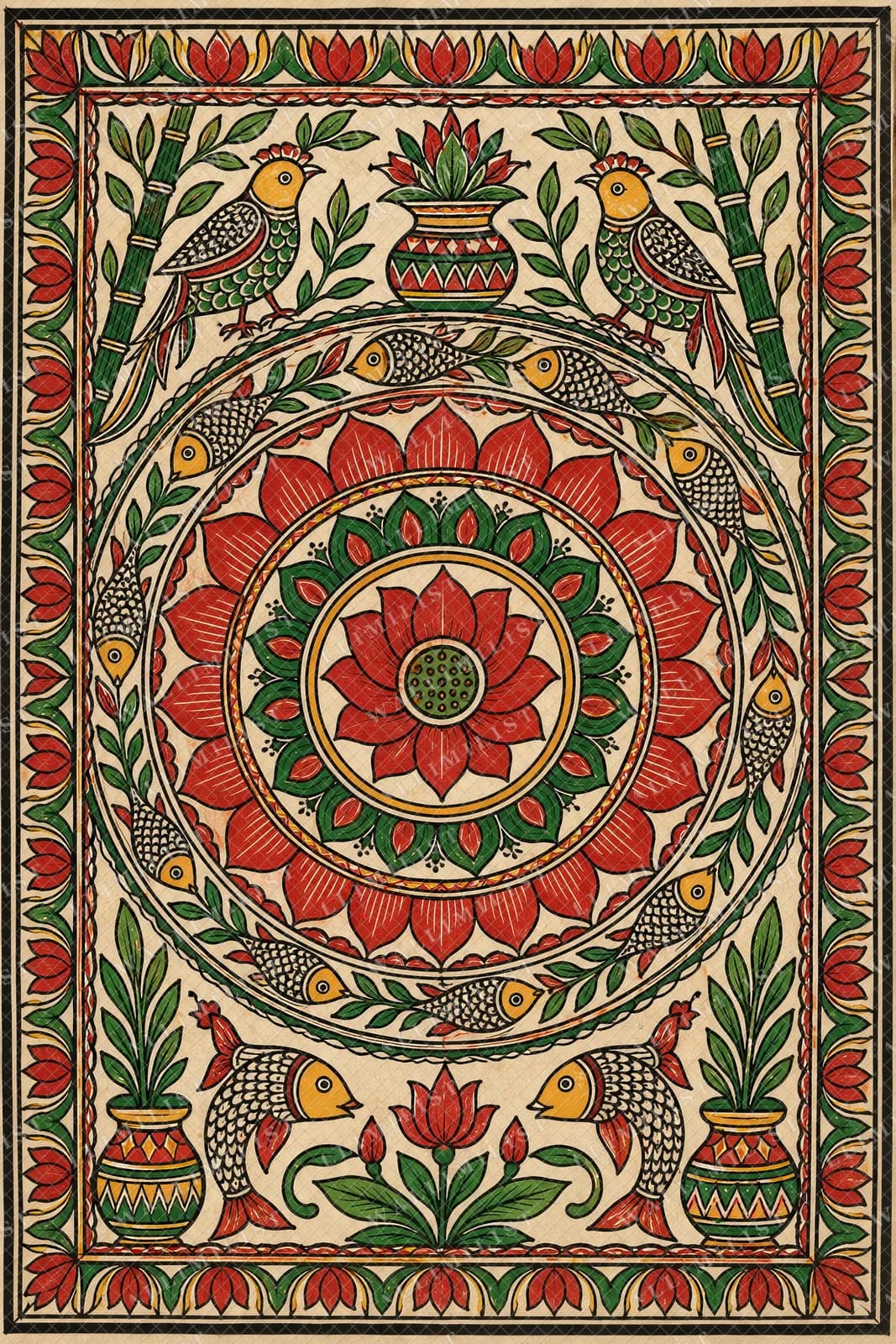
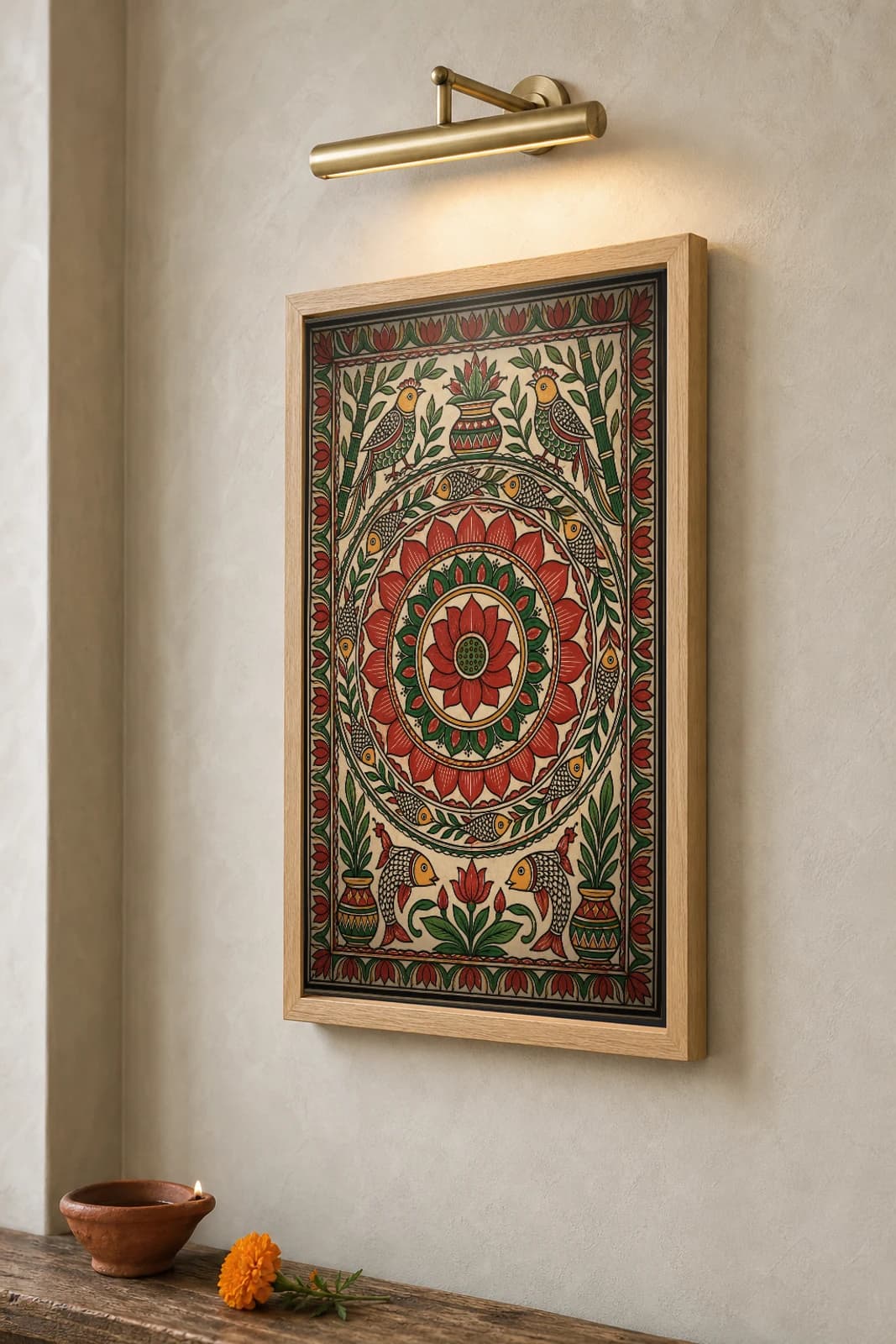
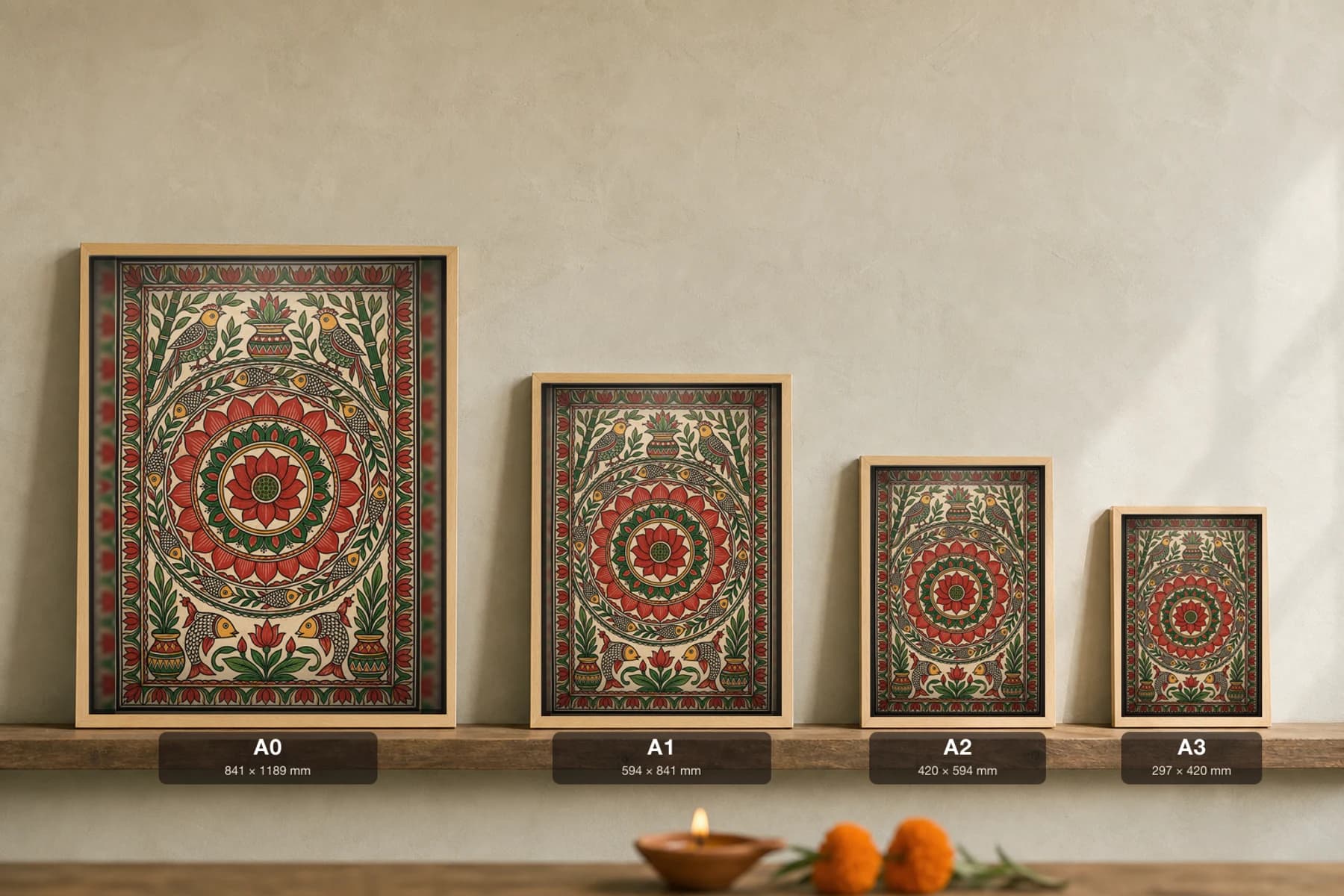
DESIGN BRIEF: Kohbar panels live or die on whether the central lotus reads as feminine bindu energy rather than a generic floral sticker. Radial-mandala symmetry solves that — concentric petal rings expand from a green seed-pod nucleus the way tip lagavaichi marks the midpoint of a Kohbar Ghar wall before painting begins. I stacked the rings tight — red, green, vermillion — because Kayastha wedding chambers treat the lotus as kamaladah personification: the bride's flourishing body, not a decorative afterthought. Eight fish orbit the mandala clockwise because Kohbar grammar demands fertility symbols encircling the feminine centre; they are not random pond life but the prosperity ring that traditionally frames the Purain lotus stem on vermillion wrapping paper. Upper kalash anchors divine presence the way a sacred lamp sits before the painted wall; flanking parrots borrow love-bird vocabulary without importing a full narrative scene. Bamboo stalks at the outer upper edge nod to masculine lineage grammar — present but subordinate, framing rather than competing with the lotus crown. Lower bloom and paired guardian fish ground the mandala the way base lotus and threshold fish anchor full-wall Kohbar compositions. Cross-hatch on fish and parrot bodies borrows Kachni line discipline inside Kohbar flat-fill rules — texture without breaking the wedding-red colour story.
 WALLIMILIST