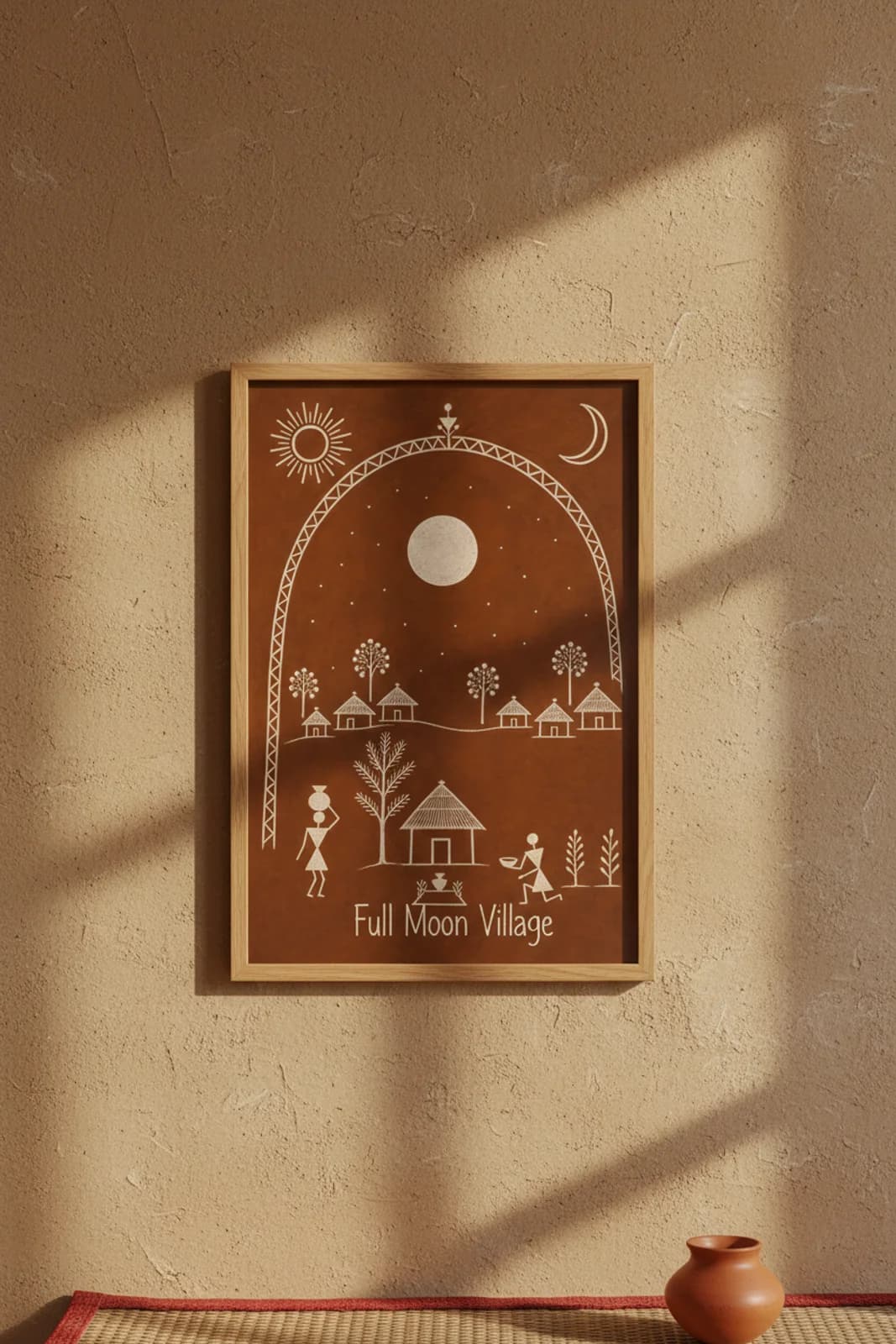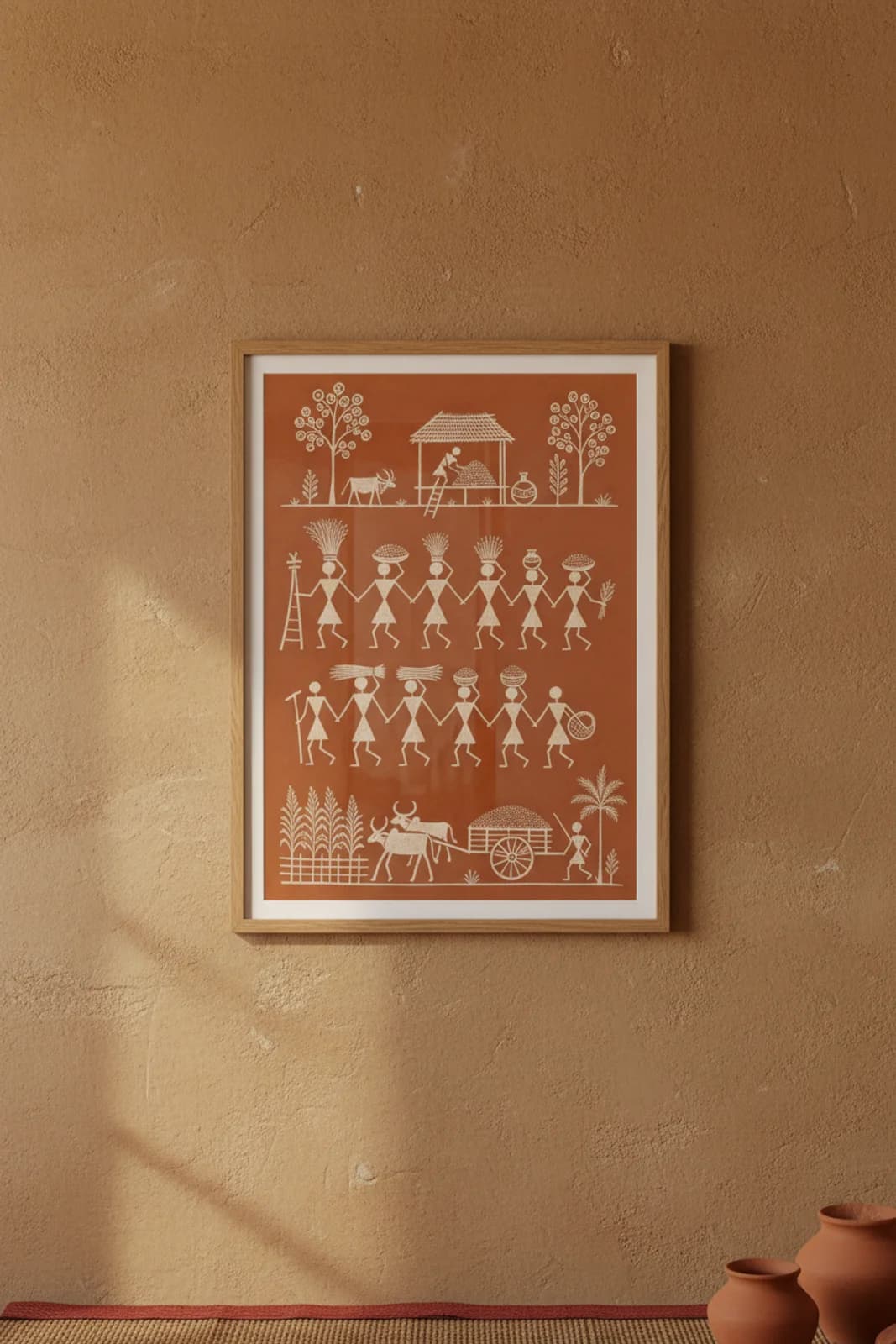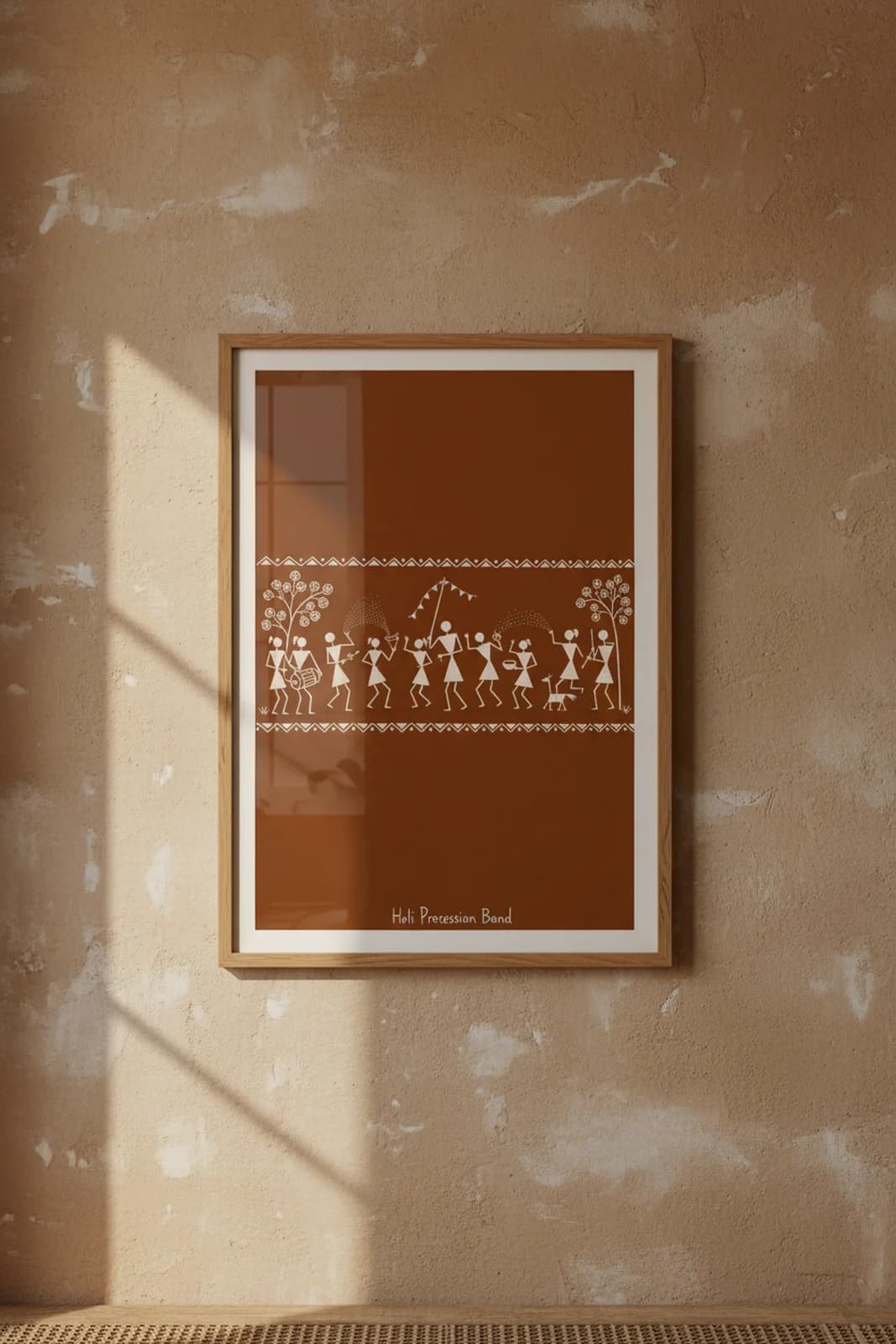
Terracotta Ochre — 25 museum-grade prints in this palette. Warli painting is a tribal mural tradition of the Warli (Varli) Adivasi community in the North Sahyadri Range of Maharashtra and adjoining Gujarat — villages in Palghar, Jawhar, Dahanu, Talasari, and Mokhada where rice-paste white pigment on red ochre cow-dung or geru-coated walls recorded harvests, hunts, weddings, and daily labour. Women historically painted lagnacha chauk and dev chauk ritual squares for nuptial and festival occasions; tarpa circle dance appears in harvest-eve scenes with musicians at the centre — motifs this fusion piece deliberately omits because the subject is urban remote work, not ritual dance. Harvest gathering scenes anchor Warli farming narratives — women carriers with head-loads, granary storage, bullock transport document monsoon-to-storage cycle central to Sahyadri Adivasi life. Linked-hand procession lines express communal labour distinct from tarpa circle dance at harvest-eve celebration. Warli painting belongs to the Warli Adivasi communities of the North Sahyadri range in Maharashtra — Talasari, Dahanu, Jawhar, Palghar, and Mokhada among the heartland districts where women traditionally painted rice-paste and gum pigment onto red ochre cow-dung or mud walls during weddings, harvests, and seasonal rituals. The geometric vocabulary — triangle torsos, circle heads, square chauk enclosures when ritual demands, horizontal bands for farming — encodes daily life rather than illusionistic depth.