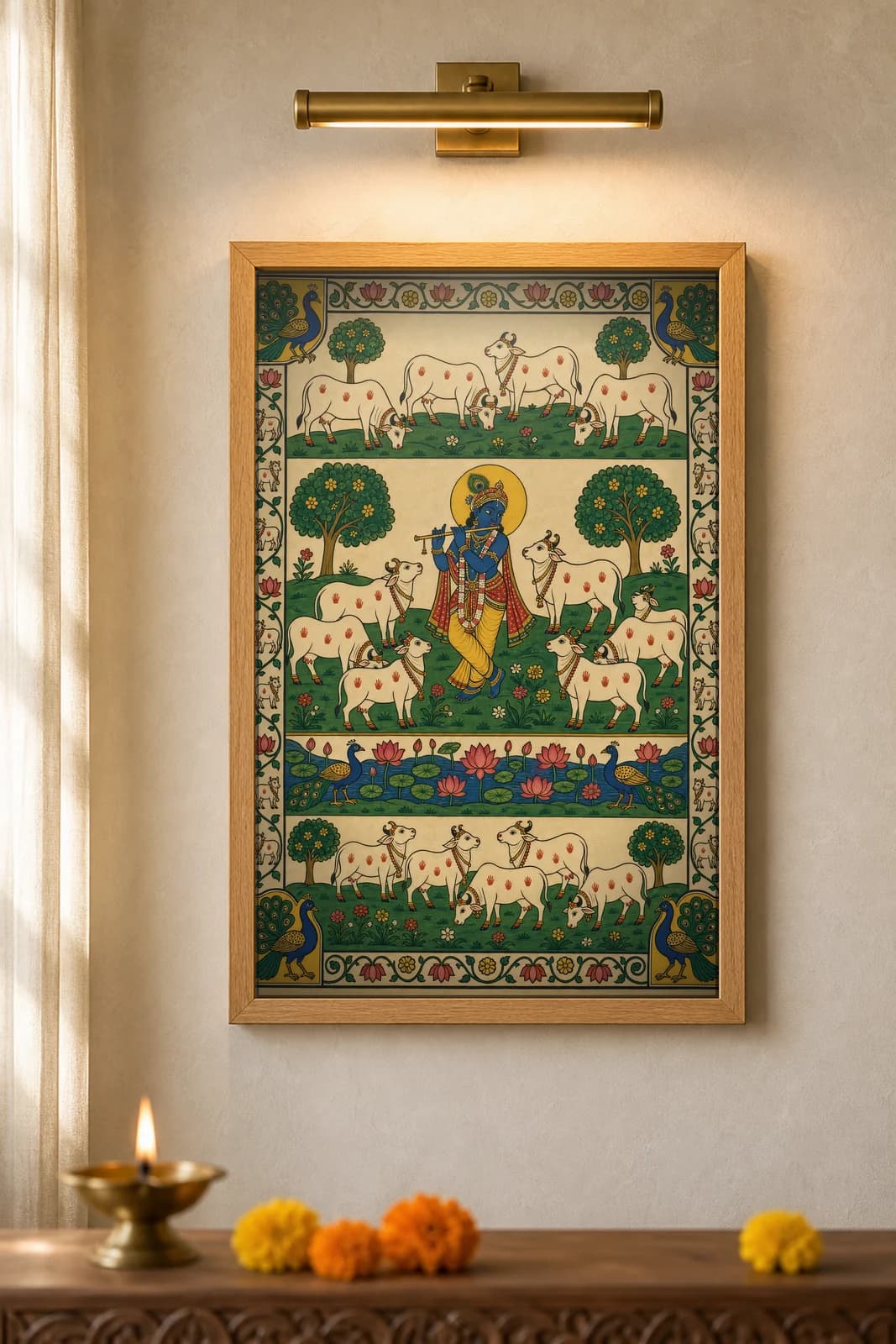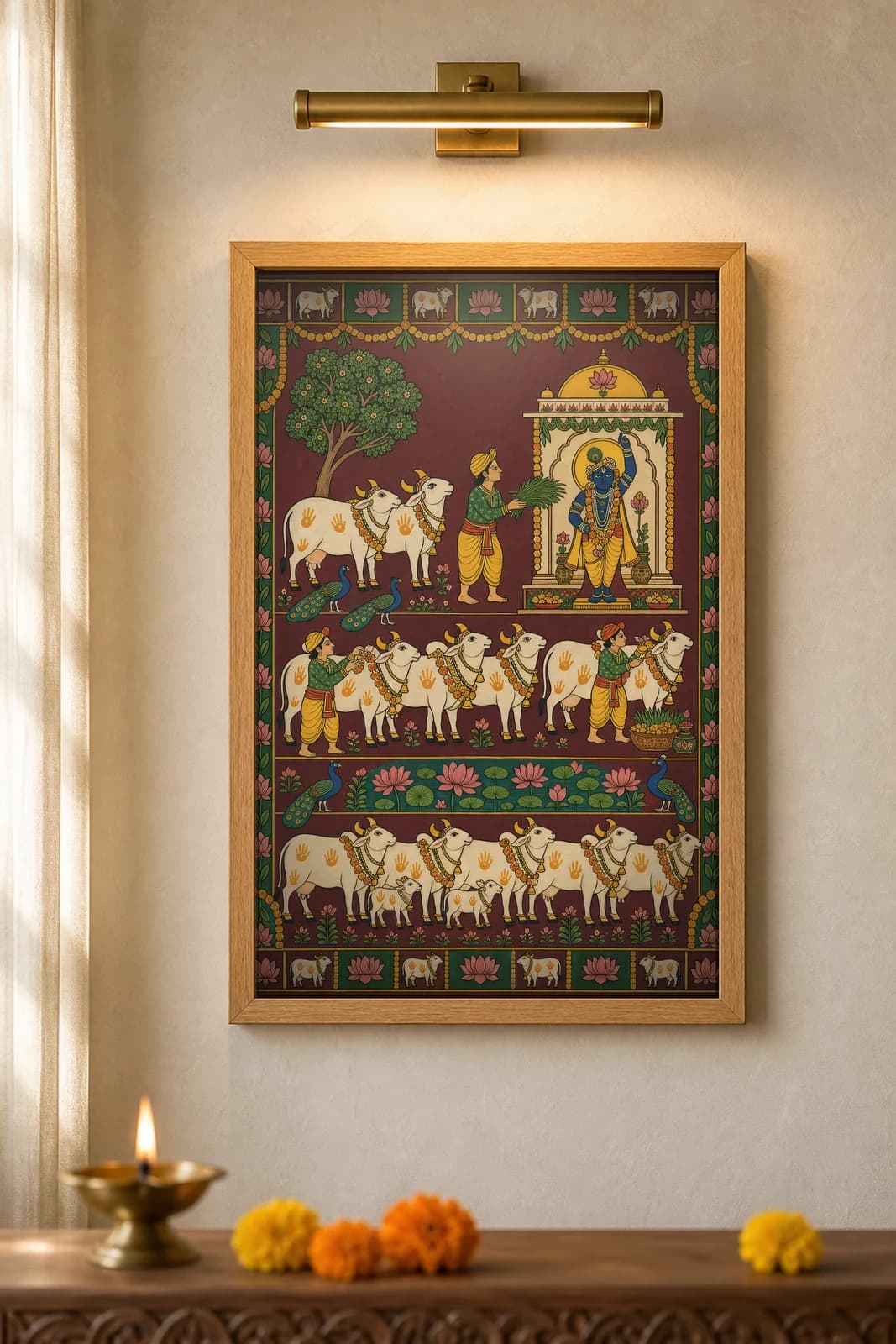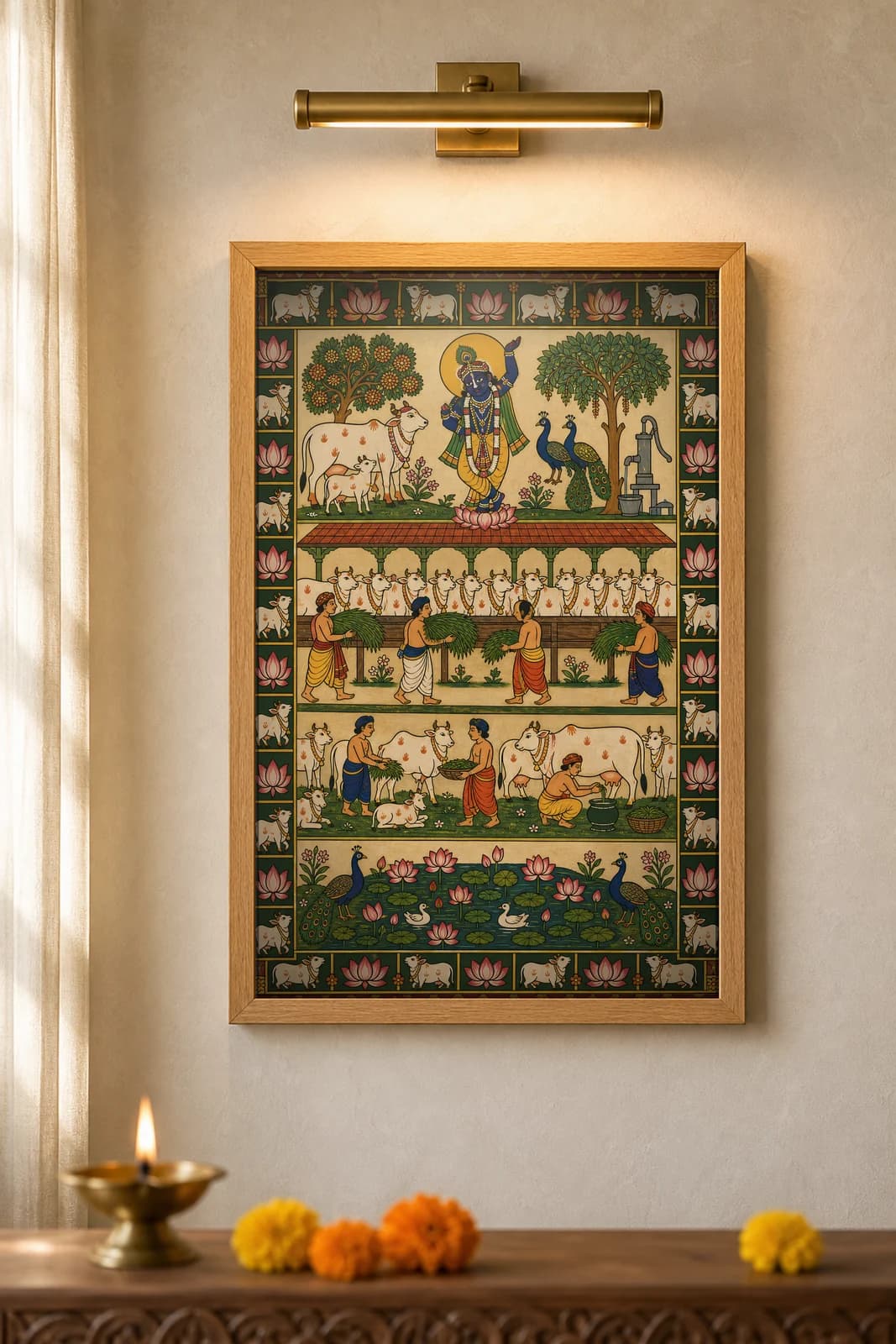
Cow Cream — 6 museum-grade prints in this palette. Tulsi (holy basil) is revered in Vaishnav households as a form of the goddess and a daily seva, watered and circled each morning — a homely devotion close to the Pushtimarg (Vallabh) spirit of seva centred on Shrinathji, the child-Krishna of the Nathdwara haveli-temple in Rajasthan. A pichhwai (literally 'that which hangs at the back') is the painted cloth hung behind the deity to set the scene; here its grammar frames a household ritual. Cows are the heart of Pushtimarg (Vallabh) devotion — go-seva, the care of cattle, is inseparable from worship of Shrinathji, the cowherd child-Krishna of the Nathdwara haveli-temple in Rajasthan. The dhenu-pankti, the horizontal row of cows, is one of the most characteristic pichwai motifs. Krishna grew up a cowherd, and gau charan — taking the cows to pasture — is at the root of his name Gopala and of Pushtimarg (Vallabh) go-seva, the care of cattle that is inseparable from worship of Shrinathji, the cowherd child-Krishna of the Nathdwara haveli-temple in Rajasthan. As Venugopala he plays the flute that gathers the herd.