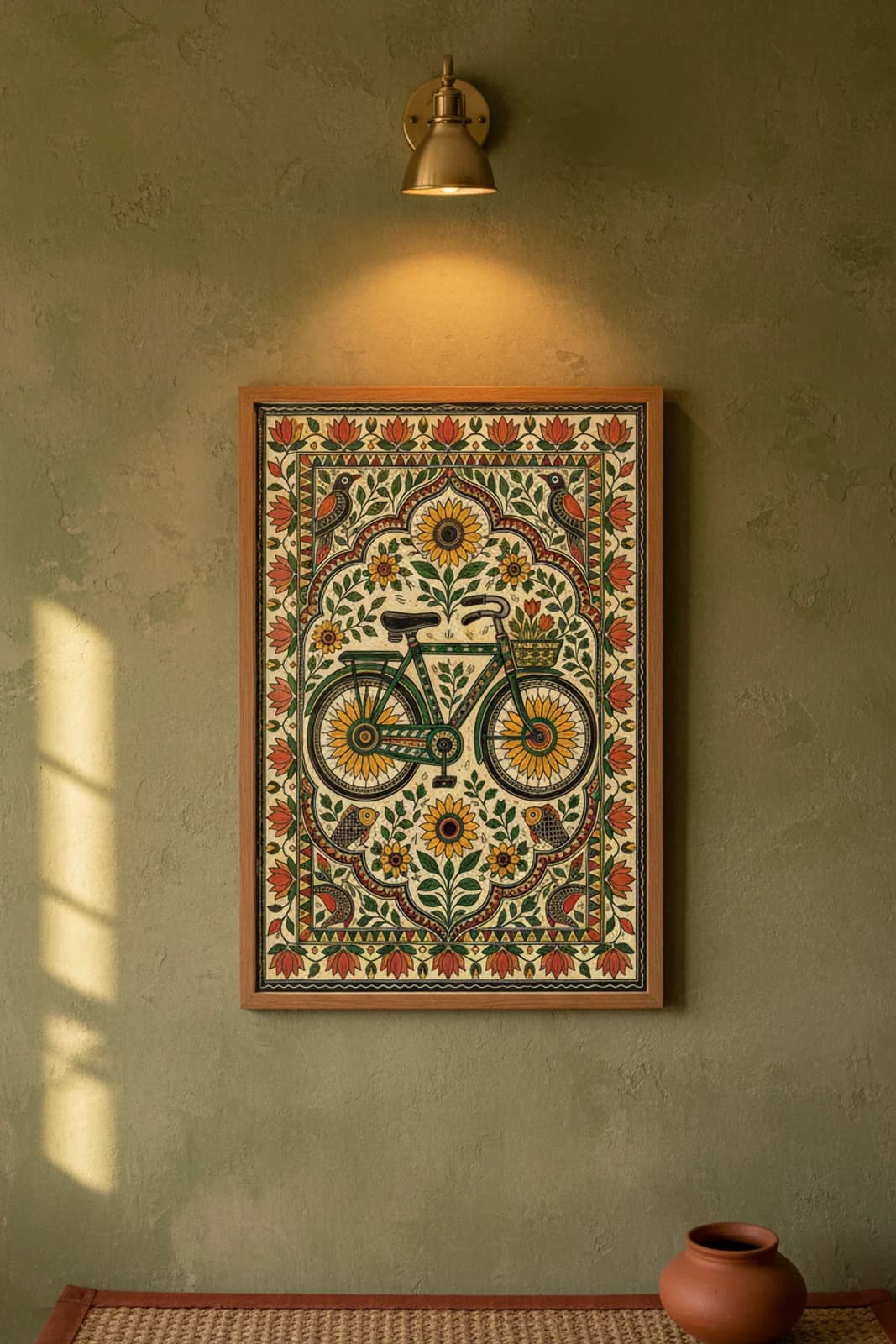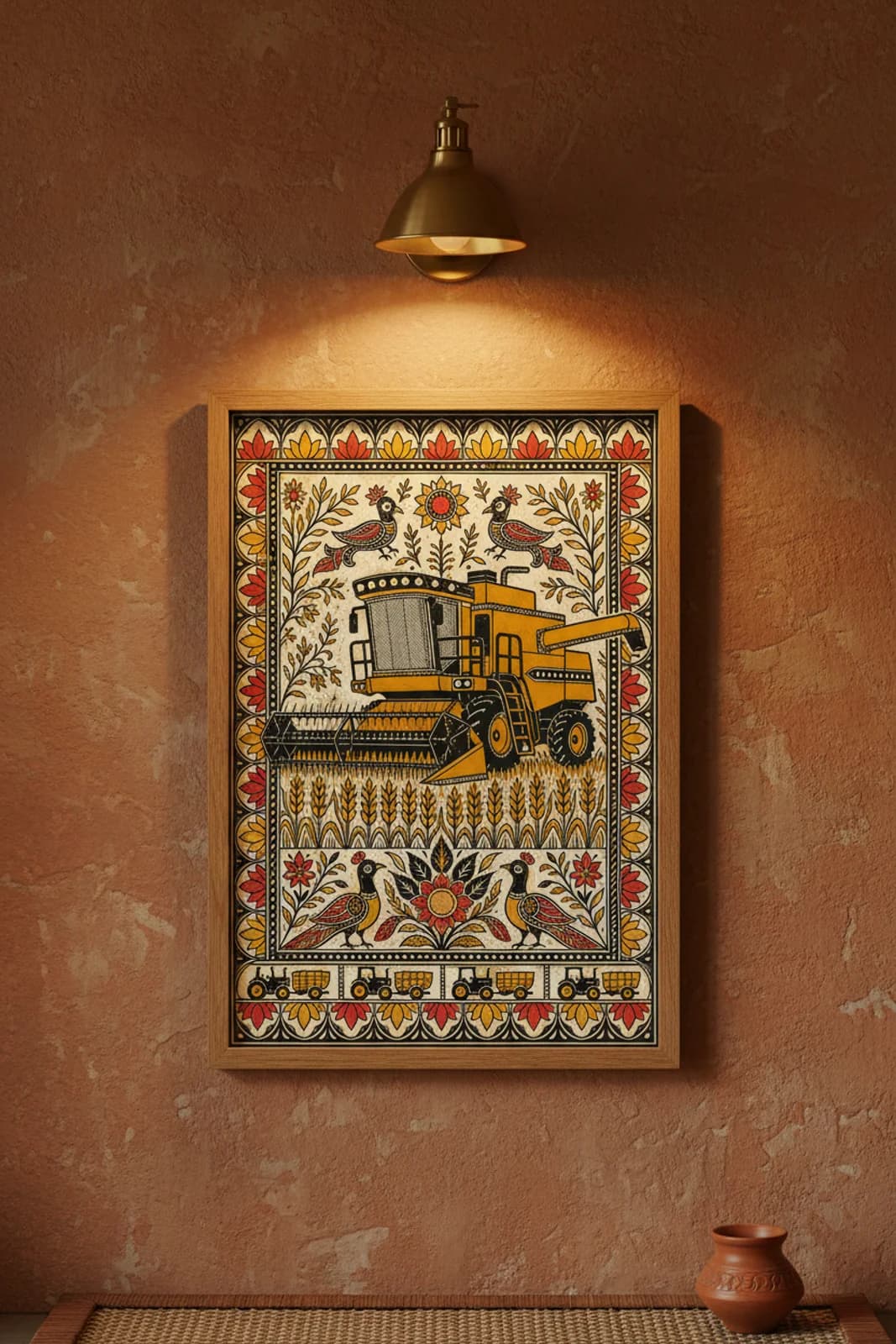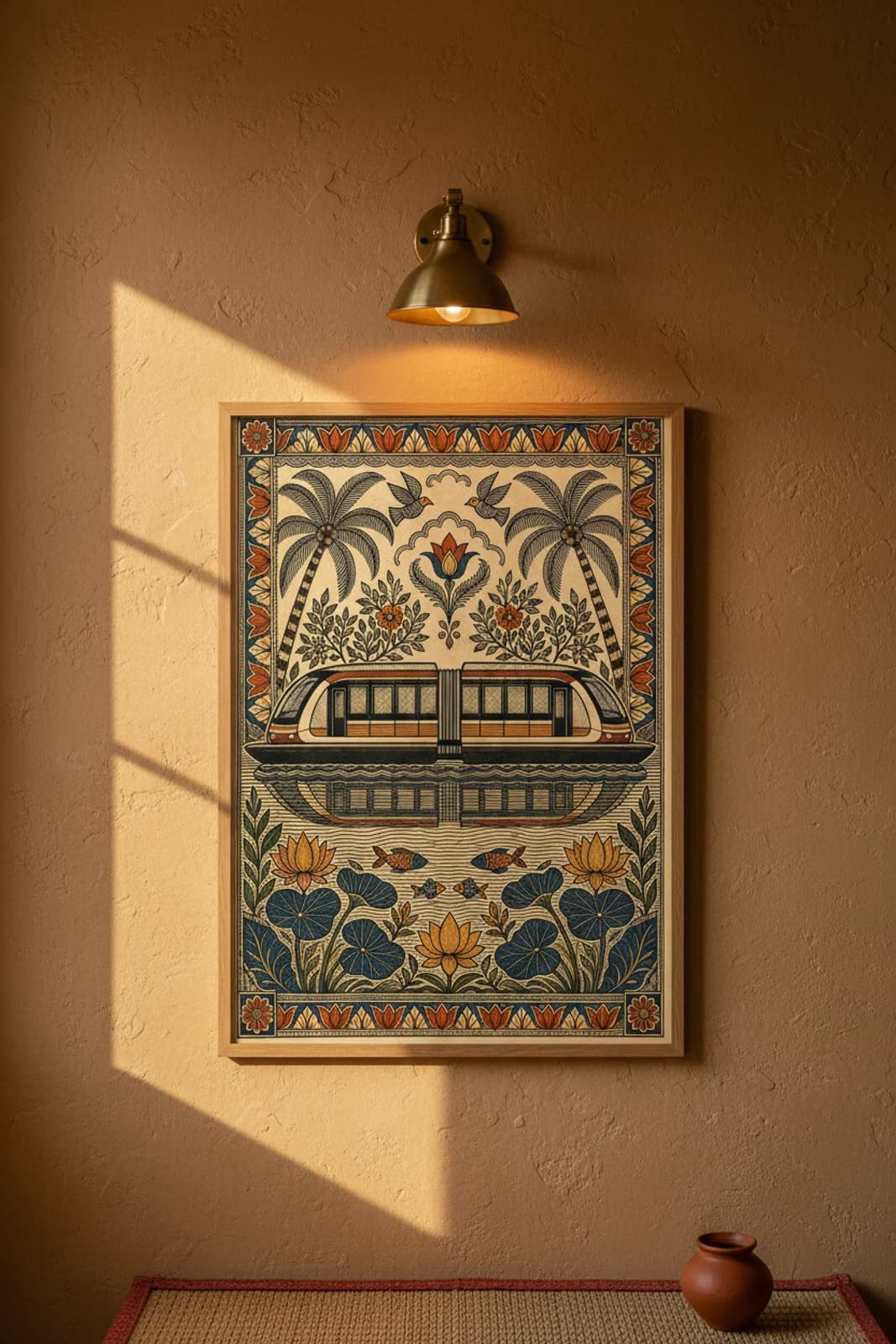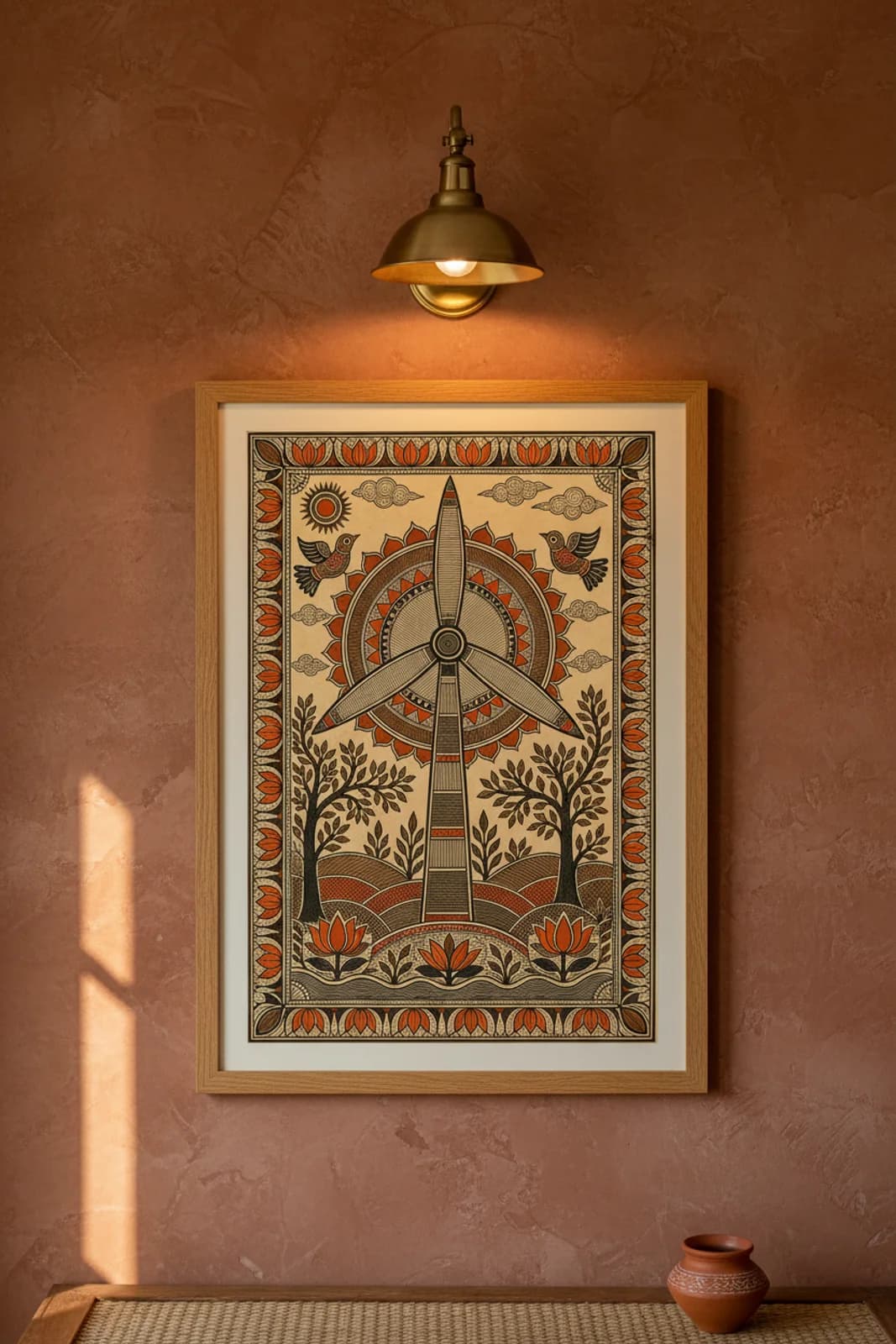
Contemporary Mithila Fusion — 4 museum-grade prints on the theme. Kachni — meaning line — is the Kayastha women's tradition within Madhubani painting: motifs built from dense parallel hatching, cross-hatch, and stippling inside double black outlines, historically associated with fine narrative and nature detail rather than Bharni flat deity colour floods. Fish (matsya) and lotus (kamal) are core Mithila symbols of fertility, abundance, and auspicious water — paired birds and cloud motifs appear in classical border vocabulary as aerial messengers above aquatic registers. Bharni — literally "to fill" — is the Mithila colour-flood style historically associated with Brahmin women painters in villages such as Jitwarpur, Ranti, and Rasidpur; bold black outlines enclose vermillion, turmeric, and ochre fills on wedding walls and, after the 1960s Bihar drought commercialisation, on handmade paper. Harvest scenes belong to the oldest Mithila subject matter: women gathering grain, chaurchan and kojagara festival panels, and Anaj ka Aashirwad motifs that celebrate agrarian labour and seasonal reward — Ambika Devi and other contemporary masters still paint harvest women in Bharni fill for farmhouse and cultural interiors. Kachni — from the Hindi kachna, to scratch or hatch — is the Kayastha women's Madhubani tradition: elaborate compositions built from parallel lines, cross-hatching, and stipple dots rather than the saturated flat fills of Brahmana Bharni. Historically practiced on ritual walls and later on handmade paper, Kachni panels often depict daily life, wetlands, and agricultural landscapes with minimal pigment — commonly lampblack with terracotta or indigo accent on cream or cow-dung-washed ground.