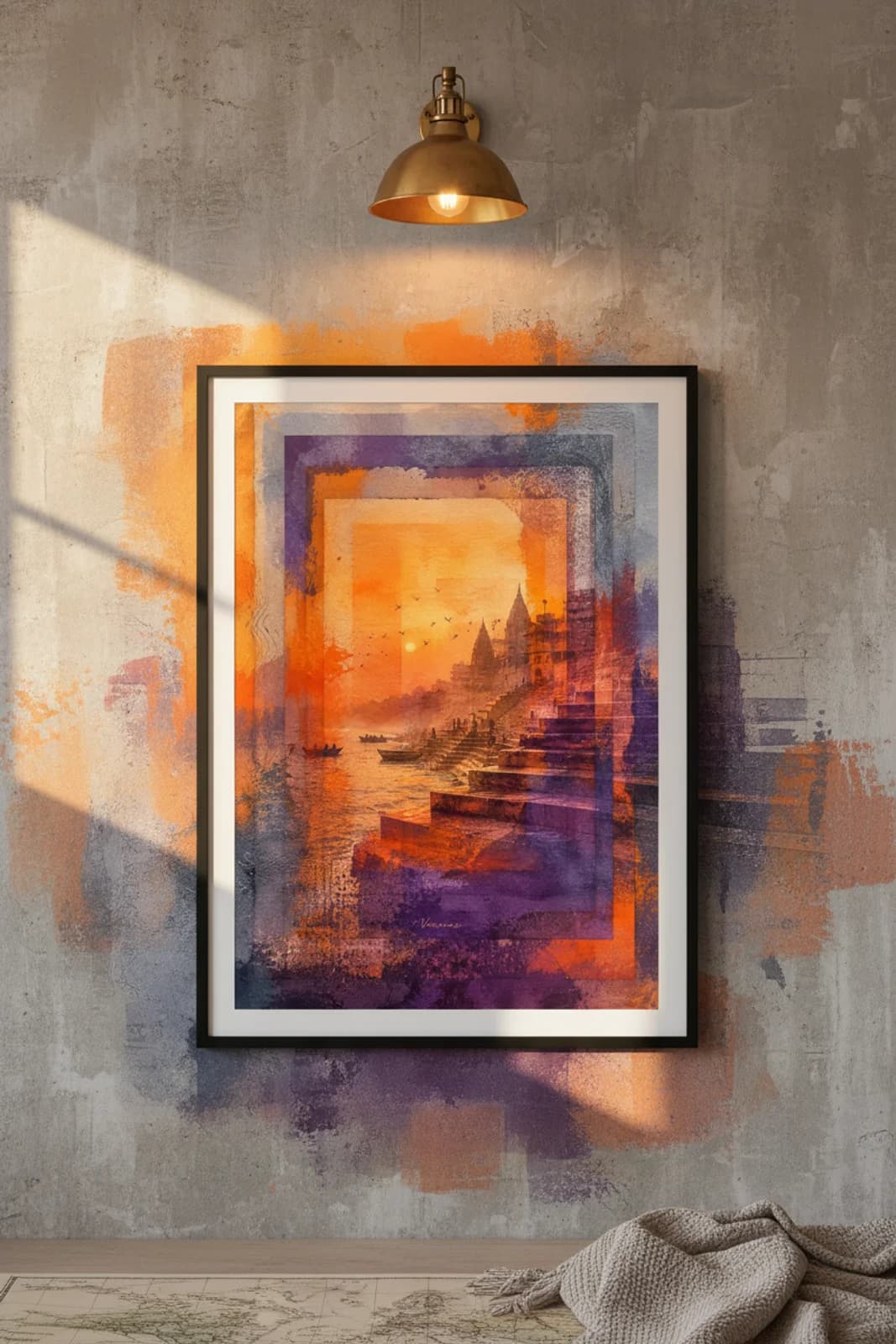
Yoga Studio — 40 museum-grade prints sized and toned for the room. The gopuram — from Sanskrit gopura, gateway tower — is the monumental pyramidal entrance of Dravidian Hindu temple architecture across Tamil Nadu, Karnataka, Andhra Pradesh, and Kerala, famously exemplified by the polychrome tiers of Madurai Meenakshi Amman Temple and Chennai Kapaleeshwarar Temple. Unlike Nagara shikhara spires of North India, gopurams widen visually through stacked horizontal tiers crowded with stucco deities, mythological figures, and ornamental yali balustrades. Aripana — also spelled Aripan — is ritual floor painting from the Mithila region of Bihar and adjoining Nepal, traditionally executed by women known as aripana deniharis before puja, weddings, thread ceremonies, and seasonal vratas. The surface is prepared with cow-dung wash; designs are drawn freehand with fingers dipped in pithar, a wet paste of soaked and ground rice, often finished with dots of sindur vermillion. Kachni — from the Hindi word for line art — is the Madhubani style associated with Kayastha community artists in Darbhanga and Rajnagar, built from fine parallel hatching, stipple dots, and minimal colour accent rather than the saturated flat fills of Brahmin Bharni panels. The sitar itself carries deep North Indian classical association: long-necked lute family instrument central to Hindustani raga performance, with gourd resonators, movable frets, and sympathetic strings — Varanasi remains among India's most storied gharana cities for sitar and tabla pedagogy along the Ganges ghats.

$49