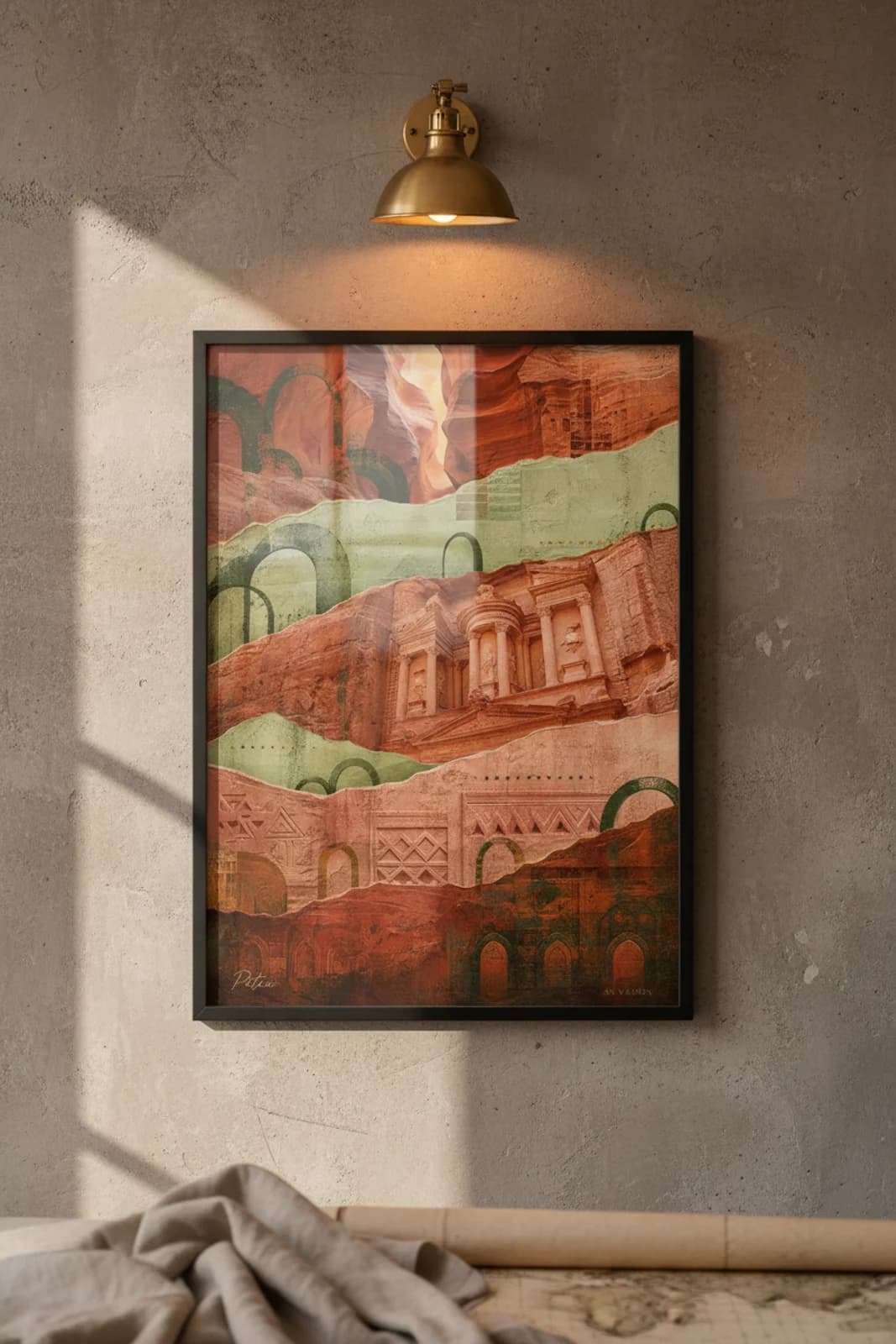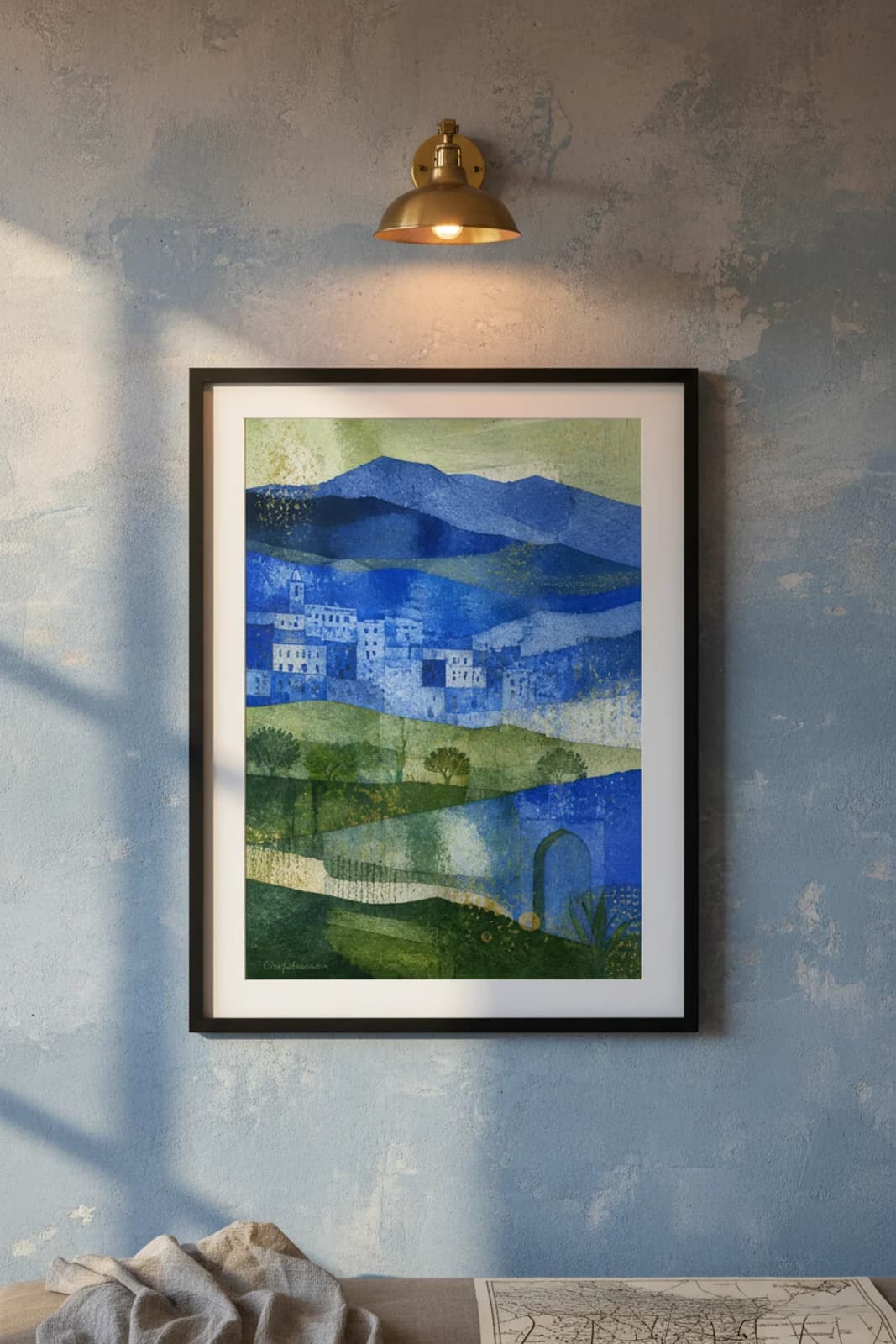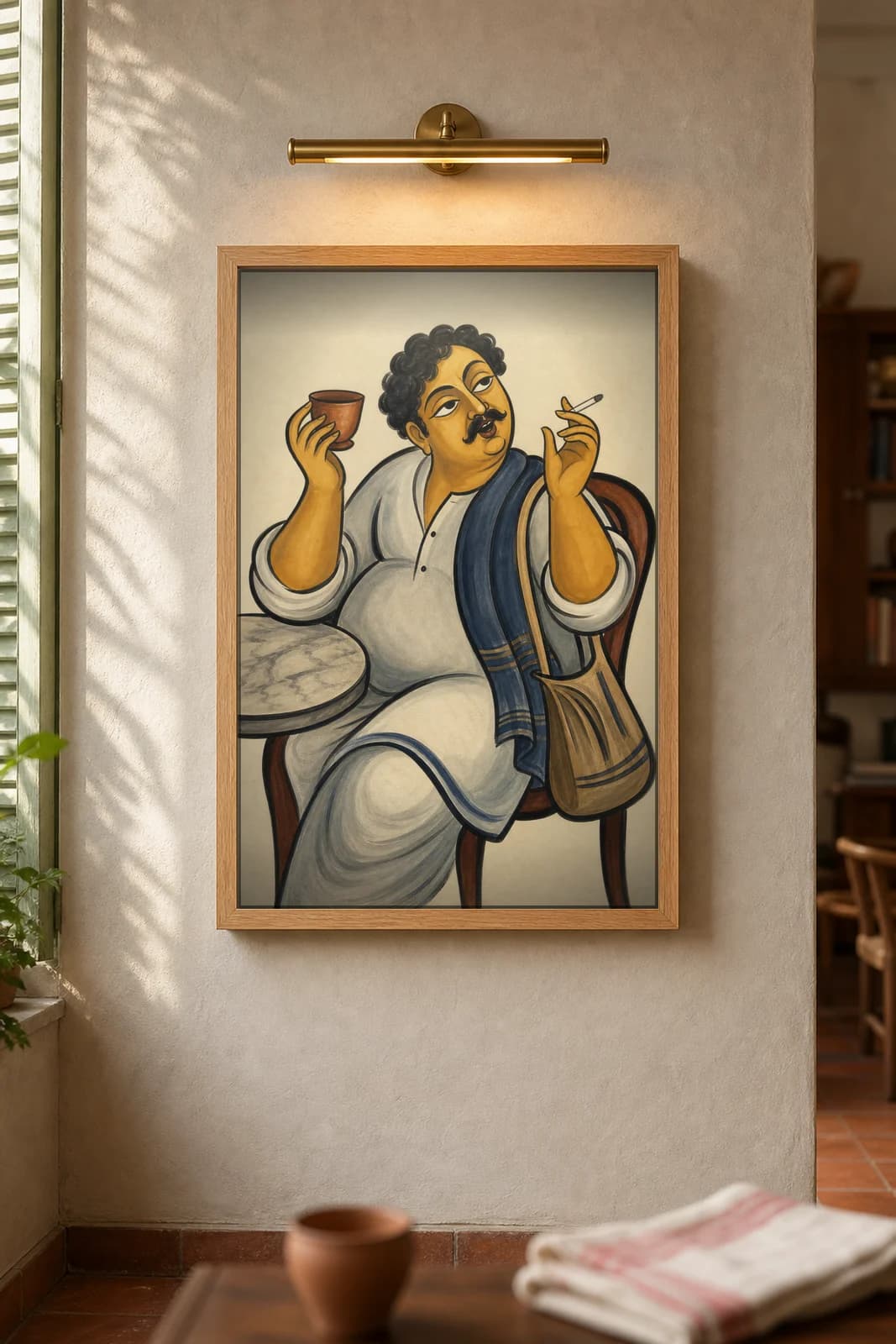
Reading Nook — 20 museum-grade prints sized and toned for the room. Kalighat Pat grew up in 19th-century Kolkata, painted by migrant patua (chitrakar) scroll-painters who settled near the Kalighat Kali temple and sold quick watercolour souvenirs to pilgrims. Working on mill-made paper with a bold single black brush outline and soft 'boneless' shaded strokes on a plain ground, they painted gods and goddesses alongside what is often called India's first modern social satire — sharp, affectionate caricatures of the colonial 'babu' and the hypocrisies of Calcutta life. Petra was the capital of the Nabataean kingdom from roughly the fourth century BCE, a caravan city carved into rose-red sandstone cliffs in southern Jordan. Al-Khazneh — the Treasury — is the most photographed facade, though scholars debate whether it served as a royal tomb or temple. Chefchaouen earned its Blue Pearl nickname from medina walls washed in shades from powder to cobalt — a tradition linked variously to Jewish refugee communities, pest-repellent folklore, and the simple fact that blue photographs beautifully against Rif Mountain light. The old town's Plaza Uta el-Hammam and the Spanish Mosque viewpoint draw millions of travellers annually, but travel-poster artists from Art Deco lithographers to contemporary print sellers return to the same essentials: stacked blue facades, mountain backdrop, and the archways that frame countless doorways.