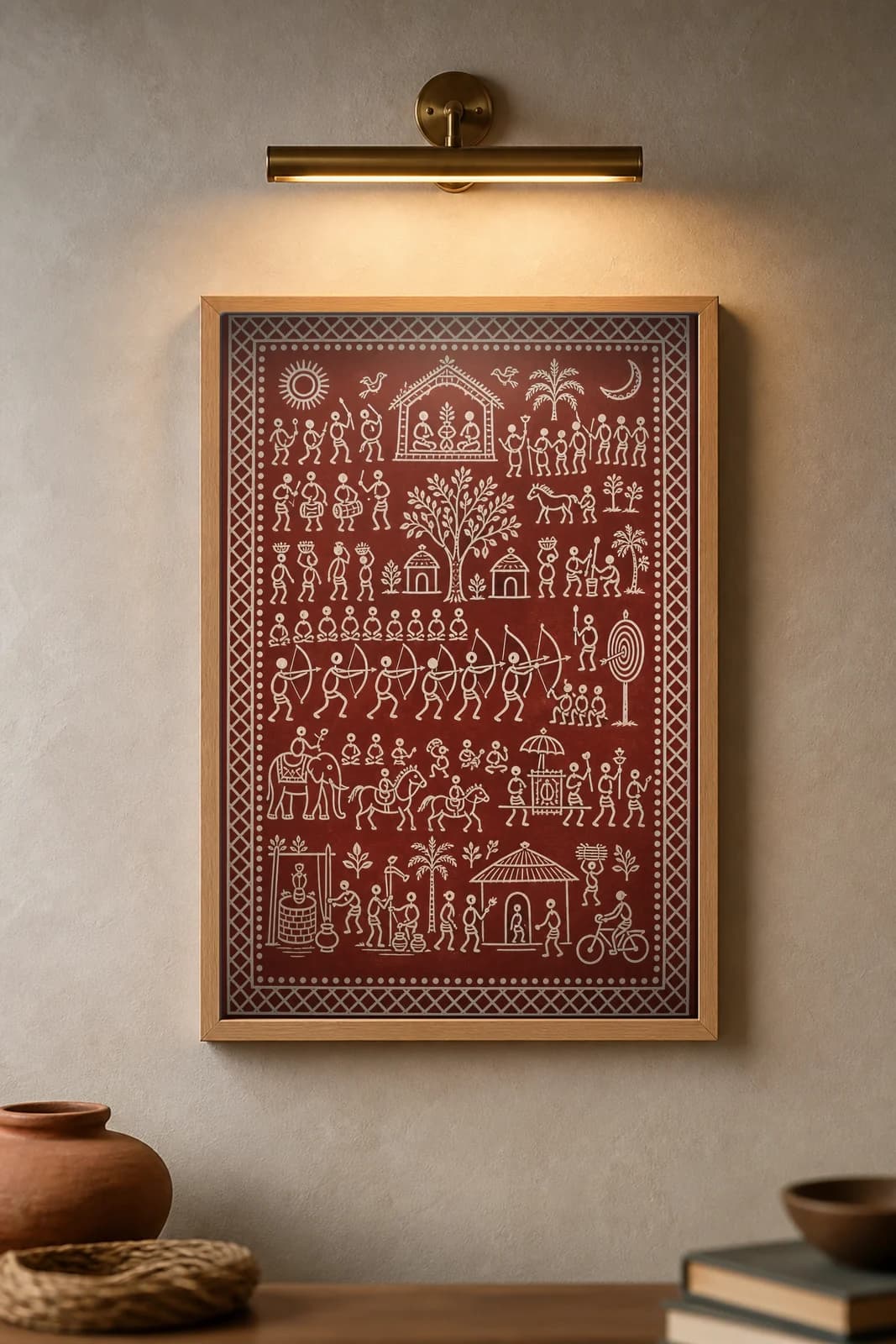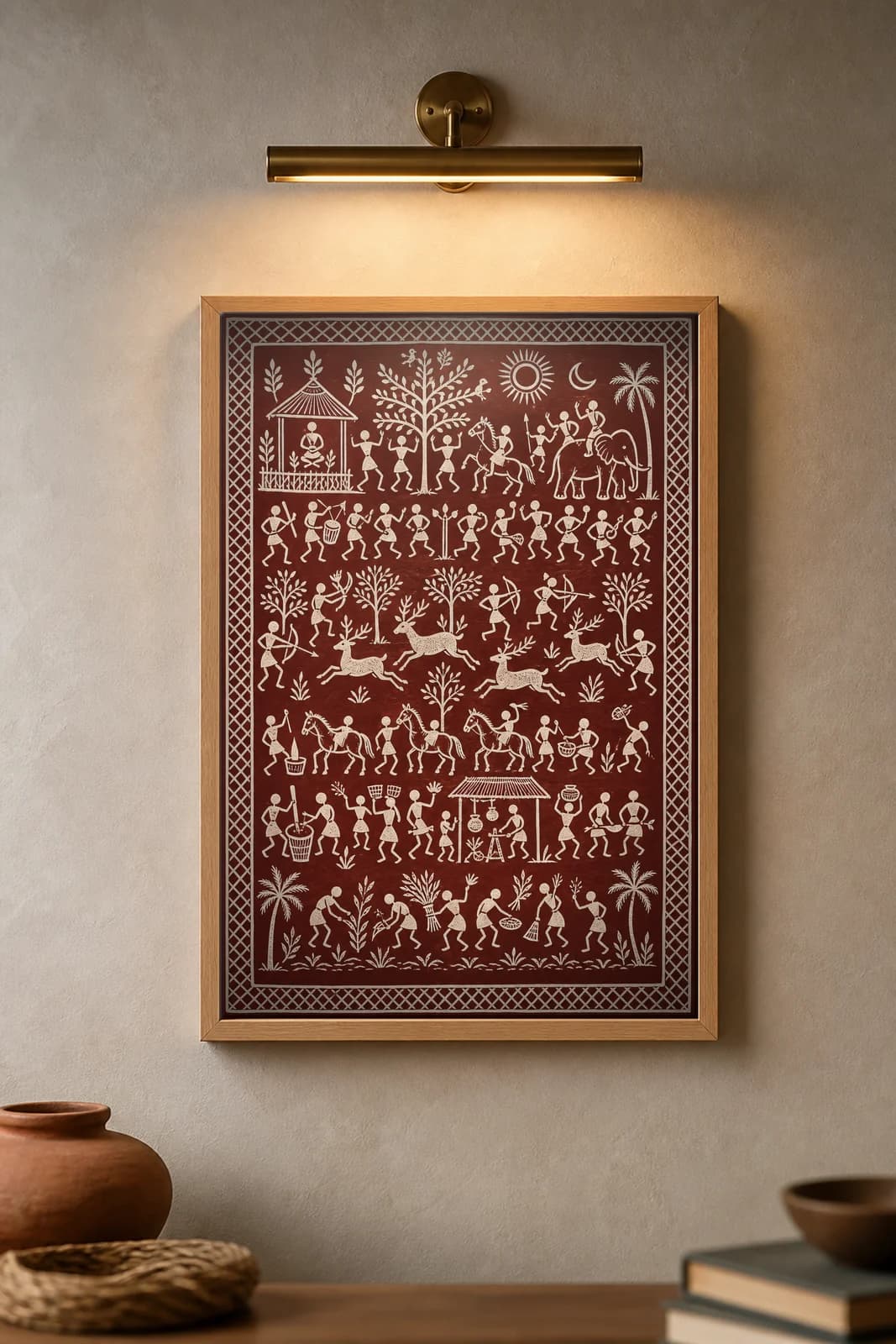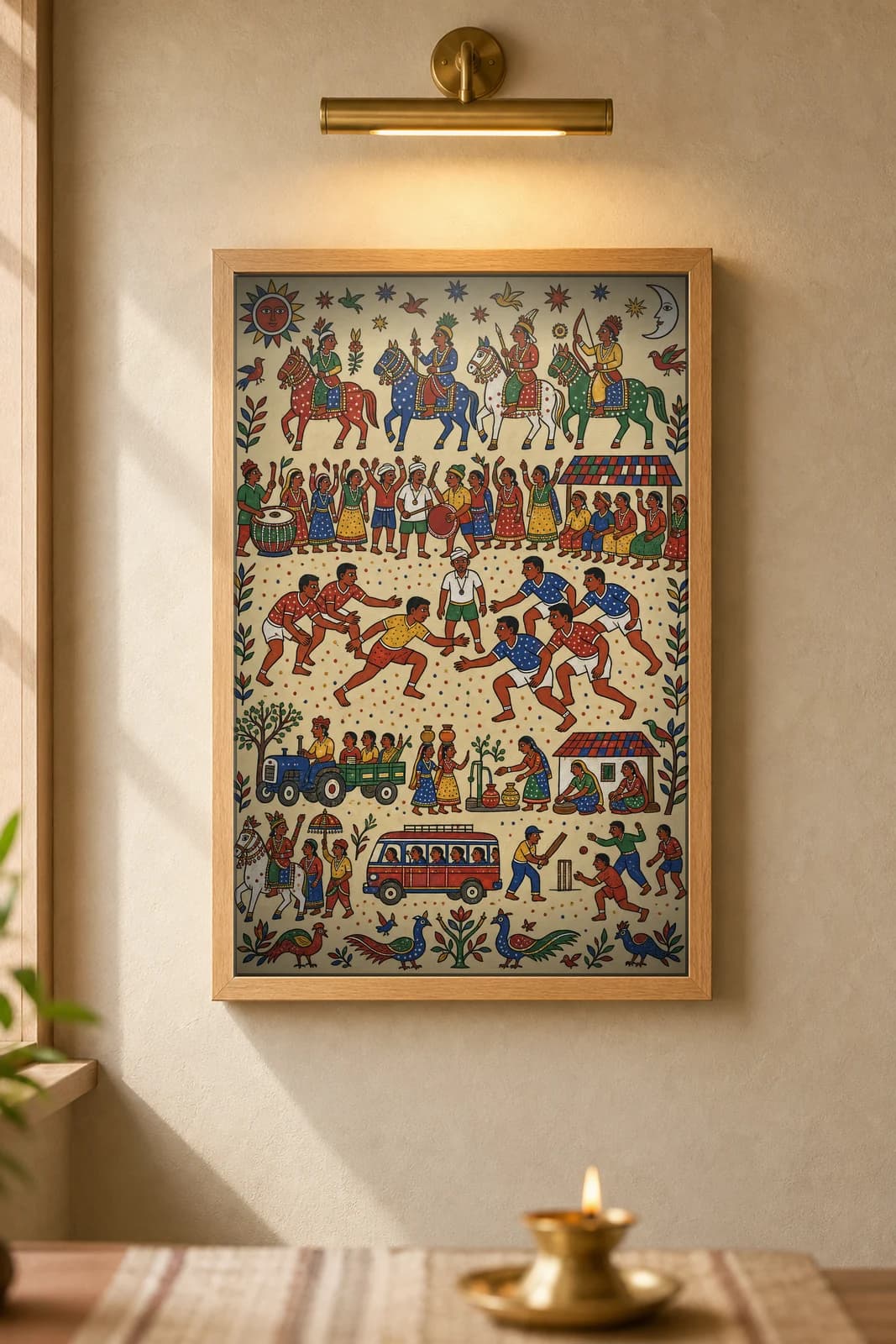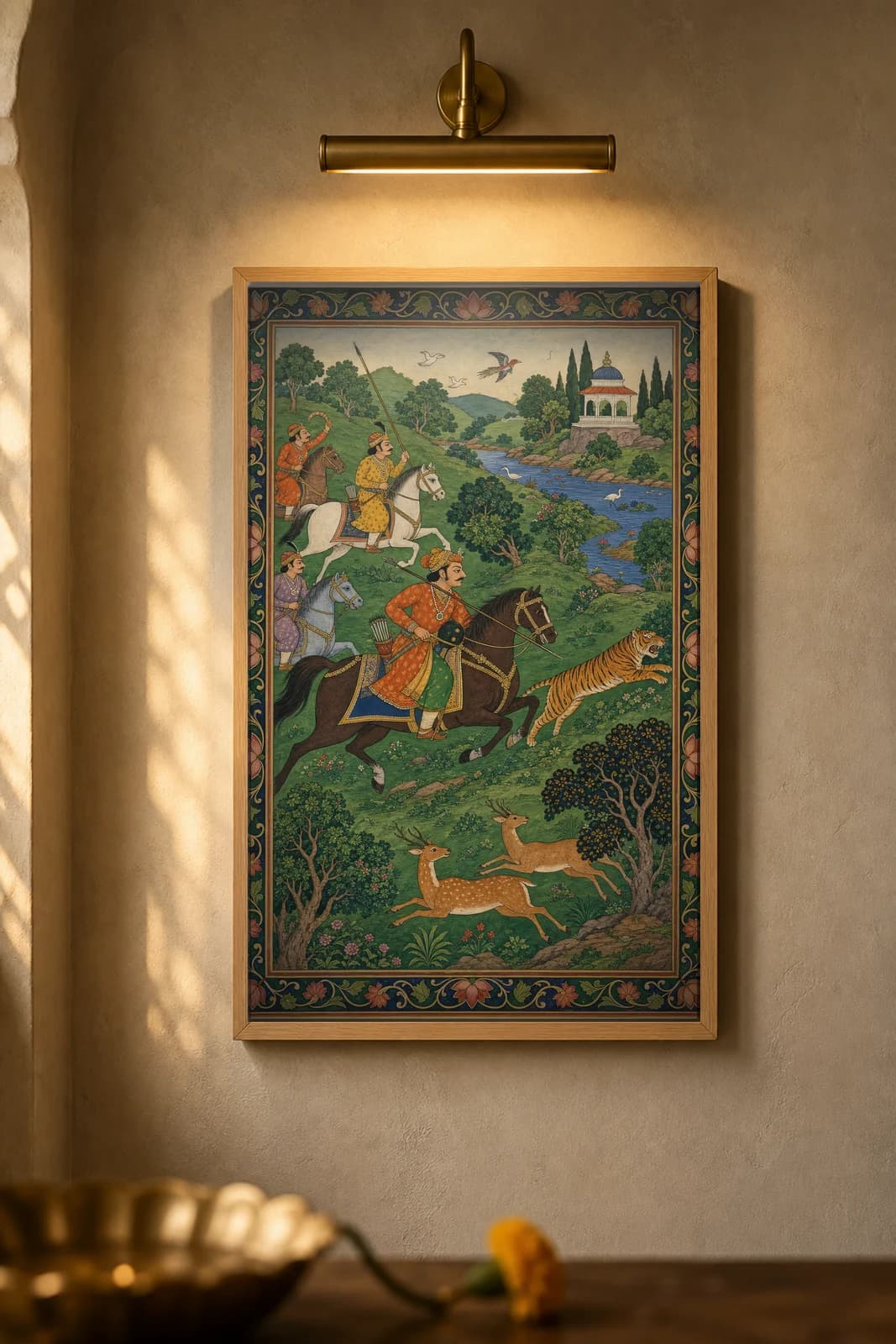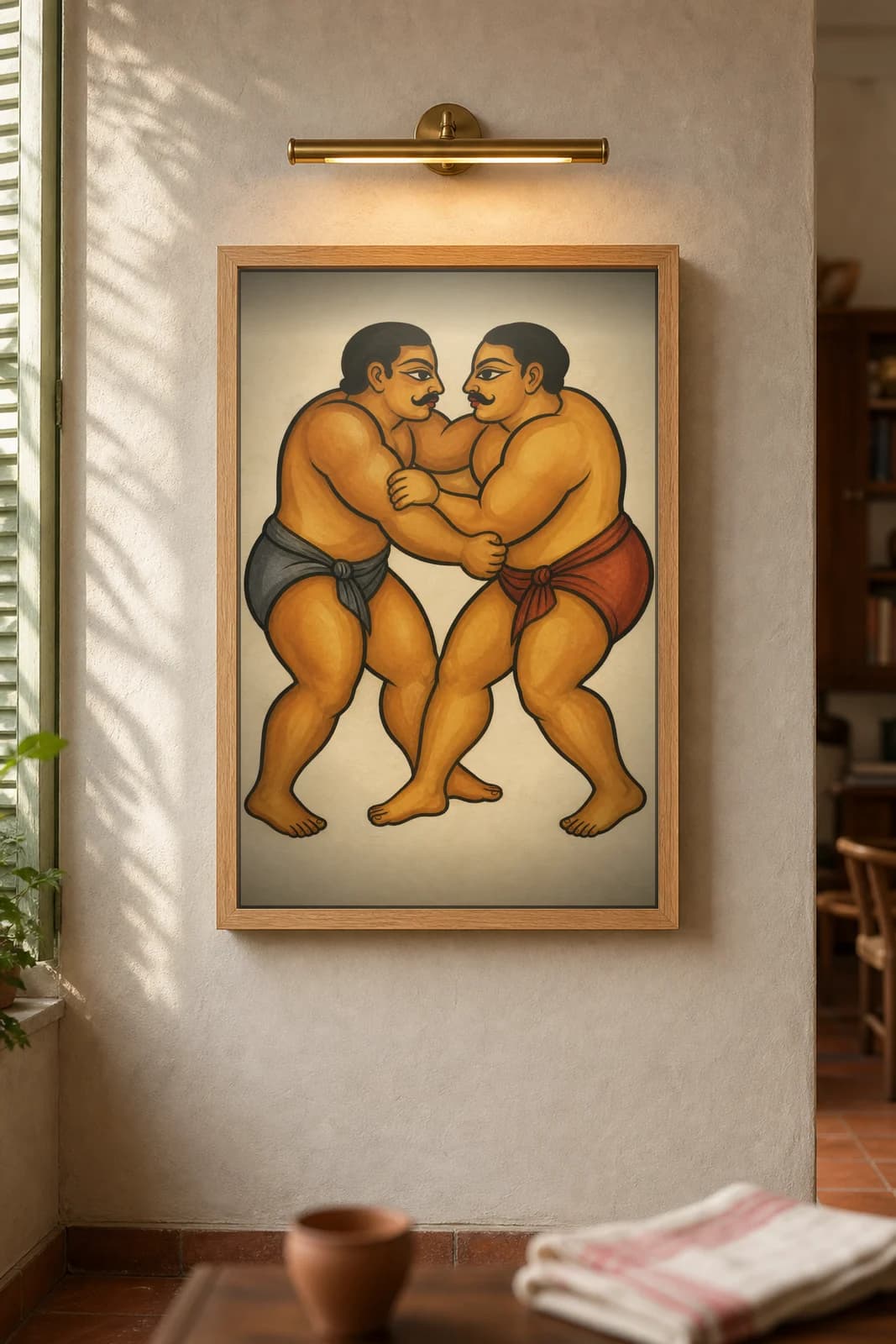
Games Room — 8 museum-grade prints sized and toned for the room. Kalighat Pat grew up in 19th-century Kolkata, painted by patua (chitrakar) scroll-painters who settled near the Kalighat Kali temple and sold quick watercolours to pilgrims. Alongside gods and goddesses they painted the everyday and athletic people of Calcutta — wrestlers, musicians, milkmaids — in the same economical, muscular line, which is why the form is often called India's first modern popular art. Pithora is the ritual wall-painting tradition of the Rathwa, Bhil and Bhilala Adivasi communities of Chhota Udepur in eastern Gujarat and the adjoining belt of Madhya Pradesh and Rajasthan. Dirt-patch cricket, the village school, the tractor and the bus are the everyday life of the same villages today, and contemporary Pithora artists fold such modern scenes into the wall's flat folk line. Marwar, the desert court of Jodhpur, is the Rajput school of intense saturated grounds and vigorous action — royal hunts, horsemen and sporting chases set against sandstone forts. This contemporary fusion borrows that energetic action grammar for gully cricket, the street game played in every Indian lane, and sets it in Jodhpur's famous blue-washed old city beneath the Mehrangarh-like fort.