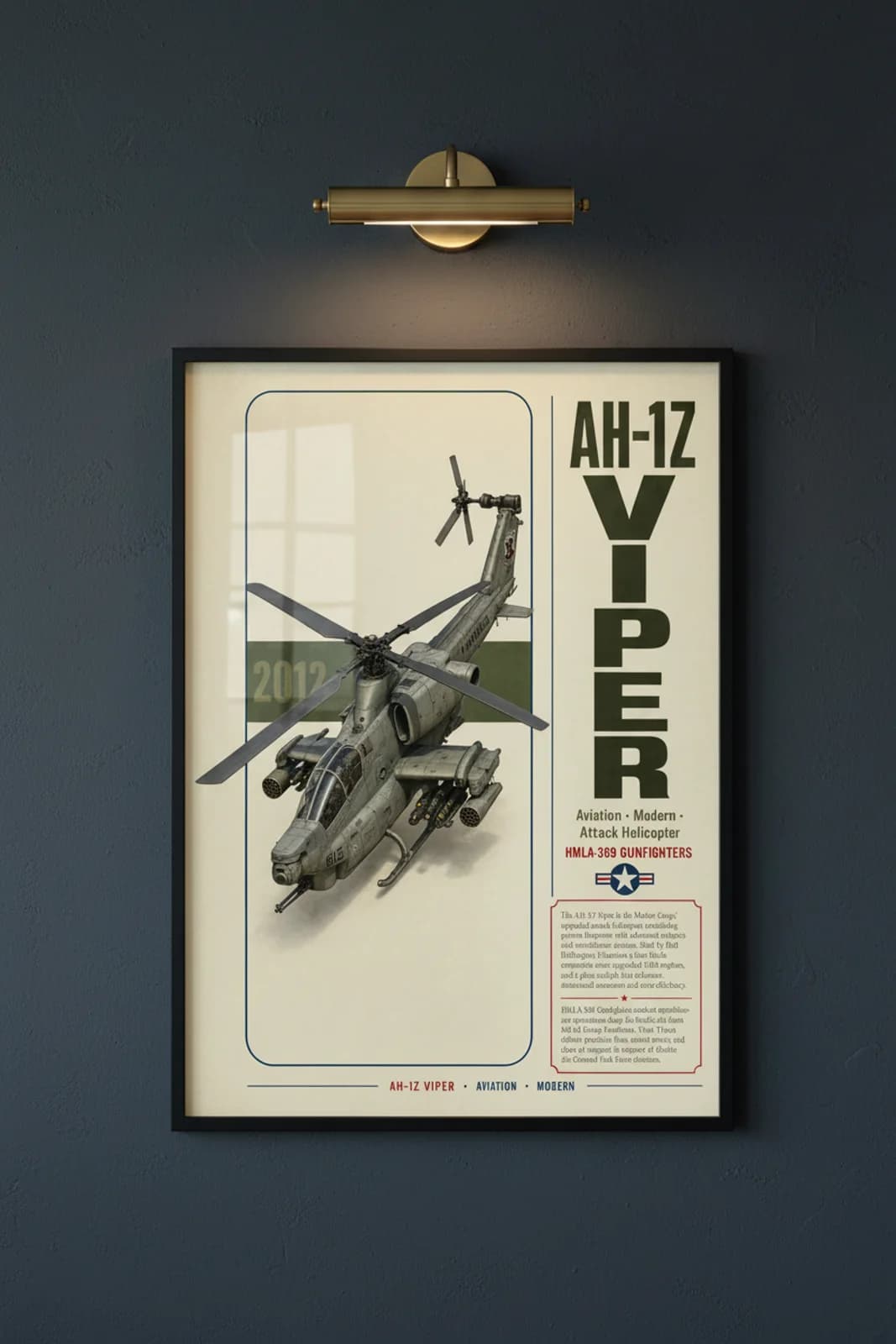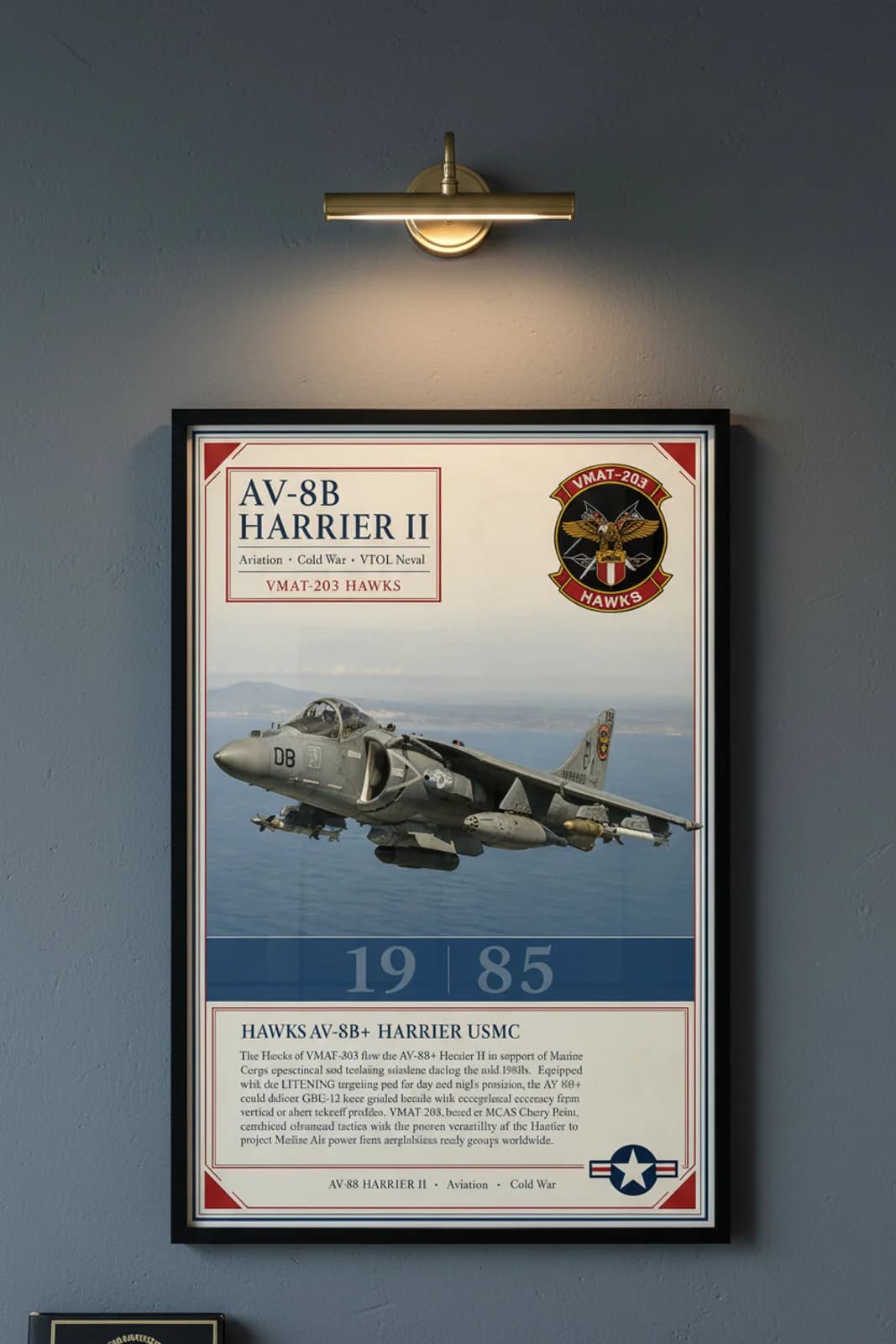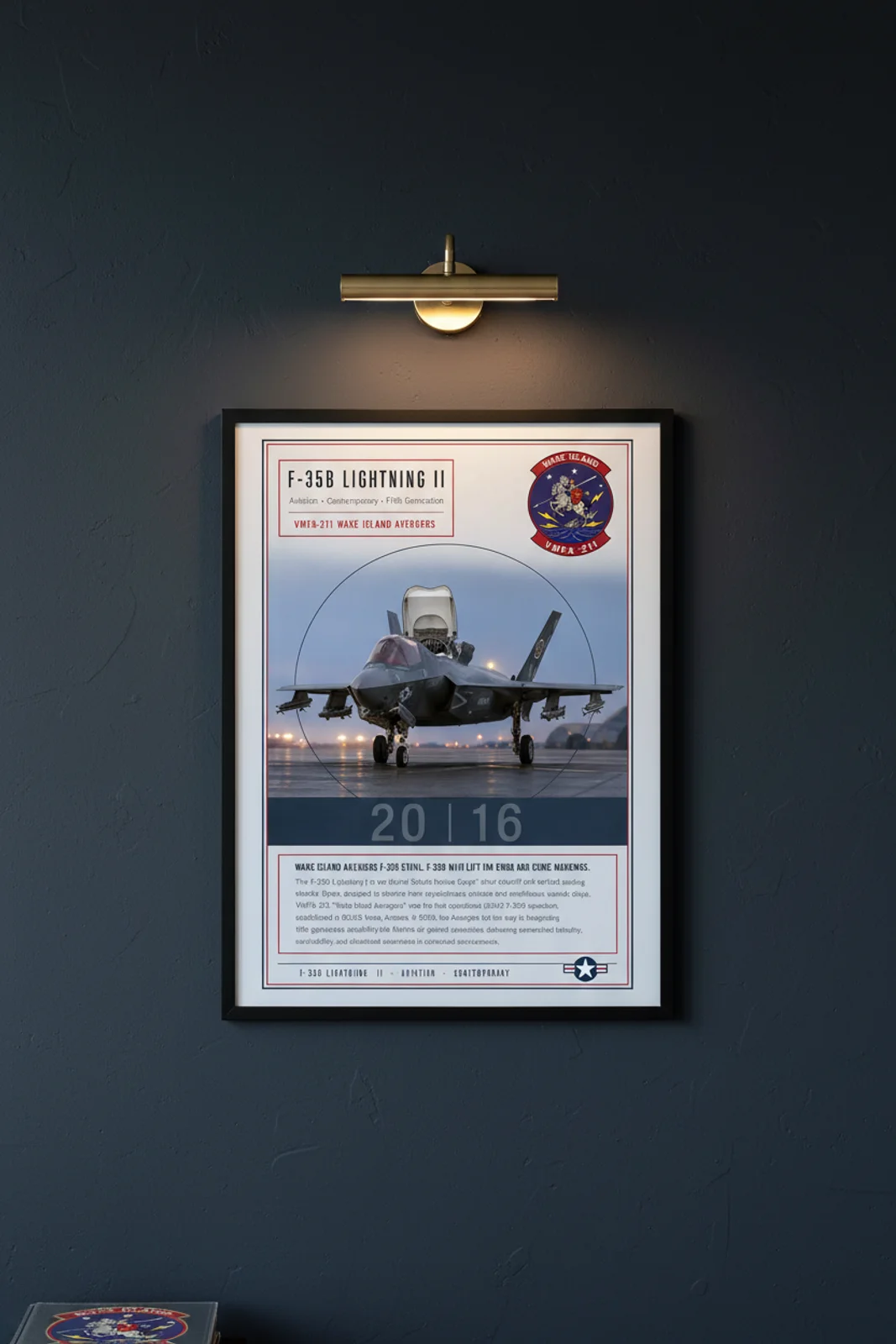
United States Marine Corps — 4 museum-grade prints from this operator. The Bell AH-1Z Viper completed the US Marine Corps H-1 upgrade program alongside the UH-1Y Venom, replacing legacy AH-1W Super Cobras with twin-engine four-blade gunships carrying Hellfire, Hydra rockets, and a nose-mounted M197 20mm cannon. HMLA-369 Gunfighters, activated at MCAS Camp Pendleton, is one of the West Coast Marine light attack squadrons flying composite Viper-Venom detachments on Pacific deployments — the same unit lineage that carried Super Cobra nose art into the modern MAGTF era. The Lockheed Martin F-35B Lightning II is the short take-off and vertical landing variant of the Joint Strike Fighter, combining low-observable shaping with a Rolls-Royce lift fan and vectoring rear nozzle so US Marine Corps aviators can operate from amphibious assault ships and austere forward strips. VMFA-211 Wake Island Avengers, assigned to Marine Aircraft Group 13 under the 3rd Marine Aircraft Wing at MCAS Yuma, Arizona, received their first F-35Bs on 9 May 2016 and were redesignated from VMA-211 to VMFA-211 on 30 June 2016 — the Corps' second fleet squadron to adopt the Lightning II after VMFA-121's earlier transition. Marine Light Attack Helicopter Squadron 167 — call sign Warriors — has flown attack helicopters from MCAS New River, North Carolina, since the Cobra era, transitioning to the AH-1Z Viper as part of the USMC H-1 upgrade programme that paired Zulu gunships with UH-1Y Venom utility helicopters in composite HMLA units. The AH-1Z, nicknamed Zulu, carries the Cobra's tandem cockpit and stub-wing weapons architecture forward with four-blade rotors, improved survivability, and precision Hellfire employment — the platform East Coast Marines reach for when MAGTF ground teams need responsive close air support.