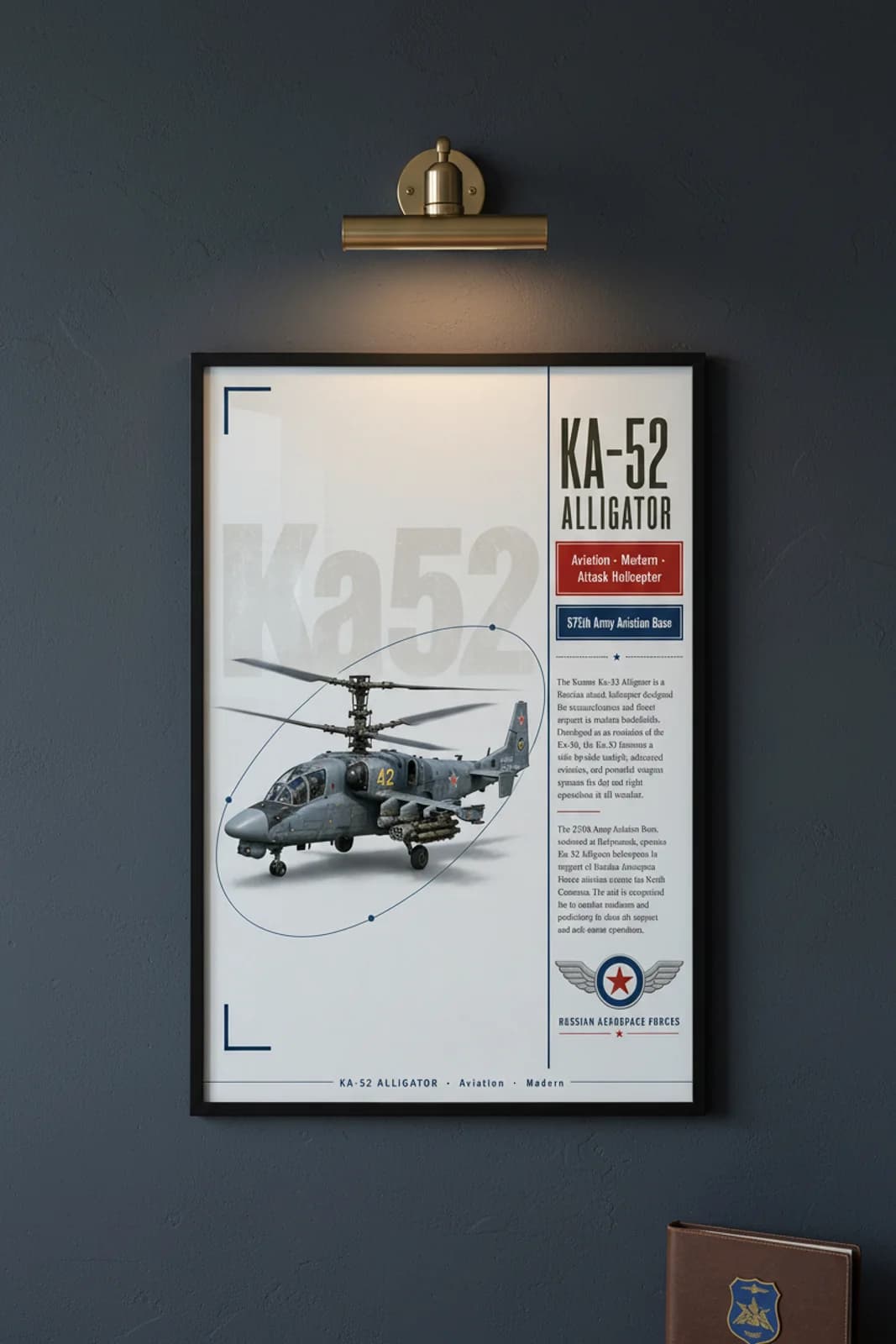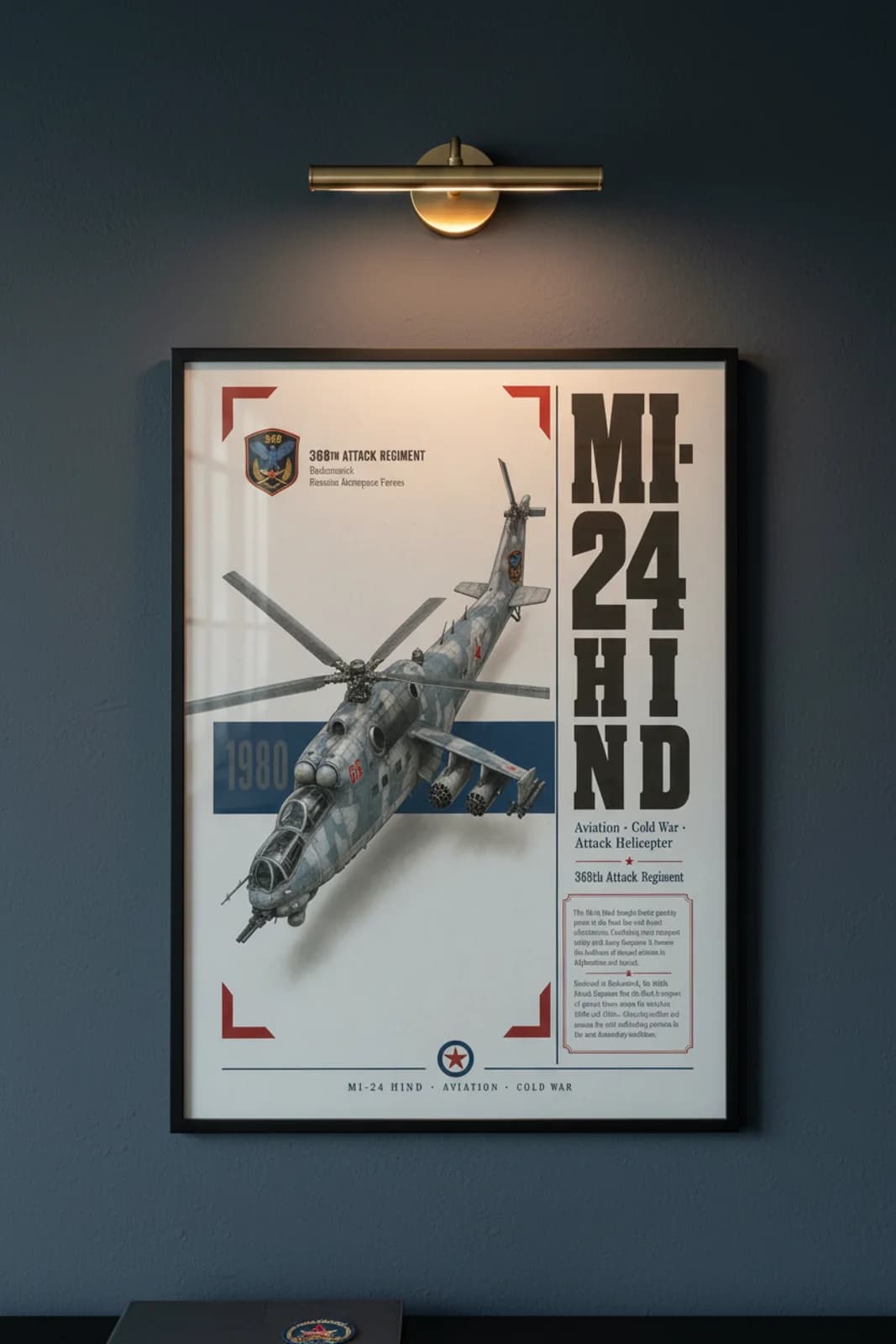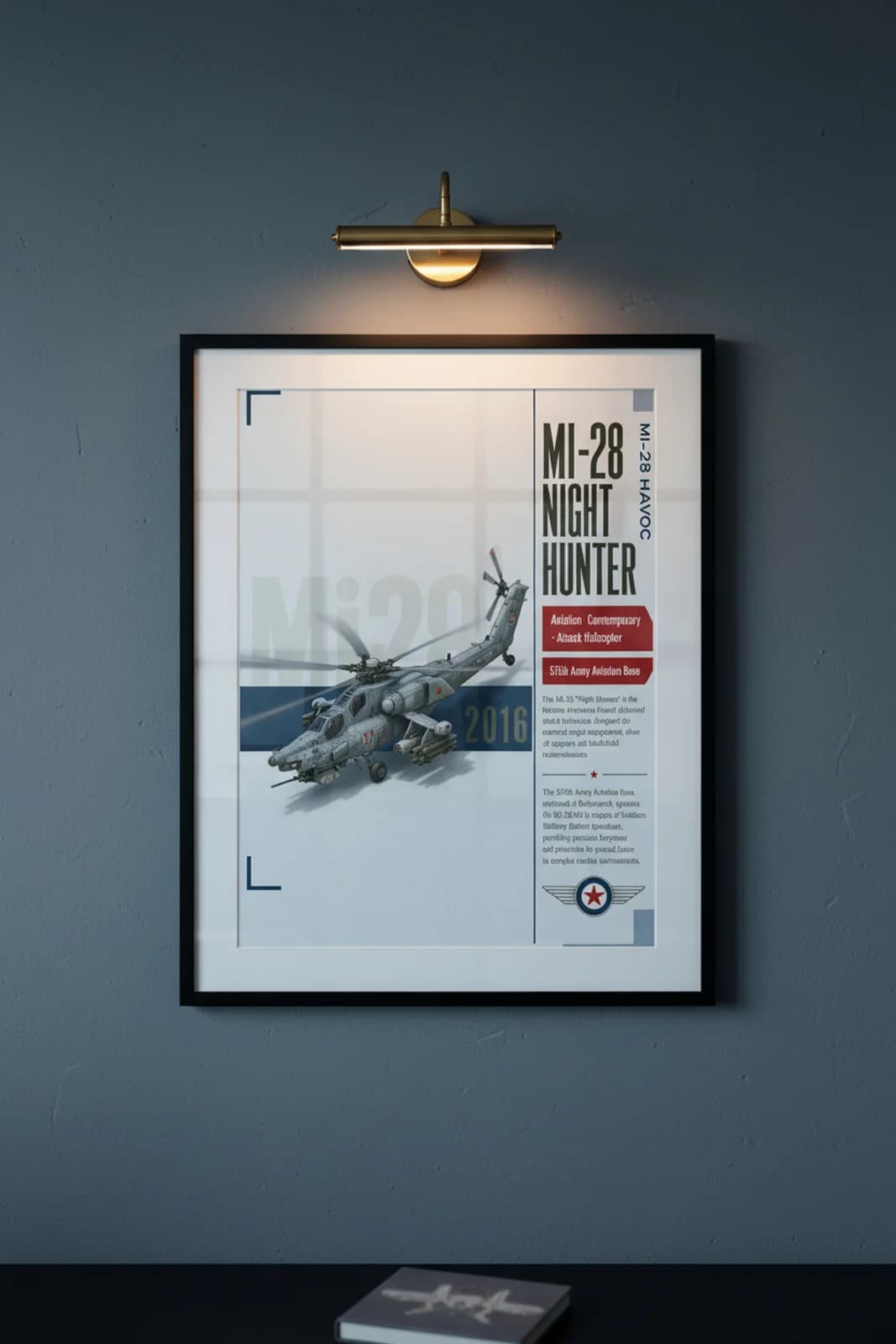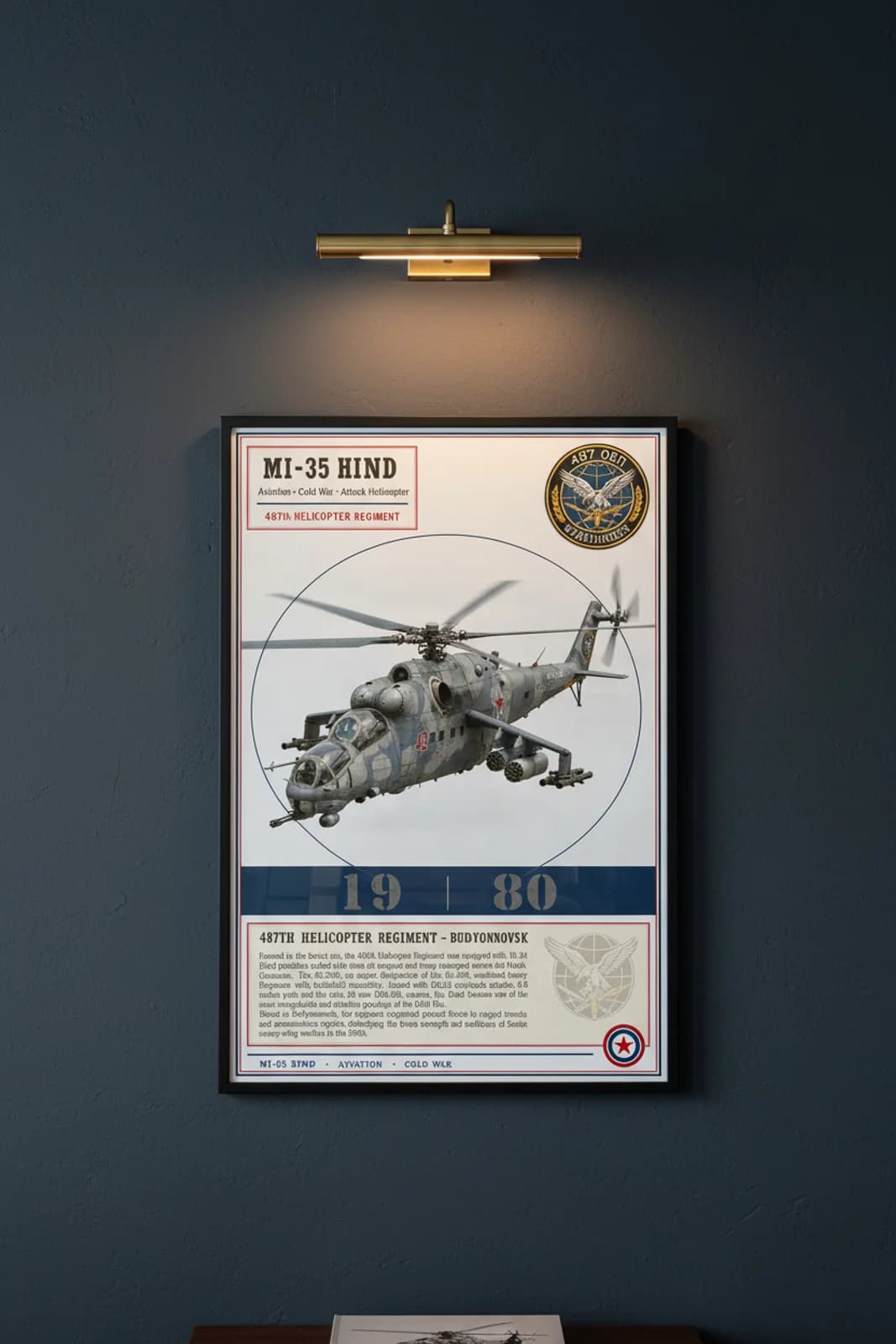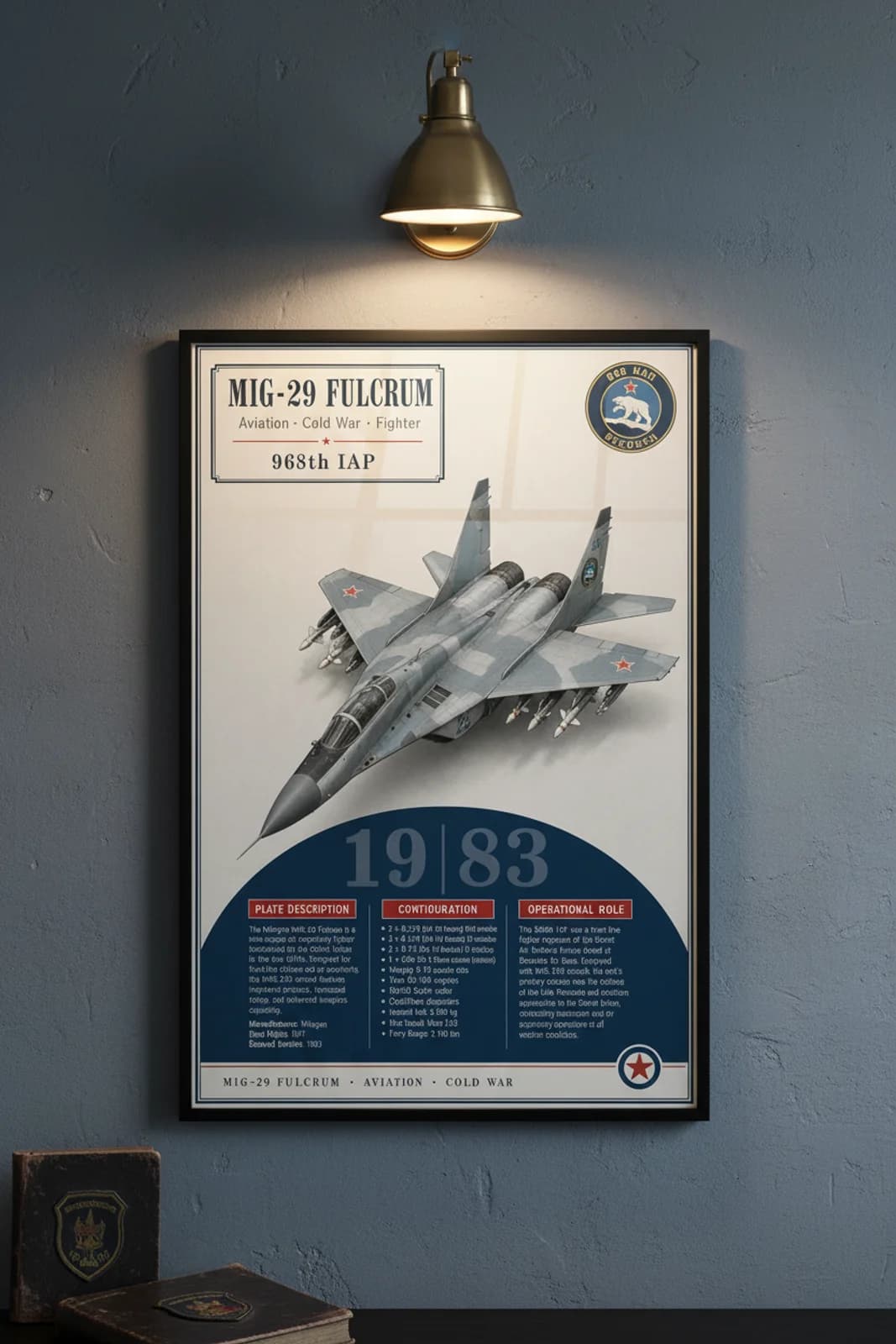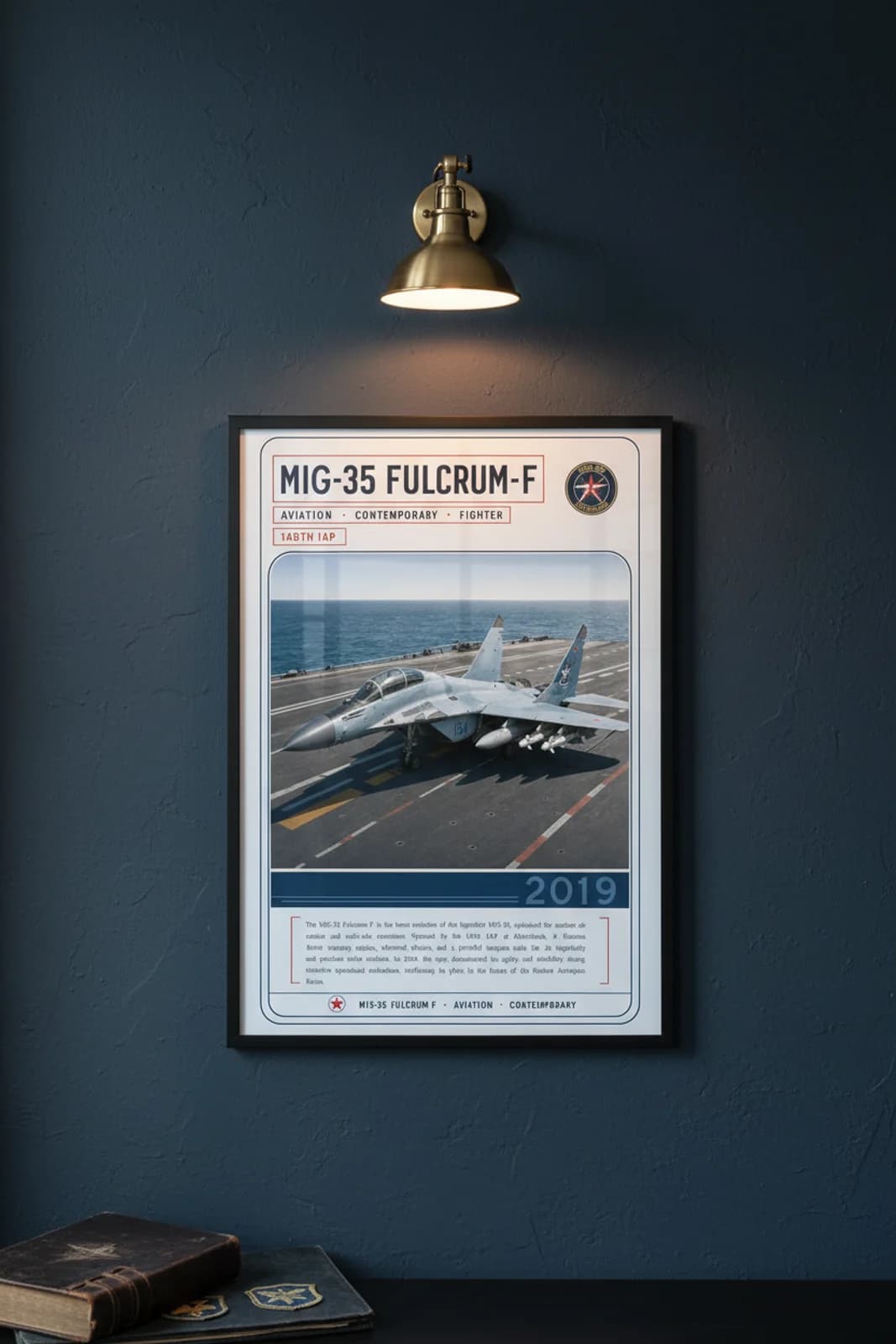
Russian Aerospace Forces — 14 museum-grade prints from this operator. The Kamov Ka-52 Alligator — NATO reporting name Hokum-B — evolved from the single-seat Ka-50 Black Shark into a two-seat reconnaissance-attack platform with side-by-side crew seating and Kamov's signature coaxial counter-rotating rotor system, eliminating a conventional tail rotor. Fielded from 2011 into Russian army aviation service, it carries 9K121 Vikhr and 9M120 Ataka anti-tank missiles plus a side-mounted 2A42 30 mm cannon for day-night, all-weather close support. The Mil Mi-24 Hind entered Soviet service in the early 1970s as the world's first purpose-built gunship helicopter with a troop cabin — NATO reporting name Hind, Russian nickname Krokodil for its armoured snout profile. It combined transport capacity for eight soldiers with wing-mounted rockets, anti-tank guided missiles, and a flexible nose gun system, making it the backbone of Soviet forward aviation through Afghanistan and beyond. The MiG-29 entered Soviet service in 1983 as a twin-engine counter to Western lightweight fighters, pairing high angle-of-attack agility with the R-73 Archer and N019 Sapfir radar family. The 968th Fighter Aviation Regiment — Sevastopolskiy Red Banner, order of Suvorov — took delivery of its first MiG-29 in November 1983 and became the type's instructor-research hub at Lipetsk, where test and instructor pilots developed combat manoeuvre guidelines that shaped Fulcrum employment across the VVS and PVO.