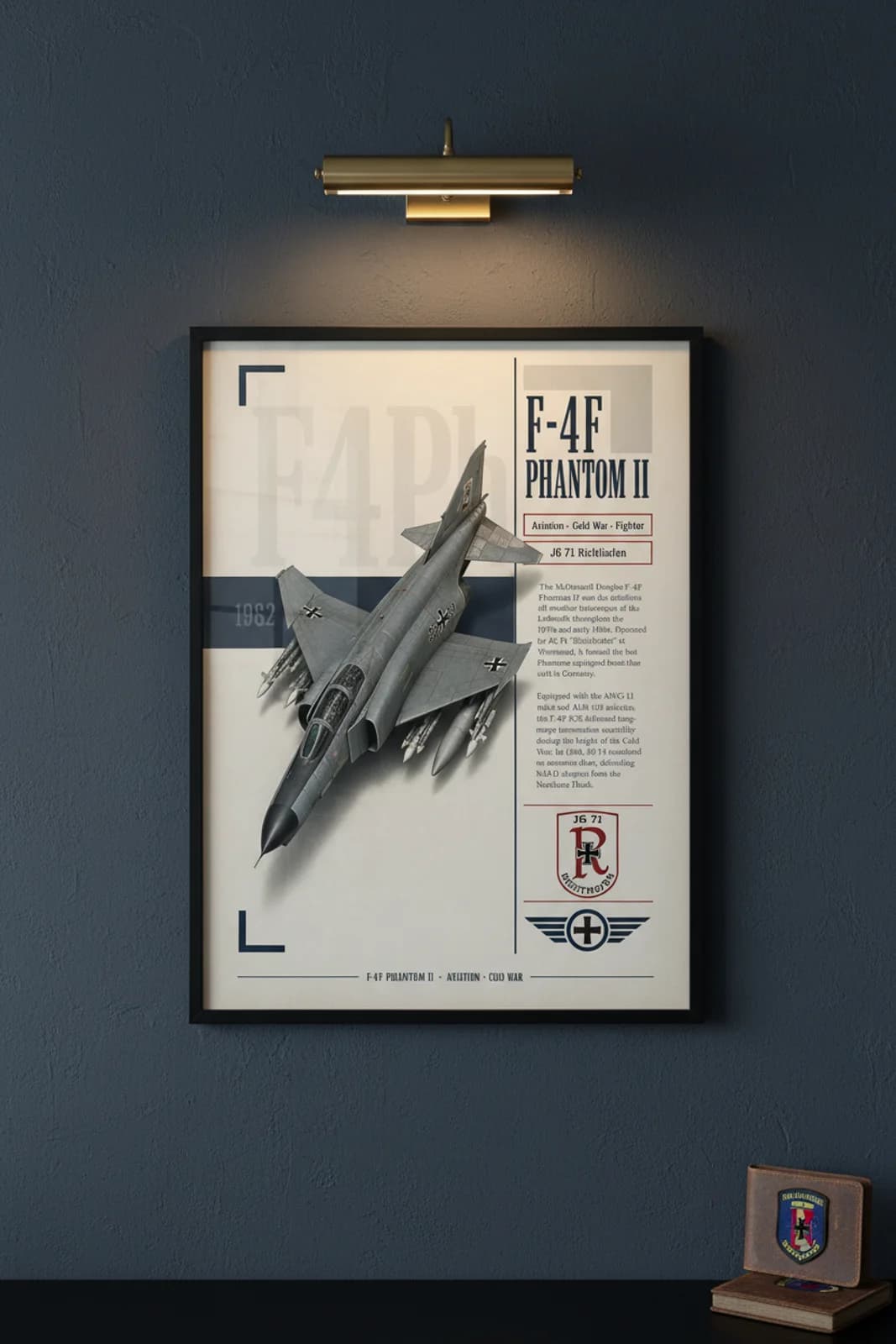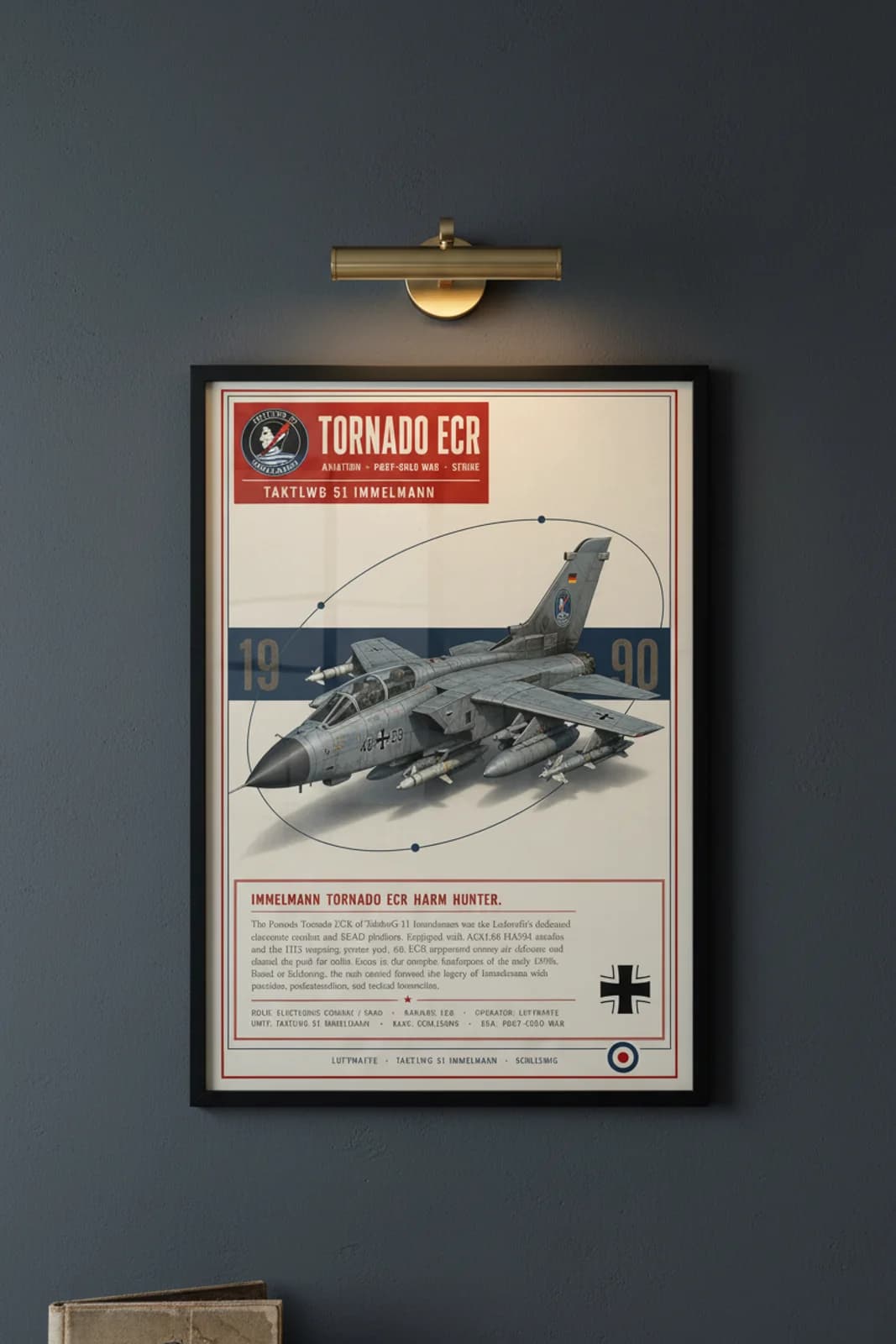
Luftwaffe — 3 museum-grade prints from this operator. TaktLwG 31 traces its lineage to Jagdbombergeschwader 31, formed in 1958 as the Luftwaffe's first operational combat wing and the first to fly both the F-104 Starfighter and Panavia Tornado IDS. Redesignated in 2013 to reflect its multi-role Eurofighter mission, the wing develops laser-guided GBU-48 employment for all German Typhoon units while honouring Oswald Boelcke — the pilot whose Dicta Boelcke still shapes fighter tactics a century later. The F-4F was a Luftwaffe-specific derivative of the F-4E Phantom II — roughly eleven percent lighter, without the seventh internal fuel tank or USAF-style aerial refuelling probe, but fitted with leading-edge slats for improved manoeuvrability in the interceptor role. Jagdgeschwader 71 "Richthofen" at Wittmundhafen Air Base was Germany's last operational Phantom wing, flying grey Norm 90J camouflage Phantoms through farewell ceremonies in 2013 before transitioning to the Eurofighter Typhoon. The Panavia Tornado ECR was Germany's answer to NATO's suppression-of-enemy-air-defences requirement — a two-seat variant of the IDS strike bomber with cannon bays repurposed for Emitter Location System hardware and RB199 Mk 105 engines to carry AGM-88 HARM missiles at standoff range. TaktLwG 51 Immelmann, named for First World War ace Max Immelmann, operates from Schleswig Air Base at Jagel in Schleswig-Holstein and absorbed the ECR fleet when Fighter Bomber Wing 32 disbanded at Lechfeld in April 2013, consolidating Germany's Wild Weasel capability under one wing alongside tactical reconnaissance and maritime strike roles.