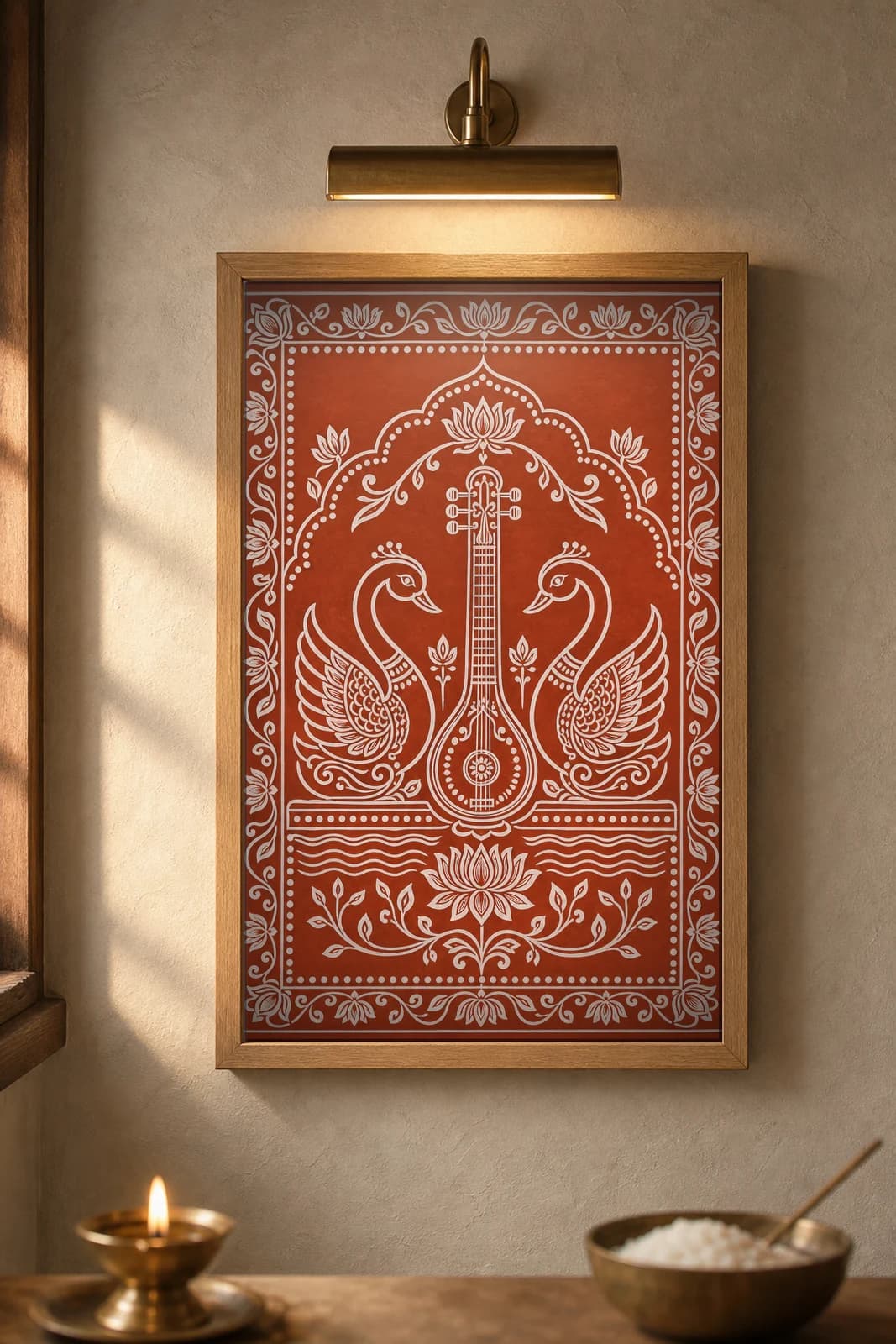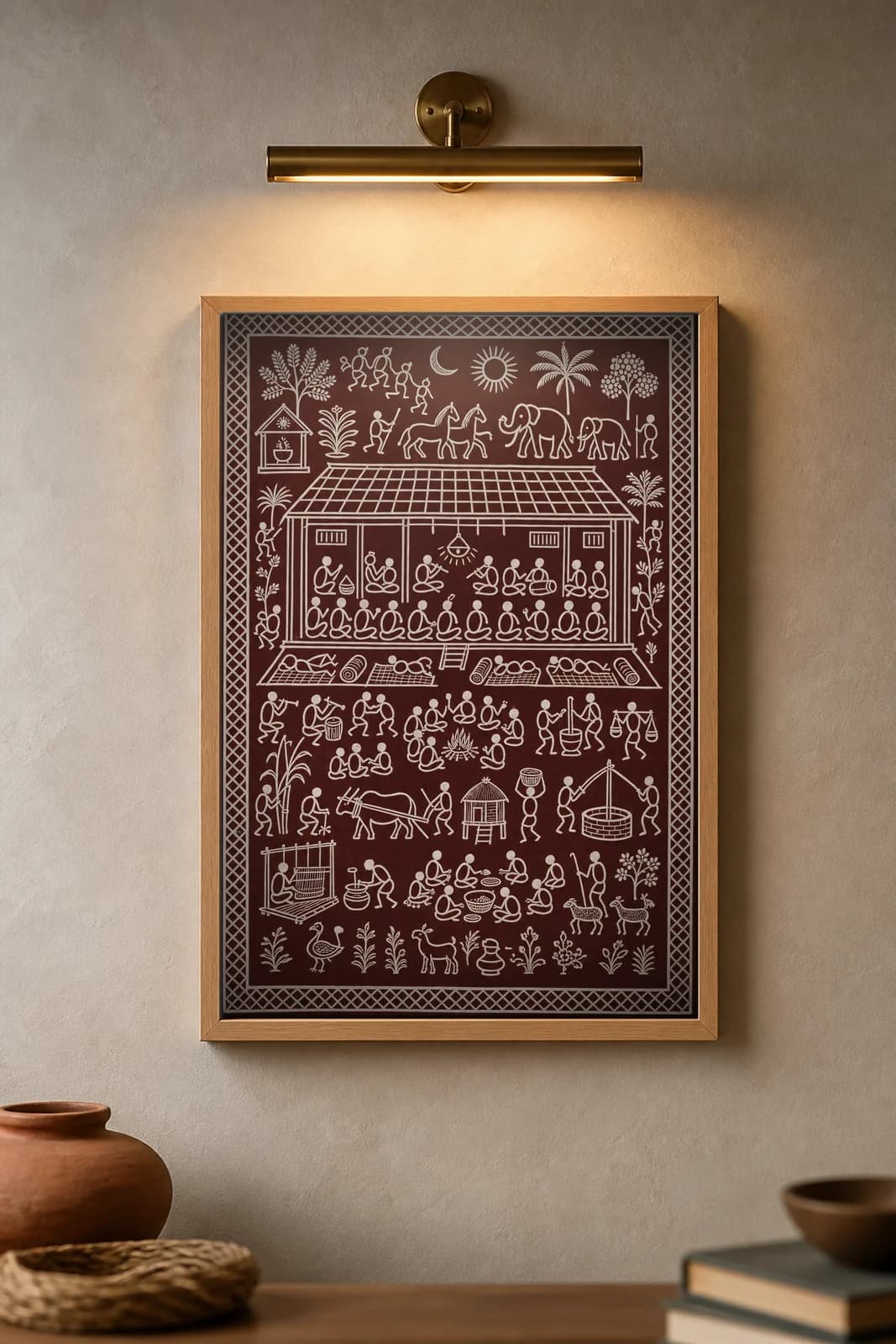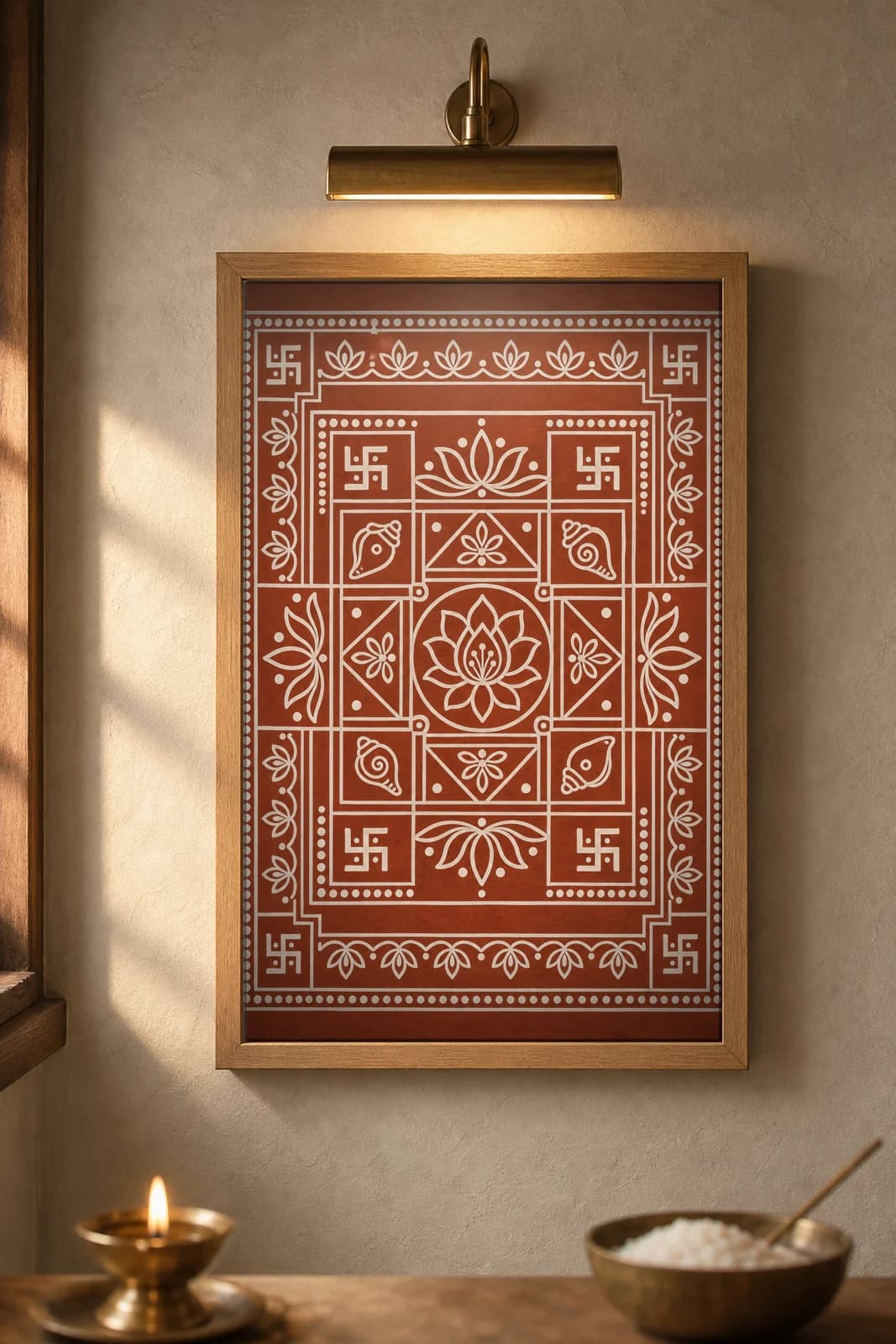
Studious — 6 museum-grade prints that set the mood. DESIGN BRIEF: the brief was the communal youth hall, an interior crowded with seated figures, so we cut its front wall away and drew the rows of young people straight on under one wide roof, a standing elder with a raised hand at the centre, and set the village day around it — ploughing, weaving, cooking, the well. We held the fill to medium and kept the fish-net frame open rather than a packed mesh, so even with the hall full the oxblood ground threads through and each seated row and chore stays legible. Aipan is the ritual floor- and wall-art of the Kumaon region of Uttarakhand, drawn traditionally by Kumaoni women with white rice-paste (biswar) on a geru (red-ochre) earth ground. The Saraswati-chowki is the seat drawn on Basant Panchami for Saraswati, goddess of learning, music, and speech; children place their first slates and pens on it, and the veena (her instrument) and the swan (her mount) are her constant attributes. Bhitti chitra is Kerala's temple wall-painting tradition, flourishing from roughly the sixteenth to the nineteenth century and still painted today by trained artists who grind their own mineral and vegetable pigments. The picture shows the actual method: pigment ground on stone, mixed in shallow bowls, and laid down in flat opaque fields over a confident lamp-black line drawing — the deity on the wall is left half-drawn to reveal exactly that sequence.