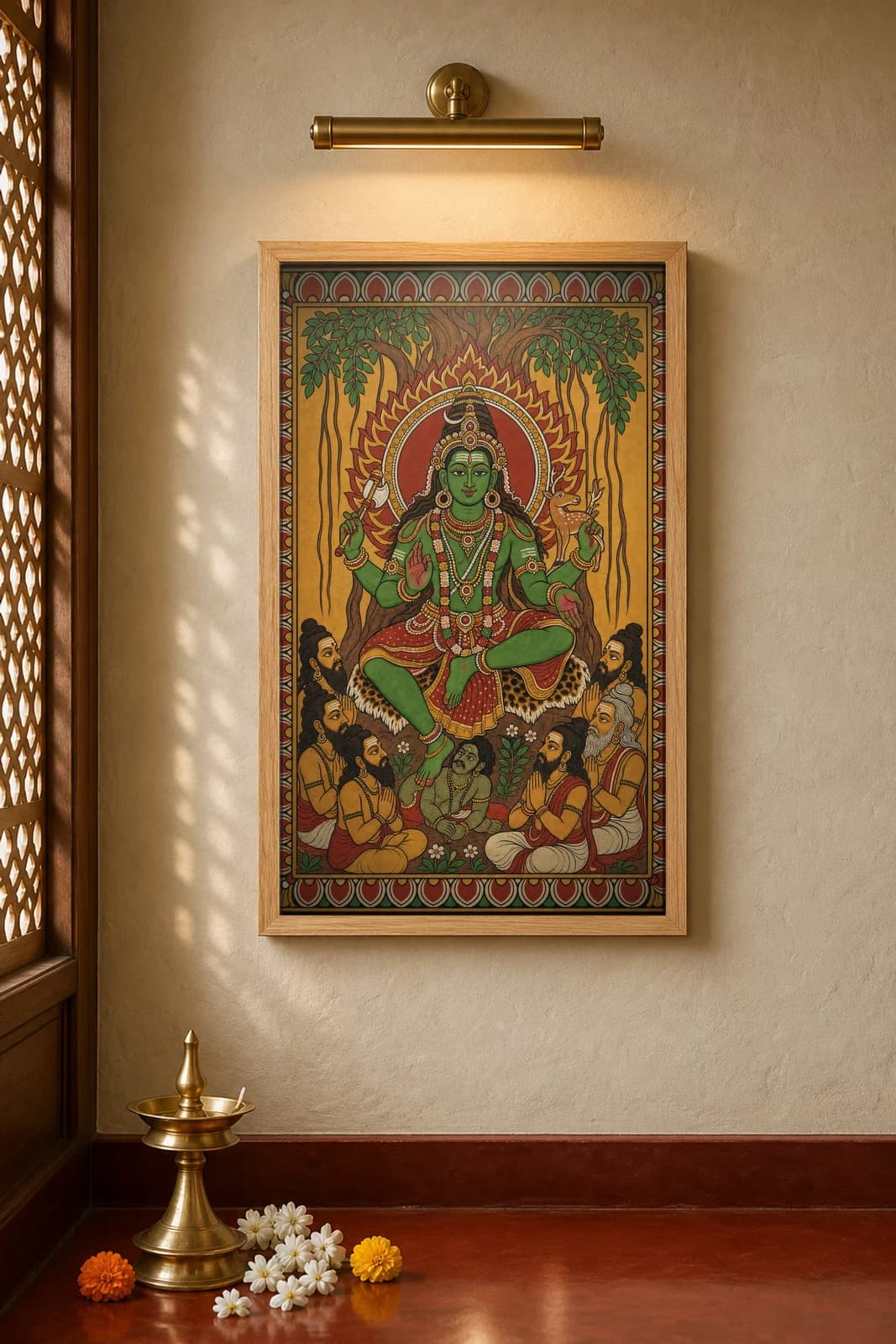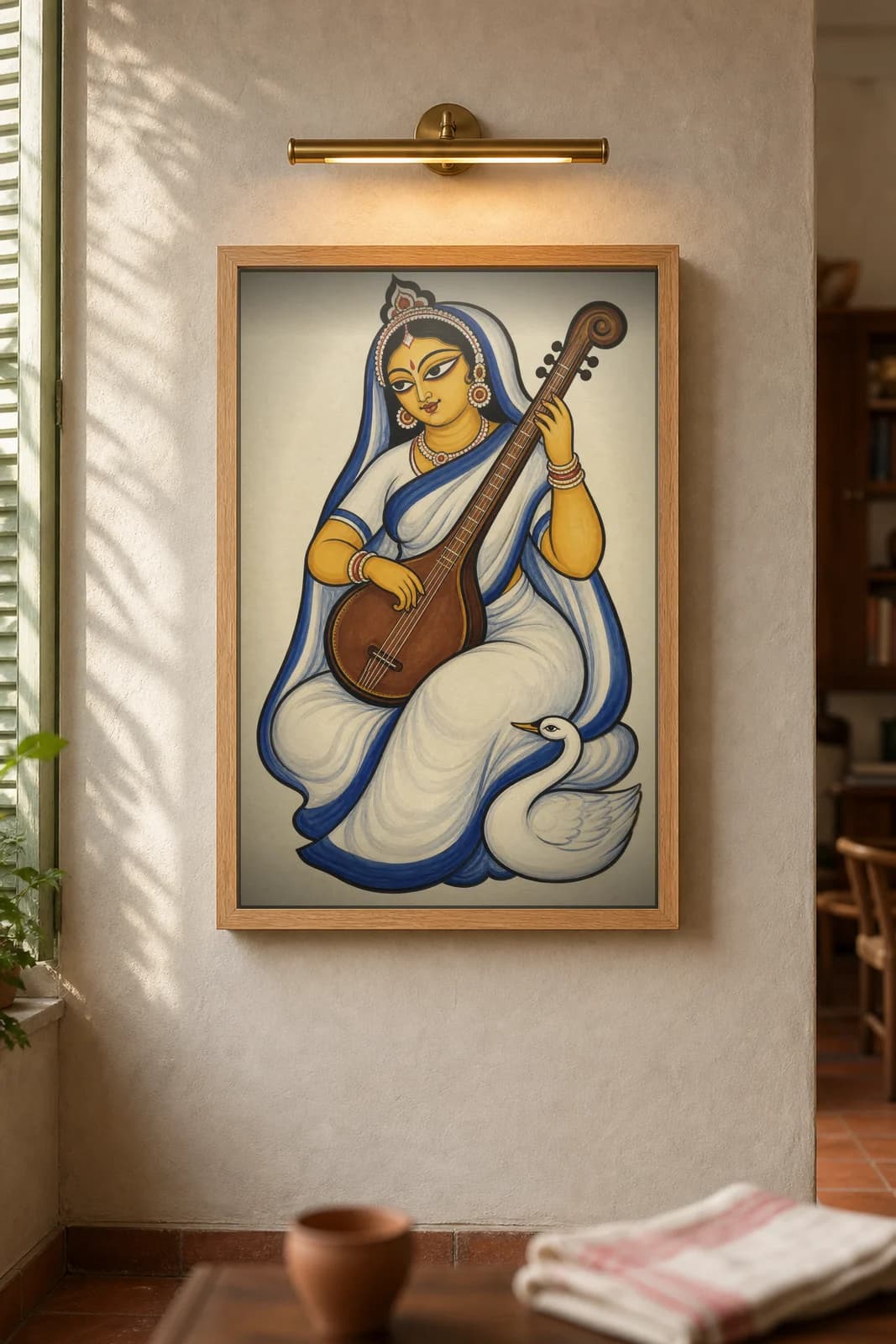
Scholarly — 3 museum-grade prints that set the mood. Kalighat Pat grew up in 19th-century Kolkata, painted by patua (chitrakar) scroll-painters who settled near the Kalighat Kali temple and sold quick watercolours to pilgrims. Alongside their famous social satire they painted the gods and goddesses of Bengal — Kali, Durga, Lakshmi, Saraswati — in the same bold-outline, boneless-shaded style, making devotional images affordable. Dakshinamurthy is Shiva in his aspect as the supreme guru — the teacher who imparts knowledge in silence, seated facing south (dakshina), often under a banyan, with the chinmudra and surrounded by sages. He is a classic subject of bhitti chitra, Kerala's temple-mural tradition that flourished roughly from the 16th to 19th century and is still painted today: flat panchavarna pigments (red, yellow, green, black, white over an ochre ground), a bold lamp-black outline and the school's elongated lotus-shaped eyes. Cheriyal scrolls come from Cheriyal village in Telangana's Siddipet district, painted for generations by the Nakashi artist community in flat colour on a red ground; alongside their long narrative scrolls, the Nakashi also painted single deity icons (pata) for household worship. Saraswati — goddess of learning, music and speech — is shown four-armed with the veena, a book or rosary, her hamsa (swan) that mythically separates milk from water, and often a peacock; she is honoured especially at Vasant Panchami.