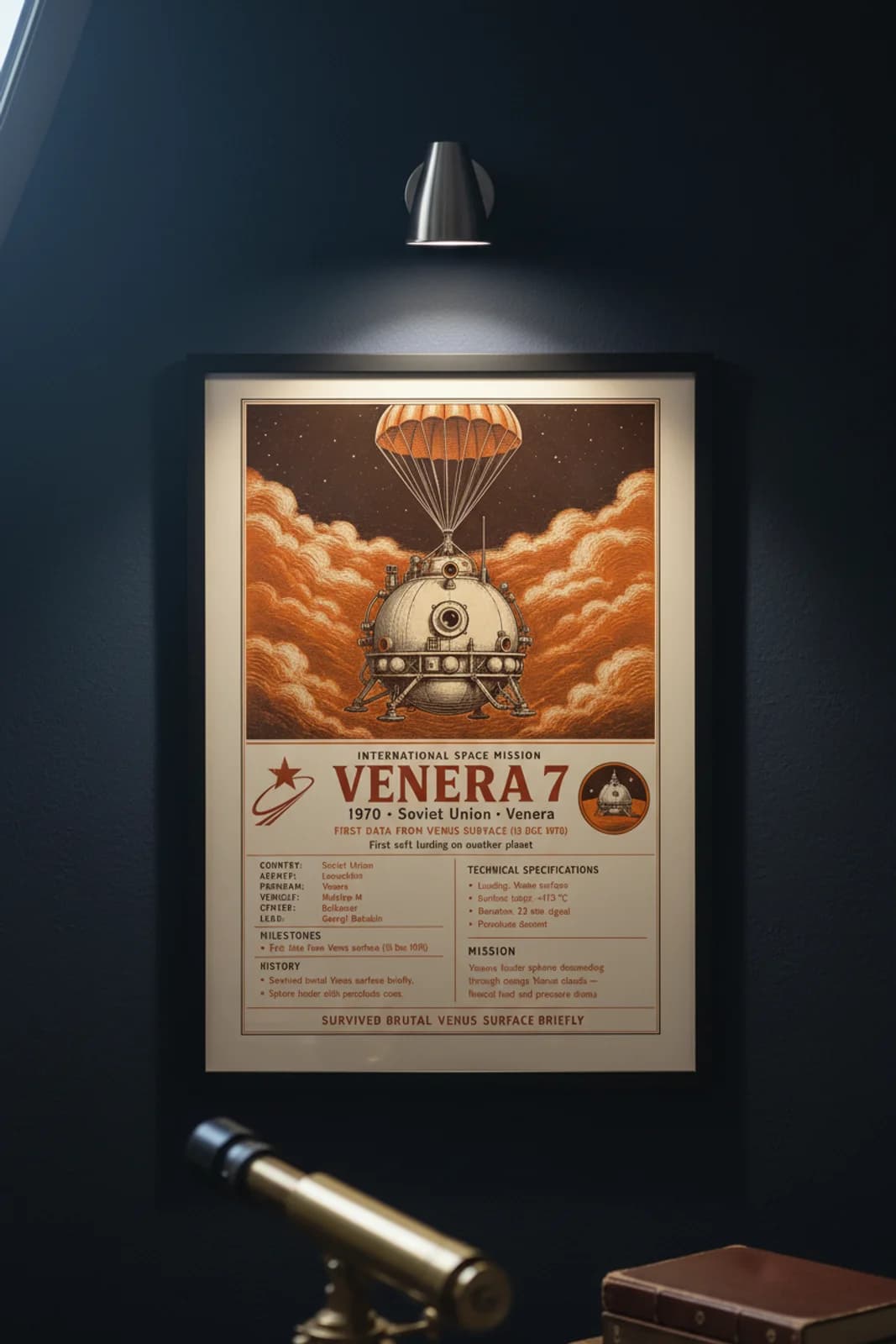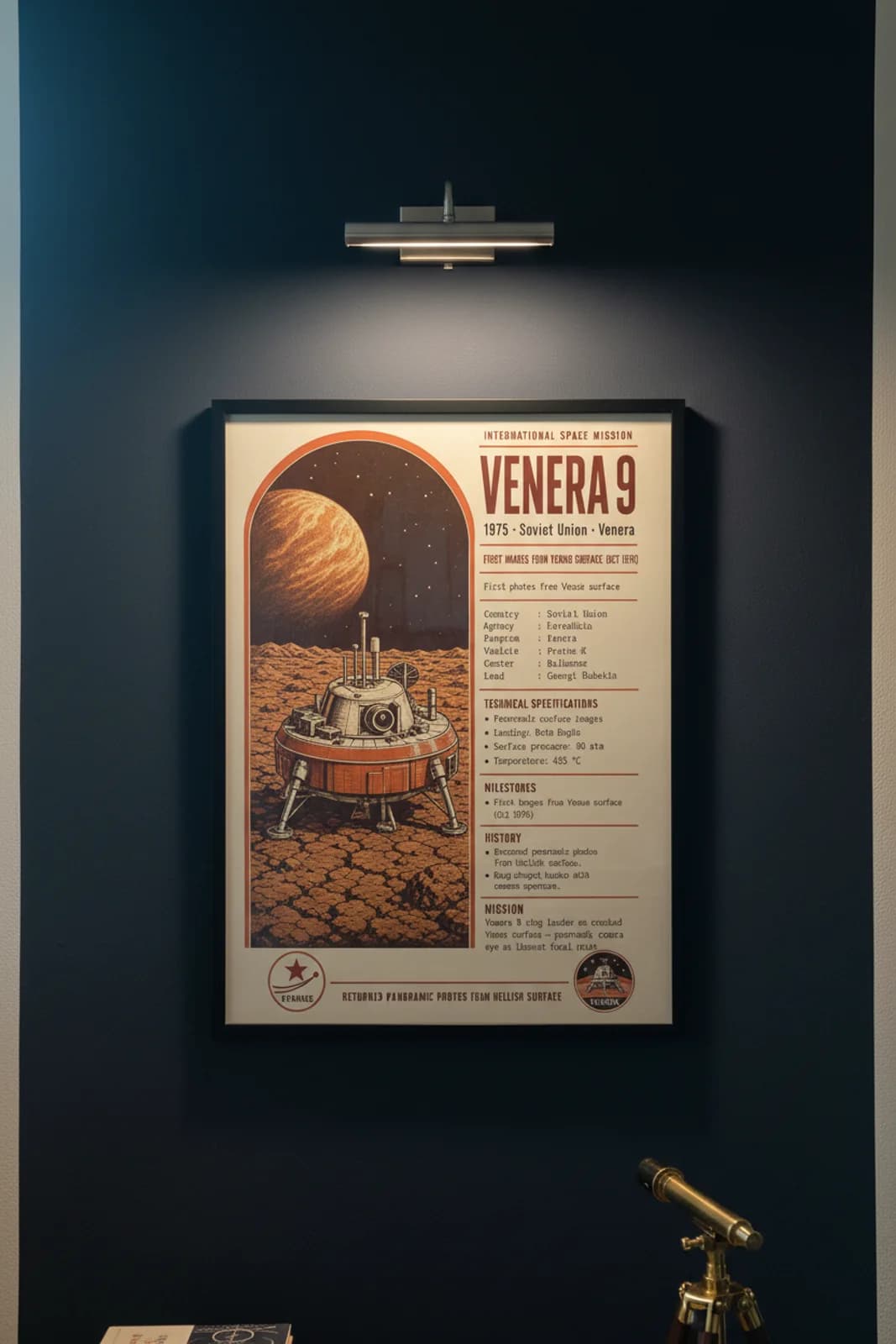
Lavochkin Engineering — 3 museum-grade prints that set the mood. Venera 13 and its twin Venera 14 represented the apex of Soviet Venus exploration — returning color panoramas and soil analysis from a world where surface pressure crushes submarines and lead melts. The missions demonstrated that robotic craft could gather science in environments impossible for humans, setting benchmarks for later Venus atmospheric probes and informing radiation and thermal engineering across planetary programs. Venera 9's October 1975 panoramas were the first images returned from the surface of another planet — a milestone that humanised Venus as a place with rocks and horizon rather than an abstract hell world. The mission operated alongside an orbiter that relayed data before atmospheric entry, establishing the dual-craft pattern later Mars missions would emulate. Venera 7's 15 December 1970 landing marked the first successful data return from the surface of another planet — a milestone that validated decades of Soviet Venus probe attempts after earlier crush failures. The mission opened the Venera surface science era that yielded panoramas, soil analysis, and proof that robotic explorers could briefly operate in environments no human has touched.