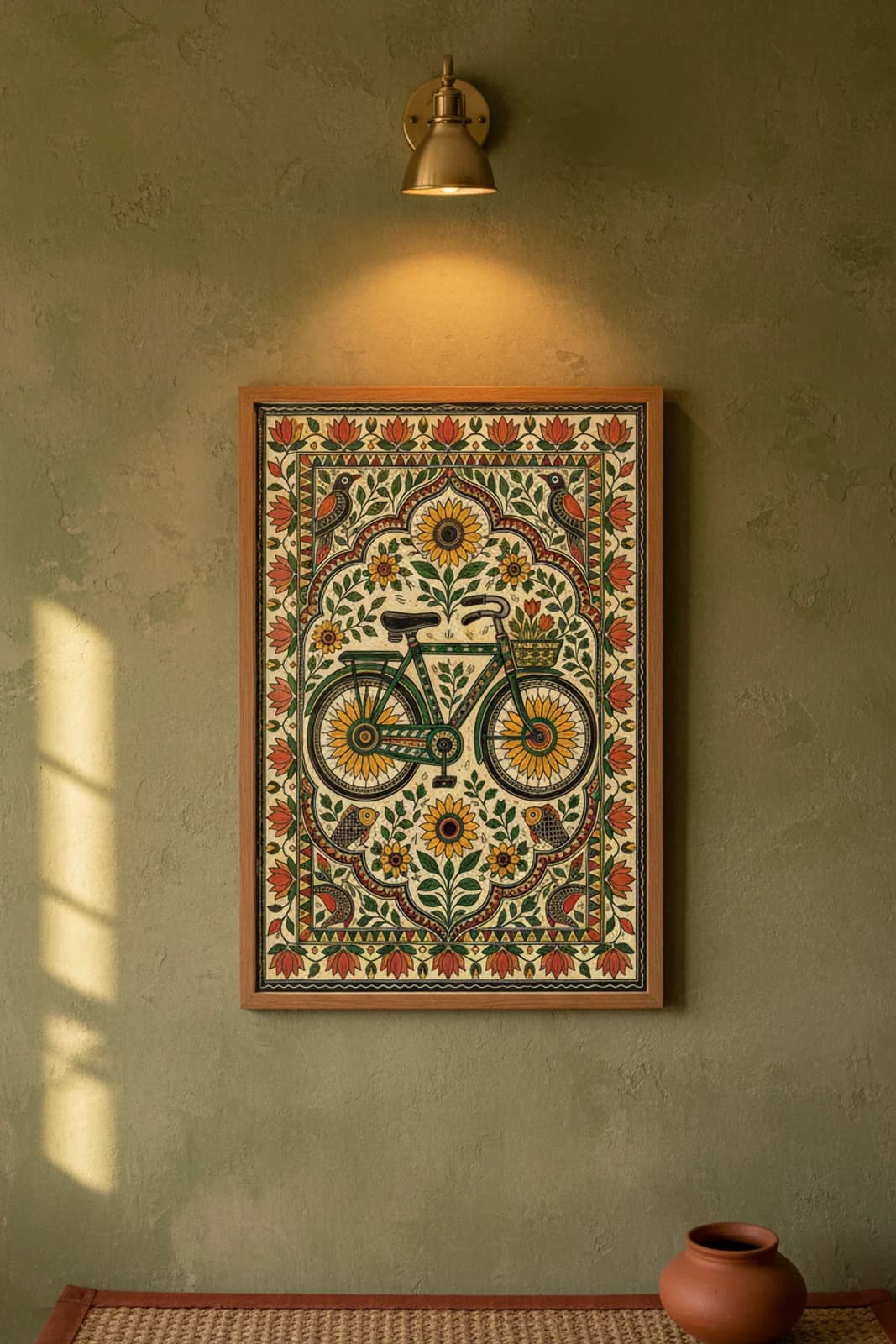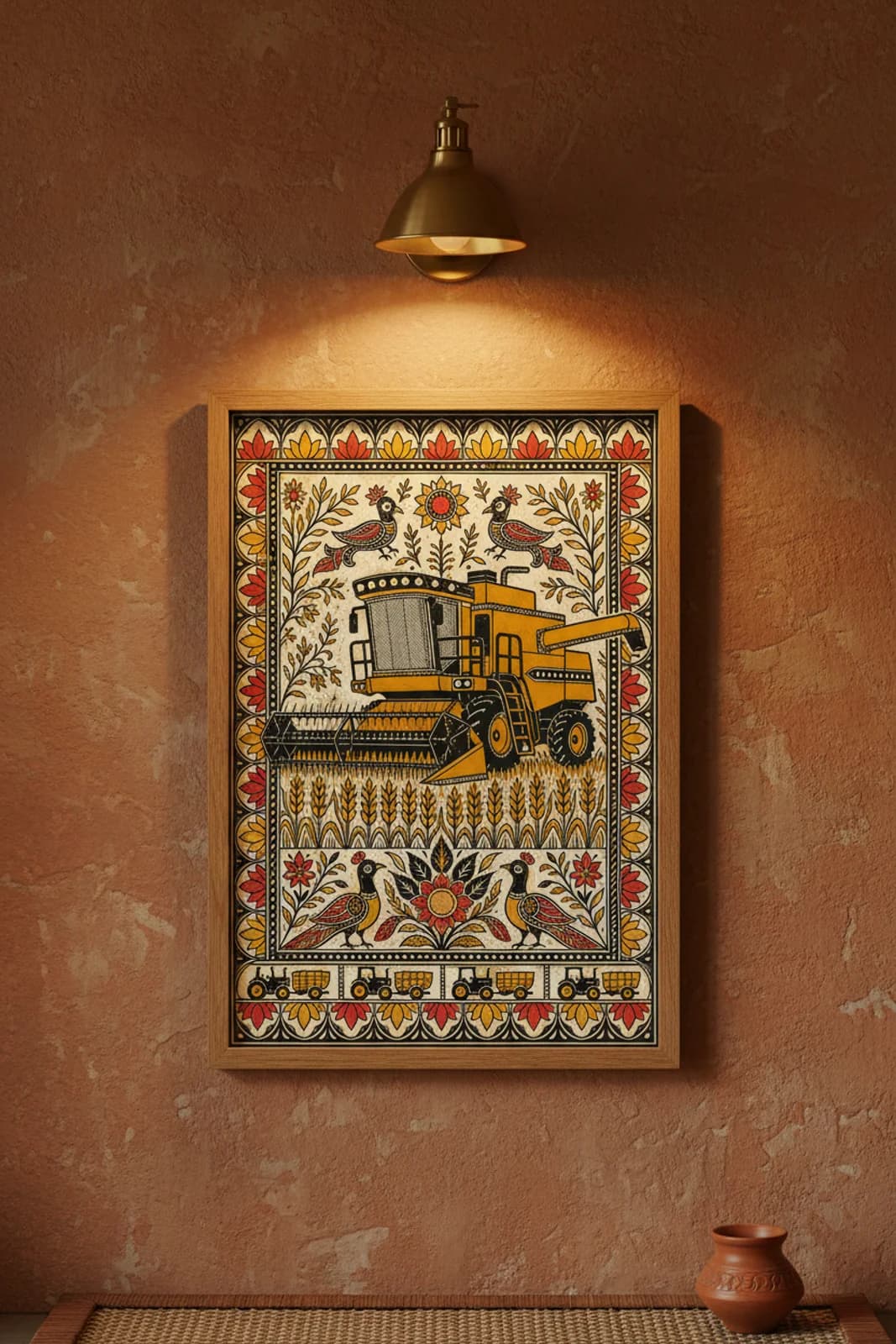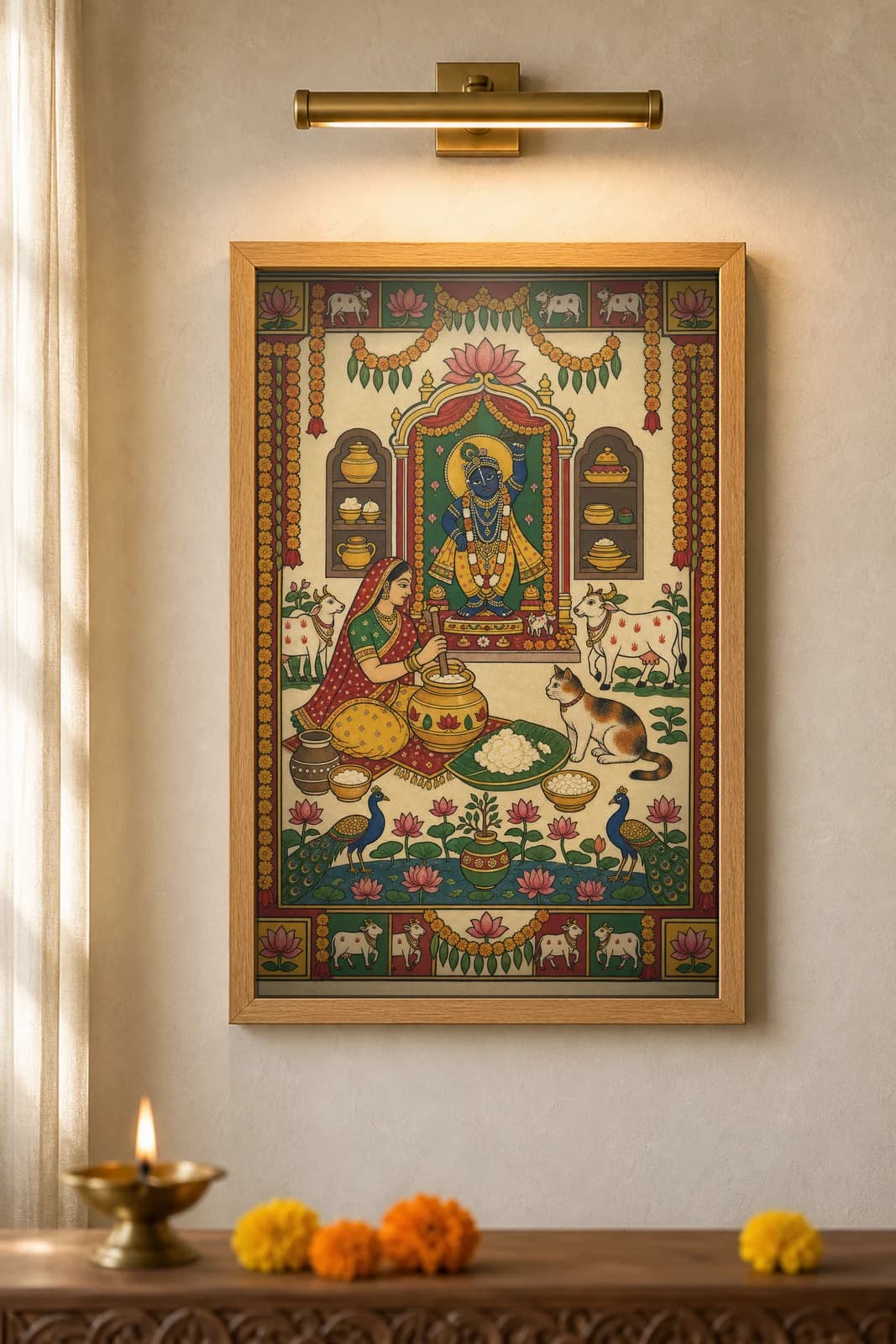
Folk Narrative — 4 museum-grade prints that set the mood. Bharni — literally "to fill" — is the Mithila colour-flood style historically associated with Brahmin women painters in villages such as Jitwarpur, Ranti, and Rasidpur; bold black outlines enclose vermillion, turmeric, and ochre fills on wedding walls and, after the 1960s Bihar drought commercialisation, on handmade paper. Harvest scenes belong to the oldest Mithila subject matter: women gathering grain, chaurchan and kojagara festival panels, and Anaj ka Aashirwad motifs that celebrate agrarian labour and seasonal reward — Ambika Devi and other contemporary masters still paint harvest women in Bharni fill for farmhouse and cultural interiors. Bharni — "to fill" — is the Mithila colour-flood style historically associated with Brahmin women painters in Jitwarpur, Ranti, and Rasidpur; bold lampblack outlines enclose vermillion, turmeric, and palash orange fills on wedding walls and, after drought-relief paper programmes in the 1960s–70s, on handmade sheets for wider commerce. Contemporary Mithila artists have extended Bharni grammar to daily-life subjects — cycles, autos, trains, smartphones — while keeping horror vacui fill rules and double-outline discipline. In Pushtimarg (the Vallabh tradition centred at Nathdwara, Rajasthan), seva of Shrinathji — the child-Krishna Govardhan-lifter — begins in the kitchen, where bhog is cooked fresh before darshan. Makhan-mishri, fresh butter with sugar crystals, is Krishna's most beloved offering, tied to his childhood as the makhan-chor.