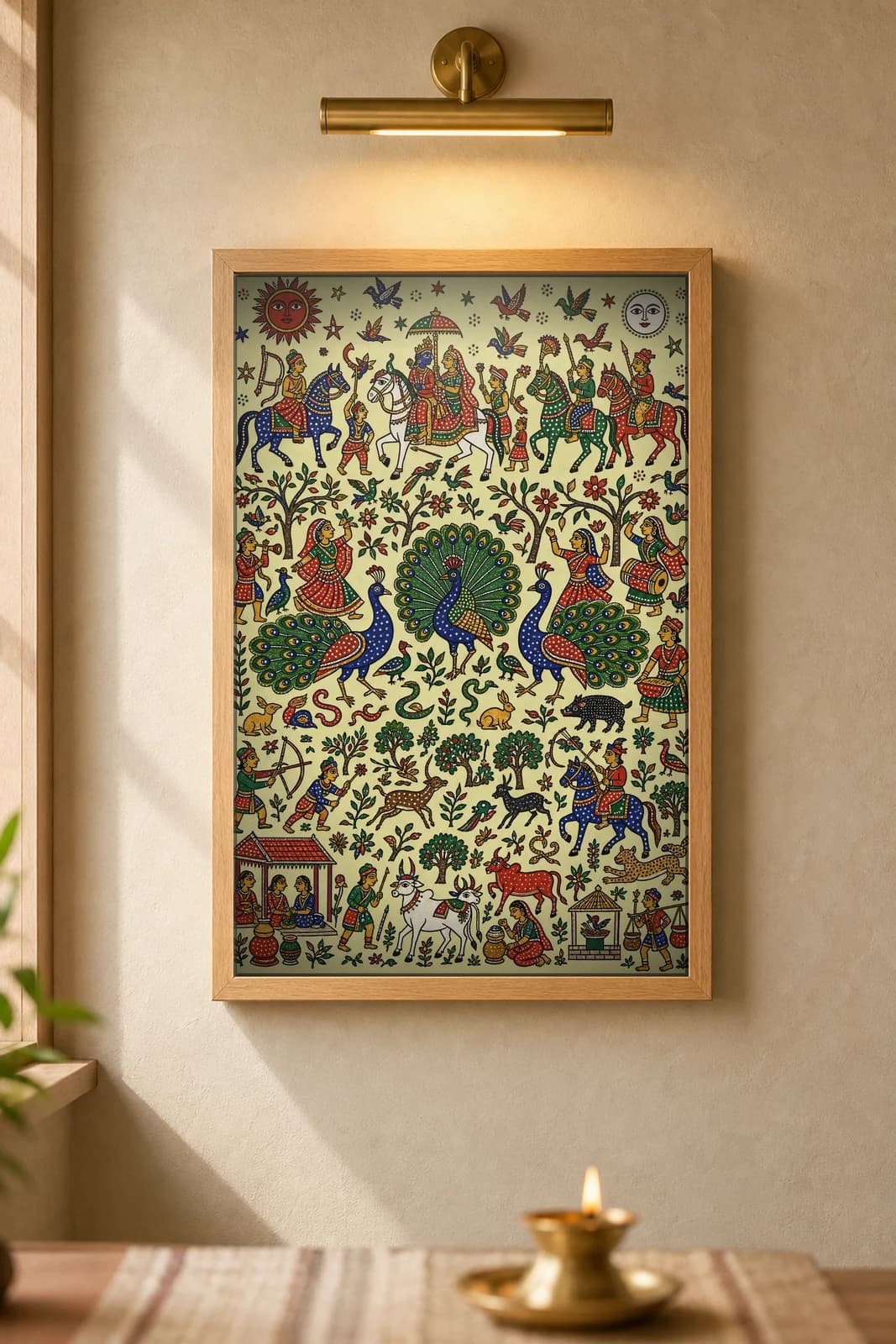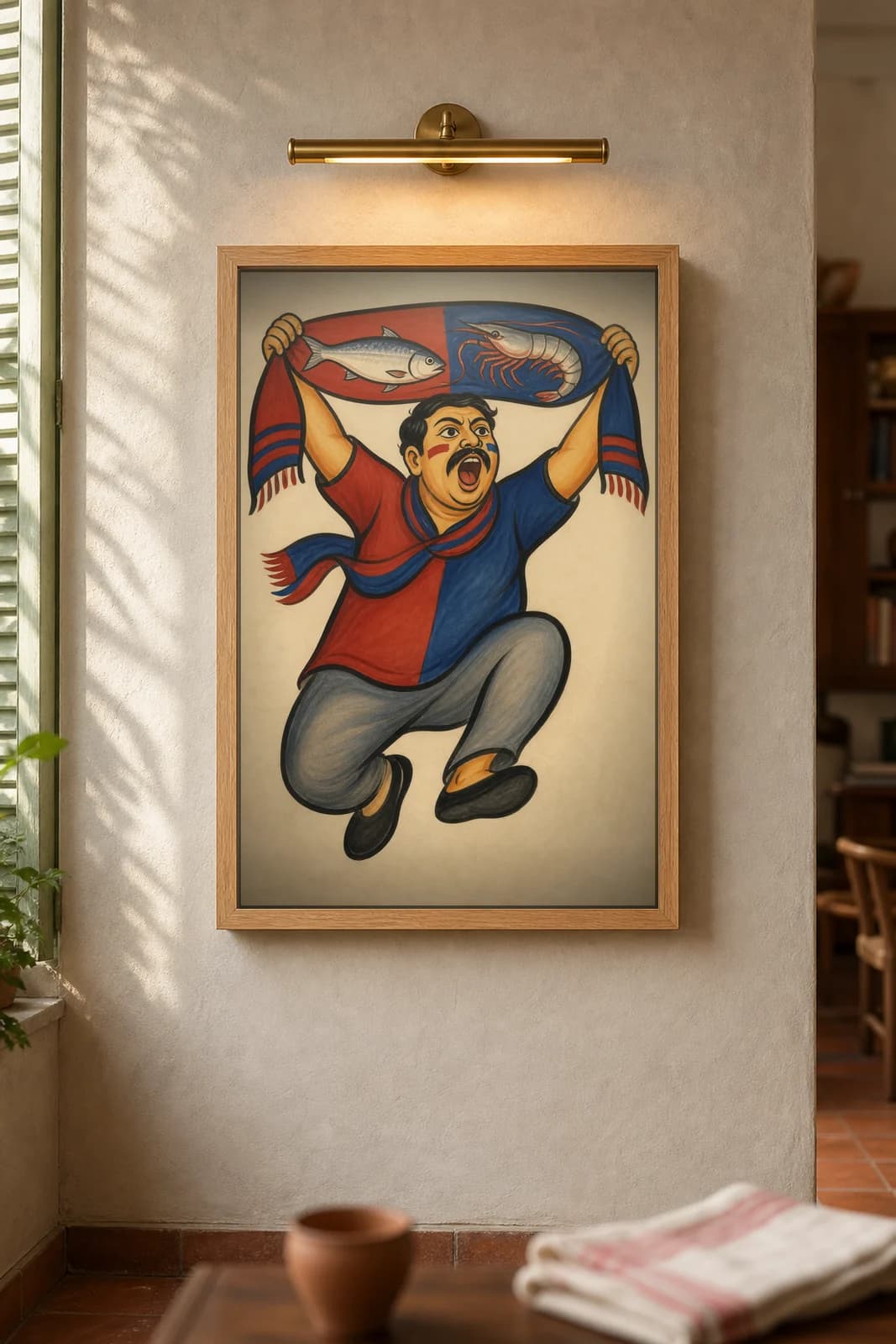
Exuberant — 3 museum-grade prints that set the mood. Kalighat Pat grew up in 19th-century Kolkata, painted by migrant patua (chitrakar) scroll-painters who settled near the Kalighat Kali temple and sold quick watercolour souvenirs to pilgrims. Working on mill-made paper with a bold single black brush outline and soft 'boneless' shaded strokes on a plain ground, they painted gods and goddesses alongside what is often called India's first modern social satire — sharp, affectionate caricatures of the colonial 'babu' and the hypocrisies of Calcutta life. Pithora is the ritual wall-painting tradition of the Rathwa, Bhil and Bhilala Adivasi communities of Chhota Udepur in eastern Gujarat and the adjoining belt of Madhya Pradesh and Rajasthan. The forest and its animals — peacocks, deer, snakes, the hunt — belong to the world the Pithora is painted to bless, drawn into the lower and middle registers of the sacred wall. The Baramasa ('twelve months') pairs each month with a mood; Vasant, the spring month, is the season of Holi, of palash and mango blossom, of Kama the love-god — conventionally the most exuberant month of the cycle. This treatment follows the Bundi school of southeastern Rajasthan, prized within the Rajput miniature umbrella for lush malachite-green gardens, lapis water and dense floral colour handled with restraint.