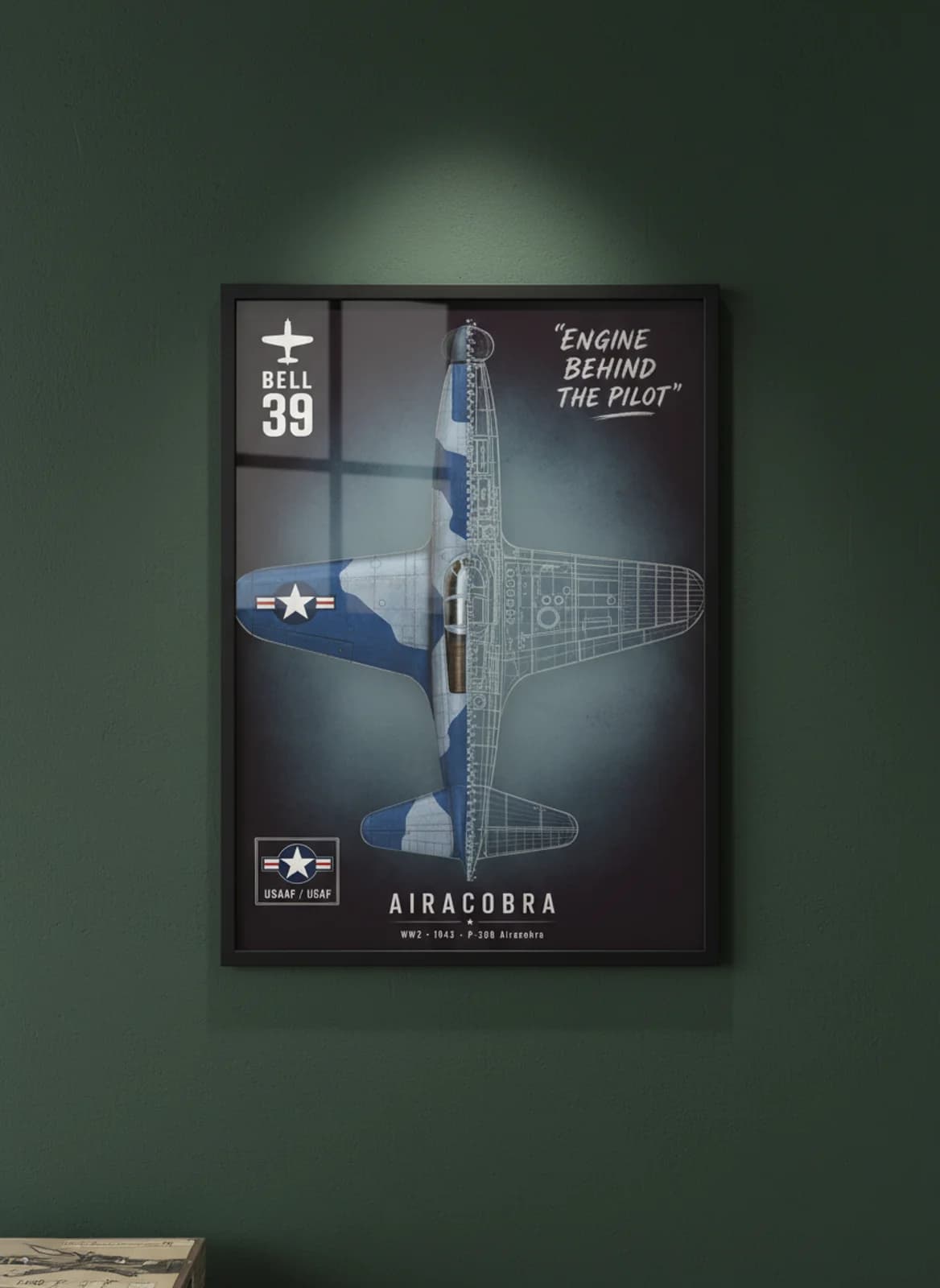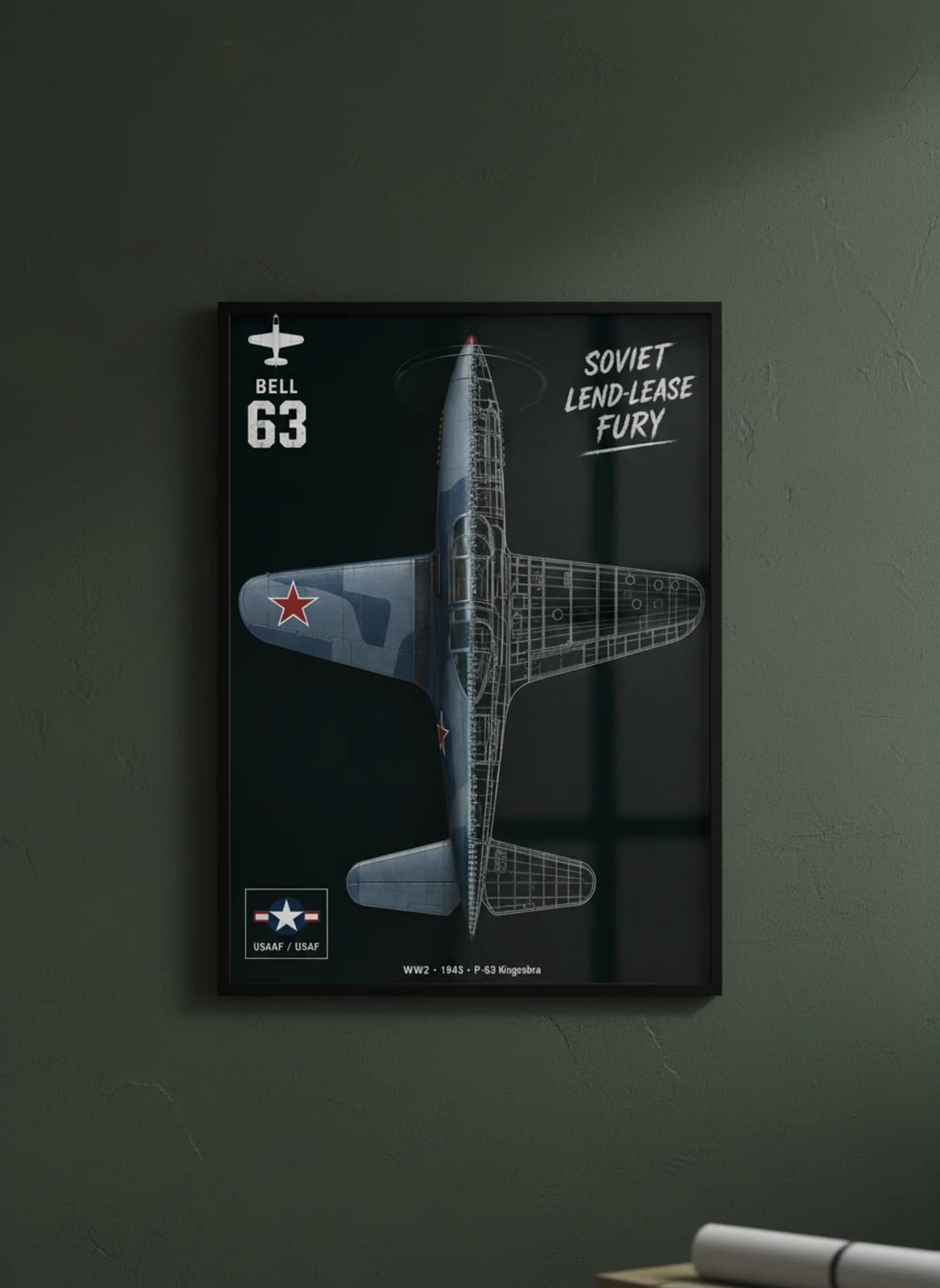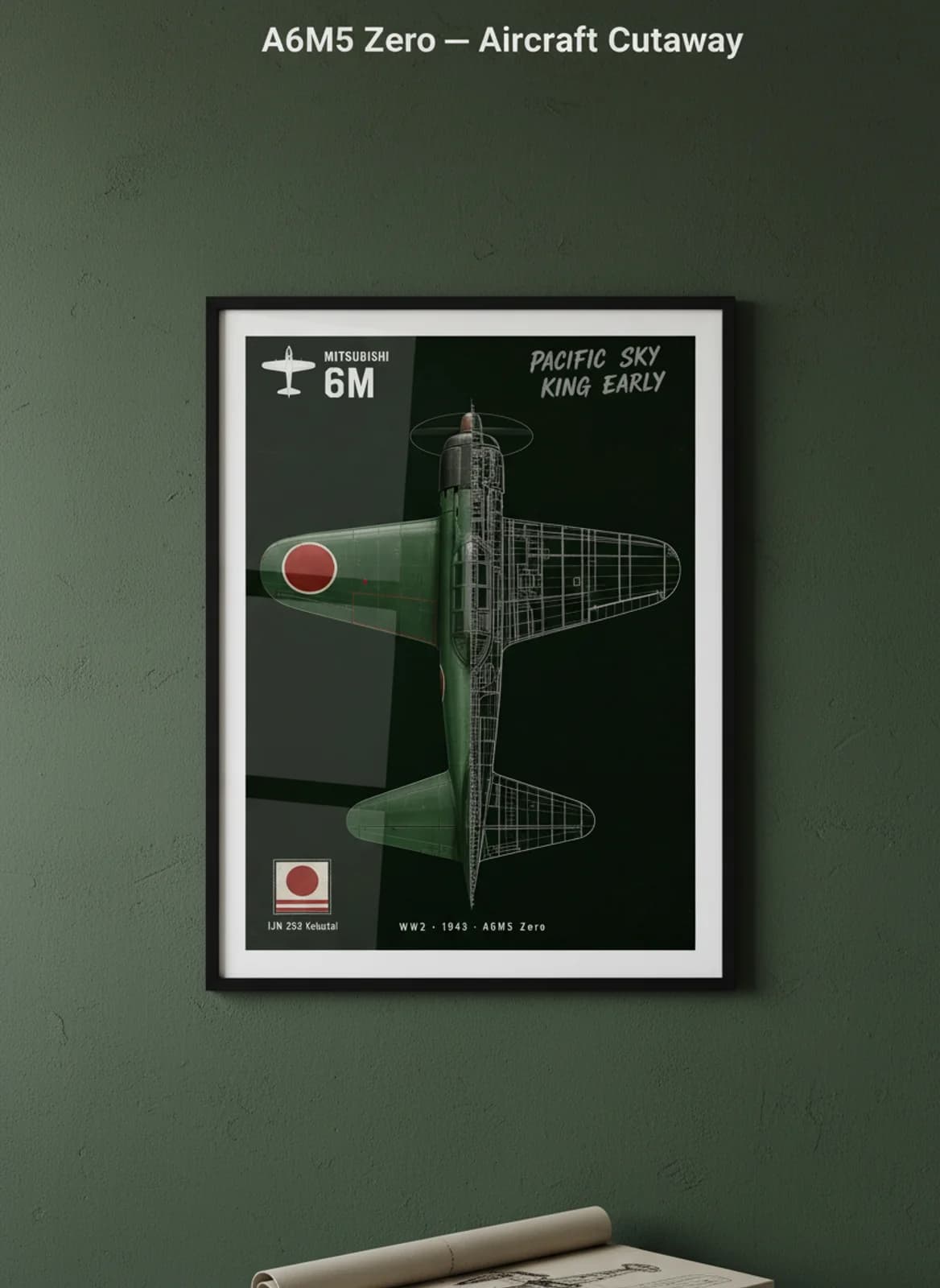
1943 Prestige — 5 museum-grade prints that set the mood. The Mitsubishi A6M Zero defined Japanese carrier aviation from 1940 through the mid-Pacific campaign, combining extreme range and agility in an airframe that shocked Allied pilots who initially dismissed Japanese fighter design. The A6M5 Model 52 represented the final major production refinement before dedicated interceptors and late-war jet projects diverted factory capacity. Bell Aircraft's P-39 design placed the Allison engine behind the pilot with a driveshaft running under the cockpit to the nose — a layout that baffled American pilots accustomed to conventional fighters but suited Soviet low-altitude tactics on the Eastern Front. More Airacobras went to the USSR via lend-lease than served in USAAF squadrons; Soviet aces including Aleksandr Pokryshkin extracted legendary results from the type against German ground attack and bomber formations. The P-47 Thunderbolt was the heaviest single-engine fighter to see large-scale combat in World War II, yet it claimed more than 3,700 air-to-air victories and destroyed thousands of locomotives, tanks, and aircraft on the ground. The 56th Fighter Group's P-47s pioneered long-range escort tactics before the P-51 assumed primary escort duty; Jug pilots valued the airframe's ability to absorb flak and return with cylinders shot away.