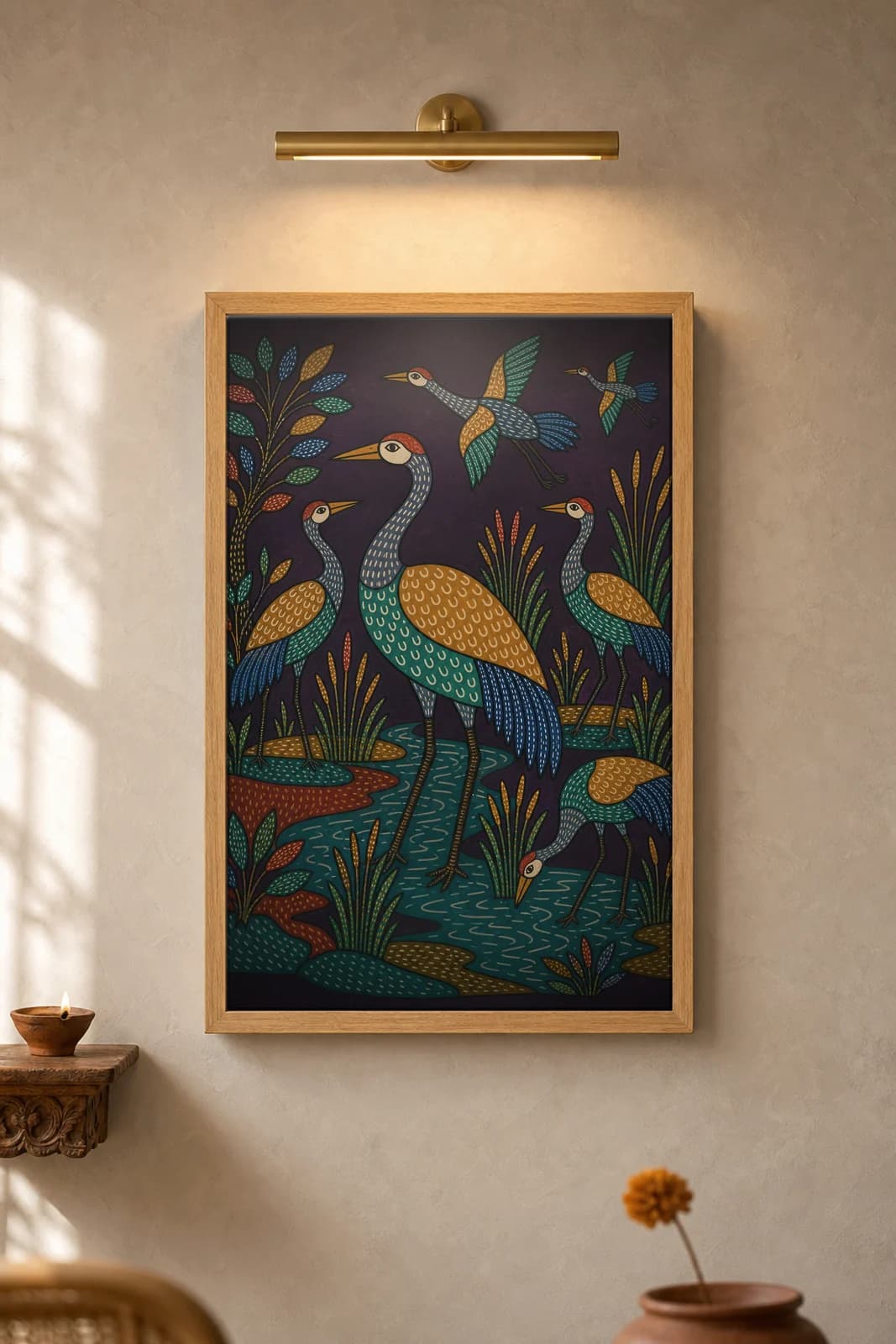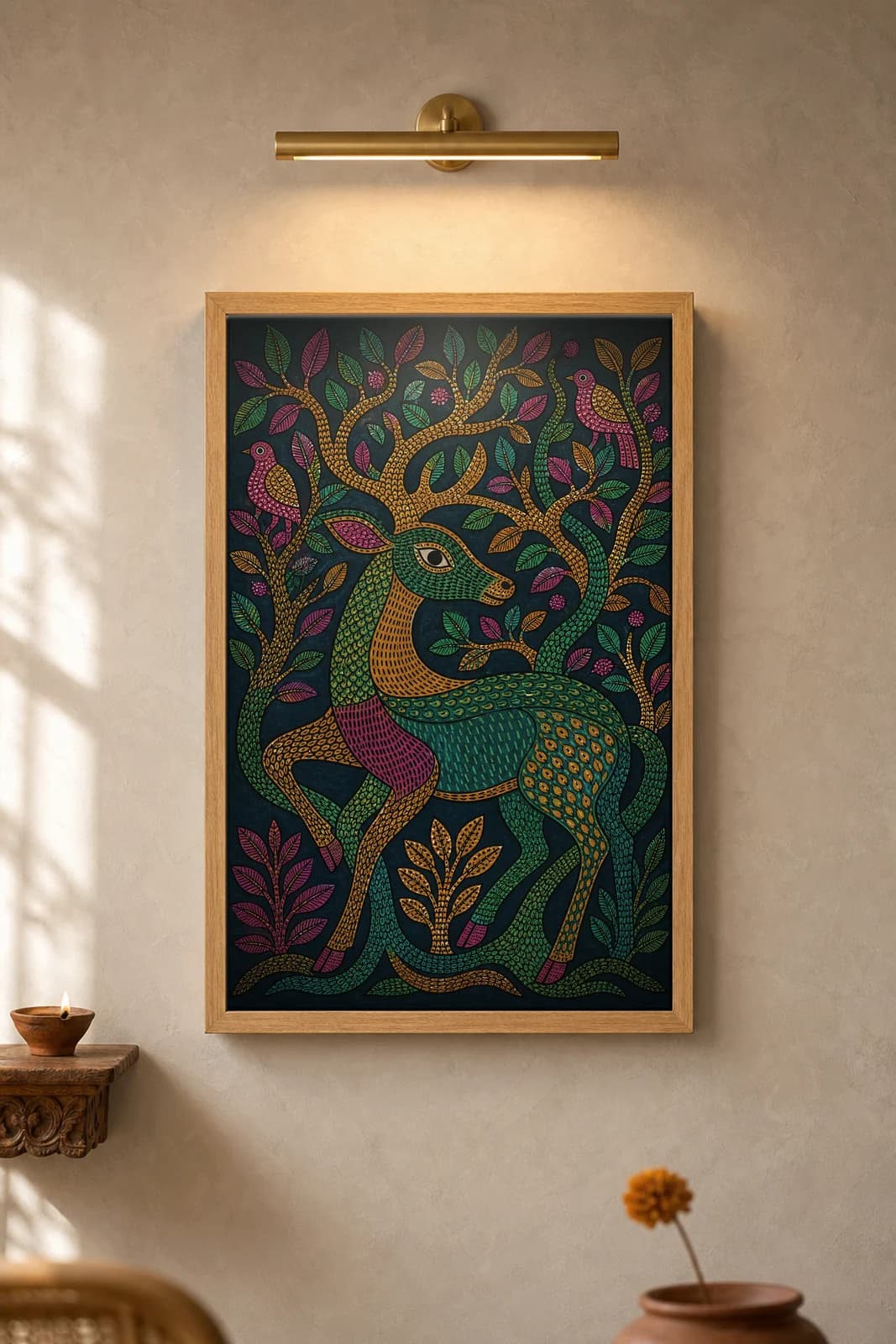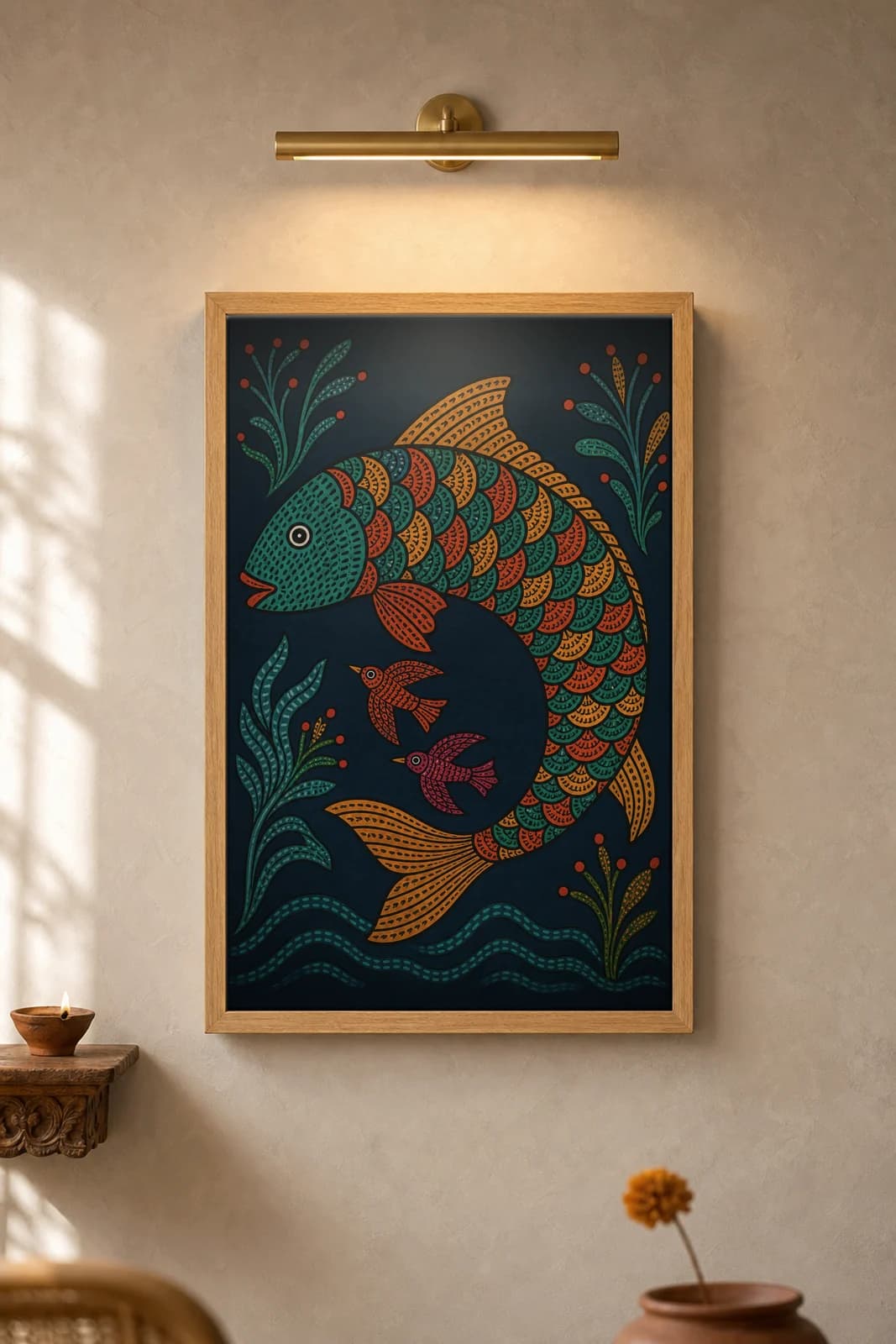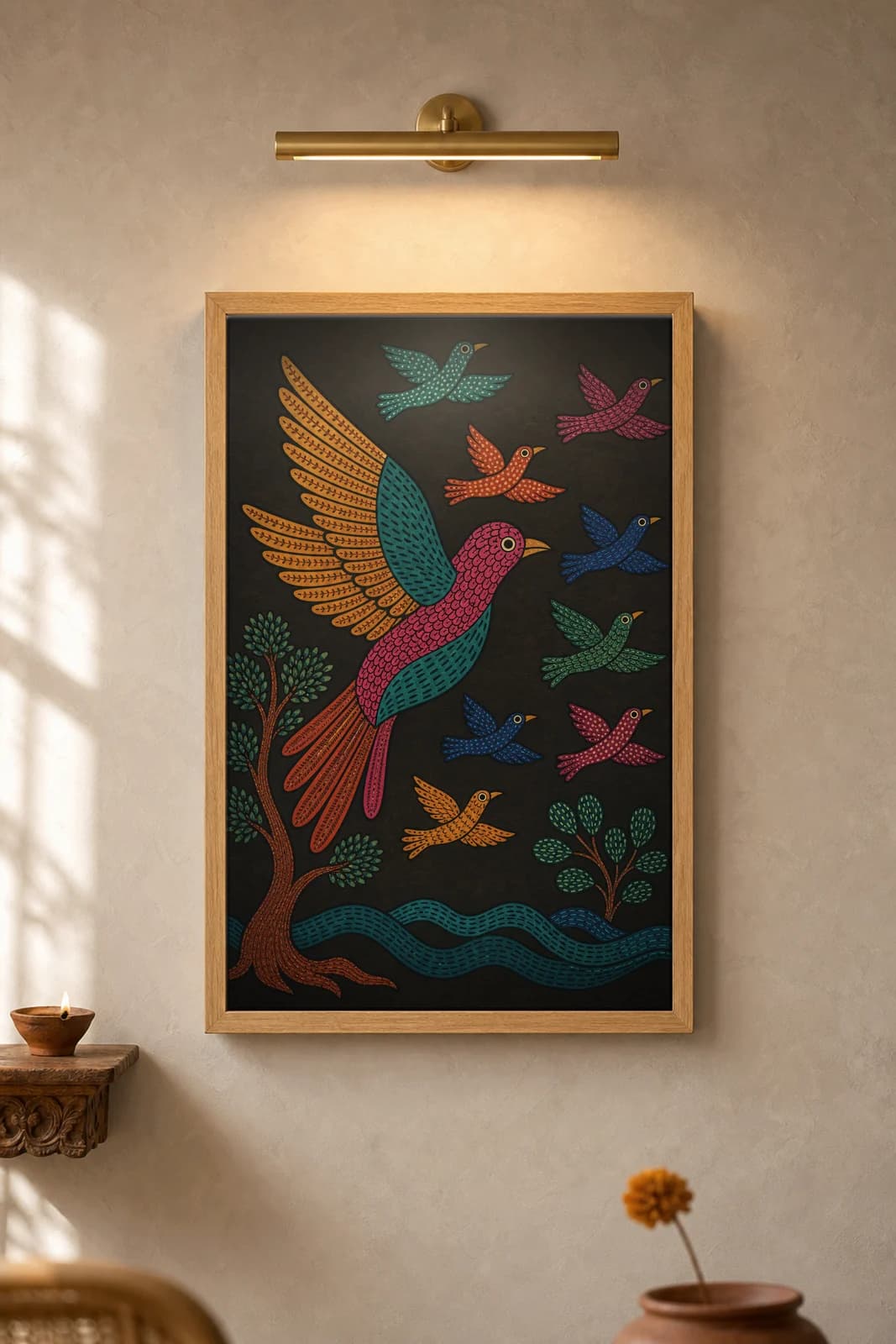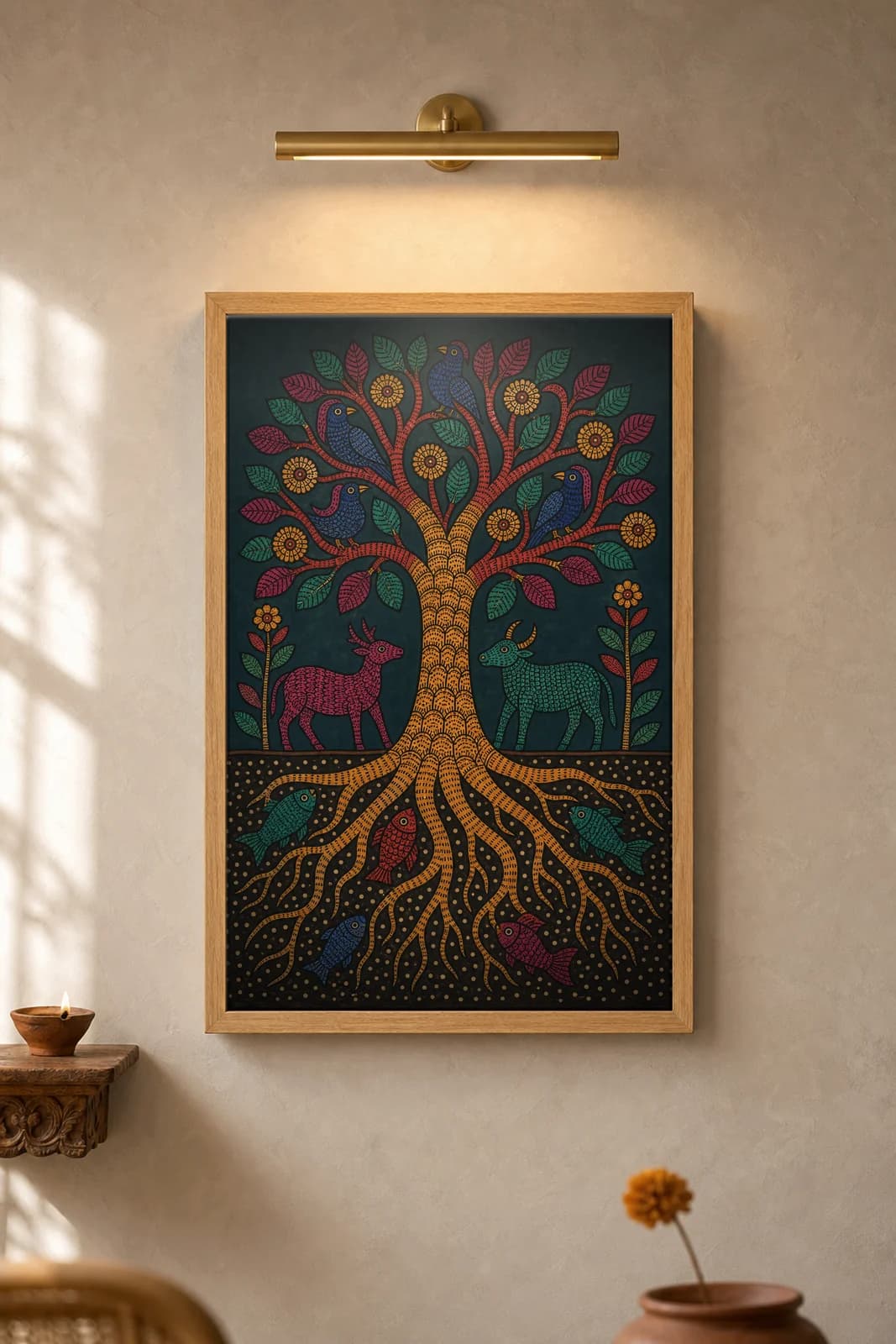
Marigold Yellow — 36 museum-grade prints in this palette. Gond painting comes from the Gond Adivasi communities of central India, with its best-known school formed by the Pradhan Gond of Patangarh and the wider Dindori region of Madhya Pradesh. The contemporary form is largely the legacy of Jangarh Singh Shyam (1962–2001), whose distinctive line-and-in-fill manner — every form bounded by a bold outline, then filled with rows of dots, dashes, commas and scales — became known as Jangarh Kalam and was carried on by his family and students. Flower garlands are central to temple shringar, the daily adornment of the deity; in the Pushtimarg (Vallabh) tradition centred on Shrinathji at the Nathdwara haveli-temple in Rajasthan, fresh flowers are integral to seva, and the towns around such temples run busy flower markets. A pichhwai (literally 'that which hangs at the back') is the painted cloth hung behind the deity to set the scene; here its grammar frames the market that supplies it. Bharni — from the Hindi word for filling — is the Brahmin-led Madhubani style characterised by solid pigment fields bounded by bold lampblack outlines, distinct from Kayastha Kachni parallel hatching and Dusadh Godna tattoo stipple. Jitwarpur village in Madhubani district became a noted centre for Bharni colour discipline after artists like Sita Devi and Mahasundari Devi exhibited nationally from the 1960s onward.